
How to Write Great Copy for Print Ads: The Ultimate Guide

In an era dominated by digital notifications and scrolling feeds, there is a tactile, enduring power in print. Whether it’s a full-page spread in a luxury magazine, a quarter-page ad in a local newspaper, or a bold flyer through a letterbox, print advertising demands a unique psychological approach.

Writing for print isn't just about shrinking your digital copy to fit a physical box; it’s about capturing attention in a world where you don't have a "clickable" link to do the heavy lifting. To succeed, your copy must be visceral, disciplined, and impeccably structured.
The Foundation: Audience Intelligence
Before a single word is written, you must understand the environment in which your ad will live. Unlike email marketing, where you have a database of names and behaviors, print is often a "broadcasting" medium. However, you can narrow the gap by analyzing the publication.
Contextual Relevance: If you are advertising in a niche gardening magazine, your tone should be expert yet accessible. If you are in a high-speed business journal, efficiency and ROI take center stage.
The Demographic Deep-Dive: Who is the typical reader? Are they retirees with disposable income or young professionals looking for a "hack"?
The Intent Factor: Is the reader in "browsing mode" (magazine) or "information mode" (newspaper)? Adjust your complexity accordingly.
The Art of the Irresistible Headline
In print, the headline is 80% of your effectiveness. It is the "hook" that stops a reader from turning the page. A great print headline should achieve three things: stop the thumb, spark curiosity, and signal relevance.
Strategies for Winning Headlines:
The Question Hook: "Are you making these 5 common mistakes with your pension?"
The Benefit-Forward Approach: "Sleep 8 hours tonight without back pain."
The Statistical Lead: "Why 94% of homeowners are overpaying for electricity."
Linguistic Flair: Use alliteration, puns (if appropriate for your brand), or power verbs to create a rhythmic "snap" that stays in the mind.
The Power of Brevity: Less is More
White space is your friend. In print, "clutter" is the enemy of "conversion." If a reader sees a wall of text, their brain subconsciously categorizes it as "work" and skips it.
Editing to the Bone: Write your first draft, then cut it by 30%. Every word must earn its place.
Visual Hierarchy: Use subheadings to guide the eye. If a reader only reads the headline,
the subheadings, and the call to action, they should still understand the core offer.
Single-Minded Messaging
One ad, one message. This is the golden rule of print. Do not try to sell your company's history, your five different product lines, and your new CSR initiative in one 10x10cm space.
Choose your "Unique Selling Proposition" (USP) for that specific ad. Are you the cheapest? The fastest? The most reliable? Focus entirely on that. When you dilute the message, you dilute the impact.
Tone: The Conversational Human
Even in B2B print, you are writing for humans. A cold, clinical tone creates a barrier. Aim for a "personable-expert" style—as if you are giving friendly advice over coffee. Avoid jargon that makes the reader feel excluded.
The Copy-Visual Synergy
Print is a visual medium. Your copy shouldn't just sit next to an image; it should talk to it. If your image is a person looking stressed, your copy should immediately offer the "relief." This harmony creates a professional, polished feel that builds brand trust.
The Print-Specific Call to Action (CTA)
Since a reader cannot click your paper ad, you must remove all friction from their next step.
Be Direct: Use "Visit," "Call," or "Bring this coupon."
The URL Rule: Use short, memorable "vanity" URLs (e.g., brand.com/save). Never use long strings of characters.
The QR Code Comeback: In the modern landscape, a QR code is a bridge between print and digital. Ensure it is large enough to scan and leads to a mobile-optimized page.
Boost Your Business Visibility with Local Page UK
While print is powerful, an integrated approach that includes a strong online presence is vital for modern growth. If you want to ensure your business is found by the right people, you need to be listed on a reputable uk online business directory.
Local Page UK serves as a comprehensive uk business directory designed to bridge the gap between service providers and customers. Whether you are looking to find local businesses uk or want your company to appear on a local businesses list uk, our platform is the gold standard for uk business listings online.
For entrepreneurs, we offer a business listing uk to help you get started without any upfront costs. Our business listing uk is perfect for those seeking a business listing uk that actually delivers traffic. Small business owners can take advantage of a business listing uk or a business listing uk to compete with larger brands.
If you are a specialist, our uk service listings and uk trade services listings ensure you reach your niche. From uk home services directory needs to uk professional services listings, the local page uk listings provide a curated experience of uk verified business listings and uk top rated local businesses.
Don't miss out on being part of the most effective uk local business directory. Whether you need a uk small business directory, a uk b2b business directory, or a uk b2c business directory, we have the infrastructure to support you. Claim your business listing uk today on our business listing uk and see why we are the preferred business directory uk online.
What Professionals Often Want to Know
Why is print advertising still relevant in 2026?
Print offers a "physicality" and credibility that digital ads often lack. It has a higher "dwell
time" as readers are less likely to be distracted by other tabs or notifications.
How long should a print ad headline be?
Ideally, between 5 to 10 words. It needs to be scannable in under two seconds.
Should I include my price in the print copy?
If your price is a competitive advantage, yes. If you are selling a premium/luxury service, it’s often better to focus on the value and "experience" first.
Is it better to use a drawing or a photo?
Photos generally build more trust, but illustrations can help you stand out in a crowded newspaper where everyone else is using stock photography.
What is the best font for print ads?
Serif fonts (like Times New Roman or Georgia) are traditionally easier to read in long-form print, but Sans-Serif (like Arial or Helvetica) is better for bold, modern headlines.
How do I track the ROI of a print ad?
Use unique "promo codes," a dedicated phone number, or a specific landing page URL to see exactly how many leads the ad generated.
Can I use the same copy for a flyer and a magazine?
Not exactly. A flyer is often "cold" outreach, while a magazine ad benefits from the prestige of the publication. Tailor the tone accordingly.
How much white space should I leave?
At least 20-30% of your ad should be "breathable" space to avoid overwhelming the reader.
What is a "Sub-headline" and do I need one?
A sub-headline sits under the main hook. Use it if your main headline is "clever" but needs a "factual" explanation to clear up confusion.
What is "Active Language" in a CTA?
It means starting with a verb: "Call," "Buy," "Discover," rather than passive phrases like "Information can be found at..."
Do I need to include my logo?
Yes, but don’t make it the biggest thing on the page. Your headline and benefit should take priority.
Should I use bullet points?
Yes! They are excellent for breaking down features or benefits into digestible bites.
What is the "AIDA" formula?
Attention (Headline), Interest (Body), Desire (Benefits), and Action (CTA). It’s the gold standard for print copy.
How do I choose the right publication?
Ask for their "Media Pack." This will tell you the demographic, reach, and interests of their readers.
Can I use humor in print ads?
Yes, but be careful. Humor is subjective. Test it on a small group before paying for a full-page spread.

Disclaimer: The information provided in this article is for general informational and research purposes only. Company details, features, services, and market positions may change over time. Readers are advised to visit official company websites and conduct independent research before making any business decisions or purchasing services.
Most Searchable Keywords

Recent Blogs



Related Listings

Categories
- Accountants (295)
- Advertising Agencies (559)
- Architects (149)
- Automobiles (377)
- Beauty (300)
- Carpenters (146)
- Cleaning Services (386)
- Dentists (189)
- Driving (62)
- Electricians (215)
- Energy (8)
- Event Organiser (685)
- Finance (599)
- Guide (3365)
- Health (2207)
- Information technology (206)
- Legal Services (353)
- Logistics (6)
- Maintenance (65)
- Manufacturing (35)
Sponsored Listings in Locksmith Services

Related Blogs

Your UK Sponsor Licence 2026 Step by Step Gui...
Read this insightful article "Your UK Sponsor Licence 2026 Step by Step Guide" to expand your knowledge!
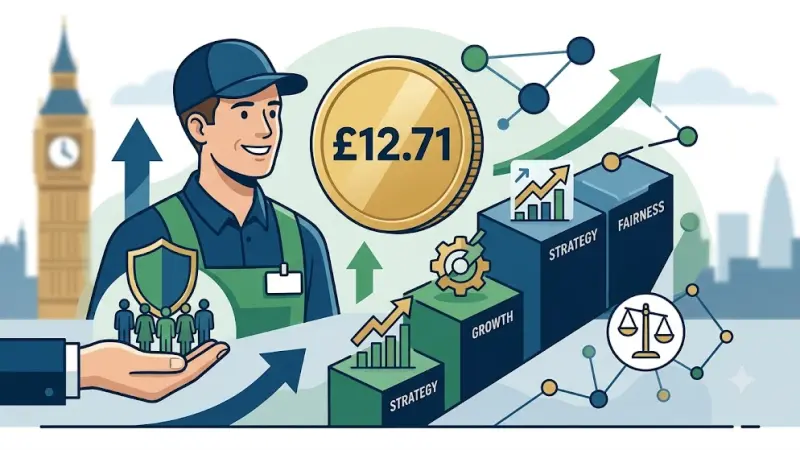
What Is the £12.71 National Living Wage Strat...
Read this insightful article "What Is the £12.71 National Living Wage Strategy for UK Employers" to expand your knowledge!

Where to Find the Best Summer Festivals in Br...
Read this insightful article "Where to Find the Best Summer Festivals in Bristol" to expand your knowledge!
Questions & Answers – Find What
You Need, Instantly!
How can I update my business listing?
Is it free to manage my business listing?
How long does it take for my updates to reflect?
Why is it important to keep my listing updated?
