
How Verified Listings Help Find Reliable Home Automation Technicians
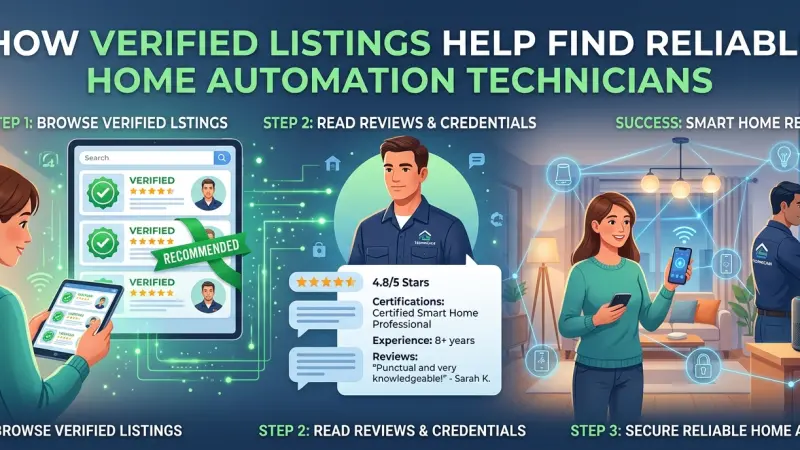
The leap from a few "plug-and-play" smart bulbs to a fully integrated, whole-home automation system is significant. While many enthusiasts enjoy the DIY aspect of smart technology, complex installations—such as integrated HVAC control, hardwired security arrays, and multi-room audio—often require the steady hand of a professional. However, the rise in demand for smart home technology has led to a saturated market of service providers, making it difficult to distinguish between a qualified engineer and an uncertified tinkerer. In this high-stakes environment, where technicians often require access to your home network and physical property, reliability is non-negotiable. Verified listings have emerged as a vital tool for homeowners, providing a filtered, transparent view of the professional landscape. By understanding how to leverage these verified resources, you can ensure your home automation project is handled with the technical precision and security it deserves.
The Challenge of Finding Niche Technical Expertise
Home automation is a unique field that sits at the intersection of electrical engineering, network IT, and interior design. A standard electrician may not understand the latency requirements of a Zigbee mesh network, and a computer repair person might not be comfortable wiring a high-voltage smart thermostat.
Finding a "reliable" technician means finding someone who understands the interoperability of different brands and protocols. The risk of hiring an unverified individual includes not just poor installation, but potential security vulnerabilities within your private network. Verified listings act as a primary defense, ensuring that the person entering your home has a documented history of professional conduct and technical competence.
Why Verification Matters in the Smart Home Sector
Verification is more than just a blue checkmark next to a name. In the context of home automation, it represents a layer of due diligence that protects the consumer’s investment and safety.
1. Proof of Legitimate Operation
A verified listing confirms that the technician or firm is a registered entity. This is the first step in weeding out "fly-by-night" operations that may disappear if a component fails or a system crash occurs a week after installation.
2. Validation of Specialized Certifications
The smart home industry is governed by various certifications, such as those from CEDIA (Custom Electronic Design & Installation Association) or specific brand certifications like Lutron or Control4. Verified platforms often require proof of these credentials before a technician can claim expert status in those niches.
3. Accountability and Recourse
When a technician is part of a verified ecosystem, they have a reputation to maintain. Most verified platforms offer a dispute resolution path or at least a transparent review system where the technician is held accountable for the quality of their work.
Step-by-Step: Using Verified Listings to Hire a Pro
Step 1: Define Your Project Scope
Before searching, be clear about what you need. Are you looking for a "Smart Lighting Expert" or a "Network Infrastructure Specialist"? Verified listings allow you to filter by these specific sub-categories, saving you from calling the wrong professional.
Step 2: Cross-Reference Professional Affiliations
Once you find a technician through a verified listing, check their affiliations. A reliable pro will often be a member of recognized trade bodies. Verification on a directory often means these documents have already been sighted by the platform.
Step 3: Analyze the "Work History" and Portfolio
Most verified profiles include a gallery of past projects. Look for neat wiring in rack closets and clean integration of sensors.
In home automation, the quality of what you can't see (the wiring) is just as important as what you can.
Step 4: The Initial Consultation
Use the information in the verified listing to ask targeted questions. If their profile says they specialize in "KNX systems," ask them about their experience with local versus cloud-based processing. A true professional will welcome technical scrutiny.
Benefits of Choosing Local Verified Talent
While large national chains offer home automation services, there is a distinct advantage to finding a local professional through a verified directory.
-
Faster Response Times: For critical systems like smart locks or security cameras, having a technician who lives in your area is invaluable for emergency repairs.
-
Knowledge of Local Infrastructure: Local pros understand regional challenges, such as the thickness of masonry in local period homes which might interfere with wireless signals.
-
Community Reputation: A local technician relies heavily on word-of-mouth. Their verified status in a local context is a powerful motivator for them to provide exceptional service.
Common Mistakes to Avoid When Hiring
-
Chasing the Lowest Quote: In home automation, you often get what you pay for. A low quote might mean the technician is cutting corners on network security or using "grey market" hardware.
-
Ignoring Post-Installation Support: Smart homes require updates. Ensure the technician listed offers a maintenance contract or at least a guarantee of support for a set period.
-
Sharing Admin Credentials Too Early: A professional technician will help you set up your system but should eventually hand over "Master" or "Owner" status to you, ensuring they don't have permanent back-door access to your home.
Supporting Local Business Visibility Beyond Core Marketing Efforts
As the demand for complex smart home ecosystems grows, the need for business discoverability among specialized local technicians becomes paramount. For a small engineering firm or an independent automation consultant, being "found" is the first hurdle in a competitive digital economy.
This is where the strategic use of directories comes into play, serving as a supporting visibility layer that bridges the gap between a service provider and a local homeowner in need.
By maintaining a profile on a business directory website, a technician can ensure a level of local presence consistency that social media alone cannot provide. When a professional chooses to list services uk directory platforms, they are effectively creating a credibility signal for potential clients who value transparency. Furthermore, a free company listing platform allows these experts to showcase their specific technical niches without the high overhead of traditional advertising.
Utilizing a business listings site also aids in trust reinforcement across platforms. When a customer sees a technician's name on Local Page UK, it acts as a local discovery aid, providing the consumer with the confidence that the business is legitimate and active within the community. For the modern technician, these platforms are not just about a phone number; they are about establishing a professional footprint that signals reliability in an increasingly complex industry.
The Success
The success of a home automation project hinges on the expertise of those who install and program it. While the hardware provides the functionality, the technician provides the logic and security. By using verified listings, you move away from the "guesswork" of search engine results and toward a curated, professional standard. Reliable home automation should simplify your life, not add stress. Taking the time to vet your installer through verified channels ensures that your smart home remains a source of comfort and security for years to come.
FAQs
1. What exactly does "verified" mean on a listing? Generally, it means the platform has confirmed the business's physical address, contact details, and often their trade licenses or insurance. It proves the business is a legitimate, active entity.
2. Should I hire an electrician or a smart home specialist? For basic wiring, an electrician is fine. For complex system integration (making different brands talk to each other), you need a smart home specialist who understands networking and software protocols.
3. Are reviews on verified listings more reliable? Yes. Many verified platforms require users to have a confirmed interaction with the business before leaving a review, which helps filter out fake feedback.
4. Can a technician see my data after they leave? Not if the handover is done correctly.
A professional will help you set up your own account and then remove their "installer" access once the job is finished.
5. How much should I expect to pay for a professional installation? This varies wildly by project. However, many pros charge an hourly rate for consultation and a flat fee for hardware installation. Always get a detailed quote upfront.
6. Do verified technicians offer warranties? Most professional installers provide a warranty on their labor (typically 12 months) in addition to the manufacturer’s warranty on the hardware.
7. Is it okay to buy my own hardware and just hire a pro to install it? Some pros allow this, but many prefer to supply the hardware themselves. This is because they know which brands are reliable and they can't guarantee the performance of hardware they didn't source.
8. What is CEDIA certification? CEDIA is the leading global trade association for the home technology industry. A CEDIA-certified professional has passed rigorous exams on technical knowledge and ethical business practices.
9. How do I know if a technician is local? Verified listings typically show a map or a service area. Hiring someone truly local is better for long-term support and maintenance.
10. Can a smart home technician help with my Wi-Fi? Yes. In fact, most smart home pros are experts in robust home networking, as a strong Wi-Fi/Zigbee mesh is the foundation of any good automation system.
11. What should I ask during the first phone call? Ask about their experience with your specific brand of hardware, if they are insured, and if they provide a "handover document" that explains how your system is configured.
12. Why do some technicians have "Silver" or "Gold" status on listings? This often refers to their level of experience or the number of successful projects they have completed and verified through that specific platform.
13. Do I need a technician for smart bulbs? Generally, no. Smart bulbs are DIY. However, if you are installing 50+ bulbs and want them integrated into complex scenes or sensors, a pro can save you hours of frustration.
14. What happens if a verified business goes out of business? This is why choosing a local pro with deep community ties is helpful.
Also, ensure your system is built on "open" standards (like Zigbee or Matter) so that another technician can take over the system if needed.
15. Is there a difference between a "security" pro and an "automation" pro? There is a lot of overlap, but security pros are specifically licensed to install alarms and cameras. Most automation pros also hold these licenses, but always double-check.
Disclaimer: The information provided in this article is for general informational and research purposes only. Company details, features, services, and market positions may change over time. Readers are advised to visit official company websites and conduct independent research before making any business decisions or purchasing services.
Most Searchable Keywords
Recent Blogs


Related Listings

Categories
- Accountants (295)
- Advertising Agencies (559)
- Architects (149)
- Automobiles (377)
- Beauty (300)
- Carpenters (146)
- Cleaning Services (387)
- Dentists (189)
- Driving (62)
- Electricians (215)
- Energy (8)
- Event Organiser (686)
- Finance (602)
- Guide (3372)
- Health (2207)
- Information technology (206)
- Legal Services (353)
- Logistics (6)
- Maintenance (65)
- Manufacturing (35)
Sponsored Listings in Travel Agencies


Related Blogs

How Much Do UK Actors Really Earn Full Indust...
Read this insightful article "How Much Do UK Actors Really Earn Full Industry Breakdown" to expand your knowledge!

Blue Light Card UK 2026 Check Eligibility and...
Read this insightful article "Blue Light Card UK 2026 Check Eligibility and Claim" to expand your knowledge!

BBC Radio 1 DJs Net Worth Ranking Revealed
Read this insightful article "BBC Radio 1 DJs Net Worth Ranking Revealed" to expand your knowledge!
Questions & Answers – Find What
You Need, Instantly!
How can I update my business listing?
Is it free to manage my business listing?
How long does it take for my updates to reflect?
Why is it important to keep my listing updated?
