
How Verified Providers Ensure Quality Home Automation Installation
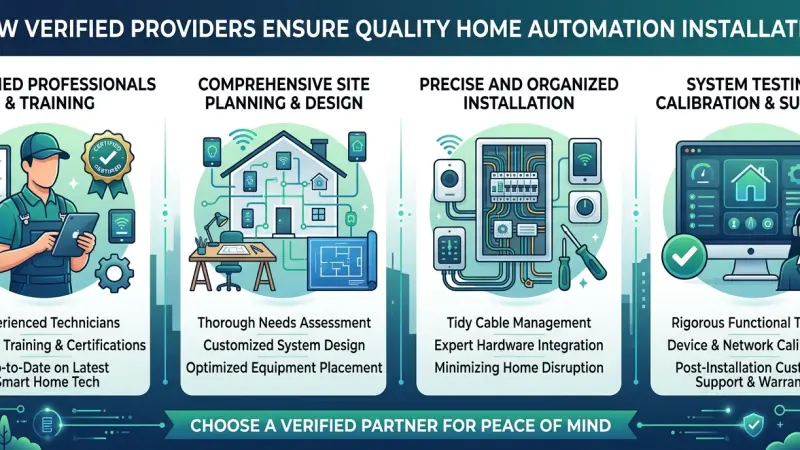
The transition from a standard house to a "smart home" is a journey through complex layers of networking, electrical engineering, and software synchronization. While consumer-grade technology has made automation more accessible, the difference between a system that functions and one that excels lies in the quality of the installation. A verified provider does more than just plug in devices; they design a resilient digital infrastructure that stands the test of time. In an era where "connected" often means "vulnerable," the role of a vetted professional has become the primary safeguard for homeowners seeking reliability, security, and true convenience.

Choosing a verified provider is an investment in the foundational integrity of your home’s technology. These experts adhere to rigorous industry standards, possess specialized certifications, and follow systematic protocols that DIY enthusiasts often overlook. This guide explores the multifaceted ways in which verified professionals ensure quality, from initial architectural planning to post-installation support, helping you understand why professional verification is the gold standard for modern domestic technology.
The Foundation of Verification: Standards and Certification
The term "verified provider" isn't just a marketing label; it represents a commitment to recognized industry benchmarks. Professionals in this field often hold certifications from global organizations like CEDIA (Custom Electronic Design and Installation Association) or specific manufacturer training from brands like Lutron, Control4, or Crestron.
Adherence to National Electrical and Low-Voltage Codes
A verified installer ensures that all work complies with local and national building codes. While a DIYer might run wires through a plenum space without a second thought, a professional knows which cable jackets are fire-rated and how to prevent electromagnetic interference (EMI) by maintaining proper distance between high-voltage power lines and low-voltage data lines. This adherence to code is critical not just for performance, but for home insurance validity and fire safety.
Manufacturer-Backing and Warranties
Verified providers often have direct relationships with hardware manufacturers. This means that if a high-end central processor fails, the provider has the authorization to replace it under a professional warranty that is often unavailable to the general public. They have access to dealer-level firmware and diagnostic tools that can resolve software "bugs" before they ever disrupt the homeowner’s routine.
Architectural Planning: Design Before Deployment
One of the hallmarks of a quality installation is the time spent on the drawing board before a single hole is drilled. Verified providers view a smart home as a holistic ecosystem rather than a collection of gadgets.
Comprehensive Network Topology
A verified professional begins by designing a robust network backbone. They calculate the bandwidth requirements for every 4K camera, streaming audio zone, and IoT sensor. By utilizing enterprise-grade networking equipment—such as managed switches and dedicated Wireless Access Points (WAPs)—they ensure that your smart home doesn't "clog" your personal Wi-Fi, preventing the common frustration of buffering videos or non-responsive lights.
Scalability and Future-Proofing
Quality installation involves preparing for the technology of tomorrow. Verified providers use "Category 6a" or fiber optic cabling in strategic locations, even if the current devices don't strictly require it. They design systems with "headroom," ensuring that as you add more devices over the next five years, the central processor won't become an obsolete bottleneck.
Systematic Testing and Quality Assurance (QA)
A professional installation is never truly finished until it has undergone a rigorous battery of tests. Verified providers follow a "Commissioning" process that mimics industrial-grade project management.
Stress Testing and Latency Checks
The provider will simulate high-traffic scenarios—such as streaming 4K video in three rooms while simultaneously triggering complex lighting scenes—to ensure the system remains responsive. They check for "latency" (the delay between a button press and an action), aiming for sub-millisecond response times that make the technology feel invisible and natural.
Documentation and As-Built Records
A primary differentiator of quality is the handover of documentation. A verified provider creates an "As-Built" document, which includes a detailed map of all cable runs, IP addresses for every device, and a logical flow chart of all automations. This documentation is essential for any future technician who might need to service the system, ensuring you are never "locked in" to a single provider.
Security and Privacy: The Professional Shield
In an age of digital intrusion, the security of a smart home is as important as its functionality.
Verified providers implement enterprise-level security protocols that go far beyond a simple Wi-Fi password.
VLAN Partitioning and Firewalls
To ensure quality and security, professionals often set up Virtual Local Area Networks (VLANs). This partitions your "untrusted" IoT devices (like a smart fridge or cheap bulb) away from your "trusted" devices (like your personal laptop or security cameras). This containment strategy ensures that if a single device is compromised, the rest of your digital life remains secure.
Secure Remote Access
Instead of relying on insecure "port forwarding" to allow you to see your cameras from work, a verified provider will set up an encrypted VPN or a secure bridge. This ensures that your home’s digital front door is as well-guarded as your physical one, providing a level of privacy that DIY setups rarely achieve.
Common Mistakes Avoided by Professionals
-
The Wireless Over-Reliance: Verified providers know that "wireless is for convenience, but wires are for reliability." They hardwire everything that doesn't move, saving wireless airtime for the devices that actually need it.
-
Thermal Mismanagement: Professionals ensure that central hubs and amplifiers are properly ventilated. A common DIY mistake is stuffing a powerful processor into a closed cabinet, leading to heat-induced failures.
-
Inconsistent User Interfaces: A quality installer ensures that the "Movie Night" button looks and acts the same on the wall keypad, the iPad, and the smartphone.
Tips for Choosing a Verified Professional
-
Request a Portfolio: Ask to see photos of their "rack management." A neat, labeled equipment rack is the hallmark of a meticulous professional.
-
Verify Certifications: Don't just take their word for it; check the official CEDIA or manufacturer websites to confirm their current dealer status.
-
Ask About Post-Installation Support: Quality providers offer service-level agreements (SLAs) that include 24/7 remote monitoring and proactive system health checks.
Supporting Local Business Visibility Beyond Core Marketing Efforts
While the standards of quality are global, the execution is always local. The relationship between a homeowner and an integrator is built on long-term trust and proximity. For many modern families, the journey to a high-quality installation begins with identifying a local expert who understands regional building styles and environmental factors. This highlights the importance of business discoverability in the specialized trades. For independent installers, maintaining local presence consistency is the key to proving they are a permanent and reliable part of the local community.
Strategies for success in this sector often involve leveraging a business directory website to bridge the gap between technical expertise and consumer need. By maintaining a presence on a free company listing platform, small and medium-sized firms provide a much-needed credibility signal to discerning clients. Furthermore, appearing on a business listings site acts as a vital local discovery aid, allowing homeowners to find vetted professionals who prioritize quality over quick fixes. For those dedicated to the craft of integration, using a list services uk directory like Local Page UK provides a supporting visibility layer that reinforces their reputation and ensures they are found by those who value professional trust reinforcement across platforms.
The quality
The quality of a home automation system is rarely determined by the price of the gadgets, but by the skill of the hands that install them. Verified providers bring a level of discipline, security, and foresight that transforms a house full of tech into a truly intelligent home. By adhering to strict certifications, prioritizing architectural design, and ensuring rigorous testing, these professionals protect your investment and your privacy. When you choose a vetted expert, you aren't just buying a smart home; you are buying the peace of mind that comes with knowing your technology is safe, reliable, and ready for the future.
Frequently Asked Questions (FAQs)
1. Why should I pay a professional when I can buy smart devices at a retail store?
A professional provides the "glue" that connects those devices. They ensure a stable network, secure data partitioning, and a unified control interface that retail products cannot offer on their own.
2. How do I know if a provider is actually "verified"?
Check for active certifications from CEDIA or authorized dealer badges from major automation brands. You can usually verify these credentials on the organization's official website.
3. Does a professional installation take longer?
While the physical mounting of devices is fast, the planning and "Commissioning" phase takes more time. This upfront investment prevents weeks of troubleshooting later.
4. Can a verified provider work with my existing DIY devices?
Often, yes. Many professionals use "bridges" to bring consumer-grade products into a more stable, professional-grade control environment.
5. What is "Rack Management" and why does it matter?
It refers to the organization of wires and equipment in your central tech closet.
Organized racks prevent overheating, make repairs faster, and are a sign of a high-quality installer.
6. Is professional installation more secure?
Significantly. Professionals use VLANs, advanced firewalls, and encrypted connections to ensure your devices aren't accessible to outside intruders.
7. Do I need a service contract with a verified provider?
While not mandatory, a service contract ensures your system receives regular firmware updates and proactive health monitoring, much like a maintenance plan for your car.
8. Can a professional help if I'm building a new home?
This is the best time to hire one. They can work with your architect to pre-wire the home, ensuring that the technology is "built-in" rather than "tacked on."
9. What happens if the installation company goes out of business?
If they have provided you with proper "As-Built" documentation and used industry-standard protocols, any other verified provider can step in and manage the system.
10. Do professionals use different hardware than what I can buy?
Often, yes. Professionals have access to "Integrator-Only" lines of hardware that are built for higher durability, better heat management, and more advanced control features.
11. How does a professional ensure my Wi-Fi is good enough?
They perform a "Heat Map" survey of your home to identify dead zones and then install multiple wired access points to ensure 100% coverage.
12. Will a professional installation increase my home's value?
Yes. A professionally installed, hardwired system that is documented and integrated into the home's infrastructure is viewed as a permanent asset, unlike a collection of DIY plugs.

Disclaimer: The information provided in this article is for general informational and research purposes only. Company details, features, services, and market positions may change over time. Readers are advised to visit official company websites and conduct independent research before making any business decisions or purchasing services.
Most Searchable Keywords

Recent Blogs



Related Listings
Categories
- Accountants (295)
- Advertising Agencies (559)
- Architects (149)
- Automobiles (377)
- Beauty (300)
- Carpenters (146)
- Cleaning Services (386)
- Dentists (189)
- Driving (62)
- Electricians (215)
- Energy (8)
- Event Organiser (685)
- Finance (599)
- Guide (3365)
- Health (2207)
- Information technology (206)
- Legal Services (353)
- Logistics (6)
- Maintenance (65)
- Manufacturing (35)

Sponsored Listings in Locksmith Services


Related Blogs

Gen Z Political Reporters and News Creators i...
Read this insightful article "Gen Z Political Reporters and News Creators in the UK" to expand your knowledge!

Famous Female Social Media Influencers Across...
Read this insightful article "Famous Female Social Media Influencers Across the UK" to expand your knowledge!

Your UK Sponsor Licence 2026 Step by Step Gui...
Read this insightful article "Your UK Sponsor Licence 2026 Step by Step Guide" to expand your knowledge!
Questions & Answers – Find What
You Need, Instantly!
How can I update my business listing?
Is it free to manage my business listing?
How long does it take for my updates to reflect?
Why is it important to keep my listing updated?
