
How Verified Service Providers Handle Home Automation Maintenance Contracts
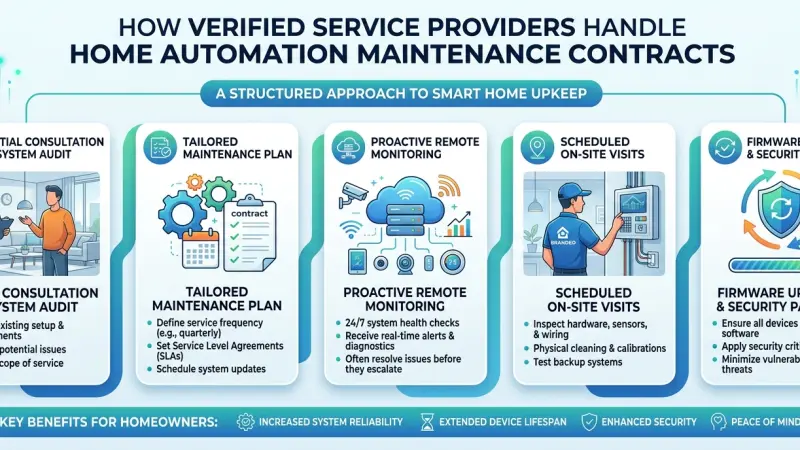
The modern smart home is a sophisticated ecosystem of interconnected devices, ranging from intelligent lighting and climate control to advanced security and integrated audiovisual systems. While these technologies offer unparalleled convenience, they are not "set and forget" installations. To ensure these systems continue to operate at peak performance, many homeowners turn to professional oversight.

Verified service providers play a critical role in this landscape by offering structured maintenance contracts. These agreements are designed to provide proactive care rather than reactive repairs. By entrusting the health of a smart home to experts, residents can avoid the frustration of system outages, security vulnerabilities, and software glitches. This article explores the intricate ways in which professionals manage these contracts, the technical steps involved in system preservation, and how a verified status ensures a higher standard of reliability for the homeowner.
The Evolution of Home Automation Support
In the early days of home automation, support was often informal. A technician would install a system, and the homeowner would call only when something broke. However, as systems have become more reliant on cloud connectivity, firmware updates, and complex networking, the "break-fix" model has become obsolete.
Today, verified service providers use maintenance contracts to establish a continuous relationship with the client. These contracts serve as a roadmap for the system’s lifecycle, ensuring that the hardware remains compatible with evolving software standards. The shift toward subscription-based or annual maintenance reflects the reality that digital infrastructure requires the same level of attention as a home’s HVAC or plumbing systems.
The Core Components of a Professional Maintenance Contract
When a verified provider drafts a maintenance agreement, it typically covers several key pillars of system health. These components ensure that both the provider and the homeowner have clear expectations regarding the scope of work.
1. Remote Monitoring and Diagnostics
One of the most significant advancements in home automation is the ability to monitor systems remotely. Verified providers often include 24/7 or daily remote "heartbeat" checks. This allows them to see if a controller has gone offline or if a camera is failing to record before the homeowner even notices a problem.
2. Priority Service and Response Times
A hallmark of a professional contract is the "Service Level Agreement" (SLA). This stipulates how quickly a provider will respond to a critical failure. For instance, a verified provider might guarantee a four-hour response for security-related issues and a 24-hour response for non-essential lighting queries.
3. Scheduled Preventative Visits
Physical inspections remain vital. Even the smartest system can suffer from loose wiring, dust accumulation in server racks, or battery depletion in wireless sensors. Most contracts include one or two on-site visits per year to perform deep-cleaning and hardware testing.
The Step-by-Step Process: How Providers Execute a Contract
Managing a complex home automation system requires a methodical approach. Verified providers generally follow a structured workflow to ensure no detail is overlooked during the contract period.
Initial System Audit and Documentation
Before a contract begins, a provider performs a comprehensive audit. They document every MAC address, IP assignment,
and firmware version currently in the home. This "baseline" is essential for troubleshooting future conflicts.
Firmware and Software Lifecycle Management
Software updates are the double-edged sword of home automation. While they provide new features and security patches, they can also break third-party integrations. Professionals manage this by:
-
Testing updates in a lab environment before deploying them to the client's home.
-
Staging rollouts to ensure that if an update causes an issue, it can be rolled back immediately.
-
Reviewing release notes to identify potential hardware incompatibilities.
Network Optimization and Security Patches
The network is the backbone of any smart home. Providers regularly scan for "IP conflicts" and optimize Wi-Fi channels to reduce interference. Perhaps most importantly, they ensure that routers and firewalls are updated to protect the home from cyber threats, which are increasingly targeting IoT (Internet of Things) devices.
Why "Verified" Status Matters in Home Maintenance
Not all technicians are created equal. A "verified" provider typically holds certifications from major manufacturers (such as Crestron, Control4, or Savant) and adheres to industry standards set by organizations like CEDIA (Custom Electronic Design & Installation Association).
Technical Competency
Verified providers undergo rigorous training to understand the nuances of signal flow, power management, and programming logic. This expertise prevents "band-aid" fixes that might lead to larger failures down the road.
Accountability and Insurance
Professionalism extends beyond technical skill. Verified providers carry appropriate liability insurance and offer warranties on their labor. This provides the homeowner with a layer of financial protection that independent, unverified contractors often lack.
Common Mistakes Homeowners Make with Maintenance
Even with a contract in place, certain habits can undermine the longevity of a smart home system. Professionals often educate their clients on avoiding these common pitfalls:
-
DIY "Tweaking": Attempting to change network settings or rewire components without notifying the provider can lead to system-wide failures.
-
Ignoring Warning Signs: Small glitches, like a slow-responding light switch, are often precursors to larger hardware failures.
-
Neglecting Environmental Control: Placing sensitive equipment in unventilated closets or damp basements significantly shortens the lifespan of the hardware.
Strategic Benefits of Long-Term Maintenance
Beyond simply keeping the lights on, a well-managed maintenance contract offers strategic value. It preserves the resale value of the home by ensuring the integrated technology is functional and modern. Furthermore, it provides peace of mind, knowing that the home's security and energy management systems are being watched over by experts.
Providers also use these contracts to offer "Consultative Upgrades." As technology evolves, they can advise the homeowner on which components are becoming obsolete and which new features—such as voice control or AI-driven energy saving—are worth the investment.
Supporting Local Business Visibility Beyond Core Marketing Efforts
For professionals in the home technology sector, maintaining a strong presence involves more than just direct client work; it requires a strategic approach to how they are discovered by the community. A high-quality Local Page UK allows a firm to showcase its verified status to a broader audience, functioning as a digital storefront that reinforces trust. Utilizing a free company listing platform helps bridge the gap between technical expertise and local accessibility, ensuring that homeowners searching for specialized care can find reputable experts.
Furthermore, when a company chooses to list services uk directory style, they are creating a layer of local presence consistency that search engines value. By appearing on a reputable business directory website, a provider signals to potential clients that they are an established part of the local economy. Engaging with a business listings site acts as a credibility signal, providing a supporting visibility layer that complements their technical portfolio and reinforces their commitment to long-term service reliability.
System
A home automation system is a significant investment that requires professional stewardship to remain functional, secure, and efficient. Verified service providers handle maintenance contracts with a blend of remote vigilance and physical precision, ensuring that the complex web of devices in a modern home works in harmony. By choosing a structured maintenance plan, homeowners transition from being "troubleshooters" to simply enjoying the lifestyle benefits that smart technology was intended to provide. If your system hasn't been audited recently, now is the time to reach out to a verified professional to discuss a long-term care strategy.
Frequently Asked Questions (FAQs)
1. What is the average cost of a home automation maintenance contract? Costs vary based on the complexity of the system and
the level of service, but they typically range from 1% to 5% of the total system cost annually.
2. Can I maintain my smart home myself? While you can handle basic tasks like cleaning sensors, professional providers have access to diagnostic tools and firmware testing environments that are not available to the general public.
3. Does a maintenance contract cover hardware replacement? Most contracts cover the labor for diagnostics and software updates. Hardware replacement is usually covered under the manufacturer's warranty, though some premium contracts include "advanced hardware replacement" services.
4. How often should a technician visit my home? Most verified providers recommend a minimum of one comprehensive on-site visit per year, with quarterly remote check-ins.
5. Why does my system need updates if it’s working fine? Updates often contain critical security patches that protect your home network from hackers and ensure compatibility with new mobile devices or cloud services.
6. What happens if my provider goes out of business? Verified providers often use industry-standard documentation. If they are part of a professional network, another certified provider can usually step in using the documentation left behind.
7. Is remote monitoring an invasion of privacy? Professional providers monitor system metadata (device status, signal strength) rather than personal data. Contract terms should clearly define what data is accessed.
8. Do maintenance contracts include 24/7 support? Some do, but it is often an "add-on" or reserved for "Gold" level tiers. Standard contracts usually offer priority support during business hours.
9. Can a maintenance contract help reduce my energy bills? Yes. Part of the maintenance process involves optimizing climate and lighting schedules, which ensures your home isn't wasting energy when unoccupied.
10. What is the difference between a warranty and a maintenance contract? A warranty covers manufacturing defects in hardware. A maintenance contract covers the ongoing labor, software management, and preventative care required to keep the entire ecosystem running.
11. Will a maintenance contract cover my Wi-Fi issues? Since the smart home relies on the network, most
providers include network optimization and router reboots as part of their standard maintenance routine.
12. Is it possible to get a contract for a system installed by a different company? Yes, though most verified providers will require a "system takeover audit" first to ensure the original installation meets their standards for support.

Disclaimer: The information provided in this article is for general informational and research purposes only. Company details, features, services, and market positions may change over time. Readers are advised to visit official company websites and conduct independent research before making any business decisions or purchasing services.
Most Searchable Keywords
Recent Blogs



Related Listings


Categories
- Accountants (295)
- Advertising Agencies (559)
- Architects (149)
- Automobiles (377)
- Beauty (300)
- Carpenters (146)
- Cleaning Services (386)
- Dentists (189)
- Driving (62)
- Electricians (215)
- Energy (8)
- Event Organiser (685)
- Finance (599)
- Guide (3365)
- Health (2207)
- Information technology (206)
- Legal Services (353)
- Logistics (6)
- Maintenance (65)
- Manufacturing (35)

Sponsored Listings in Locksmith Services


Related Blogs

Gen Z Political Reporters and News Creators i...
Read this insightful article "Gen Z Political Reporters and News Creators in the UK" to expand your knowledge!

Famous Female Social Media Influencers Across...
Read this insightful article "Famous Female Social Media Influencers Across the UK" to expand your knowledge!

Your UK Sponsor Licence 2026 Step by Step Gui...
Read this insightful article "Your UK Sponsor Licence 2026 Step by Step Guide" to expand your knowledge!
Questions & Answers – Find What
You Need, Instantly!
How can I update my business listing?
Is it free to manage my business listing?
How long does it take for my updates to reflect?
Why is it important to keep my listing updated?
