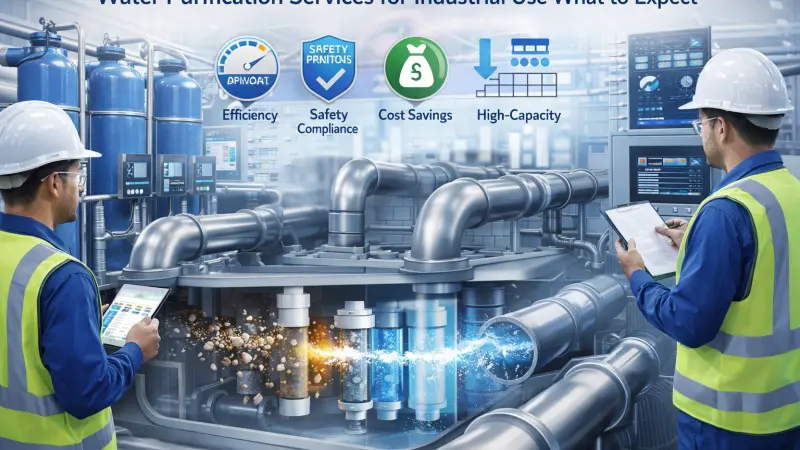
Have you ever considered the sheer volume of high grade liquid required to keep a modern manufacturing facility operational within the United Kingdom today. Water purification services for industrial use represent the backbone of countless sectors ranging from pharmaceutical production to heavy engineering and food processing. In an era where environmental regulations are becoming increasingly stringent and resource scarcity is a genuine concern for many boardrooms across Britain companies must understand the technical requirements and service expectations involved in maintaining a reliable supply of processed water. High quality water is not merely a utility but a critical raw material that dictates the efficiency of heat exchangers the longevity of boilers and the purity of final consumer products. This comprehensive guide explores the multifaceted world of industrial water treatment systems providing a detailed roadmap for facilities managers and procurement specialists who need to navigate this complex landscape while ensuring operational continuity and regulatory compliance.

The Fundamental Importance of Industrial Water Quality
Industrial water purification encompasses a wide array of technologies designed to remove contaminants from raw water sources such as mains supply boreholes or recycled process water. The primary goal is to achieve a specific chemical composition that prevents scaling corrosion and biological fouling within expensive machinery. When water is not treated correctly the financial implications can be devastating for a British enterprise leading to unplanned downtime and costly repairs. For instance a cooling tower that suffers from mineral buildup will operate with significantly reduced heat transfer efficiency which in turn increases energy consumption and carbon emissions. Furthermore the presence of bacteria such as Legionella poses a significant health and safety risk that requires rigorous monitoring and chemical intervention. By investing in robust purification services companies can mitigate these risks and ensure that their infrastructure remains in peak condition for decades.
Common Contaminants in British Water Sources
Depending on the geographic location of a facility within the UK the raw water supply can vary dramatically in terms of hardness and mineral content. Regions in the south and east of England often grapple with high levels of calcium carbonate and magnesium which lead to significant limescale issues. Conversely areas in Scotland or Wales might deal with softer water that is more naturally acidic and therefore more corrosive to metal pipework. Industrial purification systems must be tailored to handle these local variations. Common substances that require removal include suspended solids dissolved organic matter heavy metals and various ions such as chlorides and sulphates. Each of these elements can interfere with sensitive industrial processes if left unchecked. For example in the microelectronics industry even trace amounts of minerals can ruin a production batch of silicon wafers necessitating the use of ultrapure water systems that exceed standard drinking water quality by several orders of magnitude.
Primary Technologies Used in Industrial Water Treatment
The selection of purification technology depends entirely on the required end use of the water and the initial quality of the feed source. Most industrial installations utilise a multi stage approach to achieve the desired results. This often begins with mechanical filtration to remove larger particles followed by more advanced processes such as ion exchange or membrane filtration. Modern facilities are increasingly turning toward automated systems that can adjust treatment parameters in real time based on sensor data. This ensures consistent output quality while minimising the waste of chemical reagents and energy. Understanding these technologies is essential for any business looking to upgrade its existing infrastructure or commission a new treatment plant.
Reverse Osmosis Systems for High Purity Applications
Reverse osmosis is perhaps the most well known method for achieving high levels of water purity in an industrial setting. This process involves forcing water through a semi permeable membrane at high pressure which allows water molecules to pass through while rejecting the vast majority of dissolved salts bacteria and organic compounds. For many UK businesses reverse osmosis provides a cost effective way to generate boiler feed water or ingredient water for beverage production.
The efficiency of these systems has improved remarkably over the recent years with modern membranes offering higher rejection rates and lower energy requirements. However users must be aware of the need for effective pre treatment to prevent membrane fouling which can occur if the feed water contains high levels of chlorine or hardness minerals. Regular maintenance and membrane cleaning are vital components of any service contract for reverse osmosis plants.
Ion Exchange and Deionisation Processes
Ion exchange involves the use of specialized resins that swap undesirable ions for more benign ones. In water softening applications calcium and magnesium ions are exchanged for sodium ions effectively preventing the formation of scale. For applications requiring even higher purity deionisation systems use both cation and anion resins to remove virtually all dissolved minerals. This technology is frequently employed in laboratories and power stations where even the slightest mineral content could lead to catastrophic equipment failure. The regeneration of these resins requires the use of acids and alkalis which must be handled with care by trained service professionals. Many British companies now opt for service exchange cylinders where the exhausted resin is collected and replaced by a service provider reducing the need for on site chemical handling and storage.
Regulatory Compliance and Environmental Responsibility
Operating an industrial water system in the United Kingdom involves adhering to a complex web of environmental and safety regulations. The Environment Agency and various regional water authorities impose strict limits on the quality of trade effluent that can be discharged into the sewer system or natural watercourses. Failure to comply with these discharge consents can result in substantial fines and reputational damage. Purification services therefore play a dual role they ensure the water is fit for use and they treat the waste water to ensure it is safe for disposal. Many forward thinking organisations are now implementing water recycling schemes where treated effluent is repurposed for non critical applications such as site washdown or cooling. This not only reduces the volume of water purchased from the mains but also demonstrates a commitment to corporate social responsibility and sustainable resource management.
Legionella Control and Health Safety Management
One of the most critical aspects of industrial water management is the prevention of Legionnaires disease. Cooling towers and other water systems that generate aerosols are potential breeding grounds for Legionella bacteria if they are not managed correctly. UK law requires businesses to conduct regular risk assessments and implement a written scheme of control to mitigate this risk. Professional water treatment providers offer comprehensive monitoring services including regular sampling temperature checks and chemical dosing. Keeping accurate records in a site logbook is essential for demonstrating compliance during inspections by the Health and Safety Executive. By partnering with an experienced service provider companies can ensure that their staff and the general public are protected from waterborne pathogens while maintaining the operational integrity of their systems.
Choosing the Right Service Provider for Your Facility
Selecting a partner for industrial water purification is a decision that impacts the long term health of a business. It is not enough to simply purchase a piece of equipment a facility requires ongoing support expert advice and rapid response times in the event of a breakdown. When evaluating potential providers British companies should look for evidence of technical competence such as ISO certifications and membership in professional bodies like the Water Management Society. A good service provider will start by conducting a thorough audit of the site requirements including water analysis and a review of the existing infrastructure. They should be able to offer a bespoke solution that balances capital expenditure with ongoing operational costs. Furthermore the ability to provide remote monitoring and digital data logging is becoming an increasingly important differentiator in the modern market.
- Comprehensive site surveys and water analysis reports
- Custom design and installation of treatment plants
- Planned preventative maintenance schedules to avoid downtime
- Emergency breakdown support and rapid response services
- Legionella risk assessments and compliance monitoring
- Supply of high quality water treatment chemicals and consumables
- Waste water treatment and trade effluent management solutions
The Economic Impact of Effective Water Management
While the initial cost of installing advanced water purification systems may seem high the long term economic benefits are substantial. Effective water treatment reduces the frequency of equipment replacement by preventing corrosion and scaling. It also significantly lowers energy bills as clean boilers and heat exchangers operate much more efficiently than those choked with mineral deposits.
Furthermore the reduction in water consumption through recycling and process optimisation can lead to significant savings on utility bills. In the competitive landscape of UK industry where margins are often thin these operational efficiencies can provide a meaningful advantage. Businesses that view water management as a strategic investment rather than a simple overhead are better positioned to weather economic fluctuations and regulatory changes.
Future Trends in Industrial Water Purification
The field of industrial water treatment is constantly evolving with new technologies emerging to address the challenges of the twenty first century. We are seeing a shift toward more sustainable chemical free treatment methods such as ultraviolet disinfection and advanced oxidation processes. There is also a growing interest in the Internet of Things where connected sensors provide a constant stream of data regarding water quality and system performance. This allows for predictive maintenance where components are replaced just before they fail rather than on a fixed schedule. Additionally as the UK moves toward a circular economy the recovery of valuable materials from waste water streams is becoming a reality. For instance some industrial processes can now recover phosphates or metals from their effluent providing a new source of revenue while protecting the environment. Staying abreast of these trends is essential for any organisation that wishes to remain at the forefront of its industry.
Finding High Quality Industrial Support Services
Identifying reliable partners for technical services is a vital part of running any successful British enterprise. Navigating the vast landscape of service providers requires access to accurate and up to date information. When looking for the best uk business directories free of charge many owners turn to platforms that specialise in connecting local businesses with industrial clients. Using a free uk directory list for business allows managers to compare service providers and find specialists who understand the unique water challenges of their specific region. For companies looking to expand their reach and showcase their technical expertise platforms like Local page UK offer an excellent opportunity to improve online visibility through a business directory uk free for all users. By engaging with the best free business listing directories uk companies can ensure they are visible to the facilities managers who need their expertise most. Maintaining a presence on a free uk directory list for business is a strategic move for any service provider aiming to support the national infrastructure while growing their own client base.
Frequently Asked Questions Regarding Industrial Water Systems
What are the signs that my industrial water system requires a service
Common indicators include a drop in flow rate unexpected changes in water pressure visible scale buildup on equipment or a sudden increase in energy consumption. If your process output is showing signs of contamination or if your chemical usage has spiked without explanation it is time to call in a professional for a comprehensive inspection.
How often should Legionella testing be carried out in a UK factory
The frequency of testing depends on the specific risk assessment for your site but most industrial cooling towers require quarterly sampling for Legionella bacteria.
Regular temperature monitoring and monthly biocidal checks are also standard requirements under the ACoP L8 guidelines to ensure the system remains safe for workers and the surrounding community.
Can I use mains water directly for my industrial boiler feed
In most parts of the UK using raw mains water for boiler feed is not recommended due to the presence of dissolved minerals that cause scale and corrosion. Pre treatment such as softening or dealkalization is usually required to ensure the boiler operates safely and efficiently. Using untreated water can lead to overheating tube failure and a significant reduction in the lifespan of the boiler.
What is the difference between deionised and distilled water for industrial use
Distillation involves boiling water and condensing the steam to remove impurities while deionisation uses ion exchange resins to chemically remove dissolved ions. Deionisation is generally more energy efficient for large scale industrial applications and can achieve higher levels of purity although distillation is still preferred for certain specific pharmaceutical and laboratory processes.
How does water hardness affect the efficiency of industrial cooling towers
Hard water contains high levels of calcium and magnesium which precipitate out as scale when the water is heated or evaporated. This scale acts as an insulator on the heat exchange surfaces forcing the system to work harder and consume more energy to achieve the same cooling effect. If left untreated scale can also lead to blockages and localized corrosion known as under deposit corrosion.
Is it possible to achieve zero liquid discharge in a manufacturing facility
Achieving zero liquid discharge is a complex and capital intensive process that involves treating all waste water so that it can be reused within the facility leaving only a solid residue for disposal.
While challenging it is becoming increasingly popular in water stressed regions and among companies with ambitious sustainability goals as it completely eliminates trade effluent discharge issues.
What maintenance is required for a reverse osmosis membrane
Reverse osmosis membranes require regular monitoring of the silt density index and chlorine levels in the feed water to prevent fouling and degradation. Periodical chemical cleaning is necessary to remove organic or mineral buildup. Neglecting this maintenance will lead to a permanent loss of permeate flux and eventually require the expensive replacement of the membrane elements.