
Interest Rates Held at Low Percent for Another Month
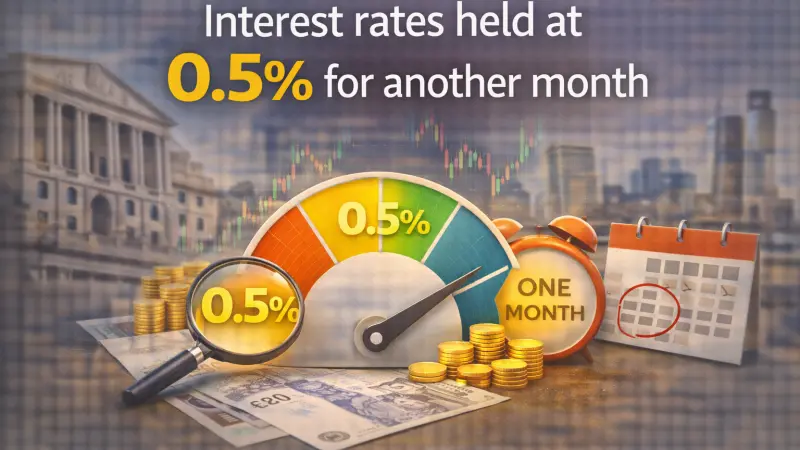
When interest rates are held steady, it often signals a period of economic caution or stability. A decision to keep rates at 0.5% for another month reflects the central bank’s assessment of inflation, growth, and financial conditions. Interest rates influence borrowing costs, savings returns, and overall economic activity.
For households and businesses, even small changes in rates can have significant financial implications. Holding rates steady can provide short term predictability, allowing consumers and companies to plan with greater certainty.
This article explores what it means when interest rates remain at 0.5% and how it affects the wider economy.
Why Interest Rates Matter
Interest rates determine the cost of borrowing and the return on savings. Lower rates generally encourage borrowing and spending, while higher rates aim to control inflation by reducing demand.
A rate of 0.5% is considered relatively low in historical terms, often used to stimulate economic activity.
Reasons for Holding Rates Steady
Central banks typically hold rates steady when economic conditions are balanced or uncertain. Factors that influence decisions include:
Inflation levels Employment data Economic growth trends Global economic conditions
Maintaining the rate at 0.5% suggests policymakers believe current conditions do not require immediate tightening or further stimulus.
Impact on Mortgage Holders
For homeowners with variable or tracker mortgages, stable rates mean monthly repayments remain unchanged. This can provide financial relief and predictability.
Fixed rate mortgage holders are generally unaffected in the short term.
Effect on Savers
Low interest rates can result in modest returns on savings accounts. While stable rates provide predictability, savers may continue to see limited growth on deposits.
Long term savers may seek alternative investment options.
Business Borrowing
Low interest rates make borrowing more affordable for businesses. Companies may take advantage of stable rates to invest in expansion, equipment, or hiring.
Stable borrowing costs support business confidence.
Consumer Spending
When borrowing remains affordable, consumers may feel more confident making large purchases such as homes or vehicles. This can stimulate economic growth.
Spending patterns often respond to rate expectations.
Inflation Considerations
Interest rate decisions are closely linked to inflation. If inflation remains under control, central banks may maintain rates. However, rising inflation may lead to future increases.
Price stability remains a key objective.
Market Reaction
Financial markets often respond quickly to interest rate announcements. When rates are held steady as expected, market reactions may be limited.
Unexpected decisions typically create more volatility.
Global Economic Influence
Interest rate decisions can also be influenced by global economic conditions. International trade, currency markets, and geopolitical events play a role in shaping policy decisions.
Global stability often supports rate stability.
Future Outlook
Holding rates at 0.5% for another month does not guarantee long term stability. Policymakers regularly review economic data and may adjust rates if conditions change.
Monitoring inflation and growth trends is essential.
What It Means for Borrowers and Savers
Borrowers benefit from continued low borrowing costs, while savers may face limited returns. Businesses gain planning certainty, and households can manage finances more predictably.
Rate stability supports short term economic balance.
Keeping interest rates at 0.5% for another month reflects cautious economic management. Stable rates provide predictability for borrowers, businesses, and consumers while allowing policymakers to monitor inflation and growth carefully.
Although the immediate impact may seem limited, interest rate decisions play a crucial role in shaping economic conditions.
Understanding these changes helps individuals and businesses make informed financial decisions.
FAQs
What does it mean when interest rates are held at 0.5% It means borrowing costs and savings rates remain unchanged for now.
Who decides interest rates in the UK The Bank of England sets the base rate.
How do interest rates affect mortgages Variable rate mortgage payments may change with rate adjustments.
Do fixed rate mortgages change immediately No, they remain fixed until the term ends.
How do low rates affect savers Savings returns may remain relatively low.
Why are rates sometimes kept low To support economic growth and borrowing.
Can rates rise in the future Yes, depending on inflation and economic conditions.
How do rates impact businesses They influence borrowing costs and investment decisions.
What is the base rate It is the main interest rate set by the central bank.
Do interest rates affect inflation Yes, they are used to manage inflation levels.
How often are rates reviewed Typically monthly or at scheduled policy meetings.
What happens if inflation rises sharply Central banks may increase rates to control it.
Do global events affect interest rates Yes, international conditions influence policy decisions.
Is 0.5% considered low Yes, it is low compared to historical averages.
Should borrowers expect changes soon Future changes depend on economic data and policy decisions.
Disclaimer: The information provided in this article is for general informational and research purposes only. Company details, features, services, and market positions may change over time. Readers are advised to visit official company websites and conduct independent research before making any business decisions or purchasing services.
Most Searchable Keywords
Recent Blogs


Related Listings

Categories
- Accountants (295)
- Advertising Agencies (559)
- Architects (149)
- Automobiles (377)
- Beauty (300)
- Carpenters (146)
- Cleaning Services (387)
- Dentists (189)
- Driving (62)
- Electricians (215)
- Energy (8)
- Event Organiser (686)
- Finance (602)
- Guide (3372)
- Health (2207)
- Information technology (206)
- Legal Services (353)
- Logistics (6)
- Maintenance (65)
- Manufacturing (35)
Sponsored Listings in Travel Agencies


Related Blogs

How Much Do UK Actors Really Earn Full Indust...
Read this insightful article "How Much Do UK Actors Really Earn Full Industry Breakdown" to expand your knowledge!

Blue Light Card UK 2026 Check Eligibility and...
Read this insightful article "Blue Light Card UK 2026 Check Eligibility and Claim" to expand your knowledge!

BBC Radio 1 DJs Net Worth Ranking Revealed
Read this insightful article "BBC Radio 1 DJs Net Worth Ranking Revealed" to expand your knowledge!
Questions & Answers – Find What
You Need, Instantly!
How can I update my business listing?
Is it free to manage my business listing?
How long does it take for my updates to reflect?
Why is it important to keep my listing updated?
