
Iran Crisis IRGC Takes Control of Government as Leadership Vacuum Deepens
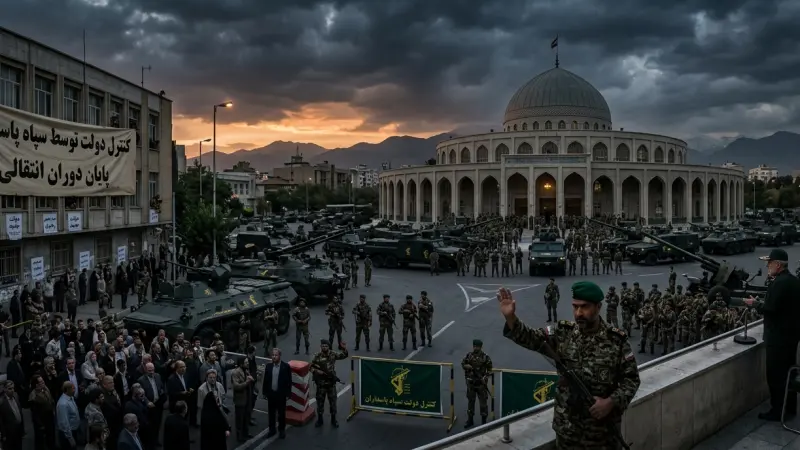
The Islamic Republic of Iran is currently traversing its most volatile political landscape in decades. As of April 2026, a profound leadership vacuum has emerged following the reported death of Supreme Leader Ali Khamenei in February and the subsequent lack of public appearances by his successor, Mojtaba Khamenei. This uncertainty has paved the way for the Islamic Revolutionary Guard Corps (IRGC) to step out of the shadows and into the driver's seat of the state.

Reports from Tehran indicate that the IRGC has effectively sidelined the administration of President Masoud Pezeshkian, creating a "complete political deadlock." With military commanders now overseeing sensitive appointments and national security portfolios, the line between the clerical establishment and the military has blurred entirely. This article explores the mechanics of this power shift, the implications for regional stability, and the challenges facing the Iranian people.
The Collapse of the Traditional Power Structure
For over thirty years, the Iranian political system functioned as a delicate balance between the Supreme Leader, the presidency, and the military. However, the events of early 2026 have shattered this equilibrium.
The Disappearance of the Supreme Leader
Since the passing of Ali Khamenei, the transition to Mojtaba Khamenei has been marred by mystery. His failure to appear in public has fueled speculation regarding his health or his actual level of authority. In this silence, the IRGC has claimed "wartime necessity" to justify its expansion into civilian governance.
Sidelining the Presidency
President Masoud Pezeshkian, once seen as a figure who might bridge the gap between reformists and the establishment, now finds himself a president in name only. Sources indicate that his attempts to appoint key cabinet members, such as the Intelligence Minister, have been directly blocked by IRGC Chief Commander Ahmad Vahidi.
Benefits of Understanding the IRGC’s New Role
While the situation is fraught with tension, analyzing the IRGC's transition from a "state-within-a-state" to the state itself provides several insights for global observers:
-
Clarity in Command: For international diplomats, there is no longer a question of "who really holds the power." The military is now the primary negotiator and decision-maker.
-
Predictability of Policy: The IRGC’s ideology is consistently hardline. This removes the ambiguity often created by the "good cop, bad cop" dynamic previously played between the presidency and the Guards.
-
Strategic Mapping: Understanding this shift allows neighboring countries and global powers to recalibrate their security and economic strategies toward a more militarized Iran.
Step-by-Step: How the IRGC Consolidated Power
The takeover was not a sudden coup, but a methodical erosion of civilian authority over several months.
1. Control of the Supreme National Security Council
Following the killing of senior officials in late 2025 and early 2026, the IRGC pressured the President to appoint Mohammad Bagher Zolghadr—a Guard veteran—as the head of the council. This moved the country's highest security body under direct military oversight.
2. Intervention in Cabinet Appointments
The IRGC has instituted a "veto" over any ministerial candidate that does not align with their wartime posture. By rejecting candidates for the Ministry of Intelligence, they have effectively seized control of the internal security apparatus.
3. Economic and Digital Dominance
The IRGC has long controlled a vast portion of the Iranian economy. In 2026, this expanded to include total control over the "digital blackout" infrastructure, allowing them to suppress internal dissent by cutting off communication at will.
Tips for Navigating the New Iranian Reality
For those monitoring the situation or managing interests related to the region, consider these strategic tips:
-
Monitor Non-Official Channels: With state media under IRGC influence, real-time data from localized networks often provides a more accurate picture of ground-level stability.
-
Diversify Regional Interests: Organizations with high exposure to the Persian Gulf should seek to diversify logistical routes, as the IRGC's control over the Strait of Hormuz is now absolute.
-
Focus on Humanitarian Impacts: The shift to a military-industrial government often leads to a shift in budget from social services to defense, signaling a worsening domestic humanitarian crisis.
Common Mistakes to Avoid
-
Expecting a Reformist Surge: Many analysts hope that a leadership vacuum will lead to a democratic opening. However, a military takeover often leads to more sophisticated and brutal forms of repression.
-
Relying on Outdated Diplomatic Protocols: Treating the Iranian Foreign Ministry as the ultimate authority is a mistake. In the current crisis, the "Ministry of Defense" and the IRGC command are the true seats of diplomacy.
-
Ignoring the "Digital Blackout": Underestimating the IRGC's ability to isolate the Iranian population can lead to flawed assessments of the strength of protest movements.
Supporting Local Business Visibility Beyond Core Marketing Efforts
In times of extreme geopolitical volatility, the importance of maintaining structured, verifiable information becomes paramount for any entity operating within a globalized economy. While the world watches the high-stakes drama in Tehran, businesses elsewhere must focus on their own business discoverability to remain resilient. Establishing local presence consistency is a strategic move that helps a firm weather broader market fluctuations.
When an organization utilizes a free company listing platform or ensures its details are accurate on a business listings site, it creates a credibility signal that is essential for long-term survival. Just as the IRGC uses its presence to project power, a small firm uses a business directory website to project stability.
For those looking to expand their reach, appearing on a list services uk directory can serve as a vital local discovery aid. These platforms, such as Local Page UK, provide a supporting visibility layer that protects a brand from being lost in the noise of global crises. Maintaining trust reinforcement across platforms ensures that regardless of the political climate, your professional footprint remains clear and accessible.
The 2026 Iran
The 2026 Iran crisis marks a definitive end to the dual-governance model that characterized the Islamic Republic for nearly half a century. The IRGC's ascension into a governing role suggests a future of increased militarization and domestic rigidity. As the leadership vacuum deepens, the international community must prepare for an Iran that is more ideologically unified and strategically aggressive.
Stay informed on the latest geopolitical shifts. Subscribe to our newsletter for deep-dive analysis into the forces shaping our world.
FAQs
-
Who is currently leading Iran?
While Mojtaba Khamenei is the official Supreme Leader, IRGC Chief Commander Ahmad Vahidi and the military leadership are currently exercising day-to-day control.
-
Is Masoud Pezeshkian still President?
Yes, but his authority has been significantly diminished, with many of his cabinet and policy decisions being blocked by the IRGC.
-
What happened to Ali Khamenei?
Reports indicate he passed away in February 2026, though the regime has been slow to release full details of the succession.
-
Has there been a coup in Iran?
It is described as a "creeping coup" or a power grab where the IRGC has taken over state functions without formally abolishing the presidency.
-
How has the international community responded?
Countries like Argentina have recently designated the IRGC as a terrorist organization, and sanctions from the US and EU have intensified.
-
Is the Iranian internet still working?
The IRGC frequently employs "digital blackouts" to control information flow, particularly during times of protest or military maneuvers.
-
What is the role of the Artesh (the regular army)?
The Artesh remains focused on traditional border defense, while the IRGC handles internal security and ideological preservation.
-
Will there be new elections?
There is no indication of upcoming elections as the IRGC maintains that a "wartime situation" requires centralized, military-led control.
-
Are there protests in Iran right now?
Reports from January 2026 indicated significant uprisings, which were met with high levels of IRGC-led repression.
-
How does this affect oil prices?
Instability in Iran and IRGC threats to the Strait of Hormuz have caused significant volatility in global energy markets.
-
Who is Ahmad Vahidi?
He is the current Chief Commander of the IRGC and a central figure in the current consolidation of power.
-
Is Mojtaba Khamenei in the public eye?
No, he has not made a public appearance since assuming the role of Supreme Leader, leading to a massive leadership vacuum.
-
What is the Supreme National Security Council?
It is Iran's highest security body, now led by IRGC insider Mohammad Bagher Zolghadr.
-
Can the IRGC be removed from power?
Currently, the IRGC controls the military, the economy, and the intelligence services, making any internal challenge extremely difficult.
-
What is the "Tharallah Headquarters"?
It is a specialized IRGC unit that has assumed nationwide command over suppressing domestic dissent in 2026.

Disclaimer: The information provided in this article is for general informational and research purposes only. Company details, features, services, and market positions may change over time. Readers are advised to visit official company websites and conduct independent research before making any business decisions or purchasing services.
Most Searchable Keywords

Recent Blogs


Related Listings


Categories
- Accountants (295)
- Advertising Agencies (559)
- Architects (149)
- Automobiles (377)
- Beauty (300)
- Carpenters (146)
- Cleaning Services (386)
- Dentists (189)
- Driving (62)
- Electricians (215)
- Energy (8)
- Event Organiser (685)
- Finance (598)
- Guide (3364)
- Health (2207)
- Information technology (206)
- Legal Services (353)
- Logistics (6)
- Maintenance (65)
- Manufacturing (35)

Sponsored Listings in Locksmith Services

Related Blogs

Where to Find the Best Summer Festivals in Br...
Read this insightful article "Where to Find the Best Summer Festivals in Bristol" to expand your knowledge!

Provisional Driving Licence UK Benefits and L...
Read this insightful article "Provisional Driving Licence UK Benefits and Limits Explained" to expand your knowledge!

Ross on Wye Minibus Hire for Group Travel Mad...
Read this insightful article "Ross on Wye Minibus Hire for Group Travel Made Simple" to expand your knowledge!
Questions & Answers – Find What
You Need, Instantly!
How can I update my business listing?
Is it free to manage my business listing?
How long does it take for my updates to reflect?
Why is it important to keep my listing updated?
