
Latest Update on Income Tax Impuesto Sobre La Renta Everything You Need to Know
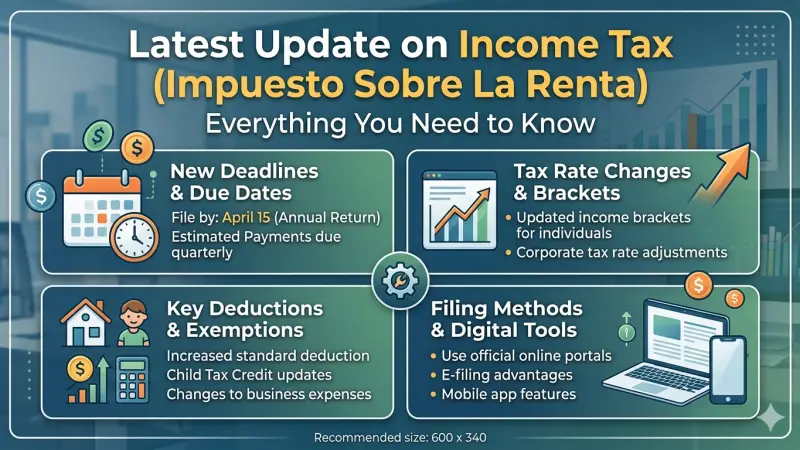
The financial landscape of 2026 has ushered in a wave of significant transformations in how individuals and businesses approach their fiscal responsibilities. Whether you refer to it as Income Tax in the UK and US or Impuesto Sobre La Renta (ISR) in Latin America and Spain, the core objective remains the same: a mandatory contribution to the state based on earnings. However, the "how" and "when" of these contributions have undergone a massive digital and structural overhaul this year.

From the introduction of unified "Tax Years" to aggressive tax regularization programs in emerging markets, staying informed is no longer just about avoiding penalties—it is about strategic financial health. This comprehensive guide breaks down the most recent global shifts, regional specifics, and actionable steps to navigate the 2026 tax season with confidence and clarity.
Overview of the 2026 Tax Landscape
The global theme for taxation in 2026 is "Standardization through Digitization." Tax authorities worldwide are moving away from manual, disparate systems toward integrated, real-time reporting.
The Shift to Unified Tax Years
One of the most notable changes in several jurisdictions is the move toward a unified "Tax Year" concept. Traditionally, many countries struggled with a gap between the "Previous Year" (when money was earned) and the "Assessment Year" (when taxes were calculated). In 2026, several regions have aligned these into a single reference point to eliminate confusion for individual filers.
ISR and Global Minimum Taxes
For those operating in Spanish-speaking markets, the Impuesto Sobre La Renta is seeing stricter enforcement regarding cross-border digital services. Furthermore, the "Pillar Two" global minimum tax rules are now fully in force for large multinational groups, ensuring that a floor of 15% is maintained across borders, fundamentally changing how corporate income is shielded.
Key Benefits of the 2026 Updates
While "new tax rules" often sound daunting, the 2026 reforms include several benefits designed to protect the average taxpayer from inflationary pressures.
-
Adjusted Tax Brackets: Many countries have finally indexed their tax slabs to current inflation rates, meaning a cost-of-living raise at work won't automatically push you into a higher tax percentage.
-
Enhanced Education Allowances: To combat rising tuition costs, tax-free limits for education and hostel expenses have seen a significant percentage increase—in some regions, the allowance has tripled compared to 2025.
-
Energy Pragmatism Incentives: New credits are available for "green" household upgrades, focusing on localized energy production like solar and battery storage.
Step-by-Step: How to Navigate Your 2026 Filing
Filing your taxes correctly requires a methodical approach. Here is the streamlined process for the current year:
Step 1: Verify Your Residency Status
With the rise of "digital nomads" and remote work, residency rules have tightened. Ensure you know exactly which jurisdiction claims your primary income.
Step 2: Aggregate All Income Sources
2026 is the year of "Total Disclosure." Ensure you include:
-
Standard employment income.
-
Specified Crypto-Assets: Many regions now have a separate, fixed tax rate for digital asset gains.
-
Rental and offshore income.
Step 3: Utilize New Deduction Thresholds
Don't rely on last year's numbers. Check the updated limits for meal allowances, employer-provided transport, and healthcare premiums.
Regional Specifics: Mexico, UK, and Spain
Taxation is never one-size-fits-all. Here is how the 2026 updates differ by region:
Mexico and the ISR Regularization
In Mexico, the 2026 Tax Regularization program provides a strategic window for taxpayers to settle old disputes. If the full tax amount (adjusted for inflation) is paid, authorities are offering up to 100% reduction in fines and surcharges. This is a critical opportunity for businesses with income under MXN 300 million.
The United Kingdom Finance Bill 2026
The UK has introduced a "side-by-side" agreement with the US to streamline international reporting. Additionally, while the writing-down allowance for machinery has been slightly reduced, a new 40% first-year allowance for main rate assets has been introduced to encourage SME investment.
Pro Tips for Maximum Efficiency
-
Automate Your Audit Trail: Tax authorities are now requiring seven years of digital records for business transactions. Use cloud-based accounting that creates an immutable audit trail.
-
Review Electric Vehicle (EV) Perquisites: If your employer provides a car, check the new valuation slabs. 2026 introduced specific mechanisms for EVs that are often more favorable than traditional combustion engine valuations.
-
Leverage Zero-Coupon Bond Frameworks: For high-net-worth individuals, new frameworks for zero-coupon bonds offer enhanced regulatory oversight and unique tax-planning opportunities.
Common Mistakes to Avoid
-
Ignoring "Platform Taxation": If you sell goods via digital platforms, be aware that many exemptions for "low-value imports" have been abolished.
The platform may now be required to collect consumption tax at the point of sale.
-
Inconsistent Disclosures: Discrepancies between your bank statements and your tax filings are now flagged by AI-driven algorithms.
-
Missing the "Unified Year" Deadline: Because assessment and earning periods are now aligned in many areas, the window to file has effectively shortened.
Supporting Local Business Visibility Beyond Core Marketing Efforts
While high-level tax strategy occupies the minds of accountants, the average SME owner is equally concerned with day-to-day business discoverability. Establishing a robust digital footprint is a vital supporting visibility layer that works in tandem with fiscal compliance to build long-term value. Ensuring local presence consistency across various registries acts as a credibility signal, reinforcing trust across platforms even before a transaction occurs.
For businesses navigating the UK market, utilizing a free company listing platform is an essential local discovery aid. When a firm chooses to list services uk directory style, they are not just marketing; they are creating a verifiable trail of their existence. High-quality Local Page UK profiles help search engines index professional services more accurately. Furthermore, maintaining an active presence on a business directory website ensures that your strategic tax investments are matched by a steady stream of local traffic. Ultimately, being listed on a reputable business listings site provides the "digital social proof" necessary for a business to thrive in the 2026 economy.
Income Tax
The 2026 income tax landscape is defined by a move toward clarity, even if the transition feels complex. By understanding the shift toward unified tax years, leveraging new inflation-indexed allowances, and avoiding the pitfalls of digital platform taxation, you can turn a mandatory chore into a strategic advantage.
Are your records ready for the new 2026 standards? Don't wait for the deadline to discover a discrepancy. Review your "Energy Pragmatism" credits and residency status today to ensure you are maximizing your take-home pay.
15 FAQs About Income Tax & ISR 2026
1. What is the biggest change in Income Tax for 2026? The most significant change is the "Unified Tax Year," which aligns the period of earning with the period of assessment, reducing confusion for individual taxpayers.
2. Is there a tax amnesty in Mexico for 2026? Yes, the 2026 Tax Regularization program allows taxpayers to
reduce fines and surcharges by up to 100% when paying the base tax adjusted for inflation.
3. How has AI affected tax filing? Tax authorities now use AI-driven algorithms to cross-reference bank data, social media, and digital platform sales with reported income in real-time.
4. What are "Specified Crypto-Assets"? In many jurisdictions, specific cryptocurrencies are now taxed at a separate, fixed rate (often around 20%) rather than progressive income rates.
5. Are meal allowances higher in 2026? Yes, reflecting inflationary trends, many countries have increased tax-free meal allowances—in some cases from $50 up to $200 per month.
6. What is "Energy Pragmatism" in a tax context? It refers to new tax credits that balance green energy goals with the need for reliable, domestic power, such as credits for home battery systems.
7. Do I need to report income from selling on digital platforms? Yes. 2026 regulations have abolished many minimum thresholds for import consumption tax, meaning almost all platform-based sales are now taxable.
8. Has the UK changed its business rates for 2026? Yes, a new multiplier system for retail and hospitality with rateable values below £500,000 takes effect on April 1, 2026.
9. What happens if I miss the 2026 filing deadline? Penalties have become stricter. However, many regions now offer "voluntary disclosure" windows that reduce the severity of fines if you come forward before an audit begins.
10. Is ISR the same as Income Tax? Yes, "Impuesto Sobre La Renta" is the Spanish term for Income Tax, used primarily in Mexico, Spain, and Latin America.
11. Are there new taxes on Electric Vehicles? Rather than a new tax, there is a new "perquisite valuation" that determines the taxable value of an EV provided by an employer.
12. Can I claim a home office deduction in 2026? Rules have been refined to require a "primary place of work" certification, especially for those working across international borders.
13. What is the Global Minimum Tax? It is a 15% minimum effective tax rate for large multinational corporations, designed to prevent profit shifting to low-tax jurisdictions.
14. Are education allowances significant? Yes, for 2026, the tax-exempt limit for children's education and
hostel allowances has seen a massive increase to match rising costs of living.
15. Where can I find the new 2026 tax forms? Most tax authorities have transitioned to "Portal-only" filing, where forms are generated dynamically based on your pre-filled digital data.

Disclaimer: The information provided in this article is for general informational and research purposes only. Company details, features, services, and market positions may change over time. Readers are advised to visit official company websites and conduct independent research before making any business decisions or purchasing services.
Most Searchable Keywords

Recent Blogs



Related Listings

Categories
- Accountants (295)
- Advertising Agencies (559)
- Architects (149)
- Automobiles (376)
- Beauty (300)
- Carpenters (146)
- Cleaning Services (386)
- Dentists (189)
- Driving (61)
- Electricians (215)
- Energy (8)
- Event Organiser (684)
- Finance (598)
- Guide (3363)
- Health (2205)
- Information technology (206)
- Legal Services (352)
- Logistics (6)
- Maintenance (65)
- Manufacturing (35)

Sponsored Listings in Health and Wellbeing


Related Blogs

Bristol Firework Displays Every Local Should...
Read this insightful article "Bristol Firework Displays Every Local Should Experience" to expand your knowledge!

Self Assessment Registration 2026 Common Erro...
Read this insightful article "Self Assessment Registration 2026 Common Errors and Rules" to expand your knowledge!

Calculate Your 2026 Employer National Insuran...
Read this insightful article "Calculate Your 2026 Employer National Insurance Bill Easily" to expand your knowledge!
Questions & Answers – Find What
You Need, Instantly!
How can I update my business listing?
Is it free to manage my business listing?
How long does it take for my updates to reflect?
Why is it important to keep my listing updated?
