
Leveraging Google My Business for Freight
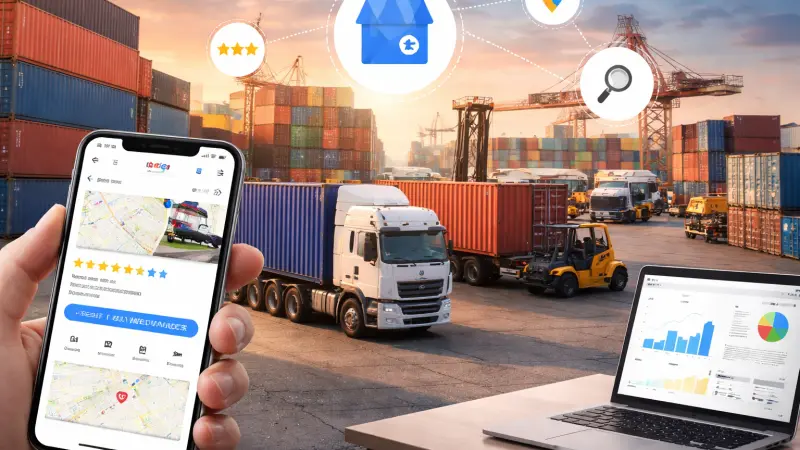
Imagine a procurement manager in Birmingham urgently searching for a reliable freight partner. They open Google, type "freight company near me," and within seconds they have a shortlist of verified businesses — complete with reviews, contact details, and operating hours. Is your freight company on that list? If not, you may be losing clients before a single conversation takes place.
Google My Business (now officially known as Google Business Profile) has become one of the most powerful and cost-free tools available to freight and logistics operators across the United Kingdom. Yet many hauliers, freight forwarders, and courier services continue to neglect it entirely, relying instead on word of mouth or outdated directories. In an industry where trust, reliability, and speed are paramount, your online presence is no longer optional — it is a competitive necessity.
What Is Google My Business and Why Does It Matter for Freight?
Google My Business (GMB) is a free platform provided by Google that allows businesses to manage how they appear in Google Search and Google Maps. When someone searches for a freight company, haulier, or logistics provider in their area, Google displays a selection of verified local businesses in a prominent panel — often referred to as the "Local Pack" or "Map Pack" — before the standard organic results.
For freight companies, appearing in this Local Pack can be transformative. Studies consistently show that businesses listed in the top three local results receive the vast majority of clicks for location-based searches. Given that freight services are inherently local and regional in nature — even when the cargo travels internationally — showing up prominently in local search results puts your business directly in front of clients at the precise moment they need you.
Beyond visibility, a well-maintained Google Business Profile communicates professionalism and reliability — two qualities that freight clients prioritise above almost everything else. A profile that is complete, verified, and regularly updated tells prospective clients that your business is active, legitimate, and easy to reach.
Setting Up Your Google Business Profile: The Essentials
Before exploring advanced optimisation strategies, it is important to ensure that your profile is correctly set up. The following steps form the foundation of any effective GMB strategy for freight businesses.
1. Claim and Verify Your Listing
If your freight business does not yet have a Google Business Profile, you can create one by visiting the Google Business Profile manager and following the setup process. If a listing already exists — which is common for established businesses — you will need to claim ownership and verify that you are the legitimate operator.
Verification is typically completed by post, phone, or email. Google will send a verification code to your registered business address, which you must enter within the platform. This step is non-negotiable; an unverified profile has limited functionality and reduced visibility.
2. Choose the Right Business Category
Google uses your primary business category to determine which searches your profile is eligible to appear in. For freight and logistics operators, selecting the most accurate category is critical. Relevant options may include:
- Freight forwarding service
- Trucking company
- Logistics service
- Courier service
- Moving and storage service
- Customs broker
You may select one primary category and several secondary categories. Be specific. A business that specialises in temperature-controlled pharmaceutical logistics, for example, should not use a generic "transport" category when a more precise option is available.
3. Complete Every Section of Your Profile
Google rewards completeness. A fully populated profile is more likely to rank well and more likely to convert visitors into enquiries. Ensure the following are thoroughly completed:
- Business name: Use your official trading name — avoid stuffing keywords into the business name field, as this violates Google's guidelines and can result in suspension.
- Address and service area: Enter your registered address. If you serve clients across multiple regions — which is common in freight — specify your service areas in the dedicated field.
- Phone number: Use a local landline where possible, as this reinforces trust and local relevance.
- Website URL: Link directly to your website's homepage or a relevant landing page.
- Business hours: Accurate hours prevent frustrated clients from calling when no one is available. Update these for bank holidays and seasonal variations.
- Business description: Use this 750-character field to describe your services clearly and naturally, incorporating relevant terms such as your specialisms, regions covered, and types of freight handled.
Optimising Your Profile for Local Freight Searches
Once your profile is set up and verified, the next step is to optimise it for the specific search queries your potential clients are using. Local SEO for freight businesses involves a combination of on-profile content, external signals, and ongoing activity.
Writing an Effective Business Description
Your business description should clearly communicate what you do, where you operate, and what sets you apart — all without reading like a sales pitch. Google's guidelines prohibit promotional language, so focus on factual, informative content.
For example, rather than writing "We are the best freight company in the UK," consider something along the lines of: "We provide full-load and part-load haulage across the United Kingdom and Europe, with specialist experience in hazardous goods transport and temperature-controlled logistics. Based in Manchester, we serve clients across the North West and beyond."
This approach naturally incorporates relevant search terms whilst providing genuine value to the reader.
Using Google Posts to Stay Active
Google Posts allow you to publish short updates, announcements, or informational content directly to your Business Profile. These posts appear in your profile and can contribute to engagement signals that Google considers when ranking businesses.
For freight companies, useful post topics might include:
- Updates on new routes or destinations you now serve
- Changes to operating hours or contact details
- Industry news relevant to your clients, such as port disruptions or customs regulation changes
- Case studies or service highlights (kept factual and informative)
Aim to publish at least one post per fortnight to demonstrate that your profile is actively managed.
Adding High-Quality Photographs
Visual content plays a meaningful role in how prospective clients perceive your business. Profiles with photographs receive significantly more clicks and direction requests than those without. For a freight or logistics company, relevant images might include:
- Your fleet of vehicles, clearly branded
- Warehouse or depot facilities
- Team members at work (with appropriate permissions)
- Specialist equipment relevant to your services, such as refrigerated trailers or heavy-lift machinery
Avoid stock photography. Genuine images of your operation are far more persuasive and reinforce the authenticity that clients are looking for.
The Role of Reviews in Freight Business Profiles
Customer reviews are among the most influential factors in both local search rankings and client decision-making. For freight operators, reviews serve a dual purpose: they signal trustworthiness to prospective clients, and they provide Google with evidence that your business is active and well-regarded.
How to Generate Reviews Ethically
Google prohibits soliciting reviews in exchange for incentives, but you are entirely within your rights to request honest feedback from satisfied clients. The most effective approaches include:
- Sending a follow-up email after a successful delivery, including a direct link to your Google review page
- Adding a review request to your invoice or delivery confirmation documentation
- Asking long-standing clients in person or over the phone, particularly after resolving a complex logistics challenge
Make the process as simple as possible. Clients are far more likely to leave a review if they can do so in two clicks rather than navigating a convoluted process.
Responding to Reviews
Responding to reviews — both positive and negative — is a critical and often overlooked aspect of profile management. Google has confirmed that businesses that respond to reviews are considered more reputable, and clients are watching how you handle feedback.
For positive reviews, a brief, genuine acknowledgement is sufficient. For negative reviews, respond calmly, professionally, and constructively. Avoid becoming defensive or dismissive. A measured, helpful response to a critical review often impresses prospective clients more than the review itself, as it demonstrates accountability and a commitment to resolution.
Local SEO Signals That Support Your GMB Profile
Google My Business does not operate in isolation. Your profile's performance in local search is influenced by a range of external factors, collectively referred to as local SEO signals. Understanding these will help you build a more holistic strategy.
Name, Address, and Phone Number (NAP) Consistency
One of the most fundamental local SEO principles is ensuring that your business name, address, and phone number are consistent across every online platform where your business is listed. Discrepancies — even minor ones, such as "Ltd" versus "Limited" or a missing postcode — can confuse search engine crawlers and undermine your local rankings.
Conduct a regular audit of your listings across directories, social media platforms, your own website, and any trade association memberships to ensure uniformity.
Website Signals
Your website reinforces your Google Business Profile. Ensure your website includes:
- Your full business name, address, and phone number in the footer of every page
- Location-specific landing pages if you serve multiple distinct regions
- Structured data markup (schema.org) to help Google understand your business type and location
- Fast loading speeds, particularly on mobile devices, where the majority of local searches now originate
Building Citations Through Directories
A citation is any online mention of your business name, address, and phone number — even without a link. Citations from reputable directories help Google verify that your business is legitimate and appropriately located.
For freight businesses in the UK, relevant directories include industry-specific platforms, trade association websites, and general online business directory UK listings that serve local and national audiences.
The more consistent and widespread your citations, the more confident Google becomes in surfacing your business for relevant searches.
Advanced Strategies for Freight Companies
Once the fundamentals are in place, there are several more advanced tactics that freight operators can employ to gain a competitive edge in local search.
Utilising the Questions and Answers Feature
Google My Business includes a Questions and Answers section where anyone — including prospective clients — can post questions about your business. Importantly, anyone can also answer these questions, which means a competitor or uninformed individual could provide inaccurate information about your services.
To mitigate this risk, proactively populate the Q&A section with frequently asked questions and accurate answers yourself. Common questions for freight businesses might include:
- What types of freight do you handle?
- Do you offer same-day or next-day delivery?
- Are you licensed to transport hazardous goods?
- What are your insurance arrangements?
- Which regions or countries do you serve?
This not only protects the accuracy of your profile but also helps prospective clients find answers quickly, reducing friction in the enquiry process.
Tracking Performance with GMB Insights
Google provides a built-in analytics tool called Insights within the Business Profile dashboard. This data reveals how clients are finding your profile, what actions they take (such as calling your number or requesting directions), and which photographs attract the most views.
Key metrics to monitor include:
- Search queries: The actual terms people used to find your profile — invaluable for refining your keyword strategy
- Direction requests: How many users asked for directions to your depot, indicating genuine intent to visit
- Phone calls: The number of times users clicked your phone number directly from the profile
- Photo views: Which images are generating the most engagement
Reviewing this data regularly allows you to identify what is working and where further optimisation may be needed.
Messaging and Booking Features
Google has progressively expanded the functionality of Business Profiles to include direct messaging and, in some categories, appointment booking. If your freight business uses a CRM or enquiry management system, enabling messaging can provide prospective clients with an additional, convenient channel to make initial contact — particularly outside of business hours.
Ensure that any messages received are responded to promptly. Google monitors response times and may reduce the visibility of businesses that routinely fail to reply.
Common Mistakes Freight Businesses Make on Google My Business
Understanding what not to do is just as important as knowing best practice. The following errors are frequently made by freight operators and can significantly limit the effectiveness of their profiles.
Keyword Stuffing in the Business Name
Adding keywords such as "Freight | Haulage | Logistics" to your business name is a violation of Google's guidelines
and can result in your listing being suspended or penalised. Use your actual trading name only.
Neglecting to Update Information
An outdated phone number, incorrect address, or obsolete opening hours can result in lost enquiries and negative reviews from clients who were unable to reach you. Set a reminder to review your profile information at least quarterly.
Ignoring Negative Reviews
Leaving negative reviews unanswered gives the impression that you either do not monitor your profile or are indifferent to client concerns. Both interpretations are damaging. Always respond, always professionally.
Using a P.O. Box as Your Business Address
Google requires that your listed address be a genuine physical location where your business operates and where you can receive post. P.O. boxes are not permitted and can result in verification failure or listing removal.
Failing to Specify Service Areas
Many freight companies serve regions far beyond their registered address. Without specifying service areas in your profile, you may miss out on searches from clients located in the regions you actually serve. Use the service area feature to list every county, region, or postcode district relevant to your operations.
Integrating Google My Business into a Broader Digital Strategy
Google My Business is most effective when viewed not as a standalone tool but as one component of a broader digital marketing strategy. For freight companies, the following integrations can amplify the impact of a well-optimised profile.
Connecting GMB to Your Website's Local SEO
Ensure that the content on your website — particularly your homepage and any location pages — aligns with the information on your Google Business Profile. Consistent messaging across both platforms reinforces your relevance for target search terms and strengthens Google's confidence in your business data.
Leveraging Social Proof Across Channels
Positive reviews on your Google profile can be repurposed as testimonials on your website, in email marketing, and on LinkedIn. This cross-channel use of social proof maximises the value of each review you receive.
Combining with Paid Search
For freight companies targeting specific commercial routes or high-value sectors, Google Ads can complement your organic GMB presence. Local search ads can appear above the Local Pack, providing additional visibility for competitive search terms where organic ranking alone may be insufficient.
The Importance of Consistent Online Listings for Freight Operators
Beyond Google, maintaining accurate and consistent business listings across a range of platforms is essential for sustained local search performance. Search engines use data from multiple sources to verify business information, and inconsistencies across platforms can dilute the trust signals that determine your rankings.
Freight businesses should ensure their details are accurate across industry directories, trade association websites, and broader business listing platforms. For those seeking to strengthen their presence across the UK, services that specialise in listing management — such as Local Page UK, an online business directory UK platform — can help ensure consistent visibility across multiple listing environments, supporting the citation building that underpins effective local SEO.
In an industry where relationships and reputation are everything, Google My Business offers freight companies a direct line to potential clients at the moment they are actively searching for services. From a fully completed and verified profile to a consistent flow of genuine reviews and regular content updates, the steps outlined in this article represent a practical roadmap for improving your logistics business's local search visibility.
The freight sector is becoming increasingly competitive online. Businesses that invest time in their digital presence — beginning with the no-cost foundation of a well-optimised Google Business Profile — are better positioned to attract new enquiries, build client trust, and maintain a sustainable pipeline of business. Combined with consistent listings across relevant platforms, including reputable directories in the UK freight and logistics space, a strong GMB profile forms the cornerstone of a credible and discoverable online presence.
Questions Clients Commonly Ask
Is Google My Business free to use for freight companies?
Yes. Creating and managing a Google Business Profile is entirely free of charge. Google does offer paid advertising products such as Local Services Ads, but the core Business Profile platform — including all the features discussed in this article — carries no cost. This makes it one of the most cost-effective tools available to freight operators of any size.
Can I list multiple depots or locations on Google My Business?
Yes. If your freight business operates from more than one physical location — for example, a head office in London and a distribution depot in Leeds — you can create a separate Business Profile for each location. Each profile should be independently verified and optimised with location-specific information. This approach can significantly improve your visibility in local searches across multiple regions.
How long does it take to see results from optimising my Google Business Profile?
The timeline varies depending on the competitiveness of your local market and how thoroughly your profile is optimised. In less competitive areas, improvements in visibility can be noticed within a few weeks. In major cities or highly contested freight corridors, it may take several months of consistent activity — including regular posts, review generation, and citation building — before meaningful results are apparent.
What should I do if a competitor appears to be using fake reviews?
If you suspect that a competitor is generating fraudulent reviews, you can report the reviews directly to Google via the Business Profile dashboard.
Google takes review manipulation seriously and will investigate credible reports. Focus primarily on generating genuine reviews for your own business rather than spending excessive time monitoring competitors.
Do I need a physical address to set up a Google Business Profile for my freight company?
Yes. Google requires a verifiable physical address — a genuine premises where your business operates and can receive post. However, if your business serves clients across a wide area rather than receiving them at your premises, you can opt to hide your address from public view whilst still specifying your service areas. This is a common and acceptable approach for hauliers and freight operators who work from industrial estates or depots not open to the general public.
Disclaimer: The information provided in this article is for general informational and research purposes only. Company details, features, services, and market positions may change over time. Readers are advised to visit official company websites and conduct independent research before making any business decisions or purchasing services.
Most Searchable Keywords
Recent Blogs


Related Listings

Categories
- Accountants (295)
- Advertising Agencies (559)
- Architects (149)
- Automobiles (377)
- Beauty (300)
- Carpenters (146)
- Cleaning Services (387)
- Dentists (189)
- Driving (62)
- Electricians (215)
- Energy (8)
- Event Organiser (686)
- Finance (602)
- Guide (3372)
- Health (2207)
- Information technology (206)
- Legal Services (353)
- Logistics (6)
- Maintenance (65)
- Manufacturing (35)
Sponsored Listings in Travel Agencies


Related Blogs

How Much Do UK Actors Really Earn Full Indust...
Read this insightful article "How Much Do UK Actors Really Earn Full Industry Breakdown" to expand your knowledge!

Blue Light Card UK 2026 Check Eligibility and...
Read this insightful article "Blue Light Card UK 2026 Check Eligibility and Claim" to expand your knowledge!

BBC Radio 1 DJs Net Worth Ranking Revealed
Read this insightful article "BBC Radio 1 DJs Net Worth Ranking Revealed" to expand your knowledge!
Questions & Answers – Find What
You Need, Instantly!
How can I update my business listing?
Is it free to manage my business listing?
How long does it take for my updates to reflect?
Why is it important to keep my listing updated?
