
Lyrics That Hit Different Most Powerful Song Quotes Meanings You Need To Know
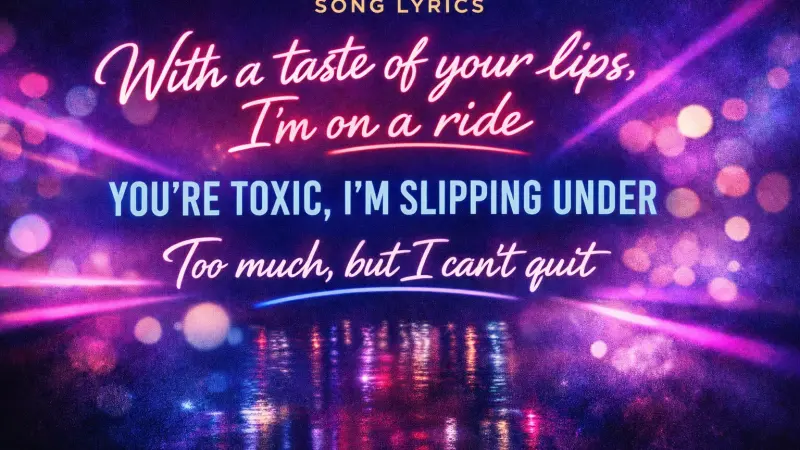
There is a specific, quiet electricity that hums in the air when a lyric catches you off guard. You’re navigating a mundane Tuesday—perhaps nursing a lukewarm oat milk latte or staring at the rain-streaked window of a commuter train—when a single line from a new release anchors you to the spot. It isn’t just catchy; it’s a mirror. In the fast-paced landscape of 2026, where streaming buzz moves at the speed of light and a viral series can turn an indie track into a global anthem overnight, the weight of words has never been more significant. We are no longer just listening to music; we are looking for the vocabulary to describe our own evolving lives. When a song "hits different," it’s because the artist has managed to articulate a feeling you haven’t yet found a name for, turning the chaotic noise of the modern world into a resonant, melodic truth.

The Architecture of a Viral Heartbreak
The current trend in songwriting has shifted away from the vague metaphors of the past toward a raw, almost uncomfortably specific diaristic style. Consider the recent surge in entertainment news regarding the "New Sincerity" movement. Modern ballads are no longer about "broken hearts" in a general sense; they are about the specific silence of a deactivated shared location or the ghost of a Netflix profile that hasn’t been deleted yet. The line, "You didn't leave because I was small, you left because you couldn't find a way to grow around me," has become a digital manifesto for the heartbroken. It’s a striking metaphor that reimagines a breakup not as a personal failure, but as a biological impossibility—like a tree outgrowing a pot that was always meant to be temporary.
This level of vulnerability is what fuels the viral nature of modern hits. We see ourselves in the jagged edges of these stories. When we share these quotes on social media, we aren't just promoting a track; we are signaling to the world: This is exactly where it hurts. In 2026, the "relatability" factor has been weaponized by algorithms. If a song captures a micro-emotion—that specific sting of being "ghosted" by a mentor or the peculiar grief of outgrowing a childhood best friend—it doesn't just sit on a playlist; it becomes a cultural artifact. The music industry has realized that while a beat gets people to dance, a lyric gets them to stay.
Nostalgia as a Modern Anchor
Interestingly, the most powerful lyrics of 2026 aren't always the newest. Thanks to the "retro-reclamation" cycle driven by cinema and streaming, tracks from decades ago are finding fresh life in a contemporary cultural context. A classic Taylor Swift line from the Evermore era, recently highlighted in a moving feature about processing collective burnout, reminds us that "Every scrap of you would be taken from me." In 2026, this hits with a different kind of gravity as we navigate an increasingly digital existence where memories are stored in clouds but felt in the marrow.
Music acts like a sonic time machine; it’s a bridge between the person you were when you first heard a chorus and the person you are now, standing in the kitchen, finally understanding what the songwriter meant by "the silence being the loudest noise in the room." This phenomenon isn't just about sentimentality; it's about survival. In a world that feels increasingly fragmented, these lyrical anchors provide a sense of continuity. Whether it's the resurgence of 90s grunge lyrics about disillusionment or 70s folk lines about the earth, we are raiding the archives of human emotion to find the words that the current trend cycle might have missed. It is this interplay between the past and the present that keeps the entertainment industry’s heart beating.
The Power of the "Micro-Quote"
In the age of short-form video, the "micro-quote" has become the king of the trend cycle. These are the four-to-five-word punches that carry the weight of a whole novel. Think of the defiant energy in recent indie-pop releases: "Kindness is my loudest rebellion." It’s a sentiment that feels like a warm blanket in a cold room, offering a counter-narrative to the often-cynical tone of the digital age. These lyrics are the modern equivalent of a lighthouse beam, cutting through the fog of endless scrolling to provide a moment of genuine connection.
Whether it's a line about resilience, like "I am the architect of my own ghosts," or a celebration of identity, these quotes are the anchors we use to stay grounded when the world feels like it’s spinning a little too fast. They remind us that while the medium of music might change—from vinyl to MP3 to neural-stream—the human need for a "song that gets it" remains universal. These micro-quotes often bypass the logical brain and go straight to the nervous system. You don't need to hear the whole six-minute epic to feel the impact of "I survived the version of me you loved." That line alone is enough to spark a million "story" shares and "get ready with me" videos, proving that in 2026, brevity is not just the soul of wit—it’s the engine of virality.
The Psychology of the Earworm
Why do some lines stick while others slide off our consciousness like rain on a windshield? In 2026, music psychologists point to the "Cognitive Itch" theory. When a lyric is both phonetically pleasing and emotionally dissonant, the brain works overtime to "solve" it. Take the recent streaming buzz surrounding the track "Glass House." The lyric "I’m throwing stones just to see if the walls are still there" is a perfect example. It’s a paradox. Why would someone destroy their own shelter? The brain loops the line, trying to reconcile the self-destruction with the need for validation.
This psychological "hook" is often what separates a one-hit wonder from a career-defining anthem. As an entertainment journalist, I’ve sat in writing rooms where artists agonize over a single syllable. They know that in the current entertainment news cycle, you have approximately three seconds of a listener's attention before they skip. If that opening line doesn't offer a "click" of recognition, you’ve lost them. But if you can tap into the collective subconscious—saying the thing that everyone is thinking but nobody has dared to tweet—you create a bond that is almost impossible to break.
The Globalization of the Lyric
One of the most exciting shifts in 2026 is the erosion of language barriers in lyricism. We are seeing a massive trend where non-English lyrics are "hitting different" for global audiences who may not even speak the language. The emotional cadence of a voice, paired with a translated "viral" snippet, allows a K-Pop ballad or a Spanish reggaeton track to carry as much weight as a local hit. When a Brazilian artist sings about saudade—that specific, untranslatable longing—the feeling translates even if the dictionary doesn't.
This globalization has led to a richer, more diverse lyrical landscape. We are learning new ways to describe our souls through the metaphors of other cultures. A lyric from a surging African Afro-fusion track, "My roots are deeper than your droughts," has become a global anthem for perseverance. It’s a reminder that even as the world becomes more technologically integrated, our core human experiences—hunger for connection, fear of failure, the joy of a summer morning—remain the same. The streaming buzz isn't just about numbers anymore; it's about the global exchange of human truth.
The Future of the Written Note
As we look toward the next wave of releases, the "meaning" behind the music is becoming as collaborative as the production itself. Fans are no longer passive listeners; they are investigators, dissecting streaming buzz for hidden "easter eggs" and deeper socio-political commentary. A lyric today is a conversation starter, a tattoo waiting to happen, and a shared heartbeat across a stadium. When an artist sings, "We are the history our parents forgot to write," they aren't just performing; they are witnessing.
This shift toward "witness-pop" ensures that the most powerful quotes of our era will be the ones that dare to look the truth in the eye without blinking. As we continue to curate the soundtracks of our lives, we find that the songs which stay with us aren't necessarily the ones with the loudest bass, but the ones with the bravest words. In the end, lyrics are the fossils of our fleeting feelings—preserved in melody, waiting to be rediscovered by someone else who needs to know they aren't alone.
The "Algorithm-Proof" Anthem
In an era where AI can generate a passable love song in seconds, the human touch in lyricism has become a premium luxury. We’ve seen a fascinating counter-trend in 2026: the "imperfection" movement. Songs that feature cracked vocals, audible sighs, or lyrics that don't quite rhyme but feel true are outperforming the polished, machine-perfected hits. There is a raw power in a line like, "I'm not okay, and I've stopped pretending the weather will fix it." It's clunky, it's honest, and it's deeply human.
The most powerful quotes are those that refuse to be optimized. They are the "glitches" in the system—the moments of pure, unadulterated humanity that remind us why we fell in love with music in the first place.
Whether it's a whisper in an indie folk song or a scream in a punk revival track, these are the moments that "hit different" because they remind us that we are still here, still feeling, and still listening for the next line that will tell us who we are.
The Rise of "Quiet Power" in Indie Lyrics
While the charts are often dominated by high-energy production, a significant portion of 2026's streaming buzz is dedicated to "Quiet Power." This is the realm of artists who use silence as an instrument and words as a scalpel. In the indie circuit, lyrics are becoming increasingly philosophical. We’ve moved past the "sad girl" tropes of the early 2020s into something more analytical. A standout quote from the breakout folk-ambient album Erosion says: "I am not falling apart; I am merely being redistributed." This perspective shift—viewing personal struggle not as a collapse but as a transformation—is a hallmark of 2026 songwriting. It reflects a society that has moved through trauma and is now looking for sustainable ways to exist. These lyrics don't just "hit different"; they provide a framework for living. They are the songs played at 2 AM when the world feels too big, providing a soft landing for the restless mind.
The Influence of Viral Series on Lyrical Longevity
We cannot discuss the power of lyrics in 2026 without mentioning the "Sync Effect." When a viral series on a major streaming platform selects a song for a pivotal scene, the lyrics are instantly re-contextualized. A song originally written about a breakup might suddenly become the anthem for a political revolution or a coming-of-age montage. The quote "I built this city out of the bricks you threw at me" went from a moderately successful pop track to a global symbol of defiance after it was used in the finale of the hit drama Glass Horizons.
This demonstrates that lyrics are living things. Their meanings aren't fixed at the moment of recording; they evolve based on how they are used and who is listening. As an entertainment journalist, I find this fluidity fascinating. It means that an artist's work can have a "second act" (or a third, or a fourth) simply because a director saw a new layer of meaning in a bridge or a chorus.
AI vs. The Soul: Can a Machine Write a Quote That "Hits Different"?
As we navigate the middle of this decade, the debate over AI-generated lyrics has reached a fever pitch. In 2026, AI can replicate the structure of a great lyric—the rhyme schemes, the common metaphors, the rhythmic flow—but it consistently fails at the subtext. An AI can write a song about "the blue sky," but it can't capture the specific, bitter-sweet blue of the sky on the day you move out of your first apartment.
The "soul" of a lyric lies in its specificity and its history. A human songwriter brings their entire life—their scars, their specific scent-memories, their unique failures—to the page. When we hear a line that hits different, we are responding to the weight of that experience. We can sense when a lyric has been lived. In 2026, the human songwriter's greatest advantage is their ability to be irrational, to be inconsistent, and to be deeply, beautifully messy.
The Lasting Echo
In the end, the most powerful song quotes are those that act as a bridge between the internal world of the artist and the internal world of the listener. They are the "me too" moments of our lives. As we move further into 2026, music will continue to be our most reliable companion. The trends will shift, the streaming buzz will find new targets, and entertainment news will always have a new star to celebrate.
But through it all, the words will remain. They are the anchors in the storm, the whispers in the dark, and the celebrations in the light. So the next time you hear a line that makes you stop in your tracks, lean into it. That’s the feeling of a human heart reaching through the digital noise to find your own. And in a world of 2026, that is the most powerful thing there is.
FAQ: 17 Questions About the Power of Lyrics in 2026
-
What does "hitting different" actually mean in a musical context?
It refers to a lyric or melody that resonates with a person on a level that feels unique, timely, or more intense than a standard listening experience.
-
Why are diaristic lyrics trending in 2026?
Listeners are craving authenticity and specific, relatable human experiences over polished, generic "pop" sentiments.
-
How do viral series impact song popularity today?
Streaming shows "sync" music with emotional scenes, giving old and new songs a massive platform and a new layer of cultural meaning.
-
Can AI write lyrics that actually move people?
While AI can mimic the structure of lyrics, it often lacks the lived experience and emotional subtext that makes human-written lyrics "hit different."
-
What is a "micro-quote"?
A very short, punchy lyrical phrase that is highly shareable and carries significant emotional or social weight.
-
How has globalization changed songwriting?
Language barriers are disappearing, allowing lyrics from diverse cultures to find global resonance through emotional cadence and digital translation.
-
Why do old songs suddenly go viral in 2026?
Nostalgia cycles and re-use in modern media (like TikTok or films) allow younger generations to discover and reinterpret classic lyrics.
-
What is "Quiet Power" in music?
A trend toward minimalist production and deeply philosophical, introspective lyrics that focus on internal transformation.
-
How do lyrics act as "anchors"?
They provide a sense of emotional continuity, helping listeners navigate life changes
by giving them a vocabulary for their feelings.
-
What is the "Cognitive Itch" theory?
The psychological idea that our brains loop certain lyrics to try and "solve" their emotional or logical complexity.
-
Are metaphors still relevant in 2026 songwriting?
Yes, but they are becoming more grounded in modern life—using technology, biology, and everyday objects as symbols.
-
What role does "witness-pop" play?
This genre focuses on documenting social truths and personal histories, acting as a lyrical record of the times.
-
How does music help with burnout?
Certain lyrics provide validation and a sense of shared experience, which acts as a psychological "soft landing" for stressed listeners.
-
Why is imperfection becoming a trend in vocals and lyrics?
As AI perfection becomes common, human flaws like cracked notes or unpolished lyrics are seen as signs of genuine authenticity.
-
How can I find the deeper meaning of a song?
Resources like Genius, artist interviews, and fan-led "lyric deep-dives" on social media are great for exploring subtext.
-
Do lyrics affect the longevity of an artist's career?
Absolutely. Artists who write resonant, meaningful lyrics often build more loyal and sustainable fanbases than those who rely only on catchy beats.
-
What is the future of songwriting?
It is moving toward a more collaborative, global, and "human-first" approach that values emotional truth over algorithmic optimization.

Disclaimer: The information provided in this article is for general informational and research purposes only. Company details, features, services, and market positions may change over time. Readers are advised to visit official company websites and conduct independent research before making any business decisions or purchasing services.
Most Searchable Keywords

Recent Blogs


Related Listings


Categories
- Accountants (295)
- Advertising Agencies (559)
- Architects (149)
- Automobiles (377)
- Beauty (300)
- Carpenters (146)
- Cleaning Services (386)
- Dentists (189)
- Driving (62)
- Electricians (215)
- Energy (8)
- Event Organiser (685)
- Finance (598)
- Guide (3364)
- Health (2207)
- Information technology (206)
- Legal Services (353)
- Logistics (6)
- Maintenance (65)
- Manufacturing (35)
Sponsored Listings in Locksmith Services


Related Blogs

Where to Find the Best Summer Festivals in Br...
Read this insightful article "Where to Find the Best Summer Festivals in Bristol" to expand your knowledge!
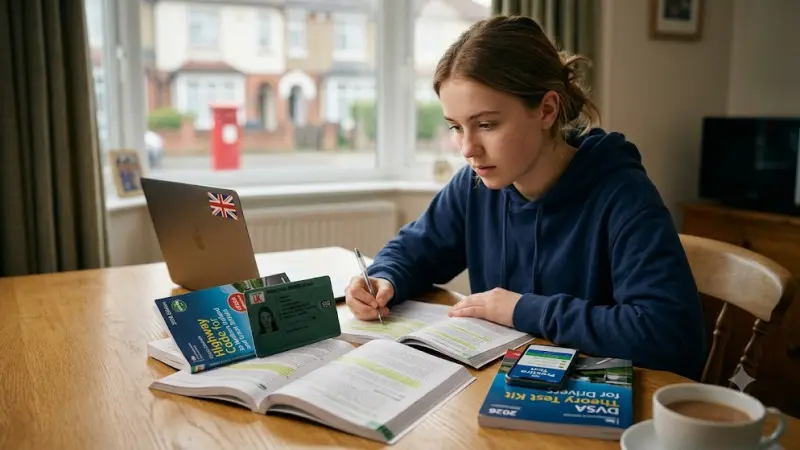
Provisional Driving Licence UK Benefits and L...
Read this insightful article "Provisional Driving Licence UK Benefits and Limits Explained" to expand your knowledge!
Ross on Wye Minibus Hire for Group Travel Mad...
Read this insightful article "Ross on Wye Minibus Hire for Group Travel Made Simple" to expand your knowledge!
Questions & Answers – Find What
You Need, Instantly!
How can I update my business listing?
Is it free to manage my business listing?
How long does it take for my updates to reflect?
Why is it important to keep my listing updated?
