
Making Tax Digital Unknown to 20% of UK Micro Businesses
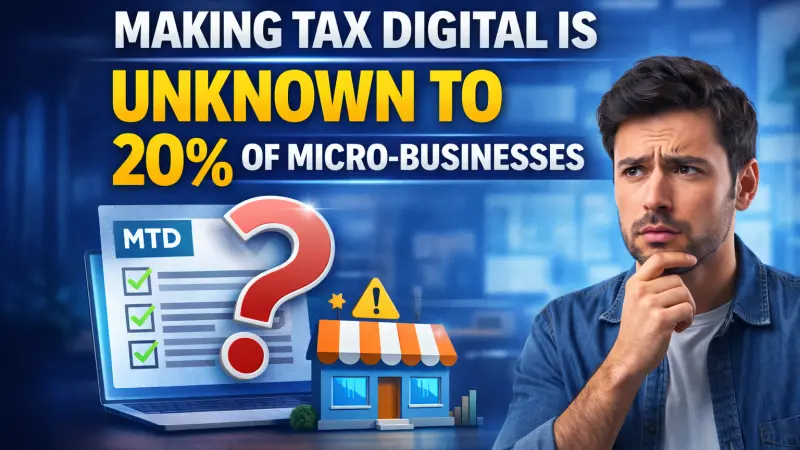
Making Tax Digital is one of the most significant changes to the UK tax system in recent years, yet many micro businesses are still unaware of what it means or how it affects them. Research has shown that around 20 percent of micro businesses do not fully understand Making Tax Digital, creating a knowledge gap that could lead to compliance risks and missed opportunities.

As HMRC continues to roll out digital tax requirements, it is becoming increasingly important for small and micro business owners to understand how the system works and what steps they need to take. Whether you are a sole director, small limited company, or self employed professional, understanding Making Tax Digital is essential for staying compliant and managing your finances efficiently.
In this article, we will explore what Making Tax Digital is, why awareness is still low among micro businesses, the benefits of adopting digital tax processes, and how businesses can prepare for the future.
What Is Making Tax Digital
Making Tax Digital, often referred to as MTD, is a government initiative introduced by HMRC to modernise the UK tax system. The goal is to make tax administration more effective, efficient, and easier for taxpayers by requiring businesses to keep digital records and submit tax information electronically using compatible software.
The initiative aims to reduce errors, improve accuracy, and streamline the tax reporting process. Instead of relying on manual calculations and paper records, businesses can manage their taxes using digital tools that automate calculations and submissions.
Why 20 Percent of Micro Businesses Are Still Unaware
Despite ongoing communication from HMRC, a significant number of micro businesses remain unaware of Making Tax Digital or misunderstand its requirements. There are several reasons for this lack of awareness.
Many micro businesses operate with limited resources and may not have dedicated finance teams to stay updated on regulatory changes. Owners often focus on daily operations and may overlook tax updates unless they directly impact their workflow.
Another factor is the perception that digital tax rules only apply to larger businesses or VAT registered companies. Some micro business owners assume they are exempt or that the requirements will not affect them.
Additionally, rapid changes in tax regulations can create confusion, making it difficult for smaller businesses to keep up with new requirements.
Who Making Tax Digital Applies To
Making Tax Digital currently applies to VAT registered businesses above the VAT threshold, and it is gradually expanding to include more taxpayers such as self employed individuals and landlords.
Over time, more micro businesses will be required to comply with digital reporting requirements, making it important to prepare early.
Understanding whether your business falls within the scope of MTD is essential to avoid penalties and ensure compliance.
Benefits of Making Tax Digital for Micro Businesses
While some business owners may see MTD as an administrative burden, it
actually offers several advantages that can improve financial management and efficiency.
Digital record keeping reduces the risk of errors by automating calculations and reducing manual data entry. This leads to more accurate tax returns and fewer mistakes.
Real time financial insights allow business owners to track income, expenses, and tax obligations more effectively, helping with better decision making.
Digital systems also save time by simplifying the process of recording transactions and submitting tax information.
In the long term, MTD can help businesses stay organised and improve overall financial visibility.
Challenges Faced by Micro Businesses
Micro businesses often face challenges when adopting new systems, especially when it involves technology and compliance requirements.
Some owners may be concerned about the cost of accounting software or lack confidence in using digital tools. Others may worry about the time required to transition from manual processes.
However, many affordable software solutions are available, and support from accountants or advisors can make the transition smoother.
Understanding these challenges and addressing them early can help businesses adapt more easily.
How to Prepare for Making Tax Digital
Preparation is key to ensuring a smooth transition to digital tax reporting. Businesses should start by understanding their obligations and timelines.
Choosing HMRC compatible accounting software is an important step, as it allows businesses to keep digital records and submit returns electronically.
Training staff or learning how to use the software ensures that records are maintained accurately and efficiently.
Working with an accountant or tax advisor can also provide valuable guidance and ensure compliance with the latest regulations.
Regularly reviewing financial processes helps identify areas that need improvement before digital reporting becomes mandatory.
Role of Accountants and Advisors
Accountants play an important role in helping micro businesses understand and implement Making Tax Digital requirements.
They can recommend suitable software, assist with setup, and provide ongoing support.
Professional guidance can reduce stress and ensure businesses remain compliant with HMRC regulations.
For many micro businesses, working with an accountant makes the transition to digital tax reporting much easier.
Impact on Business Efficiency
Adopting digital tax processes can significantly improve business efficiency. Automated systems reduce administrative tasks, allowing business owners to focus on growth and customer service.
Access to real time financial data helps with budgeting, forecasting, and managing cash flow more effectively.
Improved organisation also makes it easier to prepare financial reports and respond to tax enquiries.
Future of Digital Tax Reporting in the UK
Making Tax Digital is expected to expand further in the coming years, covering more types of taxes and businesses. The government’s long term vision is a fully digital tax system that simplifies reporting and reduces administrative burdens.
Micro businesses that adopt digital practices early will be better prepared for future changes and can benefit from improved financial management.
Staying informed about updates and requirements will help businesses remain compliant and avoid disruptions.
How Awareness Can Be Improved
Increasing awareness of Making Tax Digital among micro businesses is essential. Educational campaigns, guidance from accountants, and accessible resources can help business owners understand their responsibilities.
Industry organisations and business support networks also play a role in sharing information and providing training.
Encouraging proactive learning helps ensure businesses are prepared for digital tax requirements.
Making Tax Digital represents a major shift in how businesses manage and report their taxes in the UK. While many micro businesses are already adapting, the fact that around 20 percent remain unaware highlights the need for better communication and education.
Understanding MTD is essential for staying compliant, improving financial accuracy, and preparing for the future of digital tax reporting.
By adopting digital tools, seeking professional advice, and staying informed about regulatory changes, micro businesses can turn Making Tax Digital from a challenge into an opportunity for improved efficiency and growth.
FAQs
1 What is Making Tax Digital Making Tax Digital is a UK government initiative that requires businesses to keep digital records and submit tax information electronically.
2 Who does Making Tax Digital apply to It currently applies mainly to VAT registered businesses and will expand to include more taxpayers.
3 Why are some micro businesses unaware of MTD Limited resources, lack of communication, and confusion about requirements contribute to low awareness.
4 Do micro businesses need to comply with MTD Many will need to comply as the initiative expands to cover more businesses.
5 What are the benefits of Making Tax Digital Benefits include improved accuracy, time savings, better financial insights, and reduced errors.
6 What software is required for MTD Businesses need HMRC compatible accounting software to keep digital records and submit returns.
7 Can accountants help with Making Tax Digital Yes accountants can guide businesses through setup and ensure compliance.
8 Does MTD apply to sole traders It will apply to more sole traders as the programme expands.
9 Are there penalties for not complying Yes businesses may face penalties if they fail to meet digital reporting requirements.
10 How can businesses prepare for MTD They can choose suitable software, learn the requirements, and seek professional advice.
11 Is Making Tax Digital difficult to implement With the right tools and support, most businesses find it manageable.
12 Does MTD improve financial management Yes digital tools provide real time insights and better organisation.
13 Is digital record keeping mandatory Yes for businesses that fall within the scope of Making Tax Digital.
14 Will MTD expand in the future Yes the government plans to extend it to more taxes and businesses.
15 Why is awareness of MTD important Awareness helps businesses stay compliant and avoid penalties while improving efficiency.

Disclaimer: The information provided in this article is for general informational and research purposes only. Company details, features, services, and market positions may change over time. Readers are advised to visit official company websites and conduct independent research before making any business decisions or purchasing services.
Most Searchable Keywords

Recent Blogs


Related Listings


Categories
- Accountants (295)
- Advertising Agencies (559)
- Architects (149)
- Automobiles (377)
- Beauty (300)
- Carpenters (146)
- Cleaning Services (386)
- Dentists (189)
- Driving (62)
- Electricians (215)
- Energy (8)
- Event Organiser (685)
- Finance (599)
- Guide (3365)
- Health (2207)
- Information technology (206)
- Legal Services (353)
- Logistics (6)
- Maintenance (65)
- Manufacturing (35)

Sponsored Listings in Locksmith Services


Related Blogs

Gen Z Political Reporters and News Creators i...
Read this insightful article "Gen Z Political Reporters and News Creators in the UK" to expand your knowledge!

Famous Female Social Media Influencers Across...
Read this insightful article "Famous Female Social Media Influencers Across the UK" to expand your knowledge!
Your UK Sponsor Licence 2026 Step by Step Gui...
Read this insightful article "Your UK Sponsor Licence 2026 Step by Step Guide" to expand your knowledge!
Questions & Answers – Find What
You Need, Instantly!
How can I update my business listing?
Is it free to manage my business listing?
How long does it take for my updates to reflect?
Why is it important to keep my listing updated?
