
Meet the UK’s Most Powerful Female News Anchors Right Now
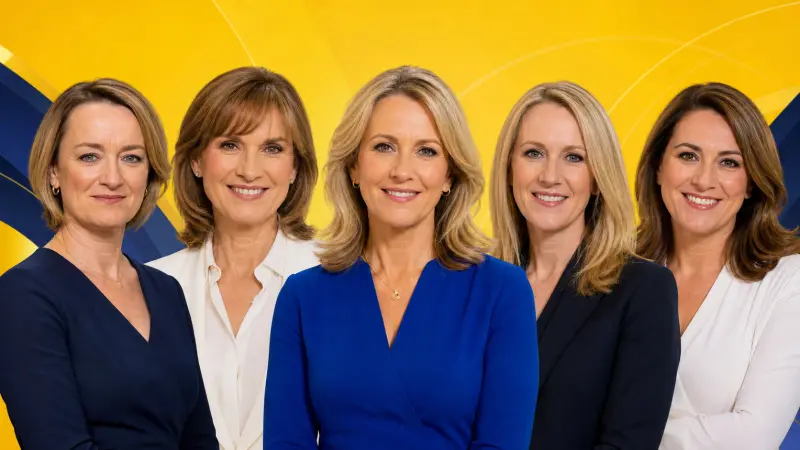
A headline about the “most viral” anchors can be tempting, but it needs a little care. There is no independent, industry-wide live table that measures every television presenter’s total views, social engagement, audience trust and news impact. Search interest moves rapidly, clips can be shared for reasons that have little to do with quality, and follower counts alone do not prove influence. Calling somebody the most viral broadcaster without a transparent dataset would be a claim we cannot substantiate.
So this is not a popularity poll and it is not a ranking of looks, wealth or private life. It is an editorial power list. The five names were selected because they combine national platforms, long-running or flagship roles, demonstrated ability to make news in major interviews, professional recognition, and a visible presence during the stories viewers most want explained. Their influence is institutional as well as digital: a tough question on a Sunday show, an election-night interview or a clear explanation in a live bulletin can set the agenda for newspapers, broadcasters and online debate for the next 24 hours.
There is an important distinction here. A news anchor is the person who guides a live programme, introduces and contextualises reporting, manages breaking developments and interviews guests. Modern British anchors are often reporters, editors, writers and podcast hosts as well. The job is not simply reading an autocue. It requires command of facts, editorial judgement, timing, listening, calm under pressure and a clear understanding of what the audience still needs to know.
These five represent different models of influence. Laura Kuenssberg is a politics-led interviewer whose Sunday programme feeds directly into Westminster coverage. Fiona Bruce blends a senior BBC news profile with the public-accountability format of Question Time. Sophie Raworth is a familiar, steady presence at the heart of major BBC bulletins and special-event coverage. Sophy Ridge’s sharp political interviewing travels efficiently from television to clips, podcasts and social feeds. Mary Nightingale has been a defining anchor of ITV’s evening news identity for years and pairs the bulletin with long-form, human-centred reporting.
A note on salary, net worth and personal information
This guide uses only information that is public and relevant to professional work. It deliberately does not include home addresses, children’s details, private contact information or rumours. Where a presenter is paid directly by the BBC and appears in the corporation’s published annual pay bands, we give the latest publicly reported band available at publication. A band is not a precise salary, and it may cover multiple BBC duties rather than one programme.
ITV and Sky do not routinely publish individual presenter salaries in an equivalent way, so a reliable current figure for Mary Nightingale or Sophy Ridge is not public. Similarly, no audited or official personal “net worth” figure is publicly available for any of the five. Celebrity-estimate websites often repeat unsourced figures; publishing them as fact would mislead readers. The responsible factsheet entry is therefore not publicly verified.
The social links below are professional public accounts or official author pages where they are available. Platforms, handles and follower totals can change; readers should verify an account through the broadcaster’s website before following or contacting anyone.
1. Laura Kuenssberg — the Westminster agenda-setter
If British politics is the story, Laura Kuenssberg is often one of the broadcasters viewers expect to see in the room. She presents the BBC’s flagship political interview programme, Sunday with Laura Kuenssberg. The BBC says she held the role of political editor from 2015 to 2022, following earlier positions including Newsnight chief correspondent and ITV News business editor. That career path matters: it gives her an unusually broad view of the machinery behind a political headline, from company and economic stories to leadership contests, elections and the day-to-day choreography of Westminster.
Kuenssberg’s power is built on access, preparation and the format she now occupies. Sunday-morning political television is not simply a recap of the week. Ministers use it to announce or defend policy, opposition figures use it to test narratives, and interview answers are clipped, quoted and replayed across the week. A strong interview can force a clarification from a government department; an evasive answer can become the story itself. In a crowded media market, that agenda-setting ability is a more meaningful sign of influence than a single viral video.
Her journalistic route began before television fame. BBC profiles note that she studied modern history at the University of Edinburgh and also studied at Georgetown University. She joined the BBC in 2000, worked in local radio and television, became a political correspondent in 2003, then BBC chief political correspondent in 2009. She moved to ITV News as business editor in 2011, returned to the BBC in 2014 and was appointed political editor the following year. The BBC also records that she has lived and worked in France and the United States, including covering US presidential races. That reporting background is visible in the way she moves between domestic politics, economics and international context.
Her interviews can generate unusually intense discussion because political journalism sits at the intersection of trust, partisanship and personality. Supporters value directness and persistence; critics scrutinise tone, framing and the choice of guests. That is not unique to Kuenssberg, but the scale of attention around her programmes illustrates the pressure carried by a high-profile political anchor. The most useful way to judge any interview is not through a single edited clip, but by watching the full exchange, checking the underlying policy claims and comparing what was said with the evidence.
Kuenssberg’s influence also extends beyond the television studio. The BBC provides an author/topic page for her reporting and a weekly newsletter connected to her programme. This multi-platform approach is now standard for leading anchors: television gives the live shared moment, web articles provide detail and corrections, newsletters create a direct reader relationship, and clips bring the work to people who may not watch a full broadcast.
Laura Kuenssberg factsheet
| Field | Publicly verifiable information |
|---|---|
| Current high-profile role | Presenter, Sunday with Laura Kuenssberg (BBC) |
| Known for | Seven years as BBC political editor; major political interviews and election coverage |
| Career route | BBC trainee and political correspondent; BBC chief political correspondent; ITV News business editor; Newsnight chief correspondent; BBC political editor |
| Education | Modern History, University of Edinburgh; also studied at Georgetown University, according to BBC profiles |
| Verified professional profile | BBC author/topic page |
| Public social profile | Instagram: @bbclaurak — professional account; readers should verify from BBC links before following |
| Salary | £405,000–£409,999 in the BBC’s published 2025/26 on-air pay data, reported for BBC work; this is a band, not an exact salary |
| Net worth | No official or audited public figure available |
| Personal-life approach in this guide | Only career-relevant public information is included; private family details are omitted |
FAQs: Laura Kuenssberg
What programme does Laura Kuenssberg present? She presents the BBC political interview programme Sunday with Laura Kuenssberg.
Was Laura Kuenssberg the BBC’s political editor? Yes. The BBC states that she was political editor between 2015 and 2022.
What is Laura Kuenssberg’s salary? The BBC’s latest published 2025/26 pay information places her in the £405,000–£409,999 band for BBC work. It is not an itemised payment for one show and should not be presented as an exact figure.
Is Laura Kuenssberg’s net worth public? No verified official figure is available. Treat unsourced online estimates with caution.
2. Fiona Bruce — authority, range and the art of the live question
Fiona Bruce is one of the most recognisable faces in British factual television because her public role extends beyond a news bulletin. She is associated with the BBC’s prime-time news output and has presented Question Time since 2019, while also fronting programmes such as Antiques Roadshow, Fake or Fortune? and, earlier in her career, Crimewatch.
This breadth is not a distraction from her news identity; it helps explain why she reaches audiences who do not all consume politics in the same way.
As chair of Question Time, Bruce’s power is different from the power of a conventional bulletin anchor. The programme places politicians, commentators and members of a studio audience in a live, unpredictable environment. The presenter must balance competing claims, decide when to stop a speaker, move the discussion forward and make sure the audience’s question is not swallowed by rehearsed political messaging. In a polarised climate, those decisions are instantly examined online. Good moderation is often invisible: the audience notices it most when it fails.
Bruce joined the BBC as a researcher on Panorama in 1989, according to the BBC’s published biographies and pay material. She later became the first female newsreader on BBC News at Ten, a landmark in an era when the most prestigious evening newscast had long been male-dominated. Her progression from researcher to national anchor is a useful reminder that television authority is built through reporting, production experience and editorial discipline as much as on-screen confidence.
Why does Bruce remain so shareable? Partly it is recognition: audiences know immediately who she is and what type of programme they are watching. Partly it is the format. A single pointed exchange from Question Time can be understood as a clip, while the full programme offers broader context and competing voices. She is also an example of the modern multi-genre presenter: someone capable of shifting from a live national debate to a cultural or heritage programme without abandoning a professional, evidence-led style.
Her work also demonstrates why “anchor” is too narrow a label for senior television journalists. Anchoring the news involves communicating verified developments under time pressure. Moderating a political audience programme demands neutrality, crowd management and a readiness to interrogate claims. Presenting factual entertainment requires clarity and trust. Bruce’s influence rests on being credible across all three forms, while knowing that each has a different editorial contract with viewers.
There is a public-interest dimension to her pay because she is among BBC on-air talent included in the annual pay disclosure. That transparency does not mean a reader can infer her total wealth or every source of income. It does mean that the BBC-funded remuneration band is available to scrutinise, which is a useful distinction often lost in celebrity coverage.
Fiona Bruce factsheet
| Field | Publicly verifiable information |
|---|---|
| Current high-profile roles | BBC presenter; chair of Question Time; presenter on BBC One programmes including Antiques Roadshow and Fake or Fortune? |
| Career landmark | First female newsreader on BBC News at Ten |
| Started at BBC | Researcher on Panorama in 1989 |
| Why she matters | Combines national news experience with one of the UK’s most visible live political-discussion formats |
| Verified professional source | BBC pay report and programme information |
| Public social profile | No clearly verified personal professional social account is linked here. Use BBC programme pages for official updates rather than similarly named accounts. |
| Salary | £345,000–£349,999 in the BBC’s published 2025/26 pay data, covering listed BBC work |
| Net worth | No official or audited public figure available |
| Personal-life approach in this guide | No private family, location or contact information included |
FAQs: Fiona Bruce
What is Fiona Bruce best known for? She is known for BBC news presenting and for chairing Question Time, as well as presenting major BBC factual programmes.
When did Fiona Bruce begin presenting Question Time? She began in January 2019.
How much does Fiona Bruce earn? The BBC’s published 2025/26 on-air list reports a £345,000–£349,999 band for her BBC work. It is a band rather than a precise salary figure.
What is Fiona Bruce’s net worth? There is no official verified figure. Articles that state a specific total without transparent financial evidence should not be relied upon.
3. Sophie Raworth — the reassuring anchor at the centre of big BBC moments
Sophie Raworth’s influence is built on durability and composure. News audiences form a relationship with anchors over years: they see them during ordinary weekday bulletins, sudden national emergencies, elections, state occasions and deeply emotional public events. Raworth’s career has placed her at the centre of that relationship for decades. She has presented the BBC’s News at Six and News at Ten, and she is one of the corporation’s most familiar faces for major live coverage.
Her route into the national newsroom began in regional journalism. BBC biographies say she joined the BBC regional trainee scheme in 1992, became a reporter for Greater Manchester Radio, worked as a Europe reporter from Brussels, and later joined Look North in Leeds, where she first presented as well as reported and produced. She joined Breakfast News in 1997, then moved to the Six O’Clock News in 2003 and the One O’Clock News in 2006. Those steps are a textbook example of the traditional broadcast-journalism ladder: reporting locally, learning production, becoming trusted on a regional programme and then earning national presentation roles.
That background matters because the best anchors understand the labour behind the screen. A live bulletin is a complex system involving editors, producers, camera operators, correspondents, verification teams, graphics staff and control-room decisions. The anchor is the visible point of accountability, but rarely works alone. Raworth’s early reporting and producing experience helps explain the unobtrusive fluency that viewers see during a fast-moving programme.
Raworth also has range beyond the studio. The BBC has used her for documentaries and special coverage, including RAF 100: Into the Blue, in which she explored her grandfather’s service in the Royal Flying Corps. This kind of work lets a news anchor bring historical and human context to a subject without turning a bulletin into opinion. It is a different skill: a documentary can slow down, use archive and allow reflection, whereas a live newsreader may have seconds to decide how to introduce a developing story.
In a social-media age, calmness can itself become viral. When an unexpected development breaks, clips of an anchor who clearly explains what is known, what is not known and what happens next are widely shared because they satisfy a basic need: clarity. Raworth’s appeal has long been rooted in that ability to make a national story accessible without over-performing it. Her authority is not mainly manufactured through controversy; it comes from consistency.
The BBC’s public pay disclosure provides a salary band for Raworth because she is directly paid for listed BBC work. It is useful information, but should be read correctly. The band does not disclose tax, savings, property, investments or private commercial arrangements, and it does not justify an invented net-worth figure. Financial transparency works only when it is reported with those boundaries in view.
Sophie Raworth factsheet
| Field | Publicly verifiable information |
|---|---|
| Current high-profile work | BBC news presenter, including News at Six and News at Ten |
| Started at BBC | BBC regional trainee scheme, 1992 |
| Early reporting roles | Greater Manchester Radio; Brussels Europe reporter; BBC Look North |
| Education | French and German at the University of Manchester; postgraduate broadcasting and journalism study at City University, according to BBC biography |
| Additional work | BBC documentaries and special-event broadcasting, including RAF 100: Into the Blue |
| Verified professional source | BBC profile |
| Public social profiles | Instagram: @sophieraworth · Instagram book account: @readbyraworth |
| Salary | £340,000–£344,999 in the BBC’s published 2025/26 on-air pay data |
| Net worth | No official or audited public figure available |
FAQs: Sophie Raworth
Which BBC programmes does Sophie Raworth present? She is associated with BBC News, including the News at Six and News at Ten, as well as special coverage.
How did Sophie Raworth start in journalism? She joined the BBC regional trainee scheme in
1992 and worked in radio, European reporting and regional television before national roles.
What is Sophie Raworth’s reported BBC pay band? The BBC’s 2025/26 published list gives a band of £340,000–£344,999 for her listed BBC work.
Does Sophie Raworth have a verified public net worth? No. No audited or official figure is publicly available.
4. Sophy Ridge — politics for the clip, the conversation and the commute
Sophy Ridge represents a newer model of political anchor: one who is as comfortable building a fast, direct interview for a morning television audience as she is making a short-form clip or recording a podcast for commuters. Sky News describes her as its lead politics presenter. She fronts Mornings with Ridge & Frost and the Cheat Sheet with Ridge & Frost podcast, and previously hosted Politics Hub with Sophy Ridge and Sophy Ridge on Sunday.
Her rise matters because the audience for political journalism has changed. A viewer might watch a full live interview on television, see a 90-second extract on a social platform, hear a podcast summary later that day and read a story on their phone. Those formats should complement rather than distort one another. Ridge’s work is built for that ecosystem, but its strength comes from the reporting and preparation behind it. A concise clip has value only when the questioning is grounded in accurate briefing and the complete exchange remains available for context.
Sky says Ridge joined the channel in 2011 after beginning her career at the News of the World. She went on to become the first woman to present a Sunday-morning political programme in the UK with Sophy Ridge on Sunday, which ran from 2017 to 2023. She has interviewed multiple prime ministers and anchored political coverage from elections, Downing Street, Washington and Brussels. That is an unusually concentrated portfolio for a political journalist: domestic power, international institutions and live election coverage all demand a different type of preparation.
Professional recognition reinforces the case for including Ridge in this list. Sky News reports that she was named Network Presenter of the Year at the 2025 Royal Television Society Journalism Awards. The RTS judges praised her ability to move from politics to breaking news while remaining insightful and controlled. Awards are not a complete measure of public impact, but they provide an external, profession-facing indicator that her work is respected beyond social-media reaction.
Ridge is also the author of The Women Who Shaped Politics. That book matters to her public identity because it shows a presenter engaging with political history and representation, not merely the daily contest. It also helps explain her on-air approach: political power is rarely only about who wins the immediate argument. It is shaped by institutions, historical assumptions and the people who have been excluded from decision-making.
Unlike BBC on-air talent paid directly under the corporation’s publicly disclosed arrangements, individual Sky News salaries are not routinely reported in an official annual list. Responsible coverage should say so rather than substituting a speculative number. The same is true of net worth. A presenter’s professional influence can be assessed through their reporting, programme role, interviews and awards; it does not need a guessed personal fortune to make the story interesting.
Sophy Ridge factsheet
| Field | Publicly verifiable information |
|---|---|
| Current high-profile role | Sky News lead politics presenter; co-host of Mornings with Ridge & Frost |
| Audio work | Co-host of Cheat Sheet with Ridge & Frost |
| Career landmark | First woman to present a UK Sunday-morning political programme, Sophy Ridge on Sunday (2017–2023) |
| Career start | Began at the News of the World; joined Sky News in 2011 |
| Recognition | RTS Network Presenter of the Year, reported by Sky News in 2025 |
| Book | The Women Who Shaped Politics |
| Verified professional profile | Sky News author page |
| Public social profiles | X: @SophyRidgeSky · Instagram: @sophyridge |
| Salary | Not publicly disclosed in an official Sky News equivalent of the BBC on-air pay list |
| Net worth | No official or audited public figure available |
FAQs: Sophy Ridge
What does Sophy Ridge do at Sky News? She is Sky News’ lead politics presenter and co-hosts Mornings with Ridge & Frost.
Did Sophy Ridge present a Sunday politics programme? Yes. Sky News says she was the first woman to present a Sunday-morning political programme in the UK, hosting Sophy Ridge on Sunday from 2017 to 2023.
Has Sophy Ridge won an RTS award? Yes. Sky News reported that she received Network Presenter of the Year at the 2025 RTS Journalism Awards.
What is Sophy Ridge’s salary or net worth? Neither is publicly verified in an official Sky News disclosure. Claims of exact sums should be treated as estimates, not facts.
5. Mary Nightingale — ITV’s evening-news constant and a human-first interviewer
Mary Nightingale is a powerful anchor for a reason that can be overlooked in lists driven by Westminster noise: she is a consistent face of evening news. As presenter of the ITV Evening News, she helps define how one of the country’s major commercial public-service news providers delivers the day’s most important stories.
The role requires speed and authority, but Nightingale’s reporting also shows an instinct for long-term human narratives—the cases and communities that remain after the first breaking-news alert fades.
ITV’s own reporting identifies Nightingale as a presenter of the ITV Evening News and documents several major interviews conducted over many years. She was among the first journalists to interview Kate and Gerry McCann after Madeleine McCann’s disappearance, and later reflected on why the story generated such deeply divided opinion. In 2022 she revisited the impact of the war in Afghanistan with a bereaved mother she had first interviewed a decade earlier. In 2024, she spoke to the daughter of PC Sharon Beshenivsky nearly 20 years after the officer’s murder. These examples show a distinctive kind of authority: the trust to return to a story, ask difficult questions sensitively and make space for people whose experience cannot be condensed into a single headline.
That kind of journalism is especially valuable online, where there is pressure to move on quickly. A video clip can generate attention, but it can also strip a complicated experience of context. Nightingale’s work points in the other direction: follow the consequences, let people tell their story and connect a personal account to a wider public issue. It is journalism designed to be remembered, not merely consumed.
She has also become part of the contemporary conversation about artificial intelligence and trust in news. In 2024, ITV News reported that Nightingale was targeted by a manipulated deepfake video that appeared to show her promoting an investment app. She described being angry at the misuse of her image and voice. The incident is bigger than one presenter. It illustrates why familiar anchors remain important: their recognisable faces can make fake material seem plausible, while their public explanation of the harm helps viewers understand how to question what they see online.
Nightingale’s influence is therefore twofold. First, there is the daily credibility of an established evening-bulletin anchor. Second, there is her ability to conduct and sustain human-centred reporting across years. That combination is not always the loudest form of power, but it is one of the most durable. For local publishers and business-directory platforms, it also offers a useful editorial lesson: stories that genuinely help audiences understand people and place tend to have a longer life than empty outrage.
As with many commercial broadcasters, ITV does not publish a routine, presenter-by-presenter annual salary list comparable to the BBC’s. It would be inaccurate to state a precise current salary or net worth as fact. The appropriate response is transparency: the information is not officially disclosed. Readers interested in Nightingale’s work should use ITV News’ verified bylines and programme pages rather than unverified celebrity databases.
Mary Nightingale factsheet
| Field | Publicly verifiable information |
|---|---|
| Current high-profile role | Presenter, ITV Evening News |
| Known for | National evening bulletins and long-running, human-centred ITV News interviews |
| Reporting examples | Interviews and follow-ups related to the McCann case, bereavement after Afghanistan and the murder of PC Sharon Beshenivsky |
| Media-literacy relevance | Spoke publicly after being targeted in a manipulated deepfake video in 2024 |
| Verified professional profile | ITV News byline and reporting |
| Public social profile | X: @nightingaleitv — profile identifies her as an ITV Evening News presenter |
| Salary | Not publicly disclosed by ITV in a presenter-by-presenter annual list |
| Net worth | No official or audited public figure available |
| Personal-life approach in this guide | Private details omitted; this profile focuses on public professional work |
FAQs: Mary Nightingale
What news programme does Mary Nightingale present? She is a presenter of the ITV Evening News.
Why is Mary Nightingale included in this list? Her influence comes from her enduring evening-news role and her ability to conduct sensitive, long-term reporting that follows the human consequences of major stories.
Was Mary Nightingale affected by a deepfake? Yes. ITV News reported in 2024 that manipulated video appeared to use her image and voice to promote an investment app.
What are Mary Nightingale’s salary and net worth? ITV does not publicly issue an equivalent individual annual pay list, and no official net-worth figure is available.
What these broadcasters reveal about power in British news
The five anchors on this list have different styles, but their careers point to a shared truth: modern news power is about more than a seat behind a desk. It is the ability to create a trusted space in which facts can be explained and influential people can be questioned. It is the skill to remain clear when a story changes minute by minute. It is a willingness to learn a brief deeply enough to detect an evasion, and the judgement to know when a personal story deserves more than a quick clip.
They also demonstrate that audiences now meet journalists in several places. A political programme may create a Monday-morning headline; an evening bulletin may give a national event its first clear narrative; a podcast may become the daily briefing; a documentary may keep a story alive after public attention has moved elsewhere. The strongest broadcasters adapt to those channels without losing the standards that make their work worth sharing: accurate sourcing, fair challenge, clear distinction between fact and opinion, corrections when necessary and respect for people affected by the news.
For publishers, there is a practical lesson. Articles about presenters perform better when they are useful rather than intrusive. Explain what a journalist actually does. Link to their verified professional work. Separate public salary disclosures from speculation about wealth. Avoid reducing women in broadcasting to appearance, relationships or rumours. This approach is more credible, safer for readers and more likely to earn meaningful engagement over time.
Fast comparison: the five anchors
| Anchor | Main platform | Signature strength | Pay information publicly available? | Verified professional link |
|---|---|---|---|---|
| Laura Kuenssberg | BBC | Agenda-setting political interviews | Yes — BBC band | BBC |
| Fiona Bruce | BBC | Live political moderation and broad factual-TV reach | Yes — BBC band | BBC |
| Sophie Raworth | BBC | Calm, trusted major-bulletin anchoring | Yes — BBC band | BBC profile |
| Sophy Ridge | Sky News | Digital-era political interviewing and podcast reach | No official individual list | Sky News |
| Mary Nightingale | ITV News | Evening-news authority and sensitive long-form interviews | No official individual list | ITV News |
Frequently asked questions about female news anchors in Britain
Who is the most powerful female news anchor in the UK? There is no objective single answer. Influence depends on role, audience, political impact, reporting record and platform. This article highlights five highly influential anchors rather than claiming a definitive ranking.
Who is the highest-paid female BBC presenter in this article? In the BBC’s published 2025/26 bands used here, Laura Kuenssberg is listed at £405,000–£409,999, ahead of Fiona Bruce at £345,000–£349,999 and Sophie Raworth at £340,000–£344,999. These bands cover BBC work and are not full measures of wealth.
Why are Sky and ITV presenters’ salaries not shown? Sky News and ITV do not publish the same individual on-air salary list that the BBC is required to publish for directly paid talent. A blank or “not disclosed” entry is more accurate than a guessed figure.
Can follower counts prove which anchor is most viral? No. Counts vary by platform and change constantly. They also do not measure broadcast reach, trust, quality of reporting or the context behind an individual clip.
Are net-worth figures for television presenters reliable? Usually not unless they are supported by official financial records or a transparent, reputable investigation. No audited net-worth figure was located for the five people in this feature, so none is claimed.
How can readers avoid fake news-anchor accounts or deepfakes? Start from the presenter’s broadcaster page, look for verified account links, check whether a clip appears on the broadcaster’s own platform, and be especially sceptical of investment promotions, sensational claims or videos that do not appear in established news coverage.
Why does representation among anchors matter? Television news is a major civic space. A wider range of experienced women in visible roles helps audiences see who gets to question power, explain events and set the terms of public debate.
Representation alone is not enough; it needs to be matched with editorial independence, opportunity and fair treatment behind the camera as well.
Sources and fact-checking notes
BBC: Laura Kuenssberg profile and programme information
BBC: Laura Kuenssberg appointed political editor
BBC: 2025/26 presenter pay bands
BBC: Sophie Raworth profile
Sky News: Sophy Ridge author profile
Sky News: RTS award coverage
ITV News: Mary Nightingale’s reporting
ITV News: Mary Nightingale and deepfake misuse
Disclaimer: The information provided in this article is for general informational and research purposes only. Company details, features, services, and market positions may change over time. Readers are advised to visit official company websites and conduct independent research before making any business decisions or purchasing services.
Most Searchable Keywords
Recent Blogs

Related Listings
Categories
- Accountants (295)
- Advertising Agencies (559)
- Architects (149)
- Automobiles (377)
- Beauty (300)
- Carpenters (146)
- Cleaning Services (387)
- Dentists (189)
- Driving (62)
- Electricians (215)
- Energy (8)
- Event Organiser (686)
- Finance (602)
- Guide (3372)
- Health (2207)
- Information technology (206)
- Legal Services (353)
- Logistics (6)
- Maintenance (65)
- Manufacturing (35)
Sponsored Listings in Travel Agencies

Related Blogs

Blue Light Card UK 2026 Check Eligibility and...
Read this insightful article "Blue Light Card UK 2026 Check Eligibility and Claim" to expand your knowledge!

BBC Radio 1 DJs Net Worth Ranking Revealed
Read this insightful article "BBC Radio 1 DJs Net Worth Ranking Revealed" to expand your knowledge!

Unlock UK Green Finance Opportunities in 2026
Read this insightful article "Unlock UK Green Finance Opportunities in 2026" to expand your knowledge!
Questions & Answers – Find What
You Need, Instantly!
How can I update my business listing?
Is it free to manage my business listing?
How long does it take for my updates to reflect?
Why is it important to keep my listing updated?
