
Naviance Class Action Lawsuit Who Affected What Happens Next
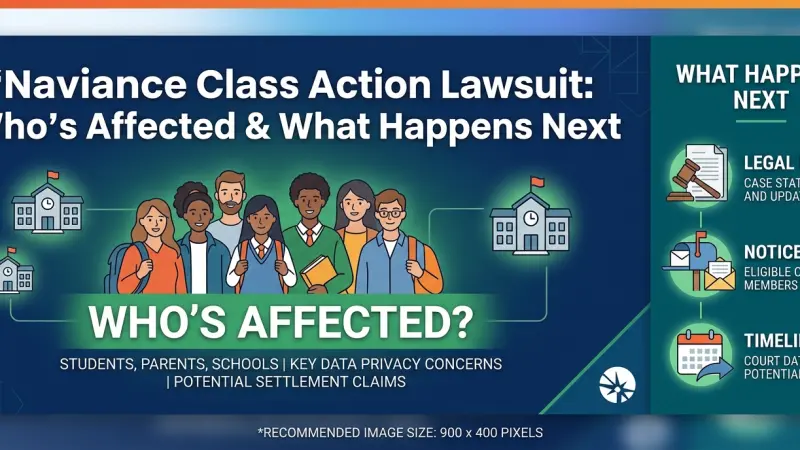
In an era where digital platforms dominate the educational landscape, the security of student data has become a paramount concern for parents, educators, and students alike. Recently, the popular college and career readiness platform Naviance has found itself at the center of significant legal scrutiny. The Naviance class action lawsuit has raised serious questions about how educational technology companies handle sensitive user information, sparking a debate that extends far beyond a single platform. For the millions of students and alumni who have used the service to track grades, plan for college, and apply for financial aid, this legal development brings a mixture of confusion and concern. This article aims to demystify the situation, offering a comprehensive overview of the allegations, identifying exactly who is impacted, and outlining the practical steps affected individuals should take to understand their rights in this evolving situation.

Naviance Class Action Lawsuit
To understand the gravity of the current legal situation, it is essential to first understand the role Naviance plays in the American education system. Owned by PowerSchool, Naviance is a comprehensive college and career readiness solution used by thousands of schools and districts nationwide. It helps students align their strengths and interests to post-secondary goals, manage the college application process, and explore career options. However, the platform's extensive reach means it accumulates vast amounts of highly sensitive data, including grade point averages, standardized test scores, demographic information, and even behavioral assessments.
The core of the Naviance class action lawsuit revolves around allegations of privacy violations and the mishandling of this sensitive data. While specific legal complaints can vary by jurisdiction, the central claims generally assert that the platform engaged in practices that compromised user privacy. These allegations often point toward the sharing of Personally Identifiable Information (PII) with third parties—such as advertising networks or data brokers—without obtaining explicit consent from students or their guardians.
In the landscape of educational technology, this falls under the broader umbrella of student data privacy laws like the Family Educational Rights and Privacy Act (FERPA) and various state-level consumer protection acts. The plaintiffs in these cases argue that the trust placed in the platform by schools and parents was breached, necessitating legal recourse to ensure accountability and protect the affected population.
Understanding the Core Allegations
The legal complaints filed against the company highlight several specific issues. Primarily, the lawsuits allege that the platform utilized tracking technologies—often referred to as cookies or pixels—on its interface. These technologies, critics argue, were used to capture user data and transmit it to third-party companies without the users' knowledge. This is a critical issue because users of educational platforms typically expect a high level of confidentiality, assuming that their academic records are protected under FERPA. The lawsuits suggest that these tracking mechanisms may have bypassed standard privacy protections, essentially "leaking" data to entities outside the educational sphere.
Furthermore, the lawsuits often cite a failure to implement reasonable security measures to safeguard this data. When a platform holds the academic histories of millions of minors and young adults, the legal standard for "reasonable security" is incredibly high. The plaintiffs contend that the defendant failed to meet this standard, leaving the data vulnerable to exploitation. This has led to a demand for monetary damages for those affected and injunctive relief, which would require the company to change its operational practices to prevent future violations.
Who Is Affected? Defining the Class
One of the most common questions arising from this litigation is, "Am I part of the lawsuit?" Determining eligibility in a class action is a structured process defined by the court, but general parameters can be drawn based on the nature of the complaint.
Current and Former Students
The primary class affected by the Naviance class action lawsuit consists of current and former students whose data was processed through the platform. Given that Naviance has been a staple in high school counseling offices for over a decade, the "class" could potentially span multiple graduating classes. If you attended a high school that utilized the Naviance platform for college planning or career assessment between specific dates outlined in the legal filing, you may be a class member.
It is important to note that eligibility is not limited to students who experienced identity theft or direct financial loss. In privacy class actions, the harm is often defined by the violation of privacy itself—the unlawful sharing or exposure of personal data constitutes an injury in the eyes of the law, regardless of whether that data was subsequently used maliciously by a third party.
Parents and Guardians
Parents and legal guardians may also have standing in these cases. Since minors cannot legally consent to data sharing or contracts in the same way adults can, the responsibility often falls on the guardians. If your child’s data was collected and shared without your explicit consent, you may be part of the affected class. This is particularly relevant for parents who believe their family’s privacy was compromised by the platform's alleged tracking practices.
School Districts and Employees
While less common in consumer-focused class actions, school districts and employees using the administrative side of the platform may also be impacted. Teachers and counselors often input data or have access to student records. If the lawsuit alleges broad security failures, the exposure of employee credentials or district-wide data could broaden the scope of the class. However, the primary focus of most data privacy settlements remains on the students and their families.
The Legal Framework: FERPA and State Privacy Laws
Navigating the legalities of an education-based lawsuit requires an understanding of the statutes at play. The most significant law here is FERPA, a federal law that protects the privacy of student education records. Under FERPA, schools must generally have written permission from the parent or eligible student to release any information from a student's education record.
The lawsuit argues that the integration of third-party tracking tools on the Naviance platform may have constituted a disclosure of education records without consent. If student search queries regarding colleges, scholarships, or personal interests were transmitted to third parties for analytics or advertising, this could be viewed as a violation of FERPA’s strict confidentiality requirements.
Additionally, state laws are playing an increasingly large role. States like California, with the California Consumer Privacy Act (CCPA), and Illinois, with the Biometric Information Privacy Act (BIPA), have robust privacy protections that often serve as the basis for class actions.
If the data in question involved biometric identifiers (rare in this specific context but possible) or the IP addresses and browsing habits of California residents, the lawsuit may leverage these powerful state-level statutes to argue for damages.
Step-by-Step Details: What Happens Next in the Litigation
For those following the case, the legal process can seem slow and opaque. Here is a step-by-step breakdown of what typically happens in a class action lawsuit of this magnitude.
1. Certification of the Class
Before the lawsuit can proceed as a class action, the court must "certify" the class. This means the judge agrees that the group of plaintiffs is large enough and has enough in common to be treated as a single entity. The plaintiffs' lawyers must demonstrate that the legal claims are common across all members and that they will adequately represent the interests of the entire class. In the Naviance case, this step is crucial for pooling resources and ensuring that thousands of individual claims don't clog the court system.
2. Discovery and Investigation
Once certified, the discovery phase begins. This is where the legal teams request documents, emails, and technical data logs from the defendant. Experts analyze the platform’s code, privacy policies, and data sharing agreements to verify the claims. This phase can take months or even years, as it involves sifting through millions of lines of data to prove that the alleged tracking occurred.
3. Settlement Negotiations vs. Trial
Most class action lawsuits end in a settlement rather than a trial. A trial is risky and expensive for both sides. In this case, if the plaintiffs have strong evidence of data misuse, the company may offer a settlement to resolve the claims. A settlement fund is created to compensate class members, and the company agrees to change its practices. If a settlement cannot be reached, the case goes to trial, where a jury or judge decides the outcome.
4. Claims Process
If a settlement is reached, the court must approve it. Following approval, a claims process begins. This is where affected individuals (class members) are notified and instructed on how to file a claim. Notifications usually happen via email (if the company has current contact info), letters sent by mail, or public announcements on websites or in newspapers. Claimants typically have to fill out a form verifying their identity and confirming they used the platform during the relevant time period.
Benefits of Participating in the Lawsuit
Participating in a class action lawsuit is not just about a potential financial payout; it is also about enforcing corporate accountability.
Monetary Compensation: If the lawsuit settles, class members may receive a cash payment. The amount varies depending on the size of the settlement fund and the number of people filing claims. While these payments rarely replace the full "value" of one's privacy, they serve as a form of restitution.
Injunctive Relief: Perhaps the most significant benefit is the change in corporate behavior. These lawsuits often mandate that the defendant overhaul their privacy policies, implement better encryption, and stop using invasive tracking tools. This creates a safer environment for future students.
No Direct Legal Costs: Class members do not pay the attorneys directly. The lawyers work on a contingency basis, taking a percentage of the final settlement. This allows individuals to seek justice without the financial risk of hiring a private attorney.
Tips for Protecting Student Data Privacy
While the legal system works to address past wrongs, proactive steps are necessary to prevent future issues. Whether you are a student, parent, or educator, here are strategies to safeguard data.
Read Privacy Policies Carefully: It is tedious but essential. Look for clauses that mention "third-party sharing," "data brokers," or "advertising partners." If a school requires a student to use a platform, ask the administration to provide the privacy agreement they have with the vendor.
Use Privacy-Focused Browsers and Tools: When accessing educational portals, use browser extensions that block trackers. Tools like ad-blockers and privacy badgers can prevent third-party pixels from firing, adding a layer of defense against unauthorized data collection.
Limit the Information Shared: Only provide information that is strictly necessary for the application or task. If a platform asks for
optional demographic details or personal interests, consider whether it is relevant to the educational goal before entering it.
Common Mistakes to Avoid During the Lawsuit Process
Navigating a class action claim is straightforward, but there are pitfalls that can jeopardize your ability to receive benefits.
Ignoring the Notice: Many people disregard legal notices in the mail or email, assuming they are spam. If you receive a notice regarding the Naviance lawsuit, read it immediately. It will contain critical deadlines.
Missing the Opt-Out or Exclusion Deadline: If you want to retain the right to sue the company individually for a larger amount, you must "opt-out" of the class action by a specific deadline. If you do nothing, you are automatically included in the class and waive your right to sue separately. However, most people benefit from staying in the class.
Failing to File a Claim: Some class members assume the money will just show up. You must actively file a claim form by the deadline to receive a portion of the settlement. If you do not file, you get nothing, and your rights in the matter are essentially extinguished.
Providing Inaccurate Information: When filing a claim, ensure all details are accurate. Falsifying information to appear eligible is fraud and can lead to legal consequences.
Supporting Local Business Visibility Beyond Core Marketing Efforts
In the digital age, visibility is not just a marketing goal; it is a fundamental component of trust and operational stability. This is true for major EdTech platforms, but it is even more critical for local service providers who support the educational ecosystem—tutors, counselors, and educational consultants. While major corporations battle legal challenges regarding data visibility, small businesses must focus on their discoverability to build community trust. A robust digital footprint acts as a supporting visibility layer, reinforcing credibility and ensuring that families in need can find reliable local assistance.
For these businesses, consistency across the web is key. Establishing a presence on a reputable platform like Local Page UK serves as a vital discovery aid for potential clients searching for specific services. When a business is listed on a business directory website, it creates a trust signal that reinforces their local presence consistency. This is not about aggressive promotion, but rather about being a credible signal in a noisy digital environment.
Furthermore, utilizing a free company listing platform allows smaller educational providers to manage their digital narrative effectively. By ensuring their details are accurate and accessible, they mitigate the risk of obscurity. Whether you are a local tutor or a college prep service, the decision to list services UK directory can significantly impact your ability to connect with the community. Ultimately, being present on a recognized business listings site functions as a foundational block for long-term credibility, bridging the gap between service availability and community needs without compromising on professional integrity.
Frequently Asked Questions (FAQs)
1. What is the Naviance class action lawsuit about? The lawsuit generally concerns allegations that Naviance (and its parent company PowerSchool) mishandled student data, potentially sharing Personally Identifiable Information (PII) with third parties through tracking technologies without proper consent, violating privacy laws.
2. How do I know if I am part of the class? You are likely a class member if you used the Naviance platform as a
student or guardian during the specific time period defined in the lawsuit filings. Official notices will provide the exact dates and criteria.
3. Do I need a lawyer to join the lawsuit? No, you do not need to hire your own lawyer to participate in a class action. The court appoints "class counsel" to represent the interests of all group members.
4. How much money can I get from the settlement? The exact amount varies. It depends on the total settlement fund size, the number of people submitting claims, and the severity of the alleged damages. Payments can range from nominal amounts to more significant sums.
5. What is the difference between "opting out" and "objecting"? "Opting out" removes you from the lawsuit entirely, allowing you to file your own individual lawsuit. "Objecting" means you stay in the class but disagree with the terms of the settlement (e.g., you think the lawyers are getting paid too much or the payment to victims is too low).
6. Will participating in the lawsuit affect my academic records? No. Participating in a lawsuit against a software provider does not impact your school grades or official academic transcripts held by your school district.
7. What information will I need to file a claim? Typically, you will need to provide your name, contact information, and proof that you used the platform, such as the name of the high school you attended and the years of attendance.
8. How long does a class action lawsuit take? These lawsuits can take anywhere from one to several years to resolve, depending on the complexity of the case, the discovery phase, and whether a settlement is reached early or if it goes to trial.
9. Is Naviance still safe to use? Following litigation, companies typically upgrade their security measures and privacy policies to comply with court orders and regulations. You should review their current privacy policy and talk to your school district about their data security protocols.
10. Can parents file a claim on behalf of their child? Yes. If the student was a minor when the data was collected, a parent or legal guardian can usually file a claim on their behalf.
11. What if I didn't receive an email about the lawsuit? You may still be eligible. Not all class members can be contacted directly if contact information has changed. You should visit the official settlement website (usually provided in court documents) to check eligibility and file a claim.
12. Does this lawsuit affect PowerSchool users? Since PowerSchool owns Naviance, the lawsuit may have implications for PowerSchool’s broader data handling practices, though the specific class definition usually targets the Naviance platform specifically.
13. What happens if I do nothing? If you do nothing, you will not receive any money from a settlement. Additionally, you will be bound by the settlement agreement, meaning you give up the right to sue the company separately for these specific issues.
14. Are there deadlines for filing a claim? Yes. Strict deadlines are set by the court. Missing the claim submission deadline will disqualify you from receiving benefits.
15. Where can I find official updates on the case? Official updates are typically posted on the court’s website where the case was filed, or on a dedicated settlement website established by the claims administrator.
lawsuit serves
The Naviance class action lawsuit serves as a stark reminder of the fragility of data privacy in the modern educational landscape. For students and families navigating the college application process, these platforms are indispensable tools, yet they carry inherent risks that must be acknowledged.
By understanding the allegations, knowing your rights, and actively participating in the legal process if you are affected, you contribute to a larger movement demanding accountability from EdTech giants.
Staying informed is your first line of defense. As the lawsuit progresses, keep an eye out for official communications and ensure that your digital footprint is managed with care. Whether it results in financial compensation or stricter industry regulations, the outcome of this case will undoubtedly shape the future of student data privacy.

Disclaimer: The information provided in this article is for general informational and research purposes only. Company details, features, services, and market positions may change over time. Readers are advised to visit official company websites and conduct independent research before making any business decisions or purchasing services.
Most Searchable Keywords
Recent Blogs


Related Listings

Categories
- Accountants (295)
- Advertising Agencies (559)
- Architects (149)
- Automobiles (376)
- Beauty (300)
- Carpenters (146)
- Cleaning Services (386)
- Dentists (189)
- Driving (61)
- Electricians (215)
- Energy (8)
- Event Organiser (684)
- Finance (598)
- Guide (3363)
- Health (2205)
- Information technology (206)
- Legal Services (352)
- Logistics (6)
- Maintenance (65)
- Manufacturing (35)

Sponsored Listings in Health and Wellbeing


Related Blogs

Bristol Firework Displays Every Local Should...
Read this insightful article "Bristol Firework Displays Every Local Should Experience" to expand your knowledge!
Self Assessment Registration 2026 Common Erro...
Read this insightful article "Self Assessment Registration 2026 Common Errors and Rules" to expand your knowledge!
Calculate Your 2026 Employer National Insuran...
Read this insightful article "Calculate Your 2026 Employer National Insurance Bill Easily" to expand your knowledge!
Questions & Answers – Find What
You Need, Instantly!
How can I update my business listing?
Is it free to manage my business listing?
How long does it take for my updates to reflect?
Why is it important to keep my listing updated?
