
NBA Playoff Schedule and Bracket Picture You Cannot Miss
Meta Title: NBA Playoff Schedule Guide and Bracket Picture Breakdown

Meta Description:
Meta Keywords: Nba Playoff Schedule, Nba Playoff Picture, Nba Playoff Bracket, NBA Postseason Guide
Short Description: An elite analysis of the NBA postseason structure covering the latest schedule updates playoff picture dynamics and full bracket projections for basketball fans.
The intensity of the professional basketball season reaches its boiling point during the postseason, a time when every possession carries the weight of a franchise's history. As the regular season winds down, fans and analysts alike become obsessed with the NBA Playoff Schedule, seeking to understand the grueling journey that leads to the Larry O'Brien Trophy. The postseason is not merely a tournament; it is a war of attrition, a tactical chess match played at 100 miles per hour. Understanding the nuances of the schedule, the shifting tides of the NBA Playoff Picture, and the structural integrity of the NBA Playoff Bracket is essential for any serious follower of the sport.
In this comprehensive guide, we move beyond simple dates and times. We explore the psychological impact of the Play-In Tournament, the strategic advantages of home-court seeding, and the historical trends that define how teams navigate the bracket. Whether you are a casual viewer looking to catch the biggest games or a die-hard stat-head tracking every tiebreaker, this breakdown provides the deep topical authority required to master the NBA's second season. The road to the Finals is paved with dramatic buzzer-beaters and unexpected injuries, making the current playoff picture a living, breathing entity that changes with every final whistle.
Quick Answer: The Current NBA Playoff Structure
The NBA postseason consists of the Play-In Tournament followed by a standard 16-team NBA Playoff Bracket. The NBA Playoff Schedule typically begins in mid-April with the Play-In games, which determine the 7th and 8th seeds in each conference. Once the field of 16 is set, the playoffs consist of four rounds: the First Round, Conference Semifinals, Conference Finals, and the NBA Finals. Each round is a best-of-seven series following a 2-2-1-1-1 format, ensuring the higher-seeded team hosts the pivotal Games 1, 2, 5, and 7. Monitoring the NBA Playoff Picture daily is vital during the final weeks of the regular season to track seeding battles and potential first-round matchups.
Table of Contents
- The Evolution of the NBA Playoff Schedule
- Decoding the NBA Playoff Picture: Tiebreakers and Seeding
- Analyzing the NBA Playoff Bracket: The Road to the Finals
- The Play-In Tournament: A High-Stakes Gateway
- Strategic Home-Court Advantage: Why the Picture Matters
- Historical Patterns: What Past Brackets Tell Us About Future Champions
- Hidden Truth: The Travel and Recovery Factor
- Frequently Asked Questions (FAQ)
- Conclusion: Embracing the Postseason Grind
The Evolution of the NBA Playoff Schedule
The NBA Playoff Schedule has undergone significant transformations over the decades to accommodate television demands, player health, and competitive balance. Originally, the playoffs were a shorter affair with fewer teams, but the modern era demands a two-month-long marathon. The current schedule is designed to maximize global viewership while providing players with enough recovery time to maintain a high level of play.
This balance is precarious; a condensed schedule can lead to injuries, while one that is too spread out can cause a loss of narrative momentum. For fans, the schedule is the ultimate roadmap, dictating late-night viewing habits and office pool strategies.
One of the most critical aspects of the modern schedule is the "rest versus rust" debate. Teams that sweep their opponents often face long layoffs before the next round begins. While this allows stars to heal nagging injuries, it can also lead to a lack of game rhythm. Conversely, teams involved in grueling seven-game series enter the next round battle-tested but physically exhausted. The NBA Playoff Schedule doesn't just list dates; it creates a set of physical conditions that teams must overcome. Understanding how these gaps between games affect shooting percentages and defensive intensity is a hallmark of elite search intent analysis for basketball enthusiasts.
Furthermore, the schedule is influenced by the "2-2-1-1-1" format, which has been the standard since 2014. Previously, the NBA Finals used a 2-3-2 format to minimize cross-country travel, but this was deemed to give too much of an advantage to the lower seed in the middle games. The return to the traditional format emphasizes the importance of the NBA Playoff Picture, as finishing with a higher seed provides the psychological safety net of hosting a winner-take-all Game 7. As we look at the schedule, we see a document that reflects the league's commitment to fairness and the high-stakes nature of professional basketball.
Decoding the NBA Playoff Picture: Tiebreakers and Seeding
The NBA Playoff Picture is a complex puzzle that becomes clearer—and more chaotic—during the final month of the regular season. Seeding is not just about the win-loss record; it involves a sophisticated hierarchy of tiebreakers that can swing the fate of a franchise. The primary tiebreaker is the head-to-head record between two teams. If that is tied, the league looks at division winners (even though division titles no longer guarantee a top-four seed) and then conference records. This makes every "meaningless" game in December potentially decisive when the final picture is painted in April.
A major factor in the current NBA Playoff Picture is the density of the middle seeds. Often, only one or two games separate the 4th seed from the 8th seed. This creates a "race to avoid the Play-In," where teams fight desperately to secure the 6th seed and guarantee a week of rest. The stress of this race often leads to playoff-intensity basketball weeks before the postseason actually begins. Analysts must look beyond the standings and evaluate the "strength of schedule" for the remaining games to accurately project how the final picture will settle. A team with an easy home stretch might leapfrog a struggling powerhouse, completely altering the first-round matchups in the NBA Playoff Bracket.
Context is everything when analyzing these seeds. For example, a team might be the 5th seed but have a better record against the top three teams than the 4th seed does. Or, a late-season trade might make a lower-seeded team much more dangerous than their overall record suggests. The NBA Playoff Picture is a snapshot of the season's cumulative work, but it doesn't always reflect current form. This is why "bracketology" in the NBA requires an understanding of momentum, injury reports, and coaching adjustments. The picture is the starting point, but the individual matchups are where the real analysis happens.
Analyzing the NBA Playoff Bracket: The Road to the Finals
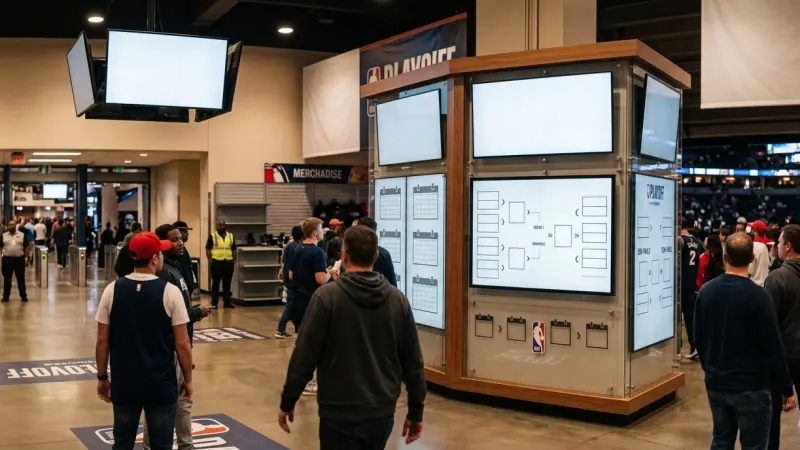
The NBA Playoff Bracket is the holy grail for basketball fans. Once the regular season and Play-In Tournament conclude, the bracket is set in stone. Unlike the NFL, there is no re-seeding in the NBA; once you are in your quadrant, you stay there. This means that a 1st seed knows they will play the winner of the 4/5 matchup if they advance to the second round. This lack of re-seeding allows for advanced scouting and long-term strategic planning, but it also means that a "bad" draw can ruin a championship-caliber team's season early on.
When studying the NBA Playoff Bracket, one must look at the "paths." Some paths are naturally harder than others. A 2nd seed might actually have a more difficult first-round matchup than a 1st seed because of a dangerous 7th seed that was under-seeded due to early-season injuries. The bracket creates natural rivalries and "revenge" narratives that the league exploits for television ratings. The left side of the bracket represents the Eastern Conference, and the right side represents the Western Conference, with the two victors meeting in the center for the Finals. This visual representation of the journey is what fans use to fill out their predictions and track their team's progress.
The structural integrity of the bracket also emphasizes the value of the "top-heavy" nature of the NBA. Historically, lower seeds (below the 3rd seed) rarely win the championship. The NBA Playoff Bracket is designed to reward regular-season excellence by giving top seeds easier paths through the first two rounds.
However, the modern NBA is more balanced than ever, and "bracket busters" are becoming more common. An 8th seed defeating a 1st seed, while still rare, is no longer the unthinkable miracle it once was. This volatility makes the bracket an exciting document to follow, as one upset can completely open up a conference for an underdog run.
The Play-In Tournament: A High-Stakes Gateway
The introduction of the Play-In Tournament has fundamentally changed the NBA Playoff Schedule and the way we view the NBA Playoff Picture. By giving teams ranked 7th through 10th a chance to fight for the final two spots, the NBA has essentially eliminated "tanking" for a significant portion of the league. The format is simple yet brutal: the 7th and 8th seeds play for the 7th spot, while the 9th and 10th seeds play an elimination game. The loser of the 7/8 game then plays the winner of the 9/10 game for the final 8th seed. This "win or go home" atmosphere is a precursor to the intensity of the Finals.
For the 7th and 8th seeds, the Play-In is a double-edged sword. While they have two chances to win one game, the physical and emotional toll of these high-pressure contests can be exhausting. A team that survives the Play-In often has to face a rested 1st or 2nd seed just 48 hours later. This creates a massive disadvantage in the NBA Playoff Bracket for those final two spots. However, the Play-In has also produced some of the most-watched games of the season, as fans gravitate toward the "March Madness" style of single-elimination basketball. It has successfully added a new layer of drama to the transition from the regular season to the postseason.
From a strategic standpoint, the Play-In forces coaches to decide how much to "empty the tank" just to get into the bracket. If a star player has a minor injury, do you play him in the Play-In to ensure a spot, or rest him and risk total elimination? This decision-making process is a critical part of the modern NBA Playoff Schedule. The Play-In isn't just a gatekeeper; it’s a filter that ensures only the most resilient teams make it into the final 16. It has also made the 6th seed the most coveted spot in the league, as it is the last "safe" harbor before the Play-In chaos begins.
Strategic Home-Court Advantage: Why the Picture Matters
The primary reason teams fight so hard for their position in the NBA Playoff Picture is home-court advantage. In the NBA, the home team wins roughly 60% of playoff games, a statistic that has remained remarkably consistent. The presence of a home crowd, the lack of travel fatigue, and the familiarity of the arena all contribute to this edge. In a best-of-seven series, having Game 7 at home is the ultimate insurance policy. The NBA Playoff Schedule is built around this advantage, ensuring that the higher seed never has to play more road games than home games.
Home-court advantage also influences officiating and role-player performance. "Role players play better at home" is an old basketball adage that holds true in the postseason. While superstars can usually perform in any environment, the bench players often rely on the energy of the home crowd to find their shooting rhythm. This means that a team with a strong home record can often "steal" a series against a more talented opponent simply by holding serve at home and winning one road game. This tactical reality is why the final weeks of the regular season are so frantic; a single loss can drop a team from the 4th seed (home court in round 1) to the 5th seed (road team in round 1).
However, the importance of home-court advantage can be overstated in certain matchups. "It’s not a series until someone loses at home" is another classic phrase. Elite teams often pride themselves on their ability to win on the road, seeing it as the true mark of a champion.
If a team can win Game 1 on the road, they effectively "flip" the home-court advantage in their favor for the rest of the NBA Playoff Bracket. This psychological shift is massive. The pressure immediately moves to the higher seed, who now must win on the road to stay alive. Understanding these momentum shifts is key to interpreting the schedule as it unfolds.
Historical Patterns: What Past Brackets Tell Us About Future Champions
History is a loud teacher when it comes to the NBA Playoff Bracket. Since the league's inception, the vast majority of champions have come from the 1st, 2nd, or 3rd seeds. The reason is simple: the regular season is an 82-game litmus test for consistency, health, and depth. Teams that finish at the top of the NBA Playoff Picture usually have the best net ratings and the most reliable rotations. While "Cinderella stories" are popular in college basketball, the NBA’s best-of-seven format almost always ensures that the better team wins eventually. An underdog might win a game or even two, but beating a powerhouse four times in two weeks is an monumental task.
Another historical trend is the "defense wins championships" mantra. While the modern NBA is focused on three-point shooting and high-octane offense, the pace of the NBA Playoff Schedule usually slows down in the later rounds. Half-court execution and defensive stops become the currency of success. Teams that can flip a switch and become elite defensive units often overperform their seeding. We have seen 4th seeds with elite defenses make the Finals over 1st seeds with record-breaking offenses. This is why analysts look at "defensive rating" in the final 20 games of the season to predict who will actually succeed in the bracket.
Finally, we must consider the "superstar factor." In the NBA playoffs, the team with the best player on the floor has a significant advantage, regardless of their position in the NBA Playoff Picture. One player can play 45 minutes a night and completely dictate the terms of the game. History shows that teams with a Top-5 player are the only ones with a realistic shot at the title. This is why a team like the 2023 Miami Heat, led by an inspired Jimmy Butler, could make a run from the Play-In all the way to the Finals. They were an outlier, but they proved that if you have a superstar and a resilient culture, the NBA Playoff Bracket is merely a suggestion, not a destiny.
Hidden Truth: The Travel and Recovery Factor
The "Hidden Truth" that most casual fans miss when looking at the NBA Playoff Schedule is the impact of travel and the "body clock." In a league where games are won by inches, the difference between flying two hours versus six hours is massive. A Western Conference team that has to travel from Los Angeles to Memphis and then to Minneapolis is facing a significantly higher physical toll than an Eastern Conference team playing in the "Amtrak corridor" (Boston, New York, Philly, DC). This geographical advantage is an unwritten part of the NBA Playoff Picture that savvy bettors and analysts always account for.
Recovery technology has improved, but the human body still has limits. When a series goes to seven games, the "turnaround time" to the next round is often less than 48 hours. If the next opponent finished their series in four games, they have had nearly a week of rest. This creates a "rest disparity" that is one of the biggest predictors of Game 1 results in the second and third rounds. The NBA Playoff Schedule is often criticized for these tight windows, but they are a necessary part of finishing the season before the heat of summer. For the players, the postseason is a test of who has the best training staff as much as who has the best coach.
Furthermore, the psychological fatigue of being away from home cannot be ignored. Staying in hotels for weeks on end and being away from family adds a layer of stress that isn't reflected in the box score. This is why "winning at home" is so vital; it allows players to sleep in their own beds and maintain their routines. The NBA Playoff Bracket doesn't just show who plays whom; it shows who has to travel where. A team that can secure the 1st seed ensures they stay home for as long as possible, minimizing the "hidden" costs of the postseason. This is the true prize of the regular season, and it's why the race for the top spot is so fierce.
Frequently Asked Questions (FAQ)
- When is the NBA Playoff Schedule usually released? The specific dates and times for the first round are usually finalized on the last day of the regular season, once the NBA Playoff Picture is set. However, the general window for the start of the Play-In and the First Round is known months in advance.
- How many teams make the NBA Playoff Bracket? A total of 16 teams (8 from each conference) make the final bracket. However, 20 teams participate in the postseason festivities if you include the four teams from each conference that compete in the Play-In Tournament.
- Can the 10th seed win the NBA Championship? Technically, yes. If the 10th seed wins two Play-In games, they enter the NBA Playoff Bracket as the 8th seed. From there, they would have to win four best-of-seven series. While highly unlikely, the structure allows for this "Cinderella" possibility.
- What happens if the NBA Playoff Picture ends in a tie? The NBA uses a specific set of tiebreakers. Head-to-head record is the first criteria, followed by division winner status, conference winning percentage, and record against playoff teams in the same conference.
- Is there a bracket re-seeding in the NBA? No. Unlike the NFL, the NBA Playoff Bracket is fixed. The winner of the 1 vs 8 matchup will always play the winner of the 4 vs 5 matchup in the second round, regardless of whether the 8th seed pulled an upset.
- How long does the NBA postseason last? The entire process, from the first Play-In game to the final game of the NBA Finals, takes approximately two months. It usually begins in mid-April and concludes in mid-June.
Conclusion: Embracing the Postseason Grind
The NBA postseason is the ultimate test of talent, coaching, and resilience. Understanding the NBA Playoff Schedule is the first step in appreciating the sheer magnitude of the challenge these athletes face. From the frantic maneuvering of the NBA Playoff Picture in late March to the finality of the NBA Playoff Bracket in June, every moment is etched in history.
The postseason isn't just about who is the most skilled; it's about who can endure the physical toll, the mental pressure, and the tactical adjustments over a two-month period.
As fans, we are treated to a spectacle that has no equal in professional sports. The best-of-seven format ensures that luck is minimized and greatness is rewarded. By tracking the seeds, understanding the tiebreakers, and anticipating the schedule, we become part of the narrative. Whether your team is a dominant 1st seed or a scrappy Play-In contender, the playoffs offer a fresh start and a chance at immortality. So, prepare your brackets, check the schedules, and get ready for the most exciting time of the year. The road to the championship is open, and only the strongest will survive.

Disclaimer: The information provided in this article is for general informational and research purposes only. Company details, features, services, and market positions may change over time. Readers are advised to visit official company websites and conduct independent research before making any business decisions or purchasing services.
Most Searchable Keywords

Recent Blogs



Related Listings



Categories
- Accountants (295)
- Advertising Agencies (559)
- Architects (149)
- Automobiles (376)
- Beauty (300)
- Carpenters (146)
- Cleaning Services (386)
- Dentists (189)
- Driving (61)
- Electricians (215)
- Energy (8)
- Event Organiser (684)
- Finance (598)
- Guide (3363)
- Health (2205)
- Information technology (206)
- Legal Services (352)
- Logistics (6)
- Maintenance (65)
- Manufacturing (35)

Sponsored Listings in Health and Wellbeing

Related Blogs

Bristol Firework Displays Every Local Should...
Read this insightful article "Bristol Firework Displays Every Local Should Experience" to expand your knowledge!

Self Assessment Registration 2026 Common Erro...
Read this insightful article "Self Assessment Registration 2026 Common Errors and Rules" to expand your knowledge!

Calculate Your 2026 Employer National Insuran...
Read this insightful article "Calculate Your 2026 Employer National Insurance Bill Easily" to expand your knowledge!
Questions & Answers – Find What
You Need, Instantly!
How can I update my business listing?
Is it free to manage my business listing?
How long does it take for my updates to reflect?
Why is it important to keep my listing updated?
