
Off-Page SEO Guide: Strategies, Link Building & Brand Authority
If you have spent any time in the digital marketing world, you have likely heard the term Off-Page SEO. While On-Page SEO focuses on what you do on your website—like optimizing your content and headers—Off-Page SEO is about what happens away from your site.

In 2026, Google has evolved from a simple keyword-matching machine into a sophisticated reputation engine. Today, your ranking is determined not just by what you say about yourself, but by what the rest of the web says about you. This guide will dive deep into the world of Off-Page SEO, explaining why it is the backbone of modern digital growth and how you can master it.
What is Off-Page SEO?
Off-page SEO refers to all activities performed outside of your own website to impact your rankings within search engine results pages (SERPs). Think of it as building your website's "street cred."
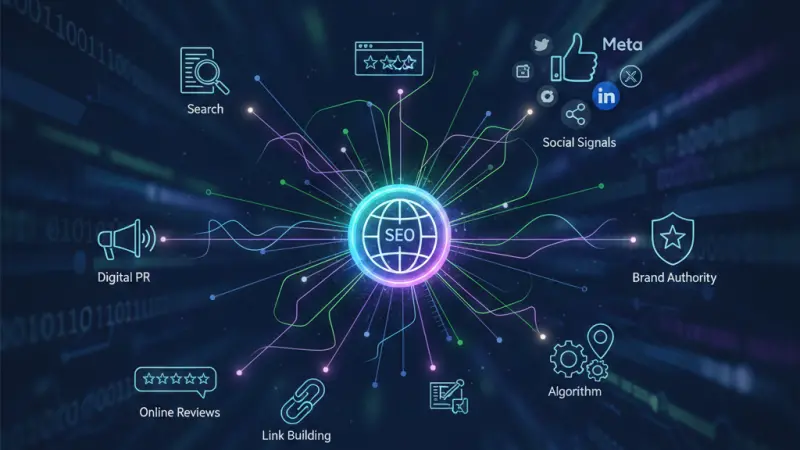
If On-Page SEO is the foundation and interior design of your house, Off-Page SEO is the collection of recommendations from neighbors, mentions in local news, and the general buzz about how great your house is. The goal is to prove to search engines like Google that your site is a trusted authority. The core pillars of this strategy include:
Backlink Building: Earning "votes" from other reputable sites.
Brand Building: Increasing searches for your specific brand name.
Content Marketing: Distributing assets that others want to share.
Digital PR: Gaining mentions in news and high-tier publications.
Social Signals: Engagement that proves real people are interacting with you.
Why is Off-Page SEO Non-Negotiable in 2026?
The search landscape has shifted. With the rise of AI Overviews (SGE) and Generative Engine Optimization (GEO), search engines now summarize information from multiple sources. If you aren’t being mentioned across the web, you simply won't appear in those AI-generated answers.
1. It Validates Your E-E-A-T
Google’s Search Quality Rater Guidelines emphasize Experience, Expertise, Authoritativeness, and Trustworthiness (E-E-A-T). Off-page signals are the primary way Google verifies these traits. A backlink from a major industry publication is a signal of authority; a flurry of positive reviews on third-party sites is a signal of trust.
2. It Drives Referral Traffic
Off-page SEO isn't just about bots; it’s about people. A well-placed link on a popular blog or a viral social media post brings "referral traffic"—users who are already primed to trust you because a source they like recommended you.
3. It Helps You Win in "Zero-Click" Searches
Many searches in 2026 are "zero-click," meaning users get their answer directly on Google without clicking a link. Off-page SEO ensures that even if a user doesn't visit your site, they see your brand name cited as the source of the information, building massive brand recognition.
The Heart of Off-Page: Link Building Strategies
Backlinks remain a top-three ranking factor. However, the focus has shifted from quantity to quality and relevance.
The Skyscraper Technique 2.0
This classic method involves finding a popular piece of content in your niche, creating something significantly better (more data, better visuals, more current), and then reaching out to those who linked to the original piece. In 2026, "better" means more human-centric and data-driven.
Broken Link Building
The internet is full of "404 Not Found" pages. By using tools to find broken links on authoritative sites and offering
your relevant content as a replacement, you provide a service to the webmaster while gaining a high-value link.
Guest Posting for Relevance
Forget low-quality "guest post farms." Modern guest blogging is about Strategic Brand Placement. You should write for sites that your target audience actually reads. A single link from a niche-relevant, high-traffic site is worth more than 100 links from irrelevant domains.
Digital PR and Brand Mentions
In the current era, Digital PR is the most powerful way to build off-page authority. It involves creating "link magnets"—newsworthy stories or original research that journalists want to cover.
Original Data & Surveys: Conduct a survey in your industry. Journalists love statistics to back up their stories, and they will link to you as the source.
Expert Commentary: Use platforms like Connectively (formerly HARO) to provide expert quotes to reporters.
Unlinked Brand Mentions: Sometimes people talk about your brand but forget to link. Reach out politely and ask them to turn that mention into a clickable link.
Social Media and Online Reputation
While social media "shares" aren't direct ranking factors, they create a ripple effect.
Social SEO
Platforms like TikTok, Instagram, and YouTube are now primary search engines for Gen Z and Millennials. Optimizing your social profiles and captions with keywords helps your content appear in social search, which in turn drives branded searches on Google—a massive off-page signal.
The Power of Reviews
For local and B2B businesses, reviews on Google Business Profile, Yelp, and Trustpilot are essential. Search engines look at the sentiment and frequency of these reviews to determine if you are a legitimate, high-quality business.
Metrics: How to Measure Success
Measuring Off-Page SEO takes patience. You won't see results overnight. Track these key indicators:
| Metric | What it Tells You |
|---|---|
| Domain Authority (DA/DR) | The overall "strength" of your backlink profile. |
| Branded Search Volume | How many people are searching for your name specifically. |
| Referral Traffic | How many visitors are coming from other sites. |
| AI Citation Share | How often AI tools (like ChatGPT or Google AI) cite you. |
Boost Your Visibility with Local Page UK
If you are looking to supercharge your Off-Page SEO, especially for a UK-based audience, you need to be where the local conversations are happening. Local Page UK is the premier destination to enhance your digital footprint. By securing a business listing uk, you create an authoritative citation that search engines trust.
Whether you are looking for a uk online business directory to build trust or need to be featured in a uk business directory that targets specific regions, we have you covered. Our platform serves as a comprehensive uk local business directory designed to help consumers find local businesses uk with ease.
For entrepreneurs, getting onto a local businesses list uk is a vital step in local SEO. Small businesses can benefit from our uk small business directory features, while those in the professional space can leverage our uk b2b business directory and uk b2c business directory sections.
By using our business directory uk online, you aren't just getting a link; you are joining a uk service providers directory that prioritizes quality. We provide the most reliable uk business listings online, making us the go-to local page uk business directory for modern brands. Our uk business directory website is optimized for high performance, ensuring your business listing uk entry carries real weight.
Don't miss out on a business listing uk. As a top-tier business listing uk, we offer an easy business listing uk process. Whether you need a business listing uk or a business listing uk, our business listing uk options are perfect. If you are based in the capital, our business listing uk section is highly active, providing a business listing uk that drives results.
Explore our local business listings uk and see why we are the leaders in uk service listings. We offer uk verified business listings for uk top rated local businesses.
From the uk home services directory to uk professional services listings and uk trade services listings, our uk local trades directory connects you with the right audience. Check out the local page uk listings today to simplify your uk local business search.
Service-Related Questions & Answers
1. Is Off-Page SEO more important than On-Page?
Neither is "more" important; they are two sides of the same coin. On-page makes your site readable for search engines; off-page makes it worth reading.
2. How many backlinks do I need to rank #1?
There is no magic number. It depends on the competition. One link from a site like the BBC or Forbes is worth more than 5,000 links from unknown blogs.
3. Does social media directly affect Google rankings?
Not directly, but it increases brand awareness, which leads to more branded searches and links—both of which do affect rankings.
4. What is a "toxic" link?
These are links from spammy, low-quality, or unrelated websites. Google generally ignores them, but too many can lead to a manual penalty.
5. How long does it take to see results?
Typically, you will see the impact of Off-Page SEO within 3 to 6 months.
6. Should I buy backlinks?
No. Buying links is a violation of Google's terms and can lead to your site being de-indexed.
7. What is Digital PR?
It’s the process of using high-quality content and outreach to get mentioned in news publications and industry blogs.
8. Do reviews impact SEO?
Yes, especially for local SEO. They act as trust signals for both users and search engines.
9. What is anchor text?
It is the clickable text in a hyperlink. Using varied and natural anchor text is crucial for a healthy backlink profile.
10. Can I do Off-Page SEO without a blog?
Yes, through PR, social media, and directory listings, but a blog makes it much easier to create "linkable assets."
11. Is guest posting dead?
No, but "spammy" guest posting is. Focus on high-quality, relevant sites.
12. What are "NoFollow" links?
These are links with a tag telling Google not to pass "ranking power" to the destination site. They are still valuable for traffic and brand awareness.
13. What is a brand mention?
A brand mention is when a website names your business without a hyperlink. Google still uses these as a signal of authority.
14. How do I find my competitors' backlinks?
Tools like Ahrefs, SEMrush, or Moz allow you to see exactly who is linking to your competitors.
15. Does local SEO count as Off-Page SEO?
Yes, things like managing your Google Business Profile and getting local citations are key off-page activities.

Disclaimer: The information provided in this article is for general informational and research purposes only. Company details, features, services, and market positions may change over time. Readers are advised to visit official company websites and conduct independent research before making any business decisions or purchasing services.
Most Searchable Keywords
Recent Blogs

Categories
- Accountants (295)
- Advertising Agencies (559)
- Architects (149)
- Automobiles (375)
- Beauty (300)
- Carpenters (146)
- Cleaning Services (386)
- Dentists (189)
- Driving (61)
- Electricians (215)
- Energy (6)
- Event Organiser (683)
- Finance (594)
- Guide (3356)
- Health (2205)
- Information technology (206)
- Legal Services (352)
- Logistics (6)
- Maintenance (65)
- Manufacturing (35)
Sponsored Listings in Real Estate


Related Blogs

Things to Do with Kids in Reading for Memorab...
Read this insightful article "Things to Do with Kids in Reading for Memorable Family Days" to expand your knowledge!
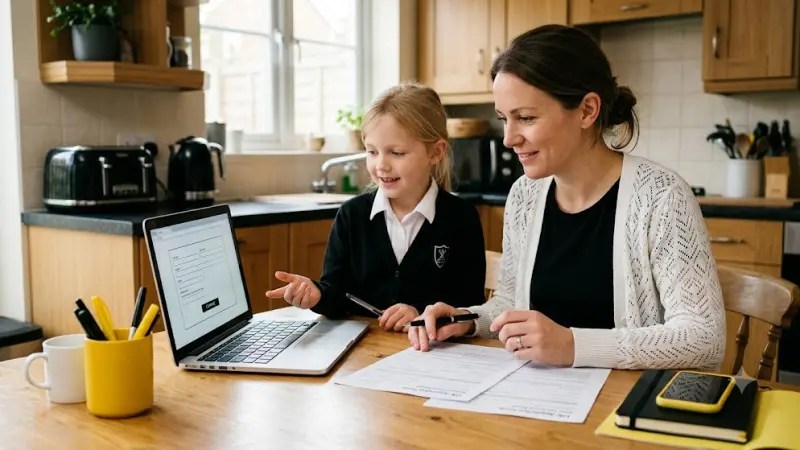
Step by Step Guide to Claiming Free School Me...
Read this insightful article "Step by Step Guide to Claiming Free School Meals in the UK" to expand your knowledge!

Free Things to Do in Newport Explore Local At...
Read this insightful article "Free Things to Do in Newport Explore Local Attractions Today" to expand your knowledge!
Questions & Answers – Find What
You Need, Instantly!
How can I update my business listing?
Is it free to manage my business listing?
How long does it take for my updates to reflect?
Why is it important to keep my listing updated?
