
Pentobarbital Sodium Explained Uses Risks Controversies
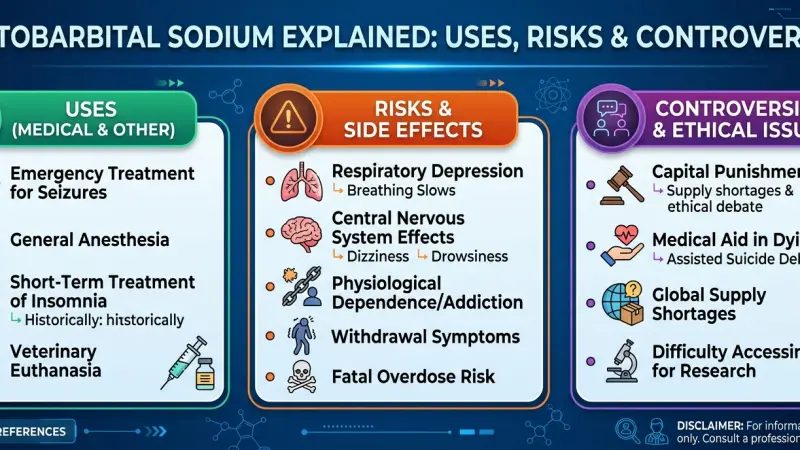
In the complex landscape of modern pharmacology, few substances carry the weight of history, controversy, and clinical necessity quite like Pentobarbital Sodium. Originally synthesized in the early 20th century as a revolutionary sleep aid, this barbiturate has evolved from a household name in sedation to a strictly controlled substance with highly specialized applications. Its journey through the annals of medicine reflects broader shifts in how society views pain management, mental health, and the ethics of end-of-life care. While it remains a vital tool in specific medical and veterinary scenarios, its reputation is shadowed by its association with capital punishment and physician-assisted suicide, creating a polarizing narrative that demands a nuanced examination. Understanding Pentobarbital Sodium requires looking beyond the headlines to grasp its pharmacokinetics, its undeniable clinical utility when used correctly, and the rigorous safety protocols governing its handling today.

What is Pentobarbital Sodium?
Pentobarbital Sodium is a short-acting barbiturate derivative, a class of drugs that depress the central nervous system (CNS). Chemically, it is the sodium salt of pentobarbital, a compound that was first developed in the 1920s as a replacement for the highly addictive barbital and phenobarbital. Its primary mechanism of action involves binding to gamma-aminobutyric acid (GABA) receptors in the brain. By enhancing the effect of GABA—the body’s primary inhibitory neurotransmitter—Pentobarbital Sodium effectively slows down brain activity, resulting in sedation, anxiolysis, and at higher doses, anesthesia.
Unlike benzodiazepines, which are often prescribed for similar conditions today, barbiturates like Pentobarbital have a much narrower therapeutic index. This means the difference between a therapeutic dose and a toxic, potentially lethal dose is frighteningly small. This characteristic largely contributed to its decline in outpatient psychiatric care following the barbiturate abuse epidemic of the mid-20th century. However, its rapid onset and predictable duration of action ensured it retained a foothold in hospital settings, emergency medicine, and veterinary science.
Historical Context and Evolution
When it first entered the market under trade names like Nembutal, Pentobarbital was hailed as a miracle drug for insomnia and anxiety. It was widely prescribed until the 1960s and 70s when the risks of dependence, overdose, and suicide became undeniably apparent. Public figures like Marilyn Monroe and Judy Garland tragically brought the dangers of barbiturate toxicity into the spotlight. Consequently, the medical community shifted toward benzodiazepines, which were perceived as safer alternatives, though they carry their own risks. Today, Pentobarbital Sodium is primarily reserved for hospital procedures, seizure management, and veterinary euthanasia, marking a significant shift from its once-ubiquitous presence in medicine cabinets.
Clinical Indications and Therapeutic Benefits
Despite its controversial history, Pentobarbital Sodium remains an indispensable agent in modern medicine for specific, high-stakes situations. Its efficacy is unmatched in scenarios where deep sedation or rapid control of neural excitability is required. While "benefits" in the context of a potent barbiturate must be weighed heavily against risks, its clinical utility in the following areas is well-documented.
Management of Status Epilepticus
One of the most critical uses of Pentobarbital Sodium is in the treatment of refractory status epilepticus—a state of continuous seizure activity that does not respond to first-line treatments like benzodiazepines or phenytoin. In these life-threatening emergencies, Pentobarbital is used to induce a "barbiturate coma." By suppressing brain activity to the point of burst suppression on an electroencephalogram (EEG), the drug effectively resets neural function and prevents further neuronal damage. This is a high-acuity intervention performed exclusively in intensive care units with continuous monitoring.
Induction of Anesthesia
In settings where propofol or other induction agents might be contraindicated, Pentobarbital Sodium serves as a reliable alternative for inducing anesthesia prior to surgery. Its rapid onset—typically within 30 to 60 seconds of intravenous administration—allows for a smooth transition into unconsciousness. It is particularly favored in certain neurosurgical procedures because it decreases cerebral blood flow and intracranial pressure, protecting the brain during delicate operations.
Use in Diagnostic Procedures
Historically, and occasionally in modern practice, the drug has been used in "Wada tests" (intracarotid sodium amobarbital procedure). This involves injecting the drug into one side of the brain to temporarily paralyze it, allowing neurologists to assess language and memory functions on the opposite side before epilepsy surgery. While sodium amobarbital is technically distinct, Pentobarbital has been utilized in similar diagnostic capacities to map brain function.
Veterinary Applications The Role in Euthanasia
Perhaps the most widely recognized application of Pentobarbital Sodium today is in veterinary medicine. It is the active ingredient in most euthanasia solutions for companion animals and livestock. In this context, the drug’s ability to induce rapid, painless unconsciousness followed by cardiac arrest is viewed as a humane method of ending suffering.
Mechanism in Veterinary Practice
When administered intravenously to an animal, Pentobarbital Sodium acts almost instantaneously. It causes deep unconsciousness within seconds, followed by a cessation of breathing and heart function. The process is designed to be peaceful and devoid of distress, making it the gold standard for euthanasia. However, its use is strictly regulated by bodies like the DEA in the United States and equivalent agencies globally, requiring veterinarians to maintain meticulous records due to the drug’s potential for diversion and abuse.
Safety Protocols for Veterinarians
Veterinary staff must exercise extreme caution. The solution is often dyed a distinct color (like bright pink or blue) to prevent accidental injection into humans. Environmental disposal is also a major concern; scavengers or pets can be poisoned if they consume the remains of a euthanized animal, necessitating strict protocols for carcass disposal, particularly in large-animal veterinary practice.
Detailed Administration and Protocols
The administration of Pentobarbital Sodium is a procedure that leaves no room for error. Unlike oral medications taken at home, this drug is almost exclusively administered by healthcare professionals in controlled environments. Understanding the step-by-step process highlights the complexity and gravity of its use.
Step 1: Patient Assessment and Screening
Before administration, a comprehensive evaluation is mandatory. This includes reviewing the patient's medical history for hypersensitivity to barbiturates, assessing liver and kidney function (as these organs metabolize and
excrete the drug), and checking for potential drug interactions. Concurrent use with opioids, alcohol, or other CNS depressants can precipitate fatal respiratory depression.
Step 2: Dosing Calculation
Dosing is highly individualized based on age, weight, and the specific indication. For instance, a dose for induction of anesthesia differs vastly from that required to control seizures. In elderly patients or those with compromised circulation, the dose must be reduced significantly to avoid prolonged sedation.
Step 3: Administration Technique
Pentobarbital Sodium is most commonly administered intravenously (IV). The injection must be given slowly to avoid hypotension and respiratory arrest. Rapid injection can cause a sudden drop in blood pressure and cardiovascular collapse. In some cases, it is administered via intramuscular injection, though this is less common due to variable absorption rates.
Step 4: Continuous Monitoring
Once the drug is administered, the patient requires constant monitoring. In an ICU setting, this involves real-time EEG monitoring for seizure control, alongside continuous tracking of blood pressure, heart rate, and oxygen saturation. Ventilatory support is often necessary because the drug depresses the respiratory drive.
Risks, Side Effects, and Contraindications
The therapeutic window for Pentobarbital Sodium is narrow, meaning the line between a safe dose and a lethal one is perilously thin. This characteristic defines the drug's risk profile and necessitates a deep understanding of its potential adverse effects.
Central Nervous System Effects
The most immediate risk is profound CNS depression. Patients can experience drowsiness, confusion, and ataxia. In cases of overdose, the patient may slip into a coma. Paradoxically, in some individuals—particularly the elderly or those with chronic pain—barbiturates can cause excitement or hyperactivity rather than sedation, a phenomenon known as "paradoxical excitement."
Respiratory and Cardiovascular Risks
Respiratory depression is the primary cause of death in Pentobarbital overdose. The drug blunts the brain's response to carbon dioxide, leading to slow, shallow breathing or apnea. Cardiovascular effects include hypotension (low blood pressure) and bradycardia (slow heart rate), which can complicate resuscitation efforts.
Dependency and Withdrawal
While less frequently prescribed for long-term use now, the risk of dependency remains high. Barbiturate withdrawal is a medical emergency, potentially more dangerous than opioid withdrawal. Symptoms can include tremors, hallucinations, seizures, and delirium tremens. Abrupt cessation of high-dose Pentobarbital can be fatal, necessitating a medically supervised tapering regimen.
Contraindications
Pentobarbital Sodium is contraindicated in patients with a history of porphyria (a group of disorders caused by abnormalities in the chemical steps leading to heme production), as it can precipitate acute attacks. It is also avoided in patients with severe respiratory insufficiency, marked liver impairment, or known hypersensitivity to barbiturates.
The Controversies: Ethics and Society
The conversation surrounding Pentobarbital Sodium is inextricably linked to its role in end-of-life decisions, both voluntary and involuntary. This section explores the ethical minefield the drug occupies.
Capital Punishment
In the United States, Pentobarbital Sodium has been used as the primary lethal injection agent in several states. Its adoption came after shortages of sodium thiopental. This use has drawn sharp criticism from medical professionals and human rights organizations. The core ethical conflict lies in the corruption of a healing profession’s tool for the purpose of state-sanctioned killing. Furthermore, drug manufacturers have increasingly blocked the sale of their products to prisons, leading to shortages and the use of unregulated compounding pharmacies, raising concerns about drug purity and the potential for "botched" executions that violate the Eighth Amendment's prohibition on cruel and unusual punishment.
Physician-Assisted Suicide (PAS)
In jurisdictions where physician-assisted suicide is legal, such as Oregon, Washington, and Switzerland, Pentobarbital Sodium (often in oral form) is the drug of choice for patients with terminal illnesses seeking to end their lives with dignity. The practice, known as "aid in dying," is strictly regulated. Patients must self-administer the medication, ensuring autonomy. While proponents argue it offers a compassionate exit from suffering, opponents fear a slippery slope toward devaluing human life. The availability of the drug for this purpose has sparked ongoing legal and ethical battles, influencing how pharmacists and physicians navigate their conscience clauses.
Safety Tips and Common Mistakes to Avoid
For healthcare providers and veterinarians handling this substance, diligence is the primary safety protocol.
Errors in handling Pentobarbital Sodium can have immediate, irreversible consequences.
Mistake 1: Inadequate Monitoring
A common mistake is underestimating the duration of action. While classified as "short-acting," the drug can accumulate in fatty tissues, leading to "hangover" effects or prolonged sedation. Patients must be monitored well beyond the initial sedation period, especially if they are to be discharged.
Mistake 2: Drug Interactions
Failing to account for interactions is a critical error. Combining Pentobarbital with anticoagulants like warfarin can decrease their efficacy, raising the risk of thrombosis. Conversely, combining it with other depressants can be instantly fatal. A thorough medication reconciliation is non-negotiable.
Mistake 3: Improper Storage and Security
Because of its potential for abuse, Pentobarbital must be stored in a locked safe or cabinet, separate from non-controlled substances. Diversion is a serious risk, and failure to maintain accurate inventory logs can lead to legal penalties and professional censure.
Handling Precautions
Personnel should always use personal protective equipment (PPE), such as gloves, when handling the liquid form of the drug to prevent accidental dermal absorption. Spills should be cleaned up immediately using appropriate protocols to prevent accidental exposure to others in the clinical environment.
Supporting Local Business Visibility Beyond Core Marketing Efforts
In the healthcare and veterinary sectors, the focus is often squarely on patient care, but the administrative side of running a practice or pharmacy also plays a crucial role in community trust. For clinics and pharmacies that manage controlled substances like Pentobarbital Sodium, establishing a credible local presence is essential for professional legitimacy and community integration. While strict regulations govern advertising for pharmaceuticals, general practice visibility relies on strategic digital foundations.
Building a robust digital footprint involves ensuring that the practice is easily discoverable by those seeking specialized care or veterinary services. This begins with consistent information across the web. A primary layer of this visibility strategy involves utilizing a reliable business directory website. By securing a presence on such platforms, practices reinforce their operational transparency, which is a critical trust signal for clients handling sensitive medical treatments.
Furthermore, consistency in Name, Address, and Phone number (NAP) data across the internet validates the business's legitimacy in the eyes of search engines and potential clients. Utilizing a free company listing platform offers a straightforward method for practices to manage this data without straining marketing budgets. These listings act as digital anchor points, confirming that the clinic is established and operating within regulatory guidelines.
For specialized clinics, discoverability is often about being found in niche categories. Directories that allow professionals to list services uk directory style can connect specific medical capabilities with the patients who need them most. This targeted visibility ensures that when a pet owner or patient searches for specific medical services, the relevant clinics appear prominently. Ultimately, engaging with a trusted business listings site provides a supporting layer of credibility that complements the medical expertise offered within the clinic walls, bridging the gap between professional care and public accessibility.
Pentobarbital Sodium
Pentobarbital Sodium stands as a testament to the dual nature of pharmacology: it is a tool of profound mercy and a potential instrument of tragedy. Its evolution from a common sedative to a strictly controlled substance mirrors our society's growing understanding of addiction, patient rights, and the sanctity of life. Whether it is saving a brain from the ravages of uncontrolled seizures, providing a peaceful end for a beloved pet, or sparking fierce ethical debates in courtrooms, its impact is undeniable. As we move forward, the focus must remain on responsible stewardship—ensuring that when this powerful substance is used, it is done with the utmost respect for safety, ethics, and the law. For medical professionals and the public alike, understanding Pentobarbital Sodium is not just about knowing a drug; it is about understanding the weight of the decisions surrounding its use. To stay informed on pharmaceutical developments and healthcare regulations, continue following verified medical resources and professional guidelines.
Frequently Asked Questions (FAQs)
1. What is Pentobarbital Sodium primarily used for today? Today, it is primarily used in hospital settings for the emergency treatment of status epilepticus (severe
seizures) and in veterinary medicine for humane euthanasia. It is rarely used for routine insomnia or anxiety due to high risks.
2. Is Pentobarbital Sodium a controlled substance? Yes, it is classified as a Schedule II controlled substance in the United States and is heavily regulated in many other countries due to its high potential for abuse and dependence.
3. How does Pentobarbital Sodium work in the body? It works by binding to GABA-A receptors in the brain, enhancing the inhibitory effects of GABA. This results in a slowdown of central nervous system activity, leading to sedation, sleep, or anesthesia depending on the dose.
4. Why is Pentobarbital Sodium used for euthanasia? It is used because it causes rapid unconsciousness and stops the heart quickly when administered intravenously. This process is considered painless and humane, making it the standard for animal euthanasia and, in some jurisdictions, physician-assisted suicide.
5. What are the signs of Pentobarbital overdose? Signs of overdose include severe confusion, slurred speech, loss of coordination, profound respiratory depression (shallow or stopped breathing), coma, and potential death. Immediate medical intervention is required.
6. Can Pentobarbital Sodium be prescribed for sleep? While it was historically prescribed for insomnia, this is now extremely rare. Safer alternatives like benzodiazepines or non-benzodiazepine sleep aids (e.g., zolpidem) are generally preferred due to the narrow therapeutic window and high overdose risk of barbiturates.
7. What is the difference between Phenobarbital and Pentobarbital? Phenobarbital is a long-acting barbiturate primarily used as an anticonvulsant for long-term seizure management. Pentobarbital is short-acting and is used more for sedation, anesthesia induction, and acute seizure emergencies.
8. Is there an antidote for Pentobarbital toxicity? There is no specific pharmacological antagonist for barbiturates. Treatment is supportive, focusing on maintaining the patient's airway, breathing, and circulation while the body metabolizes the drug. Activated charcoal may be used if the ingestion was recent.
9. Why is Pentobarbital controversial in capital punishment? It is controversial because its use in lethal injections has been linked to pharmaceutical shortages for medical use. Additionally, drug manufacturers often object to their products being used for executions, leading to legal and ethical disputes regarding drug sourcing and the potential for painful execution protocols.
10. What precautions should be taken when handling this drug? Healthcare providers should use gloves and avoid needlestick injuries. It should be stored in a locked cabinet, and precise records of usage and disposal must be maintained to prevent diversion.
11. Can Pentobarbital be taken orally? Yes, it can be administered orally in capsule or elixir form, though this is less common in hospital settings. Oral administration is the standard route in physician-assisted dying protocols in jurisdictions where it is legal.
12. Does Pentobarbital interact with alcohol? Yes, the interaction is extremely dangerous. Alcohol is also a CNS depressant, and combining it with Pentobarbital can lead to synergistic effects, causing severe respiratory depression and death.
13. How is Pentobarbital disposed of safely? Unused or expired Pentobarbital should never be flushed down the toilet due to environmental hazards. It must be disposed of via a DEA-authorized reverse distributor or a designated pharmaceutical take-back program to ensure it is incinerated properly.
14. Is Pentobarbital use monitored in hospitals? Yes, strictly. When used for procedures or seizure control, patients are placed on
continuous cardiorespiratory monitors and frequently require mechanical ventilation support due to the drug's depressive effects on breathing.
15. What are the long-term effects of Pentobarbital abuse? Long-term abuse can lead to chronic memory impairment, emotional instability, physical dependence, and severe withdrawal symptoms. Chronic use can also cause porphyria attacks in susceptible individuals.

Disclaimer: The information provided in this article is for general informational and research purposes only. Company details, features, services, and market positions may change over time. Readers are advised to visit official company websites and conduct independent research before making any business decisions or purchasing services.
Most Searchable Keywords

Recent Blogs



Related Listings


Categories
- Accountants (295)
- Advertising Agencies (559)
- Architects (149)
- Automobiles (377)
- Beauty (300)
- Carpenters (146)
- Cleaning Services (386)
- Dentists (189)
- Driving (62)
- Electricians (215)
- Energy (8)
- Event Organiser (685)
- Finance (598)
- Guide (3364)
- Health (2207)
- Information technology (206)
- Legal Services (353)
- Logistics (6)
- Maintenance (65)
- Manufacturing (35)

Sponsored Listings in Locksmith Services


Related Blogs

Where to Find the Best Summer Festivals in Br...
Read this insightful article "Where to Find the Best Summer Festivals in Bristol" to expand your knowledge!

Provisional Driving Licence UK Benefits and L...
Read this insightful article "Provisional Driving Licence UK Benefits and Limits Explained" to expand your knowledge!

Ross on Wye Minibus Hire for Group Travel Mad...
Read this insightful article "Ross on Wye Minibus Hire for Group Travel Made Simple" to expand your knowledge!
Questions & Answers – Find What
You Need, Instantly!
How can I update my business listing?
Is it free to manage my business listing?
How long does it take for my updates to reflect?
Why is it important to keep my listing updated?
