
Professional Calligraphy Services: Where Art Meets Precision
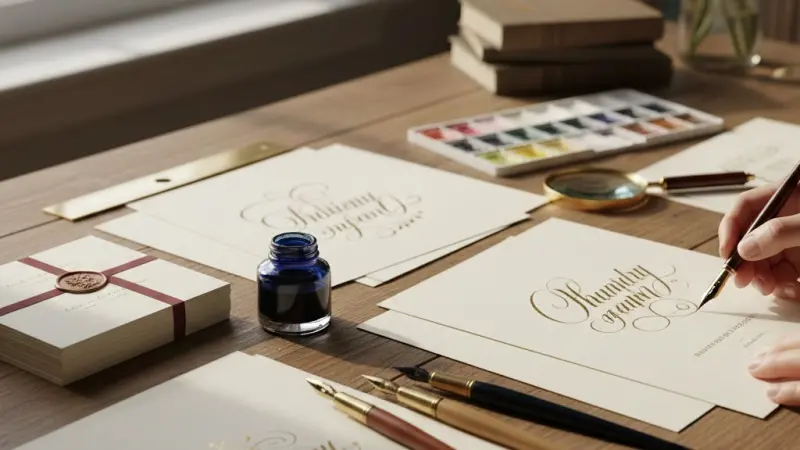
In the age of digital immediacy and mass-produced typography, the ancient art of calligraphy has undergone a remarkable renaissance across the United Kingdom. No longer confined to historical manuscripts or dusty archives, professional calligraphy has emerged as a high-value niche within the UK’s creative economy. This sector represents a unique intersection where artistic heritage meets corporate precision, serving a diverse clientele ranging from luxury fashion houses and high-society wedding planners to government institutions and private collectors.

The economic importance of the calligraphers' sector in the UK cannot be understated. As part of the broader £115 billion creative industries contribution to the UK economy, specialized hand-lettering services provide vital support to the events, hospitality, and luxury retail sectors. In a globalized market, "British Craftsmanship" remains a powerful brand; calligraphy is a cornerstone of this identity. Professional scribes contribute significantly to the local economy, often operating as specialized micro-businesses that support high-end printing houses, paper mills, and event venues.
For the modern consumer, the appeal lies in the "tactile luxury" that only a human hand can provide. Whether it is a bespoke invitation for a royal garden party or a hand-lettered logo for a boutique brand, the precision of a professional calligrapher adds a layer of authenticity and prestige that digital fonts fail to replicate. As we explore this landscape, it becomes clear that the sector is not merely surviving but thriving by adapting traditional skills to contemporary commercial needs. To navigate this flourishing market, many consumers and businesses turn to a uk business directory to identify verified artisans who possess the technical mastery required for high-stakes commissions.
The Landscape of Calligraphers in the UK
The current market for calligraphy in the UK is characterized by a sophisticated blend of traditional formalists and modern experimentalists. While the "Scribes' Guild" traditions remain strong in historical hubs like London, Oxford, and Edinburgh, the post-pandemic era has seen a geographical decentralization of the craft. The rise of remote working and the "digital nomad" lifestyle allowed many professional calligraphers to relocate from expensive urban centers to more rural, creative pockets in the Cotswolds, Cornwall, and the Scottish Highlands, without losing their high-end client base.
Quantifying the market size of such a specialized niche involves looking at the ancillary sectors it serves. The UK wedding industry, valued at approximately £14.7 billion annually, remains the primary driver for calligraphic services. However, corporate branding and experiential marketing have seen a 25% uptick in the use of live-on-site calligraphy for product launches. Post-pandemic, there has been a significant shift toward "meaningful consumption." After years of digital-only interaction, the British public has developed a renewed appreciation for physical, tangible art. This has led to an evolution in how calligraphers operate; many have moved from being "behind the scenes" executors to "front-of-house" performers, providing live lettering at luxury department stores like Harrods or Selfridges.
The evolution of the industry has also been influenced by the accessibility of information. Modern practitioners often utilize a business listing uk to bridge the gap between their traditional studio practice and the digital marketplace. This visibility is crucial in a post-lockdown economy where "localism" is a dominant consumer trend. Clients are increasingly looking for talent within their own regions, supporting the growth of regional calligraphy communities in cities like Manchester, Bristol, and Leeds. The industry has effectively transitioned from a hidden craft to a visible, vital component of the UK’s bespoke service sector.
Comprehensive Services Breakdown
The versatility of the modern calligrapher is vast, covering a spectrum of products that range from the ephemeral to the archival. Understanding the breakdown of these services is essential for any business looking to commission work.
Social and Wedding Calligraphy
This remains the most recognizable arm of the industry. It includes envelope addressing, place cards, seating plans, and bespoke invitation design. The British wedding market demands various styles, from the classic Copperplate and Spencerian scripts to more "Whimsical Modern" styles that dominate Pinterest and Instagram.
Corporate Branding and Identity
High-end British brands often commission calligraphers to create unique logotypes. Unlike a standard font, a hand-lettered logo offers a bespoke "DNA" that is impossible to pirate or replicate exactly. This service often extends to packaging design, where hand-drawn elements are digitized for large-scale production.
Commemorative and Archival Work
This traditional branch involves the creation of illuminated addresses, scrolls of honour, and certificates. Professional calligraphers are often employed by universities and livery companies to hand-write names on degrees and official rolls. This requires a high level of precision and the use of lightfast, archival inks and vellums.
On-Site Live Lettering
A growing trend in the UK is "event calligraphy." Brands hire artists to sit in-store and personalize gift tags, perfume bottles, or leather goods for customers. This "theatre of craft" is a powerful marketing tool that increases customer dwell time and brand loyalty.
Modern Signage and Large Format
Calligraphy is no longer restricted to paper. Modern practitioners work on acrylic, glass, wood, and even slate.
Chalkboard art for high-end restaurants and glass-writing for storefronts are increasingly popular ways for businesses to utilize these skills.
As the demand for these diverse applications grows, finding a specialist who excels in a specific substrate is paramount. Businesses often consult local business listings uk to find specialists in their specific niche, ensuring that the artist’s portfolio aligns with the project’s technical requirements.
How to Choose the Right Service Provider
Selecting a calligrapher in the UK requires more than just an appreciation of their portfolio. Because calligraphy is an unregulated industry, the burden of due diligence falls on the client. To ensure a professional result, one should look for several key indicators of quality.
Firstly, professional affiliations are a strong sign of commitment to the craft. Organizations such as the Society of Scribes and Illuminators (SSI) or the Calligraphy and Lettering Arts Society (CLAS) have rigorous standards for their fellows and accredited members. While not a legal requirement, membership in these bodies suggests a high level of technical proficiency and adherence to professional ethics.
Secondly, look for comprehensive insurance. A professional working on high-value items—such as a client’s heirloom Bible or 500 expensive, hand-made paper envelopes—must have professional indemnity and public liability insurance. This protects both parties in the event of accidental damage or errors.
Thirdly, local reputation and verified reviews are invaluable. In the UK, word-of-mouth has traditionally governed the craft world, but today, digital social proof is the new currency. When searching for a provider, using a uk local business search can help you find professionals who have a proven track record in your area. Look for consistency in their work; the "slant" of the letters, the consistency of the "O" shapes, and the spacing between words should remain uniform throughout a project.
Finally, consider the "turnaround time" and communication. Calligraphy is a slow art. A professional will provide a clear contract, a timeline for drafts and final delivery, and a transparent pricing structure (which may be per-line, per-item, or per-project).
Industry Challenges & Future Outlook
Despite its revival, the UK calligraphy industry faces several modern challenges. The most significant is the rapid advancement of Artificial Intelligence and digital plotting machines. High-end "fountain pen" printers can now mimic human handwriting with startling accuracy. However, the industry’s response has been to lean further into "imperfection" and "texture." The subtle variations in ink weight and the slight "bite" of the nib into the paper are things a machine cannot yet replicate, and these have become the primary selling points for human calligraphers.
Sustainability is another major shift. The modern UK consumer is highly sensitive to the environmental impact of their events. Calligraphers are responding by moving away from plastic-based acrylic inks toward traditional botanical inks, handmade recycled papers, and sustainably sourced vellums. This "green calligraphy" movement is not just a trend but a regulatory necessity as the UK moves toward stricter environmental standards for business operations.
Looking ahead, the future of the sector lies in hybridity. We are seeing a rise in "Digital Calligraphy," where artists use tablets to create hand-lettered designs that are immediately ready for web use or digital printing. This allows for the soul of the hand-drawn letter to exist in the digital space. For practitioners to stay relevant, they must ensure they are visible in the business listing uk spaces that modern buyers use to source sustainable and tech-forward vendors.
Business Tips for Calligraphers Professionals
For the professional calligrapher, talent is only half the battle; the other half is business acumen. In the UK market, the competition is fierce, and visibility is the key to sustainability.
Niche Specialization: Don't just be a "calligrapher." Be the "Luxury Wedding Calligrapher of the North West" or the
"Corporate Brand Specialist." Specialization allows you to charge premium rates and makes you easier to find.
Digital Visibility: Your website and social media are your storefront. High-quality photography of your work is non-negotiable. However, social media is volatile. You must anchor your digital presence in stable, authoritative directories. Having a presence in a uk verified business listings platform ensures that when a high-value client is looking for professional services, your business appears as a legitimate, vetted option.
Networking: Partner with complementary businesses. Stationery shops, wedding planners, and funeral directors are all potential sources of recurring work.
Workshops and Education: Diversifying your income through teaching is a proven model in the UK. Many calligraphers find that hosting "sip and script" evenings or corporate team-building workshops provides a steady cash flow during the wedding off-season.
SEO Strategy: Use local keywords. If you are based in Birmingham, ensure your online profiles reflect that. Local search is how the majority of bespoke commissions begin today.
Wrapping Up & Local Page Integration
The UK calligraphy industry is a testament to the enduring power of the human touch. From the precision of a formal deed to the flourish of a wedding place card, these professionals provide a service that elevates the mundane to the extraordinary. As we have seen, the sector is economically vital, culturally significant, and technologically adaptive.
For businesses and consumers, the challenge lies in connecting with the right talent. For the calligrapher, the challenge is standing out in a crowded digital landscape. This is where Local Page serves as the definitive bridge. As a premier uk online business directory, Local Page provides the infrastructure for UK artisans to showcase their precision and art to a national audience while maintaining their local relevance. By utilizing these tools, we ensure that the ancient art of the pen continues to write its story into the future of British commerce.
Boost Your Visibility with Local Page UK
For professionals in the calligrapher and lettering arts sector, being discovered by the right clientele is the difference between a struggling hobby and a thriving business. In a world where search engines are flooded with generic results, being part of a curated, authoritative platform is essential. We encourage all UK-based calligraphers to claim their business listing uk on Local Page UK. By joining our network, you place your artistry in front of individuals and businesses specifically seeking the high-quality, professional services you provide. Let us help you turn your passion for precision into a visible, profitable enterprise.
Frequently Asked Questions
What is the average cost of hiring a professional calligrapher in the UK?
The cost of professional calligraphy varies significantly depending on the complexity of the script and the volume of the work. For wedding stationery, you might expect to pay between £3.00 and £6.00 per envelope for addressing. For bespoke commissions, such as a hand-lettered poem or a family tree, prices usually start from £100 and can rise into the thousands for illuminated work. Many professionals also charge a "setup fee" to cover the cost of mixing bespoke inks or testing papers. It is always best to check local business listings uk to compare the rates and portfolios of different artists in your region to ensure you are getting a fair market price for the level of expertise required.
How long does it usually take to complete a calligraphy project?
Calligraphy is a meticulous process that cannot be rushed. For a standard wedding order of 100 envelopes, most professionals require a lead time of 2 to 3 weeks. This allows for the actual writing, the drying time of the ink, and a rigorous quality control check.
Larger commissions, such as hand-written books or complex seating charts, may take several months of planning and execution. It is vital to book your calligrapher well in advance, especially during the peak wedding season (May to September). Always discuss timelines upfront to ensure your project is delivered in time for your event or deadline.
Can calligraphers work on non-paper surfaces like glass or marble?
Yes, many modern UK calligraphers specialize in "surface lettering." This involves using specific permanent paints, oil-based markers, or even engraving tools to write on glass, acrylic, stone, wood, and leather. This is particularly popular for event signage, such as welcome mirrors or slate place cards. However, not every calligrapher offers this service, as it requires different technical skills and materials than traditional pen-and-paper work. When searching for a specialist, look for those who highlight "signage" or "multi-surface" work in their professional descriptions to ensure they have the right tools for the job.
Do I need to provide the paper, or does the calligrapher supply it?
This depends on the professional and the nature of the project. For wedding envelopes, clients often provide the stationery to match their invitation suite. However, calligraphers usually request an additional 15-20% of "spare" paper to account for ink testing and the occasional human error. For bespoke art pieces, the calligrapher will typically source high-quality, acid-free archival paper that they know reacts well with their specific inks. If you are providing the paper, it is essential to have it "tested" by the artist first, as some papers are too porous and cause the ink to "bleed" or "feather," ruining the crisp lines of the script.
How can I verify if a calligrapher is a legitimate professional?
To verify a professional, start by checking their presence on a reputable uk business directory website. A listing on Localpage indicates that the business is active and serious about its professional standing. You should also look for a portfolio of past work, client testimonials, and, ideally, a membership in a recognized craft body like the Calligraphy and Lettering Arts Society. A legitimate professional will always provide a formal quote or contract and will be happy to discuss their insurance coverage and the specific materials they use to ensure the longevity of your commissioned piece.
What is the difference between modern calligraphy and traditional copperplate?
Traditional Copperplate is a formal, disciplined script developed in the 16th century, characterized by a strict 55-degree slant and specific rules regarding the thickness of strokes. It requires years of study to master perfectly. Modern calligraphy, while based on these traditional techniques, is much more flexible. It allows the artist to develop their own "style," often with varying slants, exaggerated flourishes, and "bouncy" baselines. While Copperplate is often chosen for formal royal or diplomatic events, modern calligraphy is highly popular for boutique brands and contemporary weddings where a more personal, artistic touch is desired.
Is hand-calligraphy better than digital font printing?
While digital printing is faster and cheaper, it lacks the soul and texture of hand-calligraphy. A digital font repeats the same letter shape every time, whereas a calligrapher creates a unique character every time their pen hits the paper. Hand-calligraphy also allows for the use of metallic "raised" inks and gouaches that digital printers cannot handle. Furthermore, the "prestige" associated with hand-lettering is much higher; receiving a hand-addressed envelope makes the recipient feel significantly more valued, which is why it remains the gold standard for high-end events and luxury branding.
Can a calligrapher help with my corporate logo design?
Absolutely. Many calligraphers offer "branding packages" where they create a hand-lettered logo or wordmark. This is then scanned at a high resolution and converted into a vector file (digital format) that you can use for your website, business cards, and signage. This provides your brand with a completely unique identity that stands out from the thousands of companies using standard Google or Adobe fonts. It combines the organic beauty of hand-lettering with the practical requirements of modern digital marketing, offering a "bespoke" feel to your corporate identity.
What should I do if there is a mistake in my calligraphy order?
Professional calligraphers are human, and while they strive for 100% accuracy, very occasional errors can occur. A professional will usually have a policy in their contract regarding "re-do's." Typically, if the error was made by the calligrapher (e.g., a spelling mistake not present in the original list provided by the client), they will fix it free of charge. If the error was in the source list provided by the client, a small fee is usually charged for the correction. This is why providing an extra 20% of stationery is standard practice—it ensures that any corrections can be made on the matching paper immediately.
Are there eco-friendly calligraphy options available in the UK?
Yes, the UK has a growing movement of "sustainable scribes." You can request the use of iron gall ink (a traditional ink made from oak galls), botanical inks made from food waste or plants, and paper that is FSC-certified or made from recycled cotton rags. Many calligraphers are also moving away from using plastic-heavy metallic inks toward genuine gold leaf or mica-based powders which are more environmentally friendly. If sustainability is a priority for you, look for artists who explicitly mention "eco-friendly" or "sustainable" practices in their service listings.
Can calligraphy be done in different languages?
Yes, calligraphers can work in any language that uses the Latin alphabet, and many are skilled in other scripts such as Cyrillic, Arabic, or Hebrew. However, it requires the artist to understand the specific ductus (the direction and sequence of strokes) of that language. If you require calligraphy in a non-Latin script, it is essential to find a specialist in that specific tradition. A calligrapher who is unfamiliar with a language may inadvertently change the meaning of a word by incorrectly forming a character, so always ask to see samples of their work in that specific language.
Do calligraphers offer "live" services for events?
"Live calligraphy" or "on-site personalization" is a major trend for luxury retail and corporate events in the UK. Brands often hire a calligrapher to attend a product launch or a press event to personalize items for guests in real-time. This provides a "theatrical" element to the evening and gives guests a bespoke memento to take home. Most live calligraphers charge a day rate or an hourly rate (typically with a 3-hour minimum). This service is highly effective for increasing social media engagement, as guests love to film the artist at work and share it on platforms like Instagram and TikTok.
What is the best way to transport and store calligraphed items?
Calligraphy, especially when done with traditional inks or gold leaf, can be delicate. It should always be kept away from direct sunlight, which can fade certain inks over time, and moisture, which can cause the ink to run or the paper to warp. If you are transporting a large seating plan or signage, it should be kept flat and protected by acid-free tissue paper. For long-term storage of commemorative scrolls, archival-quality tubes or boxes are recommended. Always handle the paper by the edges, as the natural oils on your fingertips can sometimes react with the ink or leave marks on the high-quality paper.
Can I learn calligraphy myself, or should I always hire a pro?
Anyone can learn the basics of calligraphy through workshops or online courses, and it is a wonderful, meditative hobby. However, for high-stakes events like weddings or professional branding, hiring a professional is always recommended. The level of consistency, spacing, and technical knowledge required to produce 100 identical
place cards or a light-fast corporate logo takes years of daily practice to achieve. Many professionals offer workshops for beginners, which is a great way to appreciate the skill involved before deciding to commission them for your larger projects.
How do I find a calligrapher near me in the UK?
The most efficient way to find a local professional is to use a dedicated service directory. By performing a search on a reputable platform, you can filter by region and service type. We recommend using Local page to find verified artisans who serve your specific area. Using a structured directory ensures that you are seeing legitimate businesses rather than just social media profiles, giving you greater security and a wider range of verified options for your project.

Disclaimer: The information provided in this article is for general informational and research purposes only. Company details, features, services, and market positions may change over time. Readers are advised to visit official company websites and conduct independent research before making any business decisions or purchasing services.
Most Searchable Keywords

Recent Blogs


Related Listings

Categories
- Accountants (295)
- Advertising Agencies (559)
- Architects (149)
- Automobiles (377)
- Beauty (300)
- Carpenters (146)
- Cleaning Services (386)
- Dentists (189)
- Driving (62)
- Electricians (215)
- Energy (8)
- Event Organiser (685)
- Finance (599)
- Guide (3365)
- Health (2207)
- Information technology (206)
- Legal Services (353)
- Logistics (6)
- Maintenance (65)
- Manufacturing (35)

Sponsored Listings in Locksmith Services

Related Blogs

Gen Z Political Reporters and News Creators i...
Read this insightful article "Gen Z Political Reporters and News Creators in the UK" to expand your knowledge!

Famous Female Social Media Influencers Across...
Read this insightful article "Famous Female Social Media Influencers Across the UK" to expand your knowledge!

Your UK Sponsor Licence 2026 Step by Step Gui...
Read this insightful article "Your UK Sponsor Licence 2026 Step by Step Guide" to expand your knowledge!
Questions & Answers – Find What
You Need, Instantly!
How can I update my business listing?
Is it free to manage my business listing?
How long does it take for my updates to reflect?
Why is it important to keep my listing updated?
