
Professional Marble Care and Restoration The Complete UK Homeowner Guide
- 👤 Alex
- 👁️ 165 Views
- Last Updated: March 31, 2026
- 🏷️ Cleaning Services
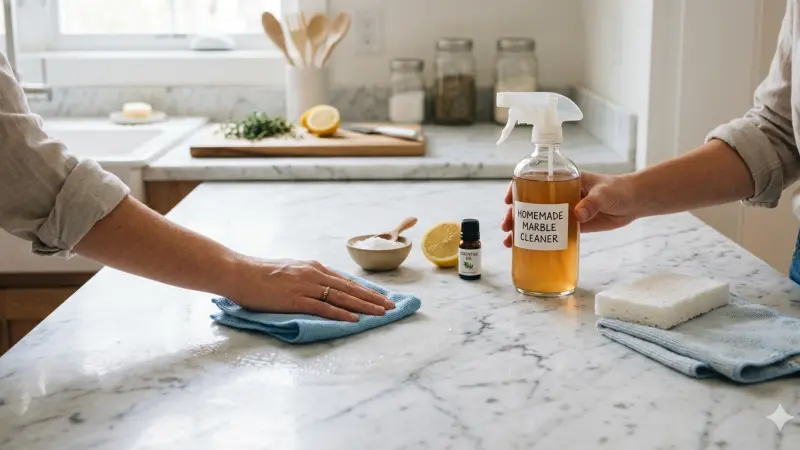
A Comprehensive Manual for the Maintenance of Natural Stone in the United Kingdom

Chapter 1: The Geology of Elegance
To master the care of marble, one must first respect its origins. Marble is a metamorphic rock that begins its life as limestone or dolomite. Under the intense tectonic pressure and geothermal heat of the Earth's crust, the original carbonate minerals undergo "recrystallisation." This process creates the interlocking mosaic of carbonate crystals we recognise as marble. The distinctive "veining" found in varieties like Carrara or Calacatta is the result of mineral impurities—such as clay, silt, sand, or iron oxides—which were originally present as layers in the limestone.
In the UK, marble has been a prized building material since the Roman occupation, though it reached its zenith in British domestic architecture during the Victorian era. Because it is primarily composed of Calcium Carbonate ($CaCO_3$), it is inherently alkaline. This chemical reality is the most important factor in its maintenance: any substance with a low pH (acidic) will trigger a chemical reaction that dissolves the calcium, resulting in permanent damage known as "etching."
The Fatal Error: Acidic Cleaners
The most common cause of marble destruction in British homes is the use of white vinegar, lemon juice, or citric acid. While these are celebrated in "eco-friendly" cleaning hacks for their ability to dissolve limescale, on a marble surface, they act as a corrosive. They do not just "clean" the surface; they eat into the stone itself, creating dull, white, and rough patches that cannot be wiped away.
Chapter 2: The Daily Maintenance Protocol
Modern marble surfaces in kitchens and bathrooms are often "polished" (shiny) or "honed" (matte). Regardless of the finish, the goal of daily maintenance is the removal of abrasive grit and the prevention of moisture infiltration.
2.1 The Microfibre Method
In the UK, hard water is a significant concern, particularly in the South East and London. If tap water is allowed to air-dry on marble, the mineral deposits (limescale) will bond to the stone. Therefore, the "Two-Cloth System" is essential.
- Cloth 1 (Damp): Use a high-GSM microfibre cloth dampened with warm, distilled water. Distilled water is preferable as it contains no dissolved minerals.
- Cloth 2 (Buffing): Follow immediately with a bone-dry, clean microfibre cloth to buff the surface. This mechanical action removes any latent droplets before they can spot.
2.2 The pH-Neutral Cleaning Solution
When water alone is insufficient—typically after food preparation—a surfactant is needed. Most off-the-shelf UK multi-purpose sprays are either too acidic (citrus-based) or too alkaline (bleach-based). A dedicated pH-neutral stone soap is required.
Recipe: Gentle Marble Finishing Spray
This solution is safe for daily use on worktops and vanity units.
- 500ml Distilled Water
- 3-5 Drops of pH-Neutral Washing Up Liquid (ensure it does not contain citrus extracts)
- 10ml Surgical Spirit (Isopropyl Alcohol) - this aids in quick evaporation to prevent streaks.
Method: Mist the surface lightly. Wipe with a damp cloth in a "S" motion to trap debris. Buff dry immediately with a clean cloth.
Chapter 3: Managing Marble Flooring
Marble floors in British hallways and entryways face a unique threat: the "Sandpaper Effect." In a damp climate, shoes track in wet grit, sand, and salt (during winter). These particles are harder than the marble itself. As people walk across the floor, these particles are ground into the stone, creating micro-scratches that eventually lead to a dull, "traffic-worn" appearance.
3.1 Dry Dusting
A marble floor should be dry-mopped daily. Use a dedicated dust mop or a microfibre pad. Avoid vacuums with rotating beater bars; the hard plastic wheels and brushes can leave tracks on the stone. If you must vacuum, use the "Hard Floor" setting where the brush is retracted.
3.2 The Two-Bucket Mopping System
When wet mopping is required, never use a single bucket. Bucket A: Contains the warm water and pH-neutral cleaner. Bucket B: Contains fresh rinse water. Dip the mop in Bucket A, clean a small section, and then rinse the mop in Bucket B before returning to the soap. This prevents the "redistribution of dirt," which is the primary cause of darkened grout lines in UK homes.
Chapter 4: Advanced Stain Extraction (The Poultice Method)
Marble is porous, meaning it acts like a sponge. If you spill red wine, beetroot juice, or coffee, the liquid "wicks" down into the stone's capillaries. Surface cleaning will not reach this deep-set pigment. You must use a "Poultice"—a chemical magnet designed to draw the stain back out.
| Stain Type | Absorbent Material | Chemical Solvent |
|---|---|---|
| Organic (Coffee, Tea, Wine) | Bicarbonate of Soda or Talc | Hydrogen Peroxide (6% Vol) |
| Oil (Cooking Oil, Makeup) | Cornflour (Cornstarch) | Water or Acetone |
| Ink (Ballpoint pen) | Paper Towel | Surgical Spirit |
| Mould/Mildew | White Chalk Powder | Diluted Bleach (Light stone only) |
4.1 The Step-by-Step Poultice Process
1. Preparation: Mix your absorbent material with your solvent until you achieve the consistency of peanut butter. 2. Application: Dampen the stained area with distilled water (to fill the pores and prevent the paste from drying too quickly). Apply the paste 1cm thick over the stain, extending it 1cm beyond the stain's edges. 3. Sealing: Cover the paste with cling film. Tape down the edges with masking tape. Poke 2-3 small holes in the film to allow for very slow evaporation. 4. The Wait: Leave for 24 to 48 hours. As the paste dries, it "pulls" the stain out of the stone and into the absorbent powder. 5. Removal: Once completely dry, scrape the paste off with a plastic scraper (an old credit card works well). Rinse with distilled water and buff dry.
Chapter 5: Bathrooms and the Limescale Challenge
Bathrooms in the UK often feature marble showers or baths. This environment is the most hostile for marble due to the presence of soap scum and hard water deposits.
Soap scum is actually a chemical reaction between the minerals in hard water and the fatty acids in soap. Over time, it creates a grey, waxy film.
5.1 Removing Soap Scum Without Acid
To remove soap scum, you need to emulsify the wax. Mix 1/2 cup of clear Ammonia with 4 litres of warm water. Use a soft sponge to scrub the walls. Ammonia is alkaline and will not etch marble, making it the perfect degreaser for stone. Warning: Always wear gloves and ensure the bathroom window is open. Never mix ammonia with bleach, as this creates toxic chloramine gas.
5.2 The 'Buff-Dry' Rule
In a marble shower, the most effective maintenance is to "squeegee" or towel-dry the walls after every use. By removing the standing water, you prevent the minerals from ever bonding to the stone. This single habit can reduce your deep-cleaning requirement by 90%.
Chapter 6: Heritage and Period Home Considerations
Many UK residents live in Victorian or Georgian properties with original marble fireplace surrounds. These are often "unsealed" and have accumulated decades of coal soot or wax. Soot Removal: Use a specialized "smoke sponge" or a dry vulcanized rubber sponge to lift surface soot without rubbing it further into the pores. Wax Buildup: If old beeswax has yellowed the marble, use a hair dryer on a low heat setting to soften the wax, then blot with a clean paper towel. Any remaining residue can be gently wiped with white spirit (mineral spirits) on a cotton wool ball.
UK Marble Care: Frequently Asked Questions
We strongly advise against it. Steam mops use high heat and pressure that can penetrate the stone's pores and strip away the protective sealer. Furthermore, in rare cases, the "thermal shock" can cause micro-cracking in the marble's crystal structure.
Yellowing is common in white marble (like Carrara) and is usually caused by the iron inside the stone oxidising (rusting).
This occurs if the stone is constantly saturated with water. Another cause is the use of non-neutral detergents that react with the stone's minerals.
Absolutely not. Magic erasers are made of melamine foam, which is an abrasive. Using one on a polished marble surface is the equivalent of using 1000-grit sandpaper; it will create a large, permanent dull patch on your stone.
If the mark is just a stain, use the Poultice method with Hydrogen Peroxide. If the mark is a dull spot that you can feel with your fingernail, it is an "etch." This requires professional polishing or the use of a specialist marble polishing powder containing tin oxide.
In a high-use kitchen, we recommend sealing every 6 months. In a bathroom or hallway, once a year is usually sufficient. To test your seal, place a few drops of water on the stone; if it doesn't bead and instead soaks in after 60 seconds, it's time to reseal.
Bicarbonate of soda is slightly abrasive. While it is useful in a soft paste (poultice), you should never use the dry powder to scrub the stone, as the grains can leave fine scratches on a polished finish.
Blot immediately. Do not wipe. Wiping spreads the acid. Once blotted, flush the area with distilled water and a drop of neutral soap, then dry completely. If a dull spot remains, it has etched and will require re-polishing.
Acetone is safe for dark marble but should be used sparingly on light marble as it can occasionally cause slight yellowing. Always test on an inconspicuous area first. Acetone will strip your sealer, so remember to re-seal that spot after cleaning.
Only if it is pH-neutral and used in very small quantities. Too much soap will leave a dulling
film on the floor that attracts even more dirt, leading to a slippery and unattractive surface.
Marble has excellent thermal mass, but it can still suffer from "thermal shock" if a hot pan is placed directly on it. Always use a trivet or a heat-resistant mat. Heat can also darken the resin often used to fill small voids in the marble during manufacturing.

Disclaimer: The information provided in this article is for general informational and research purposes only. Company details, features, services, and market positions may change over time. Readers are advised to visit official company websites and conduct independent research before making any business decisions or purchasing services.
Most Searchable Keywords

Recent Blogs



Related Listings
-
Platinum Exterior Cleaning
-

End of Tenancy Cleaning Agency
-

Royal Cleaning
-

FastKlean
-
Fantastic Services

Categories
- Accountants (295)
- Advertising Agencies (559)
- Architects (149)
- Automobiles (377)
- Beauty (300)
- Carpenters (146)
- Cleaning Services (386)
- Dentists (189)
- Driving (62)
- Electricians (215)
- Energy (8)
- Event Organiser (685)
- Finance (599)
- Guide (3365)
- Health (2207)
- Information technology (206)
- Legal Services (353)
- Logistics (6)
- Maintenance (65)
- Manufacturing (35)

Sponsored Listings in Cleaning Services
Related Blogs

Gen Z Political Reporters and News Creators i...
Read this insightful article "Gen Z Political Reporters and News Creators in the UK" to expand your knowledge!

Famous Female Social Media Influencers Across...
Read this insightful article "Famous Female Social Media Influencers Across the UK" to expand your knowledge!

Your UK Sponsor Licence 2026 Step by Step Gui...
Read this insightful article "Your UK Sponsor Licence 2026 Step by Step Guide" to expand your knowledge!
Questions & Answers – Find What
You Need, Instantly!
How can I update my business listing?
Is it free to manage my business listing?
How long does it take for my updates to reflect?
Why is it important to keep my listing updated?
