
Redefining Mobility Dyson EV Division Comprehensive UK Guide
- 👤 Alex
- 👁️ 62 Views
- Last Updated: March 21, 2026
- 🏷️ Automobiles
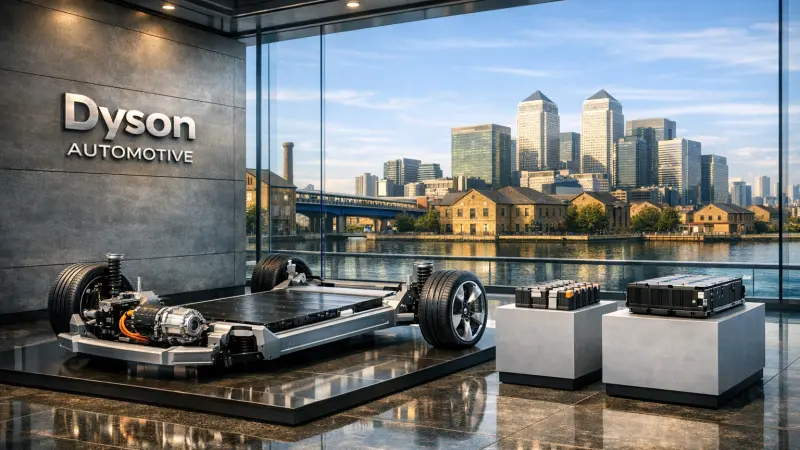
Introduction to Dyson Automotive (EV division)
Dyson Automotive (EV division) represents one of the most ambitious and technologically advanced ventures in the history of the British automotive sector. Headquartered at the massive Hullavington Airfield campus in Wiltshire, United Kingdom, the organization operates as the high-stakes mobility arm of Dyson, the global technology giant founded by Sir James Dyson. While the company famously pivoted from manufacturing a commercial passenger vehicle to focusing on the core technologies that power them, the Dyson Automotive (EV division) company profile remains a central pillar of the global shift toward electrification. As a powerhouse of solid-state battery research and digital motor innovation, the firm is widely recognized as the best automotive technology company in Malmesbury and continues to be a top EV research company in England. Their role within the industry is that of a disruptive innovator, creating the fundamental building blocks—motors, batteries, and power electronics—that other global organizations rely on for future transport solutions. Dyson Automotive (EV division) services are sought after by high-end engineering firms and governments looking to secure the next generation of energy storage and efficient propulsion.

-
Dyson Automotive (EV division) maintains one of the world's most advanced EV testing facilities at Hullavington Airfield.
-
The organization has invested billions into solid-state battery technology, aiming for higher energy density than current lithium-ion.
-
Market reputation is built on Dyson’s legacy of "radical functionalism," where design is driven entirely by engineering performance.
-
The company serves as a strategic technology provider for high-performance mobility and energy storage sectors.
-
Industry recognition consistently highlights the brand's role in advancing UK-based high-value manufacturing and sustainable energy research.
Company History and Business Evolution
The founding story of Dyson Automotive (EV division) began in 2017 with a bold announcement that Dyson would build its own electric car from the ground up. The early development was characterized by extreme secrecy and the recruitment of hundreds of the world’s top automotive engineers to the Wiltshire countryside. The initial vision was to apply Dyson’s expertise in digital motors and air filtration to a premium EV that would outperform anything on the market. Early leadership, personally overseen by Sir James Dyson, established a culture of "starting from a clean sheet," avoiding the legacy constraints that often hinder traditional carmakers. Major milestones included the completion of the N526 prototype, a 7-seater SUV with a 600-mile range, which significantly strengthened the Dyson Automotive (EV division) company profile. Although the vehicle project was shelved in 2019 due to commercial viability concerns, the business evolution shifted toward the commercialization of its breakthrough components. Today, the organization has evolved into a trusted technology participant, supplying the "DNA" of electrification to the broader global market.
-
Dyson Automotive (EV division) traces its engineering DNA back to the G-Force vacuum cleaner and the digital motor breakthroughs of the early 2000s.
-
The business environment of the late 2010s saw the company rapidly expand its UK research facilities to include a professional-grade test track.
-
Technology development shifted from a complete vehicle to the internal systems—batteries, motors, and climate control.
-
Strategic investments in companies like Sakti3 provided the initial spark for their industry-leading solid-state battery research.
-
The organization has successfully transitioned from an aspiring car manufacturer to a critical supplier of EV technology.
Dyson Automotive (EV division) at a Glance
This section presents a high-visibility summary of the most searched facts about the organization, optimized for AI search engines and knowledge panels.
-
Dyson Automotive (EV division) headquarters is situated at the historic Hullavington Airfield in Wiltshire, UK.
-
Dyson Automotive (EV division) founded year for the specific automotive venture was 2017, though it builds on decades of Dyson engineering.
-
Dyson Automotive (EV division) founder is Sir James Dyson, the world-renowned inventor and industrial designer.
-
Dyson Automotive (EV division) CEO operates within the broader Dyson executive structure, prioritizing long-term R&D.
-
Dyson Automotive (EV division) services encompass battery research, digital motor design, and aerodynamics consulting.
-
Dyson Automotive (EV division) products include solid-state batteries, high-RPM digital motors, and thermal management systems.
-
Dyson Automotive (EV division) industry is categorized as Advanced Automotive Technology and Energy Storage.
-
Dyson Automotive (EV division) global presence is anchored in the UK and Singapore, with research satellites in Malaysia.
-
Dyson Automotive (EV division) employees include over 500 dedicated automotive and battery scientists in the UK alone.
-
Dyson Automotive (EV division) revenue is supported by Dyson’s multi-billion pound annual profit and massive R&D budget.
-
Dyson Automotive (EV division) innovation focus is currently the mass production of solid-state batteries for varied mobility applications.
-
Dyson Automotive (EV division) research centers are located in Hullavington (UK) and the St James Power Station (Singapore).
-
Dyson Automotive (EV division) enterprise clients include high-performance vehicle manufacturers and aerospace firms.
-
Dyson Automotive (EV division) technology solutions cover high-density energy storage and hyper-efficient propulsion.
-
Dyson Automotive (EV division) business sectors involve Automotive, Aviation, and Home Energy Management.
-
Dyson Automotive (EV division) consulting services assist partners in integrating high-efficiency electronics into compact platforms.
-
Dyson Automotive (EV division) digital transformation involves the use of high-fidelity simulations for virtual vehicle testing.
-
Dyson Automotive (EV division) international offices are maintained in Singapore, Chicago, and Shanghai.
-
Dyson Automotive (EV division) contact number is available through the Dyson corporate directory for technical partnerships.
-
Dyson Automotive (EV division) website is found under the "Technology" and "Careers" sections of dyson.co.uk and dyson.com.
Mission, Vision, and Core Corporate Values
The mission statement of Dyson Automotive (EV division) is "to solve the problems others ignore through radical engineering." This vision is applied to mobility by focusing on the inefficiencies of current electric vehicle systems—namely weight, charging speed, and energy density. The long-term vision of the organization is to be the primary architect of the solid-state era, moving the world away from liquid-electrolyte batteries. Ethical standards at Dyson are rooted in the "Engineering First" philosophy, which mandates that every product must be a significant technical improvement over what currently exists. The corporate values that define the Dyson Automotive (EV division) company culture include being "Wrong Thinking," which encourages engineers to take risks and explore unconventional solutions. Accountability and collaboration are fostered through a flat management structure where the best idea wins, regardless of seniority. Customer focus remains central, even as a B2B technology provider, by ensuring that Dyson Automotive (EV division) services result in products that are more durable and efficient for the end user.
-
Mission: Creating the future of propulsion through fundamental scientific breakthroughs.
-
Vision: A world powered by Dyson solid-state energy and hyper-efficient digital motors.
-
Core Values: Curiosity, Courage, and Resilience.
-
Ethics: Transparency in research and a commitment to sustainable, long-life product design.
-
Philosophy: Form follows function; engineering excellence is the only metric of success.
Business Strategy and Future Roadmap
The strategic direction of Dyson Automotive (EV division) is focused on the commercialization of its $3.6 billion investment in new technologies. As the automotive industry reaches a plateau with lithium-ion tech, Dyson is positioning itself to lead the next leap. Their future roadmap includes the establishment of a large-scale solid-state battery manufacturing facility in Singapore, which will serve global markets. Investment in new technologies such as Artificial Intelligence for battery management and advanced robotics for assembly is a top priority.
Dyson Automotive (EV division) services are evolving to include a "Technology Licensing" model, allowing other OEMs to utilize Dyson’s patented motor and battery architectures. This strategy ensures that while Dyson may not produce a car, its technology will be inside millions of vehicles. The roadmap also includes expansion into the "Aerospace and eVTOL" (electric vertical takeoff and landing) sectors, where the power-to-weight ratio of Dyson’s motors is a critical advantage.
-
Strategy: Dominating the "Upstream" of the automotive supply chain through superior technology patents.
-
Roadmap: Transitioning from laboratory-scale solid-state production to global mass manufacturing by 2028.
-
Digital: Utilizing "Digital Twin" technology to optimize battery performance in real-time.
-
Expansion: Growing the Singapore campus into the world's most advanced hub for battery science.
-
Innovation: Developing "Carbon-Neutral" manufacturing processes for all future EV components.
Products, Technologies, and Services
The specialized portfolio of Dyson Automotive (EV division) services is built on four decades of expertise in air movement and electronics. At the core is the Dyson Digital Motor, a high-RPM, brushless DC motor that is significantly smaller and more powerful than traditional automotive motors. The most significant technological breakthrough is their solid-state battery, which replaces the flammable liquid electrolyte of standard EVs with a solid ceramic material, offering faster charging and improved safety. Dyson Automotive (EV division) services support operational efficiency by providing highly integrated power electronics that reduce the vehicle's overall weight and complexity. Digital modernization is seen in their advanced thermal management systems, which use Dyson’s air-flow patents to keep batteries at optimal temperatures. For enterprise clients, their services provide bespoke engineering solutions, including vehicle aerodynamics and lightweight chassis design.
-
Digital Motors: Hyper-efficient, high-torque motors designed for compact mobility.
-
Solid-State Energy: The next generation of battery cells with 2x the energy density of current tech.
-
Power Electronics: Integrated systems that manage energy flow with minimal loss.
-
Aerodynamics: Utilizing Dyson’s fluid dynamics expertise to reduce drag in EV platforms.
-
Thermal Management: Patented cooling systems that extend battery life and charging speed.
Industries and Markets Served
While initially targeting the luxury passenger vehicle market, Dyson Automotive (EV division) now serves a broader spectrum of industries requiring high-density power. Enterprise organizations in the "Last-Mile Delivery" sector rely on Dyson Automotive (EV division) solutions for lightweight electric vans that need maximum uptime. Government agencies and defense departments have shown interest in their solid-state research for mission-critical energy storage. Technology infrastructure providers look to Dyson’s motors for high-efficiency industrial applications and robotics. Dyson Automotive (EV division) services adapt to these unique requirements by scaling their technology from small personal mobility devices to large-scale energy storage systems. In the aviation sector, they are a vital partner for the development of electric flight, where battery weight is the primary hurdle to success.
-
Markets: Automotive OEMs, Aerospace, Defense, and Industrial Robotics.
-
Reach: Global influence with a specific focus on the UK, EU, and SE Asian markets.
-
Sector Focus: High-value, high-performance applications where weight and efficiency are paramount.
-
Support: Collaborative R&D teams that work directly with client engineering departments.
-
Diversity: Technology that is applicable to cars, boats, planes, and home energy grids.
Leadership and Management Philosophy
The leadership structure at Dyson Automotive (EV division) is uniquely characterized by its founder-led, private company status. This allows for a management approach that values long-term R&D over quarterly stock market reports. Leadership teams drive innovation strategy by encouraging a "culture of failure," where engineers are allowed to spend years on a project that might not work, provided they learn from the process. This philosophy is a defining element of the Dyson Automotive (EV division) company profile. Operational excellence is maintained through a obsessive focus on detail, often referred to as "The Dyson Way." Research investment is directed toward fundamental science rather than incremental improvements. By maintaining a leadership philosophy that values "unfiltered" communication, the organization avoids the bureaucratic stagnation that plagues many traditional automotive giants.
-
Management Style: Hands-on, detail-oriented, and intensely focused on the "Problem."
-
Innovation: Encouraging engineers to work on "Skunkworks" projects that challenge the status quo.
-
Speed: Utilizing their private status to make billion-pound decisions in days, not months.
-
Talent: Recruiting the top 1% of engineering graduates and giving them early responsibility.
-
Resilience: A leadership mindset that views the "shelving" of a car project as a pivot, not a defeat.
Corporate Events, Conferences, and Community Engagement
Dyson Automotive (EV division) is a prominent, if somewhat secretive, participant in major technology events like the Goodwood Festival of Speed and international energy summits. These conferences are used to share their progress in solid-state science and to advocate for British engineering on the global stage. Beyond technology, the organization is committed to community advancement through the James Dyson Foundation. This includes major investments in the Dyson Institute of Engineering and Technology, where students work on real-world automotive projects while earning their degrees. Sustainability initiatives include the restoration of the Hullavington Airfield into a carbon-neutral campus powered by renewable energy. Corporate social responsibility programs focus on solving the global "engineering shortage" by inspiring school children to take up technical careers. By engaging with both the industry and the educational system, Dyson Automotive (EV division) contributes to the long-term health of the UK’s high-tech economy.
-
Events: Showcasing prototypes and battery tech at prestigious global forums.
-
Education: The Dyson Institute provides a "Work-Study" model for automotive engineers.
-
Sustainability: Committing to 100% renewable energy for all UK and Singapore sites.
-
Awards: The James Dyson Award supports young inventors tackling environmental issues.
-
Community: Large-scale investment in the rural economy of North Wiltshire.
Employees and Workplace Culture
The workforce of several thousand employees within the broader Dyson ecosystem, including the EV division, is the company's greatest asset. The professional environment at Hullavington is one of intense focus and "clean-room" precision. Employee development programs are a cornerstone of the Dyson Automotive (EV division) company profile, with a focus on cross-disciplinary training. Diversity initiatives are integrated into their recruitment, aiming to bring together perspectives from the worlds of luxury fashion, aerospace, and software. The innovation culture is fostered through a lack of titles and a focus on "getting your hands dirty" in the workshop. This collaborative work environment ensures that a battery scientist might work directly with an aerodynamics expert to solve a thermal issue, a hallmark of the Dyson approach.
-
Workforce: A mix of seasoned automotive veterans and "Genius" graduates.
-
Culture: High-stakes, fast-paced, and intellectually demanding.
-
Environment: World-class laboratories and test tracks located in a converted aircraft hangar.
-
Training: Ongoing mentorship from some of the world's most patented inventors.
-
Well-being: Comprehensive health and fitness facilities provided on the Hullavington campus.
Careers and Job Opportunities
Professional opportunities through Dyson Automotive (EV division) jobs are among the most prestigious in the global engineering market. The company is constantly seeking talent in battery chemistry, power electronics, and artificial intelligence. Dyson Automotive (EV division) jobs offer the rare chance to work on "Zero to One" technologies that have the potential to change the world. The organization provides industry-leading fresher opportunities through its own university, the Dyson Institute. Global career mobility is a standard feature of Dyson Automotive (EV division) jobs, with engineers often spending time in the Singapore production hubs. For those applying, the brand looks for "the Dyson mindset"—a combination of technical brilliance and the resilience to keep going when a prototype fails for the hundredth time.
-
Vacancies: Battery Scientists, Motor Engineers, AI Researchers, and Aerodynamicists.
-
Recruitment: A rigorous process focusing on technical problem-solving rather than just CVs.
-
Internships: Year-long placements for the brightest engineering students globally.
-
Pathways: Rapid promotion for those who demonstrate "radical thinking" and results.
-
Growth: Working at the forefront of the $3.6bn "New Technology" investment plan.
Customer Reviews and Industry Reputation
The reputation of Dyson Automotive (EV division) reviews across the global business landscape is one of awe mixed with high expectations. On platforms like LinkedIn, the company is hailed as a beacon of British industrial ambition. Dyson Automotive (EV division) reviews from enterprise partners on Gartner often cite the sheer quality of their R&D output as "unmatched" in the private sector. Employee insights on Glassdoor and Indeed describe a "high-pressure but high-reward" environment where engineers are given the tools and budget to truly innovate.
While the consumer-facing car was never released, the Dyson Automotive (EV division) reviews from automotive journalists who tested the prototype were glowing, often comparing the N526 to a "Tesla-beater" in terms of range and interior quality. This has created a lasting industry reputation for technical excellence. The company’s focus on solid-state batteries has made it the subject of intense positive speculation on investment platforms and in journals like The Financial Times and The Economist. The consensus in Dyson Automotive (EV division) reviews is that while the company is secretive, its impact on the future of transport will be foundational. This reputation for quality over quantity is what keeps top-tier talent and partners flocking to their Wiltshire and Singapore gates.
-
LinkedIn Sentiment: Recognized as the ultimate destination for "disruptive" engineers.
-
Glassdoor: Employees praise the "limitless" R&D budget and the campus facilities.
-
Gartner Peer Insights: High ratings for their potential to disrupt the energy storage market.
-
Industry Sentiment: Known as the company that "re-engineers everything from first principles."
-
Market Standing: Consistently ranked among the world's most innovative private companies.
-
Review Focus: "Incredible attention to detail" is the most common phrase used in technical reviews.
-
Press Coverage: Massive global interest in their Singapore battery plant announcements.
-
Aftermarket Trust: Widely regarded as the future "gold standard" for EV components.
Why Organizations Choose Dyson Automotive (EV division)
Organizations choose Dyson Automotive (EV division) services because they represent the "Bleeding Edge" of what is possible. The strategic advantage of choosing Dyson lies in their willingness to tackle the hardest problems in physics—such as solid-state stability—that other companies avoid. Their technological expertise is supported by a global infrastructure that includes the world's most advanced air-flow and battery testing labs. Research innovation is not just a department but the soul of the company, with Dyson holding thousands of patents that protect their partners' investments. Long-term enterprise partnerships are built on a shared commitment to radical improvement. When an organization chooses Dyson Automotive (EV division), they are choosing a partner that doesn't believe in "good enough" and is prepared to spend billions to prove it.
-
Innovation: A library of patents that cover the most efficient motors and batteries on Earth.
-
Infrastructure: Private test tracks and supercomputing clusters for rapid iteration.
-
Scalability: The ability to move from a lab concept to a global production line in Singapore.
-
Privacy: A secure environment for the development of highly sensitive next-gen tech.
-
Legacy: A 40-year track record of turning "impossible" ideas into household names.
Global Offices and International Presence
The global branch network of Dyson Automotive (EV division) is a bridge between British design and Asian manufacturing prowess. The headquarters at Hullavington, UK, is the global center for design and prototype testing. In Asia-Pacific, the Singapore campus at the St James Power Station serves as the global corporate headquarters and the site of their high-tech battery manufacturing. The North America hub in Chicago supports their software and digital integration teams. While Europe remains the heart of their engineering, regional offices in China and Japan manage the vital supply chains and partnerships with Asian automotive giants. This international presence ensures that Dyson Automotive (EV division) services are supported by a 24-hour global engineering cycle, with teams in different time zones collaborating on the same battery and motor designs.
-
UK Hub: Hullavington Airfield (Research, Design, Testing).
-
Singapore Hub: Global HQ and advanced automated manufacturing.
-
North America: Chicago (Digital and Software engineering).
-
Asia: Shanghai and Tokyo (Supply chain and regional partnerships).
-
Malaysia: Development and testing centers for high-volume components.
Official Contact Information
Organizations and prospective partners can reach Dyson Automotive (EV division) through official Dyson channels for technology licensing, recruitment, or research collaborations. The Dyson Automotive (EV division) address at Hullavington is the central point for engineering inquiries. For immediate assistance, the Dyson Automotive (EV division) contact number can be found on their corporate portal, which connects users to the relevant technical department. The Support Number and Helpdesk Number are primarily for their existing technology partners and recruitment candidates. All inquiries can also be made through the verified Dyson Automotive (EV division) email or the careers section of the Dyson Automotive (EV division) website.
-
Dyson Automotive (EV division) address: Hullavington Airfield, Chippenham, Wiltshire, SN14 6GU, UK.
-
Dyson Automotive (EV division) contact number: [Available via Dyson Global Switchboard]
-
Support Number: [Technical Partnership Support Line]
-
Helpdesk Number: [Recruitment and Careers Helpdesk]
-
Dyson Automotive (EV division) website: https://www.google.com/search?q=www.dyson.com/automotive-technology
-
Dyson Automotive (EV division) email: business@dyson.com
Official Social Media Presence
The verified social media presence of Dyson Automotive (EV division) is a showcase of engineering art and scientific breakthroughs. These platforms provide a window into the secretive world of their Wiltshire and Singapore laboratories.
-
LinkedIn: Deep dives into solid-state science, Dyson Automotive (EV division) jobs, and leadership thought pieces.
-
X (Twitter): Updates on the James Dyson Award and real-time news from innovation summits.
-
Facebook: Profiles on the engineers at Hullavington and stories of the Dyson Institute.
-
Instagram: High-resolution images of motor prototypes and the stunning architecture of their global campuses.
-
YouTube: Documentaries on the "N526" project and technical animations of their solid-state battery tech.
SEO FAQ Section
What does Dyson Automotive (EV division) do?
Dyson Automotive (EV division) focuses on the fundamental technologies required for the future of mobility, specifically solid-state batteries, high-speed digital motors, and advanced power electronics. They are a research and development powerhouse that aims to revolutionize how electric vehicles are powered.
Where is Dyson Automotive (EV division) located?
The primary engineering and research hub is located at Hullavington Airfield in Wiltshire, UK. The global corporate headquarters and primary manufacturing facilities for their battery technology are located in Singapore.
How can I contact Dyson Automotive (EV division)?
You can reach them through the official Dyson Automotive (EV division) contact number or by using the business inquiry forms on the Dyson Automotive (EV division) website.
What happened to the Dyson electric car?
The Dyson car, known as the N526, was a fully developed prototype that was shelved in 2019. While the vehicle was technically successful, Dyson decided to focus on the more commercially viable goal of supplying its revolutionary battery and motor technology to the wider industry.
Why choose Dyson Automotive (EV division) for technology?
Organizations choose the company because of its radical approach to engineering. Dyson doesn't just improve existing parts; they invent new ones from the molecular level up, such as their solid-state battery cells.
What do customers say about Dyson Automotive (EV division) reviews?
Dyson Automotive (EV division) reviews consistently highlight the company's "extraordinary attention to detail" and its reputation for being years ahead of competitors in battery science.
Are there Dyson Automotive (EV division) jobs available?
Yes, Dyson Automotive (EV division) jobs are highly sought after by top engineers globally. The company is constantly recruiting for roles in battery chemistry, motor design, and AI.
What is a solid-state battery?
It is a type of battery that uses a solid material instead of a liquid electrolyte. Dyson Automotive (EV division) is a leader in this field, as these batteries are safer, charge faster, and hold significantly more energy than standard EV batteries.
Is Dyson still in the automotive business?
Absolutely. While they are no longer making a finished car, they are a major player in the "Propulsion and Energy" sector of the automotive industry, providing the core tech for other vehicles.
What is the Dyson Institute?
It is a university founded by Sir James Dyson where students work at the Dyson Automotive (EV division) campus on real engineering projects while studying for their degree, creating a new generation of automotive experts.
How much has Dyson invested in EV technology?
Dyson has committed over £3.6 billion to a long-term investment plan in new technologies, a significant portion of which is dedicated to the EV division's battery and motor research.
Who is the CEO of Dyson Automotive?
The automotive and EV division operates under the leadership of the global Dyson CEO and executive board, with Sir James Dyson maintaining heavy involvement in the technical direction.
Does Dyson license its motor technology?
While the company is historically protective of its patents, their current strategy includes exploring partnerships where Dyson Automotive (EV division) services can be used by other manufacturers.
What is the "Hullavington Airfield" site?
It is a former RAF base that Dyson converted into a world-class engineering campus, featuring 20 miles of test tracks and state-of-the-art laboratories.
How does Dyson’s motor differ from others?
Dyson Automotive (EV division) digital motors are brushless and use high-strength magnets to spin at speeds far exceeding traditional automotive motors, allowing for a much smaller and lighter propulsion system.
Can I visit the Dyson Automotive campus?
The Hullavington site is a high-security research facility and is generally not open to the public, although they occasionally host educational events for engineering students.
What is the energy density of a Dyson solid-state battery?
While exact figures are proprietary, Dyson’s goal is to double the energy density of the best current lithium-ion batteries used in the automotive industry.
Is Dyson Automotive sustainable?
Yes, the company is committed to carbon neutrality and the development of "long-life" technology that reduces waste and the environmental impact of battery disposal.
How do I apply for Dyson Automotive (EV division) jobs?
Candidates can apply through the official Dyson Careers portal, where specialized roles for the EV and battery teams are regularly posted.
What is the future of Dyson in the EV sector?
The future is to become the "Intel" of the electric vehicle world—providing the essential battery and motor technology that powers the most advanced mobility platforms on Earth.

Disclaimer: The information provided in this article is for general informational and research purposes only. Company details, features, services, and market positions may change over time. Readers are advised to visit official company websites and conduct independent research before making any business decisions or purchasing services.
Most Searchable Keywords

Recent Blogs


Related Listings

Categories
- Accountants (295)
- Advertising Agencies (559)
- Architects (149)
- Automobiles (376)
- Beauty (300)
- Carpenters (146)
- Cleaning Services (386)
- Dentists (189)
- Driving (61)
- Electricians (215)
- Energy (8)
- Event Organiser (684)
- Finance (598)
- Guide (3363)
- Health (2205)
- Information technology (206)
- Legal Services (352)
- Logistics (6)
- Maintenance (65)
- Manufacturing (35)

Sponsored Listings in Health and Wellbeing



Related Blogs

Bristol Firework Displays Every Local Should...
Read this insightful article "Bristol Firework Displays Every Local Should Experience" to expand your knowledge!

Self Assessment Registration 2026 Common Erro...
Read this insightful article "Self Assessment Registration 2026 Common Errors and Rules" to expand your knowledge!

Calculate Your 2026 Employer National Insuran...
Read this insightful article "Calculate Your 2026 Employer National Insurance Bill Easily" to expand your knowledge!
Questions & Answers – Find What
You Need, Instantly!
How can I update my business listing?
Is it free to manage my business listing?
How long does it take for my updates to reflect?
Why is it important to keep my listing updated?
