
Registered Office vs Corporate Office Explained
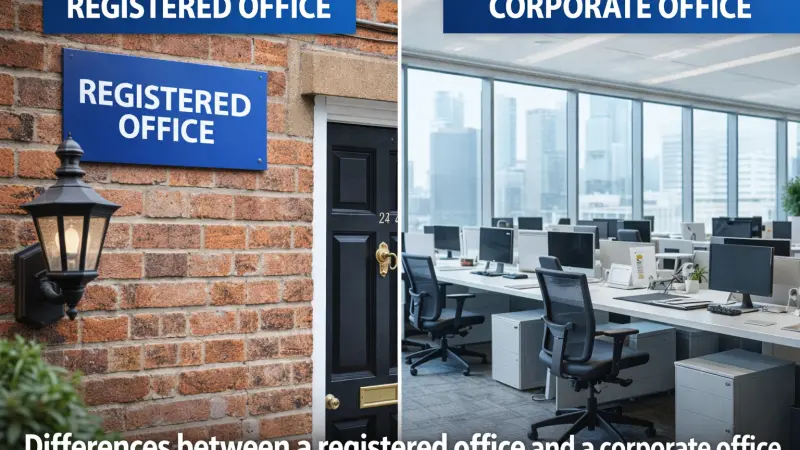
When setting up or managing a business, understanding the different types of business addresses is essential. Two commonly confused terms are registered office and corporate office. While they may sound similar, they serve very different purposes within a company structure.

A registered office is primarily a legal requirement, while a corporate office is focused on daily business operations and management. Knowing the difference helps businesses stay compliant, maintain professionalism, and ensure effective communication.
In this article, we explain the differences between a registered office and a corporate office, their roles, benefits, and when each is required, particularly in a UK business context.
What Is a Registered Office
A registered office is the official address of a company recorded with Companies House in the UK. It is the legal address where official government correspondence and legal documents are sent.
Every limited company in the UK is legally required to have a registered office address. This address appears on public records and must be able to receive official mail.
A registered office does not need to be the place where business activities take place. Many companies use accountants or virtual office providers for this purpose.
Purpose of a Registered Office
The primary purpose of a registered office is to ensure there is an official location where legal notices, tax correspondence, and government communications can be delivered.
This address is used by HMRC, Companies House, and other authorities. Having a registered office ensures compliance with legal requirements and provides transparency for stakeholders.
It also serves as the official address for company records.
What Is a Corporate Office
A corporate office, sometimes called a head office, is the main location where business operations and management activities take place. It is where executives, administrative teams, and decision makers work.
This office handles day to day operations, strategic planning, and internal management functions. It may also serve as the main point of contact for clients and partners.
Unlike a registered office, a corporate office is not a legal requirement.
Purpose of a Corporate Office
The corporate office supports operational activities and provides a central location for management and administration. It is where business decisions are made and company strategy is developed.
Corporate offices often house departments such as finance, marketing, human resources, and customer support.
This office plays a key role in managing business operations and maintaining organisational structure.
Key Differences Between a Registered Office and a Corporate Office
The most important difference is their purpose. A registered office is used for legal and compliance purposes, while a corporate office is used for operational activities.
A registered office must be located in the same jurisdiction where the company is registered, such as England and Wales, Scotland, or Northern Ireland. A corporate office can be located anywhere depending on business needs.
The registered office address is publicly available, while the corporate office may or may not be publicly listed.
Another difference is that business operations do not need to take place at a registered office, whereas a corporate office is typically where employees work.
Legal Requirements in the UK
UK companies are required to maintain a registered office address at all times. Failure to do so can result in penalties or removal from the company register.
Companies must ensure that official correspondence sent to the registered office is handled promptly. The address must be able to receive mail during normal business hours.
There is no legal requirement to have a corporate office, but most businesses choose to have one to manage operations effectively.
Can a Registered Office and Corporate Office Be the Same
Yes, some businesses use the same address for both their registered office and corporate office. This is common for small businesses operating from a single location.
However, larger companies often separate these addresses for privacy and operational reasons. Using different addresses can also help maintain professionalism and protect personal information.
The decision depends on the size and needs of the business.
Benefits of a Registered Office
Having a registered office ensures legal compliance and provides a professional business address. It helps maintain privacy by preventing the use of a home address on public records.
Using a registered office service can also improve brand credibility, especially for startups and small businesses.
It ensures important documents are received and managed properly.
Benefits of a Corporate Office
A corporate office provides a central location for management and operations. It supports collaboration, decision making, and team communication.
Having a dedicated office space can enhance productivity and create a professional environment for employees and clients.
Corporate offices also help establish a strong company culture.
Using Virtual Office Services
Many businesses use virtual office services for their registered office while operating from a different location. This approach is cost effective and provides a prestigious business address.
Virtual offices can also offer mail handling and administrative support, helping businesses manage correspondence efficiently.
This option is especially popular among startups and remote businesses.
Common Misconceptions
One common misconception is that a registered office is where business activities must occur. In reality, it is simply a legal address and does not need to be an operational location.
Another misconception is that all companies must have a corporate office. While it is common, it is not legally required.
Understanding these differences helps businesses make informed decisions.
Choosing the Right Setup
Choosing whether to separate or combine these addresses depends on factors such as company size, budget, and operational needs.
Small businesses may prefer a single address, while larger companies often benefit from separate locations.
Businesses should consider privacy, professionalism, and operational efficiency when deciding.
Consulting with legal or financial advisors can help ensure the right setup.
Understanding the differences between a registered office and a corporate office is essential for managing a business effectively. While the registered office is a legal requirement used for official correspondence, the corporate office is where daily operations and management activities take place.
Both serve important roles in supporting business success. By choosing the right setup and ensuring compliance with UK regulations, businesses can maintain professionalism, protect privacy, and operate efficiently.
Knowing how these offices function helps business owners make informed decisions and build a strong organisational structure.
FAQs
What is a registered office A registered office is the official legal address of a company where government correspondence is sent.
What is a corporate office It is the main location where business operations and management activities take place.
Is a registered office required in the UK Yes, all UK limited companies must have a registered office address.
Is a corporate office legally required No, it is not legally required but is commonly used for operations.
Can both offices be the same address Yes, especially for small businesses operating from one location.
Does a registered office need staff present It must be able to receive official correspondence during business hours.
Can I use a virtual office as a registered office Yes, many businesses use virtual office services for this purpose.
Is the registered office address public Yes, it appears on Companies House records.
What happens if a company has no registered office The company may face penalties or be removed from the register.
What functions are performed at a corporate office Management, administration, and operational activities.
Can a company have multiple corporate offices Yes, companies can have multiple operational locations.
Does the registered office handle daily operations No, it is primarily for legal correspondence.
Why do businesses separate these addresses For privacy, professionalism, and operational efficiency.
Who sends mail to the registered office HMRC, Companies House, and legal authorities.
Which address should be on company documents The registered office address must appear on official documents.

Disclaimer: The information provided in this article is for general informational and research purposes only. Company details, features, services, and market positions may change over time. Readers are advised to visit official company websites and conduct independent research before making any business decisions or purchasing services.
Most Searchable Keywords

Recent Blogs



Related Listings


Categories
- Accountants (295)
- Advertising Agencies (559)
- Architects (149)
- Automobiles (377)
- Beauty (300)
- Carpenters (146)
- Cleaning Services (386)
- Dentists (189)
- Driving (62)
- Electricians (215)
- Energy (8)
- Event Organiser (685)
- Finance (599)
- Guide (3365)
- Health (2207)
- Information technology (206)
- Legal Services (353)
- Logistics (6)
- Maintenance (65)
- Manufacturing (35)

Sponsored Listings in Locksmith Services


Related Blogs

Gen Z Political Reporters and News Creators i...
Read this insightful article "Gen Z Political Reporters and News Creators in the UK" to expand your knowledge!

Famous Female Social Media Influencers Across...
Read this insightful article "Famous Female Social Media Influencers Across the UK" to expand your knowledge!

Your UK Sponsor Licence 2026 Step by Step Gui...
Read this insightful article "Your UK Sponsor Licence 2026 Step by Step Guide" to expand your knowledge!
Questions & Answers – Find What
You Need, Instantly!
How can I update my business listing?
Is it free to manage my business listing?
How long does it take for my updates to reflect?
Why is it important to keep my listing updated?
