
Registered Office vs Corporate Office Key Differences
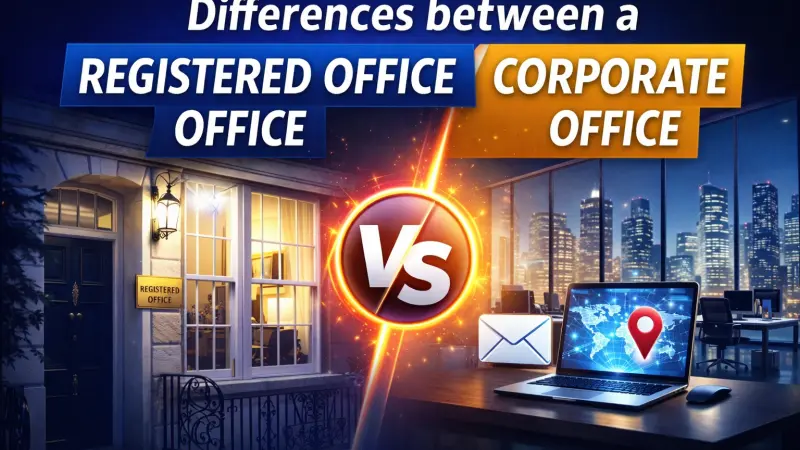
Understanding the difference between a registered office and a corporate office is essential for business owners, especially when setting up or managing a company. These terms are often confused, but they serve very different purposes. Knowing how they differ helps ensure compliance with legal requirements while also supporting efficient business operations.

Every company needs a registered office for official correspondence and legal purposes, while a corporate office is typically where the main business operations and management activities take place. Choosing the right structure helps businesses maintain professionalism and meet regulatory obligations.
What Is a Registered Office
A registered office is the official address of a company where all legal and government correspondence is sent. It is a legal requirement for companies in many jurisdictions, including the UK.
This address is recorded with regulatory authorities and appears on public records. Official documents such as tax notices, legal letters, and compliance communications are sent to this address.
A registered office does not need to be where business activities take place, but it must be a physical address and accessible for official communication.
Purpose of a Registered Office
The main purpose of a registered office is to ensure there is a reliable location where authorities and stakeholders can send official documents.
It provides transparency and ensures companies can be contacted for legal and regulatory matters.
Legal Requirements for a Registered Office
In the UK, every company must have a registered office within the jurisdiction where it is registered. The address must be able to receive official mail and be available during normal business hours.
Companies often use professional service providers or virtual office services for their registered address.
Benefits of a Registered Office
A registered office ensures compliance with legal requirements and helps maintain a professional image.
It also keeps personal addresses private, especially for small business owners or directors working from home.
Using a professional address can improve credibility and ensure important documents are handled securely.
What Is a Corporate Office
A corporate office, often referred to as a head office or headquarters, is the
main location where a company’s management and administrative activities are carried out.
This is typically where executives, management teams, and key departments such as finance, marketing, and human resources operate.
The corporate office may also serve as the primary decision making center for the company.
Purpose of a Corporate Office
The main purpose of a corporate office is to manage daily business operations, strategic planning, and company leadership.
It acts as the central hub for communication, coordination, and management activities.
Functions of a Corporate Office
Corporate offices typically house executive leadership, administrative teams, and operational departments.
They may also host meetings, manage company policies, and oversee branch or regional offices.
Key Differences Between a Registered Office and a Corporate Office
One of the biggest differences is their purpose. A registered office is used for legal and official correspondence, while a corporate office is used for operational and management activities.
Another difference is legal requirement. A registered office is mandatory for company registration, whereas a corporate office is optional depending on the size and structure of the business.
A registered office address is publicly listed, while a corporate office may or may not be publicly disclosed.
Business activities typically take place at a corporate office, not at a registered office.
Can a Registered Office and Corporate Office Be the Same
Yes, in some cases the registered office and corporate office can be the same address, especially for small businesses operating from a single location.
However, many companies choose separate addresses to maintain privacy or use professional services for their registered office.
Using a Virtual Office as a Registered Office
Many businesses use virtual office services to provide a registered address. This
allows companies to meet legal requirements while operating from different locations.
Virtual offices also offer mail handling services, ensuring official correspondence is received and managed securely.
Importance of Choosing the Right Office Structure
Choosing the right office structure ensures compliance, improves efficiency, and supports business growth.
Businesses should consider their size, operational needs, and long term goals when deciding whether to separate their registered and corporate offices.
How Office Types Affect Business Operations
A registered office primarily affects legal compliance and communication with authorities, while a corporate office influences daily operations and company culture.
Understanding these roles helps businesses operate more effectively and avoid confusion.
Common Misconceptions
Some people assume a registered office is where business activities must take place, but this is not always the case.
Others believe a corporate office is legally required, when in reality only a registered office is mandatory.
Choosing the Right Address for Your Business
When selecting a registered office, businesses should ensure the address is reliable, secure, and compliant with legal requirements.
For a corporate office, factors such as location, accessibility, and space requirements are more important.
Future Trends in Business Address Solutions
With the rise of remote work and digital operations, more companies are separating their registered and operational addresses.
Virtual offices and flexible workspaces are becoming increasingly popular for managing legal and operational needs efficiently.
Understanding the differences between a registered office and a corporate office helps businesses stay compliant while operating efficiently. A registered office is essential for legal communication, while a corporate office supports daily operations and management.
Both play important roles in a company’s structure, and choosing the right setup ensures professionalism, compliance, and operational success.
FAQs
1 What is a registered office address It is the official address used for legal and government correspondence.
2 Is a registered office mandatory in the UK Yes, all registered companies must have a registered office address.
3 What is a corporate office It is the main location where a company’s management and operations are carried out.
4 Can a registered office be different from a corporate office Yes, many companies use different addresses for each purpose.
5 Can I use a virtual office as a registered office Yes, many businesses use virtual office services for this purpose.
6 Is a corporate office legally required No, only a registered office is required by law.
7 Can business activities take place at a registered office They can, but it is not required.
8 Why do companies separate these addresses To maintain privacy, improve flexibility, or use professional services.
9 Does a registered office appear on public records Yes, it is publicly listed with company registration authorities.
10 Who manages the corporate office Company executives and administrative teams manage it.
11 Can a small business have both offices at the same location Yes, small businesses often use one address for both.
12 What happens if I change my registered office You must notify the relevant authorities to update records.
13 Is mail sent to the corporate office Operational mail may be sent there, but legal mail goes to the registered office.
14 Do large companies always have separate offices Most large companies separate them for operational efficiency.
15 Why is understanding the difference important It helps ensure compliance and proper business organisation.

Disclaimer: The information provided in this article is for general informational and research purposes only. Company details, features, services, and market positions may change over time. Readers are advised to visit official company websites and conduct independent research before making any business decisions or purchasing services.
Most Searchable Keywords

Recent Blogs



Related Listings


Categories
- Accountants (295)
- Advertising Agencies (559)
- Architects (149)
- Automobiles (377)
- Beauty (300)
- Carpenters (146)
- Cleaning Services (386)
- Dentists (189)
- Driving (62)
- Electricians (215)
- Energy (8)
- Event Organiser (685)
- Finance (599)
- Guide (3365)
- Health (2207)
- Information technology (206)
- Legal Services (353)
- Logistics (6)
- Maintenance (65)
- Manufacturing (35)

Sponsored Listings in Locksmith Services


Related Blogs

Gen Z Political Reporters and News Creators i...
Read this insightful article "Gen Z Political Reporters and News Creators in the UK" to expand your knowledge!

Famous Female Social Media Influencers Across...
Read this insightful article "Famous Female Social Media Influencers Across the UK" to expand your knowledge!

Your UK Sponsor Licence 2026 Step by Step Gui...
Read this insightful article "Your UK Sponsor Licence 2026 Step by Step Guide" to expand your knowledge!
Questions & Answers – Find What
You Need, Instantly!
How can I update my business listing?
Is it free to manage my business listing?
How long does it take for my updates to reflect?
Why is it important to keep my listing updated?
