
Scheduling and Managing Recurring Cleaning Services UK
- 👤 Alex
- 👁️ 61 Views
- Last Updated: April 13, 2026
- 🏷️ Cleaning Services
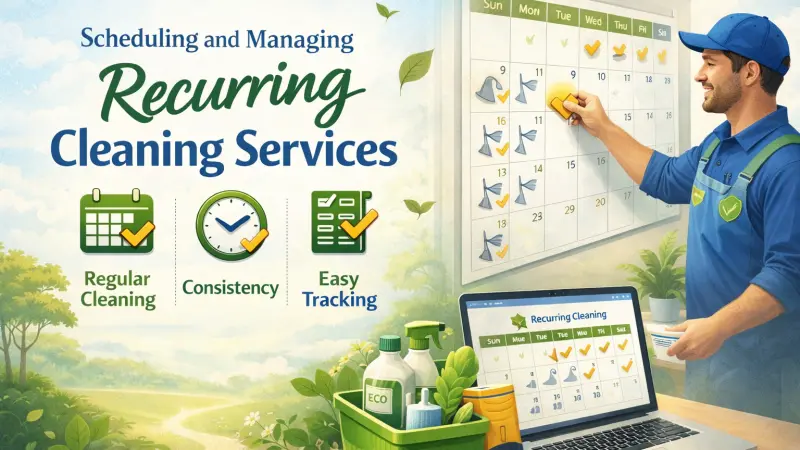
Maintaining a clean home is rarely about a single, heroic burst of energy; it is about the quiet discipline of consistency. For many UK households, the transition from ad-hoc "one-off" cleans to a structured, recurring service is the moment they truly reclaim their time and mental clarity. However, simply hiring a cleaner to show up every Tuesday is only the beginning. To get the most out of a professional relationship, you must understand how to build a schedule that breathes with your lifestyle, manage expectations through clear communication, and oversee the logistical nuances of home access and security.

This comprehensive guide explores the strategic side of domestic management. We will delve into how to determine the ideal frequency for your household, how to build a "scope of work" that evolves with the seasons, and the best practices for managing a recurring service so that it remains a help rather than a headache. Whether you are managing a busy family home or a high-paced urban apartment, these insights will help you establish a seamless, long-term cleaning partnership.
Overview: The Shift from Reactive to Proactive Cleaning
In the UK, the domestic cleaning market has shifted significantly. We are moving away from the "spring clean" model toward "maintenance cleaning." The core philosophy of a recurring service is prevention. By addressing dust, limescale, and grime on a weekly or fortnightly basis, you prevent these elements from causing permanent damage to your home’s fixtures and fittings.
Managing a recurring service requires a different mindset than hiring a one-off deep cleaner. It is a partnership based on trust and routine. A recurring cleaner becomes familiar with the quirks of your home—the tap that drips, the floorboard that creaks, and exactly how you like your bed linens folded. This familiarity is the primary value of a recurring service, but it requires careful management to ensure standards don't slip over time.
The Benefits of a Structured Recurring Service
1. Consistent Hygiene Standards
With a recurring schedule, your home never reaches that "critical mass" of mess. This is particularly beneficial for respiratory health, as dust mites and allergens are kept at bay through regular HEPA-filter vacuuming and damp-dusting.
2. Longevity of Home Assets
UK homes often deal with hard water. Recurring cleaning ensures that limescale is managed before it etches into chrome taps or glass shower screens. Similarly, regular vacuuming prevents grit from grinding into carpet fibres, extending the life of your flooring by years.
3. Mental Wellbeing and "Cognitive Load"
The "mental load" of household management is a significant source of stress. Knowing that the floors will be washed every Thursday allows you to remove that task from your mental "to-do" list, freeing up cognitive space for work, family, and rest.
Determining the Right Frequency for Your Household
One of the most common questions is how often a cleaner should visit. There is no one-size-fits-all answer, but we can break it down by household type.
Weekly Cleaning
-
Best for: Families with children, households with pets, or those who work from home.
-
Focus: High-traffic areas, kitchen sanitization, bathroom deep-cleans, and floor maintenance.
Fortnightly Cleaning
-
Best for: Professional couples or individuals who maintain a relatively tidy home day-to-day.
-
Focus: A comprehensive "reset" of the home, including dusting, mirrors, and more thorough vacuuming.
Monthly Cleaning
-
Best for: Those on a budget who just want help with the heavy lifting.
-
Focus: Deep cleaning tasks like skirting boards, inside windows, and thorough kitchen degreasing.
Step-by-Step Guide to Setting Up a Recurring Service
Step 1: Conduct a "Time-Motion" Audit
Before hiring, spend a week observing your home. Which areas get dirty fastest? Which tasks do you hate the most? This will help you create a "Prioritized Task List." If you only have three hours of cleaning time, you need to know exactly where that time is best spent.
Step 2: The Initial Consultation
When meeting a service provider, discuss the "Initial Deep Clean." Most reputable UK companies will insist on a longer first session to bring the home up to a maintainable standard. Managing this first session is crucial; it sets the benchmark for all future visits.
Step 3: Establishing the "Scope of Work"
A recurring service should have a "Core Task List" (done every visit) and a "Rotational Task List" (done once a month).
-
Core: Kitchen, Bathrooms, Floors, Dusting.
-
Rotational: Cleaning behind the sofa, wiping down doors, polishing silver, or cleaning the inside of the fridge.
Step 4: Logic of Access and Security
Decide on key-holding protocols. If you are provided with a professional service, they should have a secure key-coding system. If you are hiring an independent, ensure you have a written agreement regarding key safety and alarm codes.
Professional Tips for Management
-
The Communication Log: Use a physical notebook or a digital app to leave notes for your cleaner. This prevents the "awkwardness" of face-to-face criticism and allows you to highlight specific tasks for the week (e.g., "Please focus on the guest room this week as we have visitors").
-
Provide Quality Tools: If you want high-end results, provide high-end tools. A well-maintained Miele or Dyson vacuum and professional-grade microfibre cloths make a tangible difference in the time it takes to clean a room.
-
Prepare the Space: A cleaner is there to clean, not to tidy. To get the best value, ensure surfaces are clear of clutter before they arrive. "Tidying" takes up valuable time that could be spent on deep-cleaning tasks.
-
Review Annually: Every twelve months, sit down with your provider to review the schedule. As children grow up or habits change, the cleaning needs of the home will evolve.
Common Mistakes to Avoid
1. The "Set and Forget" Fallacy
The biggest mistake is assuming the service will run perfectly forever without input. Even the best cleaners can develop "blind spots" over time. Periodic "quality audits" or a friendly chat about standards will keep the service sharp.
2. Underestimating Time Requirements
Many homeowners try to squeeze a five-hour job into a three-hour slot. This leads to rushed work and frustration on both sides. Be realistic about what can be achieved in the time provided.
3. Vague Instructions
"Just do the usual" is the enemy of quality. Be specific. If you want the skirting boards done, put them on the list.
Professional cleaners are not mind readers; they follow the instructions provided.
4. Poor Payment Management
Consistency works both ways. Ensure payments are automated or handled promptly. In the UK domestic market, the most reliable cleaners stay with the clients who are the most reliable with their payments.
Supporting Local Business Visibility Beyond Core Marketing Efforts
Establishing a successful recurring cleaning service is often the result of a long search for the right local expert. For these domestic professionals, being found by the right clients is a complex task that involves more than just word-of-mouth. In the digital age, a cleaning company’s success is largely dependent on their business discoverability across a variety of platforms. When a company takes the time to advertise company uk directory listings, they are essentially creating a digital paper trail that proves their reliability and long-term presence in the community.
Maintaining local presence consistency is a critical trust signal. If a homeowner finds conflicting information about a service provider across different sites, it creates doubt. However, a business that appears with identical credentials on their own site and a reputable directory marketing uk platform demonstrates a level of professionalism that is essential for a service involving home access. This consistency acts as a supporting visibility layer that reinforces the cleaner's brand without the need for aggressive sales tactics.
Furthermore, the domestic service industry thrives on company ratings uk. Before a homeowner commits to a weekly schedule, they will almost certainly look for third-party verification of the cleaner’s punctuality and attention to detail. For many independent cleaners, being listed in a free business database directory is the most effective way to collect these reviews and present them to the local market. Using a platform like Local Page UK allows these specialists to function as a local discovery aid, connecting them with neighbours who value quality and consistency. This transparent approach to visibility helps build a healthy, competitive local market for domestic services.
Scheduling And Managing Cleaning Service
Scheduling and managing a recurring cleaning service is the key to maintaining a sanctuary in a busy world. It is a process that rewards clear communication, realistic expectations, and professional respect. By treating your cleaning service as a strategic partnership rather than a simple transaction, you ensure that your home remains a source of pride and relaxation.
If you are ready to take the leap into a more organized home life, start by auditing your needs and reaching out to local professionals. A well-managed routine today is the secret to a stress-free home tomorrow
Frequently Asked Questions (FAQs)
1. How long should a standard weekly clean take for a 3-bedroom house?
Typically, a 3-bedroom, 2-bathroom house requires 3 to 4 hours per week for a thorough maintenance clean. This allows enough time for all surfaces, floors, and a rotation of deep-cleaning tasks.
2. Should I stay home while the cleaner is there?
This is a personal preference. Many UK homeowners prefer to be out to allow the cleaner to work efficiently without interruption. If you are home, it is best to stay in a different room to stay out of the way of the workflow.
3. What happens if my cleaner is sick or on holiday?
If you use a professional agency, they will usually provide a replacement. If you hire an independent, you should discuss this in advance and decide if you want to skip the week or find a temporary fill-in.
4. Is it okay to change the day of the clean occasionally?
Most cleaners have a very tight schedule. While occasional changes might be possible with plenty of notice, recurring services work best when the day and time are kept strictly consistent.
5. Do I need to provide insurance?
Your home insurance should cover domestic employees, but you must check your policy. Furthermore, any reputable cleaning company or independent should have their own Public Liability insurance.
6. How do I handle a "missed spot"?
Address it immediately but kindly. Leave a note in the communication log or send a polite text. Most professionals want to do a good job and will appreciate the feedback so they can correct it next time.
7. Should I tip my recurring cleaner?
In the UK, tipping isn't mandatory for domestic cleaning. However, a "Christmas bonus" equivalent to one week’s pay is a common and appreciated gesture for long-term, reliable cleaners.
8. How do I cancel a recurring service?
Check your contract. Usually, a notice period of one to two weeks is standard. It is best to give notice in writing to ensure there is no confusion regarding final payments or key returns.
9. Can I ask my cleaner to do laundry or ironing?
Yes, but these tasks take a significant amount of time. If you add laundry, you must either increase the hours or accept that less time will be spent on deep cleaning the kitchen or bathrooms.
10. How do I find a reliable local service?
The most effective way is to look for companies with high company ratings uk and a verified presence in a local free business database directory.

Disclaimer: The information provided in this article is for general informational and research purposes only. Company details, features, services, and market positions may change over time. Readers are advised to visit official company websites and conduct independent research before making any business decisions or purchasing services.
Most Searchable Keywords

Recent Blogs



Related Listings
-

Platinum Exterior Cleaning
-
End of Tenancy Cleaning Agency
-
Royal Cleaning
-
FastKlean
-
Fantastic Services


Categories
- Accountants (295)
- Advertising Agencies (559)
- Architects (149)
- Automobiles (376)
- Beauty (300)
- Carpenters (146)
- Cleaning Services (386)
- Dentists (189)
- Driving (61)
- Electricians (215)
- Energy (8)
- Event Organiser (684)
- Finance (598)
- Guide (3363)
- Health (2205)
- Information technology (206)
- Legal Services (352)
- Logistics (6)
- Maintenance (65)
- Manufacturing (35)

Sponsored Listings in Cleaning Services


Related Blogs

Bristol Firework Displays Every Local Should...
Read this insightful article "Bristol Firework Displays Every Local Should Experience" to expand your knowledge!

Self Assessment Registration 2026 Common Erro...
Read this insightful article "Self Assessment Registration 2026 Common Errors and Rules" to expand your knowledge!

Calculate Your 2026 Employer National Insuran...
Read this insightful article "Calculate Your 2026 Employer National Insurance Bill Easily" to expand your knowledge!
Questions & Answers – Find What
You Need, Instantly!
How can I update my business listing?
Is it free to manage my business listing?
How long does it take for my updates to reflect?
Why is it important to keep my listing updated?
