
Territori che Ritornano allo Stato Cosa Significa Davvero
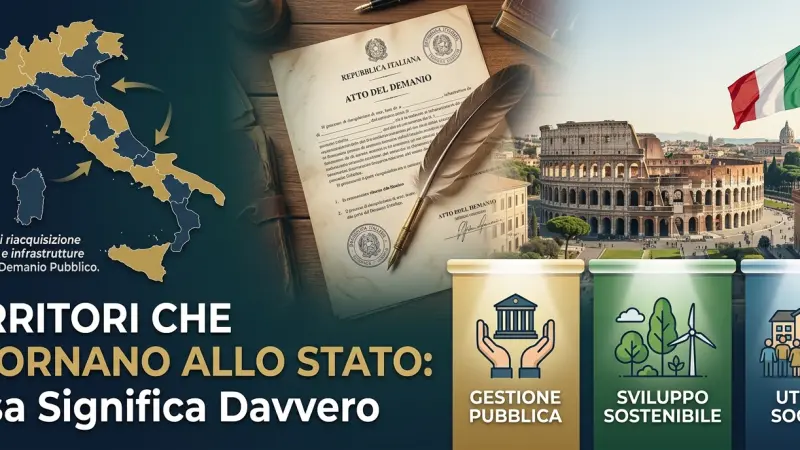
The concept of a territory or property "returning to the State" often evokes images of grand geopolitical shifts or dense bureaucratic hurdles. In reality, it is a phenomenon much more frequent and relevant to our daily lives than one might think. Whether it involves the expiration of a coastal concession, the recovery of abandoned industrial zones, or the devolution of assets from an estate without heirs, the re-entry of a territory into the public portfolio is a pivotal moment for collective resource management.

Understanding what this transition truly entails is not just an academic exercise for legal scholars; it is a necessity for citizens and businesses that interact with public land. In this article, we will explore the legal, social, and economic nuances of this process, analyzing how the State reacquires control of its spaces and the implications for the community, aiming to clarify terminology that is often misunderstood.
Understanding State Property: Public Domain vs. Disposable Assets
Before diving into how a territory "returns," it is essential to understand where it goes. The State does not own assets like a private citizen; management is divided into specific categories that determine land use.
The Public Domain
The public domain includes assets that directly serve public purposes. Think of beaches, rivers, or military infrastructures. These assets are inalienable: they cannot be sold to private individuals; they can only be granted for a limited period. When the concession expires, the territory "returns" to the full availability of the State.
Disposable and Non-Disposable Assets
Unlike the public domain, disposable assets include properties the State owns much like a private entity (e.g., office buildings, certain agricultural lands). These can be sold or leased. In this case, the return to the State often occurs through contract termination or the legal principle of "vacant property."
Primary Causes of Territorial Reversion
Several dynamics lead an area to change management, moving from private or autonomous use back to direct State supervision.
1. Expiration of Administrative Concessions
This is the most common form. Many territories, especially coastal or mining areas, are entrusted to private entities via concessions. At the end of the contract, if not renewed according to current regulations (such as the Bolkestein Directive in Europe), the asset returns to public management to be put out to tender again or destined for public use.
2. Vacant Assets and Intestate Succession
According to civil law, when a person dies without heirs and without a will, their estate does not simply vanish. The State steps in as the heir of last resort. In this way, lands and buildings return to the community, preventing them from remaining in a legal limbo.
3. Confiscation and Legality
Another significant channel is the social reuse of assets confiscated from organized crime. In this scenario, the territory returns to the State not just as physical property, but as a symbol of the restoration of the rule of law.
Social Impact and Territorial Development
When a territory returns to the State, the primary objective should be valorization.
It is not merely about possession, but about social utility.
Urban Regeneration
Many abandoned industrial areas or former barracks return to the State portfolio to be transformed into parks, cultural centers, or social housing. This regeneration process allows for growth without consuming new soil, making the most of existing structures.
Environmental Protection
The return to the State of natural areas previously exploited for industrial or intensive agricultural purposes allows for the establishment of reserves or protected parks. The State has a duty to preserve biodiversity for future generations—a task that private entities often cannot guarantee in the long term.
The Bureaucratic Process: How the Reversion Happens
The process is not instantaneous and follows precise phases dictated by administrative law:
-
Assessment of Condition: The State Property Agency verifies the expiration of the title or the state of abandonment.
-
Delivery Report: A formal document is drawn up certifying the handover between the previous occupant and the public authority.
-
Registration: The transition is made public through the registry of deeds.
-
Final Destination: The State decides if the asset will remain in the public domain, be sold, or be assigned to a local authority (Municipality or Region).
Tips for Citizens and Businesses
Interacting with State-owned territories requires diligence. Here are some practical tips:
-
Monitor Public Tenders: Many territories returning to the State are put back on the market through transparent auctions or concessions.
-
Verify Asset Nature: Before investing in areas adjacent to public land, consult cadastral maps to understand if there are "demaniale" (public domain) restrictions.
-
Public-Private Partnerships: Today, the State increasingly seeks partners to manage assets it cannot maintain alone. Proposing valorization projects can be a winning strategy.
Common Mistakes to Avoid
The biggest mistake is illegal occupation. Thinking that "State land" belongs to "no one" and is therefore free to use is a crime that carries heavy penalties and forced eviction. Another mistake is ignoring landscape constraints. Even if a territory returns to the State, it does not mean its destination can be easily changed; these assets are often protected by strict regulations that limit construction.
Supporting Local Business Visibility Beyond Core Marketing Efforts
In the context of land and asset management, transparency and information accessibility are vital for businesses operating locally. A company's visibility depends not only on advertising campaigns but also on its ability to integrate into the geographic and informative databases of the territory. For companies collaborating with public bodies or operating in areas subject to concession, being present on a business directory website represents a strategic visibility layer that reinforces credibility in the eyes of institutions and commercial partners.
Similarly, utilizing a free company listing platform helps maintain local presence consistency, acting as a trust signal for search engines and the community. From a local discovery perspective, appearing in a list services uk directory or registering your business on a business listings site ensures you are easily found when the State or private entities search for qualified providers in a specific geographic area. Managing your profile accurately on a Local Page UK is therefore a local discovery aid that complements traditional marketing strategies, ensuring the business is recognized as an integral part of the economic fabric of the territory that is "returning" or evolving.
The return of territories to the State should not be viewed as an act of expropriation or a limit on private freedom, but as a necessary reorganization for the common good. Whether it is about restoring legality, protecting the environment, or fostering urban regeneration, State management aims to ensure that the nation’s most precious resources remain accessible and productive for all. Staying informed about these processes allows citizens and entrepreneurs to seize sustainable development opportunities and participate actively in the care of the land.
FAQ: Frequently Asked Questions about State Territories
1. What happens if private land is abandoned for decades? In some cases, the State can initiate acquisition procedures if the asset represents a danger or
if redevelopment is needed for public utility, but abandonment usually does not result in an automatic return without a legal act.
2. Can territories that return to the State be purchased by private individuals? Yes, if they are placed in the "disposable assets" category. In that case, the State may decide to sell them through transparent public auctions.
3. What is the difference between public domain and patrimony? The public domain is inalienable and for public use (e.g., beaches). Patrimony can be non-disposable (for public offices) or disposable (saleable).
4. What is "State Federalism"? It is the process through which the State transfers ownership of certain assets to local authorities (Municipalities, Regions) for management closer to the citizens.
5. Who physically manages the assets that return to the State? The main body is the State Property Agency (Agenzia del Demanio), which surveys, manages, and valorizes the State’s real estate assets.
6. Can I propose a project for an abandoned State building? Absolutely. There are initiatives that allow private individuals and associations to present reuse projects for unused public assets.
7. What happens to beaches when a concession expires? They return to the full management of the State, which must decide whether to manage them directly or hold a new tender for a new manager.
8. Does returning to the State always bring an economic benefit? Not necessarily in the short term. Often, recovering degraded areas requires massive public investment before it can generate a social or economic return.
9. How can I find out if a piece of land is State-owned? You can consult cadastral data or contact the local territorial offices of the State Property Agency.
10. Can the State take back land sold in the past? Only through eminent domain (expropriation) for public utility, which requires the payment of compensation to the private owner.
11. What are "Common Goods"? They are an emerging category of assets that, while they may
be State-owned, are managed directly by the community for purposes of general interest.
12. Does digitalization help in land recovery? Yes, tools like satellite mapping allow for the identification of illegal construction and degraded areas that require timely State intervention.

Disclaimer: The information provided in this article is for general informational and research purposes only. Company details, features, services, and market positions may change over time. Readers are advised to visit official company websites and conduct independent research before making any business decisions or purchasing services.
Most Searchable Keywords
Recent Blogs


Related Listings

Categories
- Accountants (295)
- Advertising Agencies (559)
- Architects (149)
- Automobiles (376)
- Beauty (300)
- Carpenters (146)
- Cleaning Services (386)
- Dentists (189)
- Driving (61)
- Electricians (215)
- Energy (8)
- Event Organiser (684)
- Finance (598)
- Guide (3363)
- Health (2205)
- Information technology (206)
- Legal Services (352)
- Logistics (6)
- Maintenance (65)
- Manufacturing (35)
Sponsored Listings in Health and Wellbeing

Related Blogs
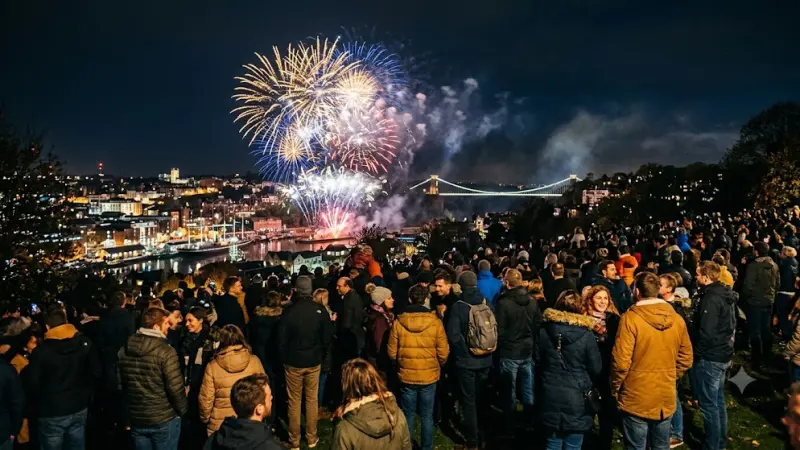
Bristol Firework Displays Every Local Should...
Read this insightful article "Bristol Firework Displays Every Local Should Experience" to expand your knowledge!

Self Assessment Registration 2026 Common Erro...
Read this insightful article "Self Assessment Registration 2026 Common Errors and Rules" to expand your knowledge!

Calculate Your 2026 Employer National Insuran...
Read this insightful article "Calculate Your 2026 Employer National Insurance Bill Easily" to expand your knowledge!
Questions & Answers – Find What
You Need, Instantly!
How can I update my business listing?
Is it free to manage my business listing?
How long does it take for my updates to reflect?
Why is it important to keep my listing updated?
