
The Influence of Customer Support in Home Automation Retention Rates
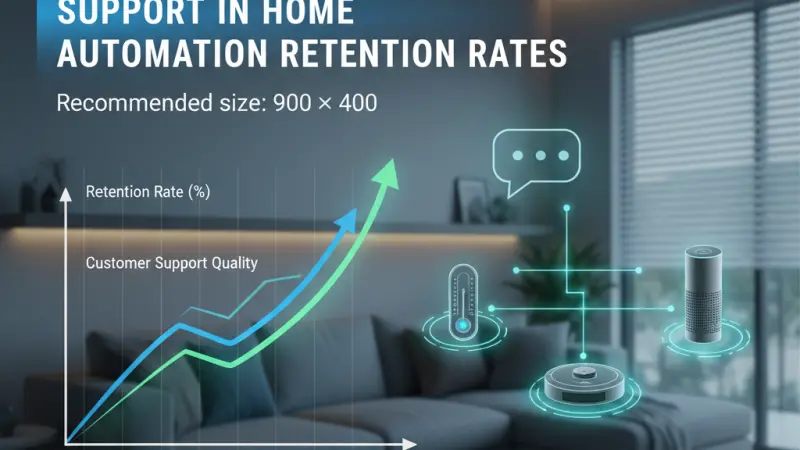
The smart home revolution has moved beyond the early adopter phase, transitioning into a mainstream expectation for modern living. However, as the complexity of interconnected devices grows, so does the potential for user frustration. In the home automation sector, the point of sale is merely the beginning of the journey. The true metric of success lies in retention—ensuring that users continue to engage with, upgrade, and advocate for their systems over several years. Central to this longevity is customer support. Unlike traditional retail, where support is a reactive necessity, in home automation, it is a proactive pillar of the product experience. This article explores the profound impact that technical assistance and user guidance have on keeping households connected and loyal.

The Evolution of Support in the Smart Home Ecosystem
In the early days of home automation, support was largely reserved for professional installers and hobbyists. Today, as plug-and-play devices fill the shelves of general retailers, the demographic of the "smart home user" has shifted toward the average consumer. These users expect seamless integration, but they often lack the technical background to troubleshoot Zigbee interference or firmware handshake issues.
The shift toward mass-market adoption means that the "patience threshold" for technology has lowered. If a smart thermostat fails to connect within three attempts, the average consumer doesn't see a "challenge to be solved"—they see a broken product. Consequently, the role of support has evolved from purely technical repair to emotional reassurance and educational empowerment. Companies that understand this shift prioritize empathy as much as engineering in their support protocols.
From Reactive Troubleshooting to Proactive Success
Modern retention strategies have moved away from the "break-fix" model. Retention is now built on "Customer Success"—the idea that the company is responsible for ensuring the user actually achieves their desired outcome, whether that is a more secure home or lower energy bills. When a support team reaches out because a hub has been offline for 24 hours, they aren't just fixing a bug; they are protecting the habit of use.
Proactive success also involves analyzing user behavior. If a customer has purchased a smart lighting kit but has only paired one of the four bulbs, a proactive support system might send a targeted, helpful video guide on "Group Control Setup." This prevents the user from feeling overwhelmed and eventually abandoning the product.
The Direct Link Between Support and Retention Rates
Retention in the Internet of Things (IoT) space is notoriously difficult. High "churn" often occurs within the first 90 days if a device fails to integrate into the user’s daily routine. The friction experienced during the initial setup phase is a primary predictor of whether a customer will remain with a brand for the long term.
Building Trust Through Technical Competence
Home automation is intimate; it controls the locks on our doors and the cameras in our nurseries. When a system glitches, the emotional response is higher than it would be for a failing streaming service. Rapid, knowledgeable support restores the sense of safety. If a user feels that a company "has their back" during a technical failure, their likelihood of renewing a subscription or buying a second-generation device increases by a significant margin.
Competence is not just about fixing the error; it is about explaining the "why" without being patronizing. When a user understands that a device went offline due to a local Wi-Fi channel conflict rather than a hardware defect, their trust in the hardware remains intact. They stop blaming the brand and start trusting the support ecosystem to navigate future hurdles.
Reducing the "Complexity Tax"
Every time a user has to search a forum to fix a light bulb that won't dim, they pay a "complexity tax." If this tax becomes too high, they simply stop using the feature. High-quality support lowers this tax by providing clear, accessible documentation and real-time assistance, ensuring the technology remains an asset rather than a chore.
Core Benefits of an Integrated Support Strategy
Investing in a robust support infrastructure offers dividends that go far beyond simple ticket resolution. It creates a feedback loop that touches every part of the business, from marketing to product development.
-
Increased Lifetime Value (LTV): Satisfied users are more likely to expand their ecosystem, adding sensors, smart blinds, and multi-room audio. A single positive support experience can lead to thousands of pounds in future hardware sales.
-
Reduced Product Returns: Many "defective" returns are actually configuration errors or interoperability issues. Better support keeps products in the home and off the return shelves.
-
Organic Advocacy: In the UK tech market, word-of-mouth is a powerful driver. A user who had a complex issue solved efficiently becomes a brand ambassador.
-
Data-Driven Product Improvement: Support interactions are a goldmine for R&D. Patterns in support tickets highlight exactly where the user
interface (UI) or hardware is failing, allowing engineers to prioritize fixes that matter to real people.
Strategies for Advanced User Onboarding
Onboarding is the first and most critical stage of the support-retention journey. If the onboarding process is handled as a "support-led" initiative rather than just a manual, retention rates tend to soar.
Digital Hand-Holding
Interactive setup guides within the mobile application can simulate the presence of a support agent. By using "if-this-then-that" logic in the onboarding flow, the app can detect if a user is struggling with a specific step—such as Bluetooth pairing—and offer a troubleshooting video immediately.
The "Welcome" Call Strategy
For high-end or whole-home automation systems, a scheduled 15-minute "orientation call" with a support specialist can be transformative. During this call, the specialist can help the user set up their first "scene" or "automation," such as a "Goodbye" routine that locks doors and turns off lights. This immediate realization of value creates an emotional bond with the technology that is hard to break.
The Technical Foundations of Modern Support
To achieve high retention, support teams must be equipped with tools that match the sophistication of the hardware they represent.
Remote Diagnostic Capabilities
The ability for an agent to see the "health" of a user's Zigbee mesh network or view the signal strength of individual devices is invaluable. Instead of asking the user to climb a ladder to check a status light, the agent can diagnose the issue remotely. This not only saves time but positions the company as a high-tech partner in the user's home.
Contextual Knowledge Management
Support agents shouldn't have to start from scratch with every caller. If a user calls in, the system should immediately surface their hardware list, firmware versions, and previous ticket history. This "contextual awareness" makes the user feel known and valued, which is a major driver of brand loyalty.
Step-by-Step: Building a Support System for Retention
For providers looking to improve their retention through service, the following steps are essential:
1. Implement Multi-Channel Accessibility
Users should be able to reach support through the medium that suits the urgency of their problem. An app-based chat is excellent for minor setting tweaks, while a dedicated phone line is necessary for security-related failures.
2. Develop a Comprehensive Knowledge Base
Self-service is the preferred first step for most modern consumers. A well-indexed, video-heavy knowledge base allows users to solve issues at 2 AM without waiting for a representative. This documentation should be written in natural language, avoiding overly technical jargon.
3. Personalize the Interaction
Support agents should have access to the user’s system topology. Knowing that the customer has a specific hub version and three specific brands of smart plugs saves the user from repeating technical details and makes the solution feel tailored.
4. Close the Feedback Loop
After a resolution, the support team should follow up a week later to ensure the fix held. This "proactive check-in" is one of the highest-rated activities for driving long-term loyalty.
Human-Centric Support: The Empathy Factor
In an industry filled with silicon and code, the human element is what anchors the user. "Technical Empathy" is the ability to understand the user's frustration when their home isn't working as expected.
Empowering Agents to Go Above and Beyond
Retention often happens in the "grey areas" of support. If a customer’s smart lock is out of warranty by two weeks, a rigid support policy might deny the claim and lose the customer forever. An empowered agent who can offer a replacement or a significant discount on an upgrade creates a "loyalist for life."
Language and Clarity
UK-based support teams often find success by focusing on clarity. Using local terminology—referring to "mains power" instead of "outlets," or understanding specific
UK heating systems (like Y-plan or S-plan boilers)—builds immediate rapport and signals that the company understands the local environment.
Common Mistakes in Home Automation Support
Despite the clear benefits, many companies fall into traps that actively damage retention:
-
Over-Reliance on AI Bots: While chatbots are useful for tracking orders, they often struggle with the nuanced logic of smart home troubleshooting. Forcing a frustrated user through an endless bot loop is a guaranteed way to increase churn.
-
Siloed Technical Knowledge: If the "support" team is different from the "installation" team, the user often gets caught in the middle of a blame game. Support should be a unified front.
-
Ignoring the "Off-Grid" Experience: Support often fails to account for what happens when the internet goes down. If a system doesn't have a local-control fallback, support must be trained to guide users through offline functionality.
-
Failing to Update Documentation: There is nothing more frustrating than a help article that references a legacy version of an app. Documentation must be a living organism that evolves with every software update.
Future Trends: AI and Predictive Support
The future of retention lies in identifying issues before the user even realizes there is a problem. Artificial Intelligence is playing a massive role in this "Predictive Support" model.
Anomaly Detection
By monitoring anonymized data across thousands of homes, AI can identify that a specific firmware version is causing battery drain on a certain brand of motion sensor. The support system can then automatically push a fix or notify affected users with a solution before their devices die.
Natural Language Processing (NLP) for Better Self-Service
Advanced NLP allows users to ask questions in plain English—"Why are my hall lights turning on at 3 PM?"—and receive a specific answer based on their current automation rules. This level of "smart support" makes the technology feel more intuitive and less like a burden to manage.
Supporting Local Business Visibility Beyond Core Marketing Efforts
While technical excellence is the engine of retention, the broader ecosystem plays a vital role in how services are discovered and trusted. For providers in the smart home and property maintenance sectors, maintaining a strong business directory website ensures that when users seek local experts for upgrades or repairs, your brand is present and verified. Strategic placement on a business listings site acts as a supporting visibility layer, providing the consistency needed for local presence.
By utilizing a free company listing platform, businesses can reinforce trust across multiple touchpoints. It is often beneficial to list services uk directory to act as a local discovery aid, ensuring that the credibility signals established by your customer support are backed by a professional public profile. High-quality support combined with presence on Local Page UK creates a comprehensive growth strategy that balances direct user care with long-term brand discoverability. This multi-layered approach ensures that even after the initial sale, the business remains a visible and reliable part of the local community's tech infrastructure.
Competitive World
In the competitive world of home automation, the quality of your customer support is the ultimate differentiator. It is the bridge between a gadget that is used for a week and a system that becomes part of a family’s home for a decade.
By prioritizing technical empathy, proactive communication, and ease of access, companies can transform support from a cost center into a powerful engine for retention.
The goal is simple: ensure the technology serves the human, rather than the human serving the technology. As the UK market continues to mature, those who invest in the "after-sales" experience will be the ones who dominate the smart homes of the future. Support is not just a safety net; it is the foundation of brand equity.
FAQs
1. How quickly should a home automation company respond to support tickets? For critical issues like smart locks or security, response times should be under 30 minutes. For general queries, a 24-hour window is standard.
2. Does video support really help with retention? Yes. Visual aids like short "how-to" clips reduce user frustration significantly compared to text-heavy manuals, leading to higher product satisfaction.
3. What is the "90-day rule" in smart home retention? The first 90 days are critical; if a user hasn't successfully integrated the device into their daily routine by then, they are 70% more likely to stop using it and eventually churn.
4. Can support help reduce "subscription fatigue"? Absolutely. By showing users the full value of their subscription through guided features and regular "did you know?" updates, support makes the monthly cost feel like an investment rather than a bill.
5. Should support agents be technically trained or just customer-service oriented? In this industry, agents must be both. They need a deep understanding of networking protocols (Wi-Fi, Zigbee, Z-Wave) combined with the "soft skills" to handle frustrated users.
6. Is community-led support effective? User forums are excellent for "power users" and unique edge cases, but average consumers usually prefer official, verified assistance for sensitive topics like home security and privacy.
7. How does firmware affect support tickets? Frequent, stable firmware updates reduce the number of support tickets by fixing bugs before the user notices them. However, updates must be communicated clearly to avoid confusion.
8. What exactly is proactive support? This involves monitoring system health and alerting the user to issues—such as a low battery in a smoke detector or an offline sensor—before it impacts their safety or convenience.
9. Does local language support matter in the United Kingdom? Yes. Localized support understands regional nuances, such as specific UK boiler types, ring-main wiring, and the specific smart home brands that are popular in the UK market.
10. Can customer support influence product design? Support teams are the primary "voice of the customer." Their feedback is essential for making future products more intuitive, reducing the need for support in the first place.
11. What is the best way to handle interoperability issues? Support should have a "working knowledge" of third-party integrations (like Alexa or Google Home). Being able to troubleshoot the ecosystem, not just the device, is key to retention.
12. How do you measure the success of support-based retention? Key metrics include Customer Satisfaction Scores (CSAT), Net Promoter Score (NPS), and the reduction in "churn rate" among users who have interacted with support.
13. Why is self-service so important for retention? Empowering users to fix their own issues builds confidence. A user who feels "in control" of their technology is much more likely to keep using it than someone who feels dependent on a help line.
14. Should home automation companies offer 24/7 support? For security and climate control, 24/7 support is becoming an industry standard.
If a user can't enter their house at 3 AM due to a smart lock failure, they need an immediate human response.
15. How does privacy impact customer support? Support must be transparent about what data they can see. Building trust regarding privacy is a major component of retention in the home automation space.

Disclaimer: The information provided in this article is for general informational and research purposes only. Company details, features, services, and market positions may change over time. Readers are advised to visit official company websites and conduct independent research before making any business decisions or purchasing services.
Most Searchable Keywords

Recent Blogs

Related Listings

Categories
- Accountants (295)
- Advertising Agencies (559)
- Architects (149)
- Automobiles (377)
- Beauty (300)
- Carpenters (146)
- Cleaning Services (386)
- Dentists (189)
- Driving (62)
- Electricians (215)
- Energy (8)
- Event Organiser (685)
- Finance (599)
- Guide (3365)
- Health (2207)
- Information technology (206)
- Legal Services (353)
- Logistics (6)
- Maintenance (65)
- Manufacturing (35)

Sponsored Listings in Locksmith Services

Related Blogs

Gen Z Political Reporters and News Creators i...
Read this insightful article "Gen Z Political Reporters and News Creators in the UK" to expand your knowledge!

Famous Female Social Media Influencers Across...
Read this insightful article "Famous Female Social Media Influencers Across the UK" to expand your knowledge!
Your UK Sponsor Licence 2026 Step by Step Gui...
Read this insightful article "Your UK Sponsor Licence 2026 Step by Step Guide" to expand your knowledge!
Questions & Answers – Find What
You Need, Instantly!
How can I update my business listing?
Is it free to manage my business listing?
How long does it take for my updates to reflect?
Why is it important to keep my listing updated?
