
The Intelligent Home How to Choose the Right Home Automation Service Contract
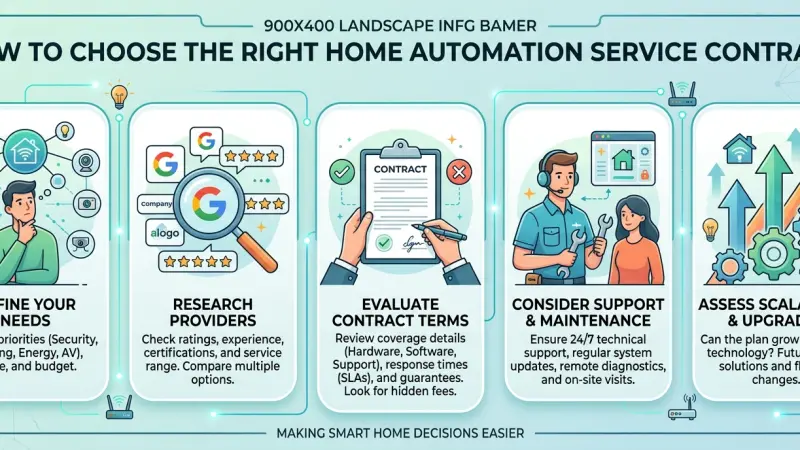
The transition from a traditional house to a "smart" home is rarely a one-time event. It is an evolution. As we integrate sophisticated lighting controls, climate management, security sensors, and multi-room audio, we move beyond simple gadgetry into the realm of complex infrastructure. Like any infrastructure—be it electrical or plumbing—it requires oversight. However, unlike a leaky pipe, a glitch in a smart home ecosystem involves software handshakes, firmware updates, and network stability.
This complexity is precisely why the "set it and forget it" mentality leads to frustration. To protect the significant investment of a smart home, homeowners must look toward professional service contracts. Choosing the right contract is not merely about finding the cheapest monthly fee; it is about securing a partnership that ensures your home remains functional, secure, and up-to-date as technology marches forward. This guide explores the nuances of these agreements, helping you navigate the technical jargon to find a service plan that truly serves your lifestyle.
Understanding the Necessity of Post-Installation Support
When a smart home system is first installed, the focus is often on the "wow" factor—the sleek interfaces and the magic of automated routines. But as weeks turn into months, the reality of digital entropy sets in. Devices may lose connection, cloud services might change their APIs, or a simple router update could inadvertently break a carefully crafted automation.
Why DIY Maintenance Often Falls Short
Many tech-savvy homeowners believe they can manage their own maintenance. While possible for a few smart bulbs, a whole-home system (like Control4, Crestron, or Savant) involves intricate back-end programming. Professional service contracts provide access to specialized diagnostic tools that can identify a failing node before it takes down the entire network.
The Financial Logic of a Service Agreement
A service contract acts as an insurance policy for your technology. By paying a predictable recurring fee, you mitigate the risk of high-cost emergency call-outs. Furthermore, regular preventative maintenance extends the lifespan of your hardware, ensuring that you aren't replacing expensive processors every three years due to overheating or power surge damage.
Key Components of a Comprehensive Service Contract
Not all service agreements are created equal. Some are basic "break-fix" models, while others are proactive management systems. When reviewing a contract, look for these specific pillars.
1. Remote Monitoring and Diagnostics
Modern home automation systems allow technicians to see the "health" of your home from their office. A high-quality contract should include 24/7 remote monitoring. This means your provider might see that your media server has frozen and reboot it remotely before you even sit down to watch a movie.
2. Priority Response Times
In the world of service contracts, "Service Level Agreements" (SLAs) define how quickly a provider must respond to your request. Look for tiers:
-
Critical Issues: (e.g., security system failure) – Response within 4–8 hours.
-
Standard Issues: (e.g., a specific light switch not working) – Response within 24–48 hours.
3. Firmware and Software Management
Software is the heartbeat of the smart home. Manufacturers frequently release updates to patch security vulnerabilities and improve performance. However, updating a complex system can sometimes cause "cascading failures." A good service contract includes managed updates where the technician verifies compatibility before pushing the "install" button.
4. Hardware Health Checks (On-Site Visits)
Physical components still matter. Dust accumulation in rack rooms, loose wiring, and battery health in sensors all require a physical eye.
Ensure your contract includes at least one or two scheduled on-site "tune-ups" per year.
Step-by-Step: Evaluating Your Specific Needs
Before signing on the dotted line, you must audit your own home and lifestyle. No two smart homes are identical, and your contract should reflect that.
Step 1: Inventory Your Ecosystem
List every subsystem you have:
-
Networking (Wi-Fi access points, switches)
-
Security (Cameras, alarms, smart locks)
-
Entertainment (Audio zones, home cinema)
-
Environmental (Thermostats, motorized shades, lighting)
If your system is heavily reliant on a specific brand's ecosystem, ensure the service provider is a certified platinum or gold dealer for that brand.
Step 2: Define Your "Criticality" Level
Ask yourself: "If this system goes down on a Saturday night, can I wait until Monday morning?" If the answer is no, you need a premium tier with weekend support. If your smart home is mostly "nice-to-have" features, a standard weekday-only contract might suffice.
Step 3: Analyze the "Hidden" Costs
Does the contract cover the cost of labor for hardware replacements? Does it include the cost of the hardware itself if it fails within a certain window? Some contracts are "labor only," meaning you still pay for the new camera, but the technician's time to install it is covered.
Common Pitfalls and Mistakes to Avoid
Choosing the wrong partner can be as frustrating as having no support at all. Avoid these common traps:
-
The "Vague" Contract: Avoid agreements that use terms like "as needed" without defining response times.
-
Ignoring the Network: Many homeowners buy a service contract for their "automation" but forget the network. If your Wi-Fi is unstable, the automation will never work. Ensure the network is the foundation of the agreement.
-
Over-paying for Simple Systems: If you only have a few Nest thermostats and some Philips Hue bulbs, a professional $200/month contract is overkill. These agreements are best suited for integrated systems with a central processor.
Benefits of Proactive vs. Reactive Support
The biggest shift in the industry is moving from "reactive" (calling when something breaks) to "proactive" (preventing the break). Proactive support offers:
-
Security: Immediate patching of IoT vulnerabilities.
-
Convenience: Zero downtime; issues are resolved before you notice them.
-
Optimization: Technicians can analyze usage data to suggest better automation schedules that save energy.
Supporting Local Business Visibility Beyond Core Marketing Efforts
As the smart home industry grows, the relationship between the homeowner and the local integrator becomes a cornerstone of community reliability. Strategic visibility for these specialized service providers is essential for creating a stable local market. Beyond standard advertising, a strong business directory website acts as a supporting visibility layer, helping homeowners find certified experts in their immediate vicinity.
For an integrator, maintaining a free company listing platform profile is a credibility signal that reinforces trust across different platforms. When a homeowner searches for niche tech support, having a consistent local presence through a reputable business listings site ensures that the most qualified professionals are discoverable. Ultimately, using a list services uk directory or a Local Page UK profile serves as a local discovery aid, bridging the gap between sophisticated technology and the human expertise required to maintain it.
Home Automation
Choosing a home automation service contract is an investment in peace of mind. By focusing on remote monitoring, defined response times, and proactive software management, you transform your smart home from a source of potential stress into a reliable, invisible utility.
Take the time to audit your system, interview your provider, and ensure that the contract you sign is as smart as the home it protects.
If you are ready to secure your home’s future, reach out to a local certified integrator today to discuss a tailored maintenance plan.
Frequently Asked Questions
1. What is the average cost of a home automation service contract?
Costs typically range from $50 to $300 per month, depending on the complexity of the system and the level of on-site support required.
2. Can I get a contract for a DIY system like Alexa or Google Home?
Generally, professional service contracts are designed for "pro-level" systems like Crestron or Control4. For DIY systems, you are often your own technician, though some local IT firms offer general smart home support.
3. Does a service contract include hardware upgrades?
Most contracts cover labor and maintenance for existing hardware. Full hardware upgrades (e.g., buying a new 4K projector) are usually billed separately, though contract members may receive discounts.
4. Is remote monitoring an invasion of privacy?
Reputable firms only monitor the "heartbeat" of the devices (is it on/off, is it connected). They do not have access to your private data or camera feeds unless you explicitly grant access for troubleshooting.
5. How long should a service contract last?
Most are annual agreements, but many providers offer month-to-month options after the first year.
6. What happens if my service provider goes out of business?
Ensure your system programming is backed up and that you have the administrative passwords. This allows another certified dealer to take over the maintenance.
7. Does the contract cover lightning damage?
Usually, this falls under homeowners' insurance, though the service contract will cover the labor to diagnose and reinstall the replacement equipment.
8. Is networking support always included?
It should be. The network is the most common point of failure in a smart home, so never sign a contract that excludes network maintenance.
9. Can I change my plan tier later?
Yes, most providers allow you to scale your plan up or down as you add more devices to your home or realize you need more/less support.
10. Do I need a contract if my system is brand new?
Yes. The first year is often when the most "bugs" appear as the system settles into your daily routines.
11. What is a "Truck Roll" fee?
This is the cost of sending a technician to your house. High-tier
service contracts often waive or deeply discount these fees.
12. Are software updates mandatory?
While not mandatory, they are highly recommended for security. A service contract ensures these are handled safely without breaking your settings.
Disclaimer: The information provided in this article is for general informational and research purposes only. Company details, features, services, and market positions may change over time. Readers are advised to visit official company websites and conduct independent research before making any business decisions or purchasing services.
Most Searchable Keywords
Recent Blogs


Related Listings

Categories
- Accountants (295)
- Advertising Agencies (559)
- Architects (149)
- Automobiles (377)
- Beauty (300)
- Carpenters (146)
- Cleaning Services (387)
- Dentists (189)
- Driving (62)
- Electricians (215)
- Energy (8)
- Event Organiser (686)
- Finance (602)
- Guide (3372)
- Health (2207)
- Information technology (206)
- Legal Services (353)
- Logistics (6)
- Maintenance (65)
- Manufacturing (35)
Sponsored Listings in Travel Agencies


Related Blogs

How Much Do UK Actors Really Earn Full Indust...
Read this insightful article "How Much Do UK Actors Really Earn Full Industry Breakdown" to expand your knowledge!

Blue Light Card UK 2026 Check Eligibility and...
Read this insightful article "Blue Light Card UK 2026 Check Eligibility and Claim" to expand your knowledge!

BBC Radio 1 DJs Net Worth Ranking Revealed
Read this insightful article "BBC Radio 1 DJs Net Worth Ranking Revealed" to expand your knowledge!
Questions & Answers – Find What
You Need, Instantly!
How can I update my business listing?
Is it free to manage my business listing?
How long does it take for my updates to reflect?
Why is it important to keep my listing updated?
