
The Role of Hyper Personalization in Customer Acquisition in Insurance
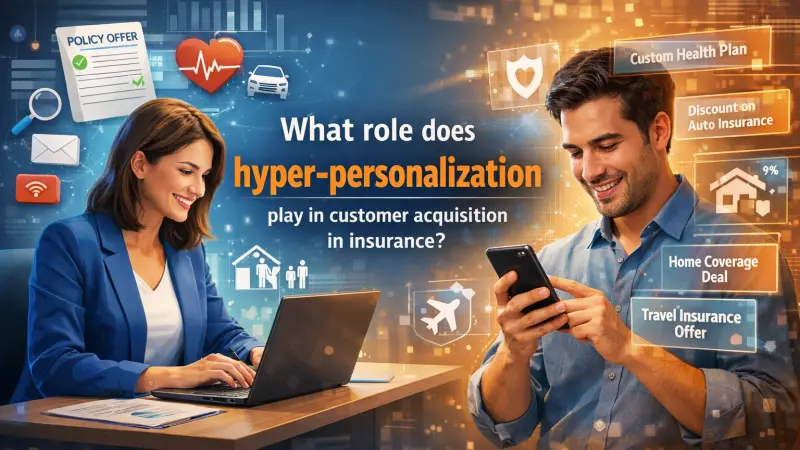
Imagine receiving an insurance quote that doesn’t just reflect your age and postcode, but understands your specific driving habits, your home's unique vulnerability to local weather patterns, and your preferred way of communicating. This level of granular detail is the hallmark of hyper-personalization in insurance, a strategic shift that is fundamentally redefining how UK insurers attract and retain new clients. In a market where consumers have become accustomed to the "Amazon effect" the expectation of highly relevant, real-time recommendations the traditional, one-size-fits-all approach to insurance is rapidly losing its efficacy. Today's British consumer is no longer satisfied with generic policy bundles; they seek a bespoke experience that acknowledges their individual risks and rewards their specific behaviours. This evolution from broad segmentation to individualised engagement is not merely a technological upgrade but a vital necessity for customer acquisition in an increasingly competitive and digital-first landscape.
For insurance providers, the move toward hyper-personalization represents a departure from historical actuarial models that relied on large, often imprecise data sets. By leveraging advanced analytics, artificial intelligence (AI), and the Internet of Things (IoT), insurers can now offer "segments of one." This article explores how this shift impacts every stage of the customer acquisition journey, from the initial point of brand discovery to the finalization of a tailored policy. We will examine the role of real-time data, the psychological impact of personalised pricing, and the regulatory considerations within the UK’s Financial Conduct Authority (FCA) framework, providing a comprehensive overview of how hyper-personalization is becoming the primary driver of growth in the modern insurance sector.
Defining Hyper-Personalization in the Modern Insurance Context
To understand its impact on acquisition, one must first distinguish between standard personalization and hyper-personalization. Standard personalization might involve using a customer’s name in an email or suggesting a product based on a broad demographic category. In contrast, hyper-personalization utilizes real-time data and AI to deliver content, products, and services that are specifically tailored to the individual’s current context. In the UK insurance industry, this might manifest as a telematics-based motor policy that adjusts premiums weekly based on actual driving performance, or a health insurance plan that integrates data from wearable devices to offer discounts for active lifestyles. This level of specificity ensures that the marketing message resonates on a personal level, making the prospect feel understood rather than just targeted.
The technological backbone of this strategy involves sophisticated data ecosystems. Insurers are now moving beyond their own internal databases to incorporate third-party data, social media signals, and real-time environmental data. For example, a travel insurance provider might use hyper-personalization to send a mobile notification to a customer as they arrive at Heathrow airport, offering a specific add-on for their destination. This contextual relevance is a powerful tool for customer acquisition because it intercepts the consumer at the exact moment of need. By providing a solution that is both timely and highly specific, the insurer removes friction from the buying process, significantly increasing the likelihood of a successful conversion.
Furthermore, hyper-personalization helps in building a more accurate risk profile, which in turn allows for more competitive pricing for low-risk individuals. Traditional models often penalised entire groups based on the actions of a few; hyper-personalization reverses this by rewarding the individual. In the UK, where price comparison websites have traditionally led consumers to focus solely on the cheapest option, the ability to offer a "fairer" price based on actual behaviour is a compelling acquisition hook. It shifts the conversation from "how cheap is this?" to "how well does this reflect my actual life?", creating a more value-oriented relationship from the very first interaction.
Optimising the Acquisition Funnel Through Tailored Experiences
The journey of a new insurance customer typically begins with awareness and research. Hyper-personalization enhances this stage by ensuring that the digital advertisements a consumer sees are relevant to their specific life stage. Using predictive modelling, an insurer can identify when a consumer is likely to be moving house, getting married, or starting a business. By presenting a tailored insurance solution before the customer even begins an active search, the brand positions itself as a proactive partner. This pre-emptive engagement is far more effective than generic display ads, as it addresses a latent need with precision, reducing the "noise" the consumer experiences in their digital environment.
As the prospect moves into the consideration phase, the role of hyper-personalization becomes even more critical. Website experiences can be dynamically altered based on the referral source or previous browsing behaviour. If a user lands on a site via a link about "eco-friendly home upgrades," a hyper-personalised site will immediately highlight green home insurance features and sustainable rebuilding guarantees. This immediate alignment of brand values and consumer interest builds a sense of rapport that is difficult to achieve through traditional static web design. For UK insurers, this means a higher "time on site" and a significant reduction in bounce rates, as the content feels curated specifically for the visitor.
The final stage of acquisition—the quote and buy process—is where hyper-personalization truly shines. Long, tedious forms are one of the biggest barriers to conversion in the insurance industry. Hyper-personalization allows for "pre-filled" forms using verified third-party data, where the customer only needs to confirm details rather than enter them manually.
This ease of use, combined with a quote that is clearly explained through the lens of the customer’s specific data points, creates a seamless path to purchase. By making the acquisition process as effortless as possible, insurers can capture customers who might otherwise have abandoned their application due to "form fatigue."
The Psychology of Trust and Individual Recognition
Insurance is essentially a promise of future support, making trust the most valuable currency in the industry. Hyper-personalization fosters this trust by demonstrating that the insurer is paying attention. When a company provides a policy that fits like a glove, the consumer perceives a higher level of care and expertise. This psychological "recognition" is a key driver of customer acquisition. In the UK, where consumers are often wary of "hidden catches" in financial products, a transparent, data-backed personalised offer can demystify the product and build the confidence necessary to switch from a long-term incumbent provider.
This trust is further strengthened through educational personalization. Instead of generic advice, a hyper-personalised approach might involve sending a report to a small business owner showing how their specific industry’s risk landscape has changed over the last quarter. By providing value before asking for a sale, the insurer establishes itself as an authority. This "education-first" acquisition strategy is particularly effective for complex commercial lines or high-net-worth personal insurance, where the customer is looking for a consultant rather than just a policy provider. Hyper-personalization allows this consultancy to happen at scale, reaching thousands of prospects with the precision of a one-on-one meeting.
However, there is a fine line between "helpful" and "intrusive." The "uncanny valley" of personalization occurs when a brand seems to know too much without a clear reason. Successful acquisition strategies in the UK avoid this by being "privacy-first." They clearly explain why certain data is being used and how it benefits the customer (e.g., "We are using your location data to ensure you only pay for the miles you actually drive"). By maintaining this transparency, insurers can leverage the benefits of hyper-personalization without triggering the "creepiness factor" that can lead to brand rejection.
Navigating the UK Regulatory Landscape
Any strategy involving hyper-personalization in insurance must be viewed through the lens of UK regulation. The Financial Conduct Authority (FCA) has introduced the "Consumer Duty," which sets higher standards for consumer protection. This means that personalization cannot be used to unfairly price out vulnerable customers or to "price walk" (the practice of increasing premiums for loyal customers). Instead, the focus must be on using personalization to deliver better outcomes. From an acquisition standpoint, this means that data-driven offers must be demonstrably fair and provide clear value to the new customer.
Data protection is equally paramount. UK GDPR requires that insurers have a lawful basis for processing personal data and that they are transparent about their methods. Acquisition campaigns must ensure that consent is obtained correctly and that data is used ethically. Insurers who lead with ethical data usage often find it easier to acquire customers, as the modern British consumer is increasingly concerned with data sovereignty. By positioning hyper-personalization as a tool for consumer empowerment—giving the customer control over their premiums through their own data—insurers can align their acquisition goals with regulatory requirements and social expectations.
Compliance should not be seen as a hurdle but as a framework for better personalization. For example, the requirement for "clear and prominent" information can be met through personalised video explanations of a quote, which are more engaging and easier to understand than traditional PDF documents. By using technology to meet regulatory goals, insurers can create an acquisition process that is both compliant and superior in user experience. This dual benefit is what will distinguish the market leaders from the laggards in the coming years.
The Influence of IoT and Telematics on Growth
The Internet of Things (IoT) is perhaps the greatest enabler of hyper-personalization. In the UK, telematics (or "black box" insurance) has already transformed the young driver market. By moving away from statistical averages for 18-year-olds and focusing on the individual's braking, cornering, and speed, insurers
have been able to offer affordable cover to a demographic that was previously priced out. This is a classic example of hyper-personalization driving acquisition in a "blue ocean"—creating a market where one did not effectively exist before.
Beyond motor insurance, the "connected home" is the next frontier. Smart leak detectors, connected security systems, and smart thermostats provide a wealth of data that can be used to personalise home insurance. An insurer might offer a lower premium to a customer who installs a specific brand of smart water shut-off valve. This is not just a discount; it is a partnership. The insurer helps the customer protect their home, and in exchange, the customer provides the data that allows for a more accurate and personalised policy. This symbiotic relationship is a powerful acquisition tool, as it shifts the insurer's role from a reactive payer of claims to a proactive protector of assets.
In the health and life insurance sectors, wearable technology is playing a similar role. By incentivising healthy behaviours through personalised rewards and premium adjustments, insurers are attracting a more health-conscious demographic. This "gamification" of insurance, powered by hyper-personalization, makes the product more engaging and relevant to daily life. For a consumer choosing between two life insurance policies, the one that offers a weekly "Active Rewards" coffee or cinema ticket based on their actual steps is likely to be the more attractive choice, even if the base premium is similar.
Future Trends: AI-Driven Predictive Personalization
The future of hyper-personalization lies in generative AI and predictive analytics. We are moving toward a state of "anticipatory insurance," where the insurer can predict a need before the customer is even aware of it. For instance, an AI system might analyse macroeconomic trends and individual financial data to suggest a temporary increase in "income protection" cover during a period of economic volatility. This level of proactive service is the ultimate acquisition and retention tool, as it makes the insurer an indispensable part of the customer's financial planning team.
Moreover, the use of AI-powered chatbots and virtual assistants is making the delivery of hyper-personalization more scalable. These systems can have thousands of unique conversations simultaneously, each tailored to the specific context of the user. In the UK, where customers value both efficiency and accuracy, a virtual assistant that can instantly explain how a specific life event (like a new car purchase) will affect a current policy is a major competitive advantage. This 24/7 personalised support ensures that the brand is always "on" and always relevant, capturing prospects at whatever time they choose to engage.
Finally, we will see a greater integration of insurance into other digital ecosystems. "Embedded insurance"—where a personalised policy is offered at the point of sale for another product (like a holiday or an appliance)—relies heavily on hyper-personalization to ensure the offer is appropriate and priced correctly. As insurance becomes more invisible and integrated into daily transactions, the ability to personalise the offer in milliseconds will be the primary factor in successful customer acquisition. The insurers who master this "invisible personalization" will be the ones who dominate the digital economy.
Frequently Asked Questions
How does hyper-personalization differ from regular personalization?
Hyper-personalization uses real-time data, AI, and advanced analytics to create a "segment of one," whereas regular personalization typically uses
broader demographic data or simple name insertion. Hyper-personalization focuses on the individual's current context and specific behaviours.
Is hyper-personalization legal under UK data laws?
Yes, provided it adheres to UK GDPR and the FCA's Consumer Duty. Insurers must have a lawful basis for processing data, be transparent about how data affects pricing, and ensure that the outcomes for customers are fair and not discriminatory.
Does hyper-personalization always mean lower premiums?
Not necessarily. While it can lead to lower premiums for low-risk individuals or those who demonstrate safe behaviours, its primary goal is accuracy. It ensures that the premium accurately reflects the individual risk, which may be higher or lower than a generic average.
What kind of data do insurers use for hyper-personalization?
Insurers use a mix of traditional data (age, location), telematics (driving data), IoT data (smart home sensors), wearable data (fitness trackers), and third-party data (weather patterns, local crime rates, and credit scores).
Can hyper-personalization help small insurance brokers?
Yes. While large insurers have more data, smaller brokers can use hyper-personalization to offer highly niche expertise and deeply personal service in specific sectors, using smaller, more focused data sets to provide a level of care that larger firms cannot match.
How do I know if my insurance is hyper-personalised?
You can tell if your insurer asks for specific data from devices (like a black box or a fitness tracker) or if they offer you dynamic pricing and rewards based on your actions rather than just your static demographic profile.
Is my data safe when used for insurance personalization?
UK insurers are subject to strict security standards. They are required to encrypt sensitive data and use it only for the purposes agreed upon. Always check an insurer's privacy policy to understand their specific data handling practices.
Conclusion
The shift toward hyper-personalization in insurance marks a significant milestone in the evolution of the financial services industry. By moving away from generic assumptions and embracing the unique data of the individual, UK insurers are not only improving their customer acquisition rates but also fostering a more transparent and trust-based relationship with the public.
Whether through the real-time feedback of telematics, the proactive protection of smart homes, or the ethical application of AI, hyper-personalization ensures that insurance remains a relevant and valuable part of modern life. As consumer expectations continue to rise, the ability to deliver a bespoke, data-driven experience will be the defining characteristic of the most successful insurance brands in the United Kingdom.
In an era where digital presence is paramount, finding the right partners and being found by the right clients is essential. Whether you are a provider looking to expand your reach through a verified business directory or a consumer searching for a free business search directory, the quality of your connections matters. Utilizing a free company search directory can help bridge the gap between niche needs and expert solutions, while a reputable company directory online such as Local Page UK is an invaluable resource for listing businesses and improving online visibility in an increasingly personalised and competitive marketplace.
Disclaimer: The information provided in this article is for general informational and research purposes only. Company details, features, services, and market positions may change over time. Readers are advised to visit official company websites and conduct independent research before making any business decisions or purchasing services.
Most Searchable Keywords
Recent Blogs


Related Listings
Categories
- Accountants (295)
- Advertising Agencies (559)
- Architects (149)
- Automobiles (377)
- Beauty (300)
- Carpenters (146)
- Cleaning Services (387)
- Dentists (189)
- Driving (62)
- Electricians (215)
- Energy (8)
- Event Organiser (686)
- Finance (602)
- Guide (3372)
- Health (2207)
- Information technology (206)
- Legal Services (353)
- Logistics (6)
- Maintenance (65)
- Manufacturing (35)
Sponsored Listings in Travel Agencies


Related Blogs

How Much Do UK Actors Really Earn Full Indust...
Read this insightful article "How Much Do UK Actors Really Earn Full Industry Breakdown" to expand your knowledge!

Blue Light Card UK 2026 Check Eligibility and...
Read this insightful article "Blue Light Card UK 2026 Check Eligibility and Claim" to expand your knowledge!

BBC Radio 1 DJs Net Worth Ranking Revealed
Read this insightful article "BBC Radio 1 DJs Net Worth Ranking Revealed" to expand your knowledge!
Questions & Answers – Find What
You Need, Instantly!
How can I update my business listing?
Is it free to manage my business listing?
How long does it take for my updates to reflect?
Why is it important to keep my listing updated?
