
The Role of Smart Lighting in Home Automation Atmosphere Control
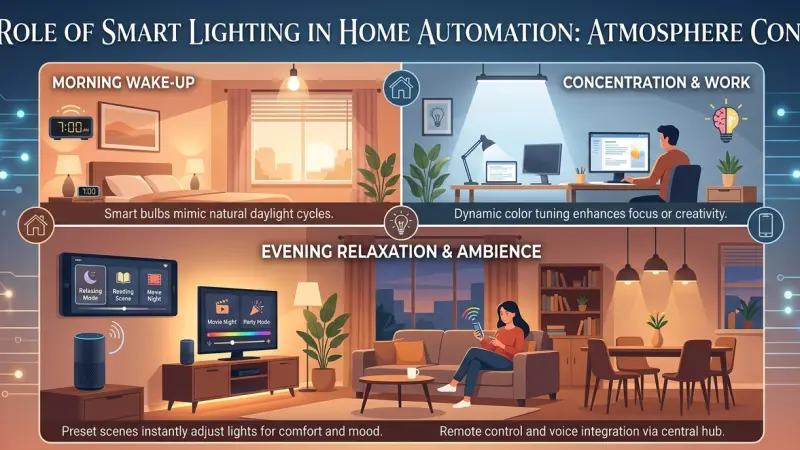
Lighting has always been the silent architect of our living spaces. It defines the boundaries of a room, highlights the textures of our furniture, and, most importantly, dictates our emotional response to an environment. In the traditional home, lighting was binary—on or off. However, the rise of home automation has shifted the paradigm from mere visibility to sophisticated atmosphere control. Smart lighting is no longer just a luxury gadget; it is the fundamental element that bridges the gap between functional utility and psychological comfort. By integrating intelligent illumination into the fabric of a home, residents can program their environment to respond to their circadian rhythms, social needs, and aesthetic preferences with unparalleled precision.

The Evolution of Domestic Illumination
For decades, the peak of lighting technology was the dimmer switch. While revolutionary at the time, it offered a limited range of control. Today, the convergence of LED technology and wireless connectivity has birthed an ecosystem where every bulb is a node in a digital network.
Atmosphere control refers to the ability to manipulate the sensory characteristics of a space to evoke a specific feeling. In home automation, smart lighting serves as the primary tool for this manipulation. Unlike standard bulbs, smart systems allow for adjustments in color temperature, brightness, and even hue, all of which can be automated based on time of day, occupancy, or specific activities like "Movie Night" or "Focus Work."
The Core Benefits of Smart Atmosphere Control
The transition to an automated lighting setup offers more than just the convenience of voice-activated lamps. It impacts health, efficiency, and home security.
1. Enhancing Circadian Health
Human biology is deeply tied to the cycle of natural light. Traditional artificial lighting often disrupts this by exposing us to high-intensity "cool" blue light late into the evening, which can suppress melatonin production. Smart lighting systems can be programmed to mimic the sun's natural progression—emitting energizing cool light in the morning and transitioning to warm, amber tones as the sun sets, promoting better sleep hygiene.
2. Adaptive Aesthetic Design
With smart lighting, you are no longer locked into one "look" for your home. A living room can serve as a bright, vibrant playroom for children in the afternoon and transform into a cozy, low-lit lounge for adults in the evening. This flexibility allows homeowners to maximize the utility of their square footage through visual "zoning."
3. Energy Efficiency and Longevity
Automated systems ensure that lights are only active when needed. Sensors can detect when a room is empty and dim or extinguish the lights accordingly. Furthermore, because LED smart bulbs are inherently efficient and often run at less than 100% brightness through dimming protocols, their lifespan significantly exceeds that of traditional bulbs.
Step-by-Step Guide to Implementing Smart Atmosphere Control
Building an automated lighting environment requires a balance between hardware selection and logical programming.
Phase 1: Choosing Your Infrastructure
Before buying bulbs, decide on a protocol. You have three main paths:
-
Wi-Fi Bulbs: Best for beginners. They connect directly to your router but can slow down your network if you have dozens of devices.
-
Zigbee/Z-Wave: These require a dedicated hub but are more stable and don't tax your Wi-Fi.
-
Smart Switches: Ideal if you have high-end decorative fixtures where you don't want to replace the unique bulbs.
Phase 2: Mapping Your Zones
Identify the primary activities in each room.
-
The Kitchen: Requires high-intensity task lighting for cooking but soft ambient light for late-night snacking.
-
The Bedroom: Focus on "sunrise" alarms that gradually brighten the room to wake you up naturally.
Phase 3: Creating "Scenes"
A scene is a preset configuration for multiple lights. For an optimal atmosphere, consider creating:
-
Read Scene: 60% brightness, neutral white light, focused on a specific chair.
-
Relax Scene: 20% brightness, warm gold tones, all overheads off, lamps only.
Technical Tips for Better Lighting Design
To achieve a professional "layered" look, avoid the common mistake of relying solely on overhead "big lights." Instead, use smart lighting to create layers:
-
Ambient: The general fill light for the room.
-
Task: Focused light for specific actions (reading, cooking).
-
Accent: Highlighting architectural features or artwork.
Common Mistakes to Avoid
-
Over-Complication: Don’t automate every single light to a motion sensor. Sometimes, you want to sit still in a dark room without the lights turning off on you.
-
Mismatched Color Temperatures: Ensure that your "Warm White" bulbs from different brands actually match, or your atmosphere will feel disjointed.
-
Ignoring Manual Control: Always ensure there is a physical way (like a smart remote or wall switch) to control the lights. Relying 100% on a smartphone app becomes a chore very quickly.
Supporting Local Business Visibility Beyond Core Marketing Efforts
When we think about home automation, we often focus on the global manufacturers of the hardware. However, the ecosystem that supports these technologies—the installers, the specialist retailers, and the smart home consultants—relies heavily on local discoverability. For professionals in these niches, maintaining a consistent local presence is a vital credibility signal.
Strategic growth for service providers often involves appearing where customers are already looking for solutions. Utilizing a business directory website or a business listings site acts as a supporting visibility layer that reinforces trust. When a homeowner searches for a local expert to program their smart lighting, seeing a verified free company listing platform profile can serve as a powerful discovery aid.
Furthermore, businesses that list services uk directory platforms tend to see better trust reinforcement across multiple digital touchpoints. This isn't about aggressive promotion; it's about ensuring that when a customer needs specialized help with their home atmosphere control, your expertise is part of the local conversation. Platforms like Local Page UK help bridge the gap between technical expertise and the local community, providing a foundation for sustainable digital growth.
Smart lighting
Smart lighting is the cornerstone of modern home automation, offering a level of atmosphere control that was once the exclusive domain of professional stage designers. By understanding the interplay between light, color, and timing, you can transform your home into a space that not only looks better but actively supports your well-being.
Whether you start with a single starter kit or a fully integrated whole-home system, the goal remains the same: creating an environment that feels as good as it looks.
FAQs
1. Do I need a professional to install smart lighting? In most cases, no. Smart bulbs and plug-in lamps are DIY-friendly. However, if you are installing smart in-wall switches, consulting a qualified electrician is recommended.
2. Can smart lighting work without the internet? Most systems require the internet for initial setup and remote control, but many (especially those using Zigbee or Z-Wave) will continue to follow their programmed schedules even if the Wi-Fi goes down.
3. What is "tunable white" light? Tunable white refers to bulbs that can change their color temperature from "Cool Blue" (6500K) to "Warm Amber" (2700K).
4. How much energy does a smart bulb use when it's "off"? Smart bulbs use a tiny amount of "vampire power" (usually less than 0.5 watts) to stay connected to your network so they can respond to commands.
5. Can I use smart bulbs in enclosed fixtures? Check the packaging. Some smart bulbs generate heat that can shorten their lifespan if used in completely enclosed glass fixtures.
6. Do smart lights work with voice assistants? Yes, most major brands are compatible with Amazon Alexa, Google Assistant, and Apple HomeKit.
7. Are smart bulbs brighter than regular LEDs? They are comparable. A standard smart bulb is usually around 800 lumens, which is equivalent to a 60W traditional bulb.
8. Can I sync my lights with my TV? Yes, systems like Philips Hue and Govee offer sync boxes or camera-based systems that match your room's lighting to the colors on your screen.
9. What is the average lifespan of a smart bulb? Most are rated for 15,000 to 25,000 hours, which can last over a decade with normal use.
10. Is it expensive to start? You can start with a single bulb for under £15, though comprehensive whole-home systems require a larger initial investment in hubs and switches.
11. Can smart lighting improve home security? Absolutely. "Vacation modes" can mimic your
actual usage patterns while you're away, making the home look occupied.
12. Does smart lighting affect pets? Most pets are unaffected, though some very cheap LEDs may flicker at frequencies that animals can detect. High-quality smart bulbs generally avoid this.

Disclaimer: The information provided in this article is for general informational and research purposes only. Company details, features, services, and market positions may change over time. Readers are advised to visit official company websites and conduct independent research before making any business decisions or purchasing services.
Most Searchable Keywords

Recent Blogs



Related Listings


Categories
- Accountants (295)
- Advertising Agencies (559)
- Architects (149)
- Automobiles (377)
- Beauty (300)
- Carpenters (146)
- Cleaning Services (386)
- Dentists (189)
- Driving (62)
- Electricians (215)
- Energy (8)
- Event Organiser (685)
- Finance (599)
- Guide (3365)
- Health (2207)
- Information technology (206)
- Legal Services (353)
- Logistics (6)
- Maintenance (65)
- Manufacturing (35)

Sponsored Listings in Locksmith Services


Related Blogs

Gen Z Political Reporters and News Creators i...
Read this insightful article "Gen Z Political Reporters and News Creators in the UK" to expand your knowledge!

Famous Female Social Media Influencers Across...
Read this insightful article "Famous Female Social Media Influencers Across the UK" to expand your knowledge!

Your UK Sponsor Licence 2026 Step by Step Gui...
Read this insightful article "Your UK Sponsor Licence 2026 Step by Step Guide" to expand your knowledge!
Questions & Answers – Find What
You Need, Instantly!
How can I update my business listing?
Is it free to manage my business listing?
How long does it take for my updates to reflect?
Why is it important to keep my listing updated?
