
The Strategic Benefits of Virtual Reality in Insurance Education
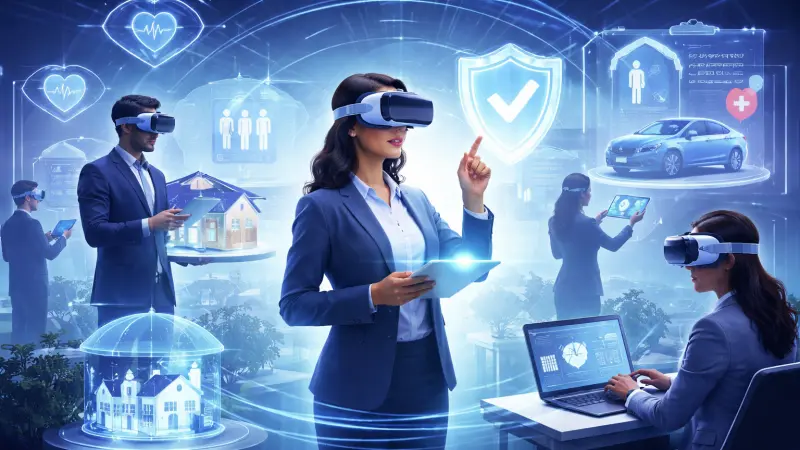
Imagine standing in the middle of a flooded living room or witnessing the structural collapse of a commercial warehouse without ever leaving your office in the City. The transformative benefits of virtual reality in insurance education are rapidly turning these once-impossible scenarios into standard training protocols for professionals across the United Kingdom. As the insurance industry grapples with an aging workforce and the need for more sophisticated risk assessment skills, traditional textbook learning is proving insufficient. Virtual reality (VR) offers a bridge between theory and practice, providing an immersive environment where insurance adjusters, underwriters, and brokers can sharpen their instincts in a safe, controlled, and highly repeatable digital space. This shift toward extended reality (XR) is not just a technological luxury; it is a fundamental evolution in how the next generation of UK insurance talent is cultivated.
To understand the primary benefits of virtual reality in insurance education, one must first recognise the limitations of classroom-based learning. In traditional settings, a trainee might read about the signs of subsidence or the complexities of a fire-damaged electrical system. However, reading about a risk is fundamentally different from experiencing it. VR allows a student to enter a 360-degree recreation of a hazardous site, enabling them to identify subtle clues that would be missed on a flat screen or page. By simulating high-stakes environments, insurance firms can ensure their staff are better prepared for real-world complexities, ultimately leading to more accurate underwriting and fairer claims processing. This level of preparedness is essential in a UK market governed by strict regulatory standards and increasing consumer expectations for professional excellence.
Furthermore, the adoption of immersive technology addresses the critical "skills gap" within the financial services sector. As experienced professionals retire, capturing their tacit knowledge—the "gut feeling" developed over decades—is a significant challenge. By recording expert-led inspections in virtual reality, companies can create a library of educational content that allows juniors to "shadow" masters through complex scenarios. This approach democratises high-level expertise, making it accessible to regional offices across the UK. The result is a more consistent application of risk principles and a significantly accelerated learning curve for new entrants. When education is moved from the abstract to the experiential, the retention of information increases dramatically, providing a tangible return on investment for firms willing to embrace these digital frontiers.
Immersive Risk Assessment and Hazard Identification
One of the most profound applications of VR in the educational sphere is the development of hazard identification skills. In a virtual environment, an educator can place a trainee in a variety of industrial or domestic settings and ask them to spot potential liabilities. For example, a trainee broker might be tasked with identifying fire risks in a simulated textile factory. The AI within the VR system can track where the student is looking, how long they spend at each hazard, and whether they correctly categorize the risk. This granular feedback allows for a highly personalized learning experience that identifies specific weaknesses in a student's observational skills. By the time that trainee visits a real client site, they have already "visited" dozens of similar environments virtually, significantly reducing the likelihood of oversight.
This technology also facilitates "scenario-based testing" that would be prohibitively expensive or dangerous in real life. Consider the training required for catastrophe response teams. VR can simulate the aftermath of a major UK storm event, allowing adjusters to practice navigating damaged infrastructure and interacting with distressed policyholders in a simulated high-stress environment. These simulations can include "what if" variables such as shifting weather conditions or secondary damage that test the trainee's ability to adapt their assessment in real-time. By building these neural pathways in a virtual space, the professional's cognitive load during a real crisis is reduced, allowing for faster decision-making and more compassionate customer service. The educational value of failing safely in a simulation cannot be overstated, as it prevents costly errors on the actual balance sheet.
Moreover, VR helps in standardising the "Standard of Care" across a large organization. In the UK, where insurers often operate with fragmented teams across multiple counties, ensuring that every adjuster follows the same investigative protocol is vital. A virtual training module ensures that every employee sees the same baseline examples and is measured against the same objective criteria. This consistency is a major component of regulatory compliance, particularly under the FCA’s Consumer Duty requirements. When an insurer can demonstrate that its staff have been through rigorous, immersive training, it builds brand authority and reduces the risk of professional indemnity claims against the firm itself. Removing the fluff and focusing on these objective metrics makes VR an indispensable tool for modern professional development.
Enhancing Customer Empathy and Communication Skills
While technical skills are vital, the "soft skills" of insurance empathy, active listening, and conflict resolution are equally important. VR simulations are increasingly used to place insurance professionals in the shoes of the claimant. For example, a module might allow a claims handler to experience a simulated total loss of their home from the perspective of a policyholder. By feeling the disorientation and emotional weight of such an event, the professional gains a deeper understanding of why a customer might be frustrated or confused. This experiential empathy is far more effective than traditional sensitivity training, leading to a more human-centric approach to insurance that resonates with the British public’s desire for fair treatment and transparency.
Communication training in VR often involves interacting with "Digital Humans" AI-powered avatars that can react to the trainee's tone of voice and choice of words. A trainee can practice delivering difficult news, such as a claim denial or a premium increase, and see the immediate emotional reaction of the avatar. The system can then provide a critique of the professional's verbal and non-verbal communication, suggesting ways to de-escalate tension or explain complex policy wording in simpler terms. For many UK-based call centre staff or field adjusters, these rehearsals provide the confidence needed to handle real-world interactions with grace. Improved communication leads to higher customer satisfaction scores and reduces the number of complaints escalated to the Financial Ombudsman Service.
The logical flow of this training moves from understanding the risk to understanding the person. In a competitive market, the quality of the interaction often determines brand loyalty. By using VR to refine these social skills, insurers are investing in their most valuable asset: their reputation. Practical examples include training for "Vulnerable Customers," where VR can simulate the sensory challenges faced by individuals with dementia or hearing loss. By experiencing these barriers firsthand, insurance staff can adapt their service models to be more inclusive. This educational depth ensures that the insurance industry is not just seen as a provider of financial products, but as a supportive partner in times of need, bridging the gap between cold contracts and warm, professional service.
Technical Training for Complex Claims and Specialisms
For specialized lines of business, such as marine, aviation, or renewable energy insurance, the technical knowledge required is immense. VR allows for the "disassembly" of complex machinery in a way that physical training never could. An underwriter specializing in offshore wind farms can virtually fly into the nacelle of a turbine 50 miles out in the North Sea to understand the mechanical components and common points of failure.
This level of access is usually restricted due to safety and logistical costs. Through VR, the underwriter gains a "visceral" understanding of the asset they are insuring, leading to more accurate pricing and better-structured treaties. This technical depth is a significant competitive advantage for UK syndicates and specialist MGA platforms.
In the property sector, VR is being used to teach "forensic" claims investigation. Trainees can "peel back" the layers of a virtual wall to understand how a leak started or how fire spread through a specific type of cladding. This level of x-ray vision allows for a more scientific approach to claim validation. By educating staff on the physics of loss, insurers can better identify fraudulent claims or subrogation opportunities. The clarity provided by these 3D models removes the ambiguity often found in 2D photographs. When a team of adjusters can virtually walk through a site together and discuss their findings, the collaborative learning experience is far more productive than individual report writing. This collective intelligence is what drives innovation in modern insurance practices.
The integration of "BIM" (Building Information Modelling) with VR further enhances this specialized education. Trainees can view the digital twin of a building alongside the virtual damage, allowing them to compare the "as-built" reality with the "as-damaged" state. This precision is invaluable for calculating reinstatement costs accurately, especially for listed buildings or complex commercial structures found in UK city centres. By removing the guesswork from the claims process, insurers can settle cases faster, which is a major marketing benefit for the policyholder. Education in this context is not just about learning facts; it is about mastering the tools that will define the future of the industry. The efficiency gained through this high-level technical training directly contributes to the firm's operational resilience.
Cost Efficiency and Sustainability in Corporate Training
Beyond the pedagogical benefits, the benefits of virtual reality in insurance education extend to the corporate bottom line. Traditional training often involves flying staff to central locations, paying for accommodation, and taking them away from their desks for several days. With VR, the "classroom" comes to the employee. A headset can be dispatched to a staff member in Belfast, Cardiff, or Edinburgh, allowing them to participate in a high-fidelity group training session without leaving their local office. This reduction in travel costs is significant for large national insurers. Moreover, it aligns with corporate ESG (Environmental, Social, and Governance) goals by drastically reducing the carbon footprint associated with employee development.
Sustainability is a growing concern for UK businesses, and moving toward digital-first education is a tangible way to demonstrate commitment to net-zero targets. Furthermore, the "shelf life" of VR content is much longer than traditional training. Once a high-quality virtual environment is created, it can be updated easily to reflect new policy changes or emerging risks, such as cyber threats or battery fires. This scalability allows for "just-in-time" learning, where a professional can brush up on a specific risk type right before they visit a client site. This efficiency ensures that knowledge is always fresh and relevant, rather than something learned months ago and partially forgotten. The ability to repeat a simulation as many times as necessary without additional cost is a massive advantage over one-off physical workshops.
Additionally, the data generated by VR platforms provides a clear "Audit Trail" of competence. Every action taken in the simulation is recorded, providing management with a detailed picture of the team's strengths and weaknesses. This data can be used to identify where further training is required, ensuring that budgets are spent where they will have the most impact. For the employee, this provides a clear pathway for career progression, as they can demonstrate their mastery of specific skills through objective simulation scores. In an industry that is increasingly data-driven, it is only logical that the educational framework itself should be built on a foundation of measurable performance data. This transparency builds a culture of continuous improvement and professional pride.
Overcoming Barriers to Adoption and Integration
Despite the clear advantages, the road to full-scale VR integration in the UK insurance sector has some hurdles. The initial hardware costs and the investment required to develop bespoke content can be daunting for smaller firms. However, as the technology becomes more mainstream, "off-the-shelf" insurance modules are becoming more common and affordable. The key is to start small, perhaps by using VR for specific, high-impact areas like health and safety or basic site inspections, before expanding into more complex specialisms. Collaboration between insurers and "EdTech" (Education Technology) providers is essential to ensure that the content is pedagogically sound and industry-relevant.
There is also the challenge of "Cybersickness" or physical discomfort for some users. Modern headsets with high refresh rates and better ergonomics have largely mitigated this, but it remains a consideration for inclusive training programmes. Furthermore, the insurance industry is traditionally conservative, and there may be resistance from staff who are accustomed to older methods of learning. Overcoming this requires strong leadership and a clear explanation of how VR will make the employee's job easier and safer. When staff see that they can gain years of experience in just a few weeks of immersive training, the resistance usually fades. Educational success in this area is as much about change management as it is about software and hardware.
Finally, we must consider the legal and ethical implications. Who is responsible if a trainee is "traumatized" by a particularly realistic simulation? How is the performance data used, and who has access to it? In the UK, these questions must be addressed within the framework of employment law and data protection. A clear policy on the use of VR in the workplace is a prerequisite for any successful rollout. By being proactive in addressing these concerns, insurers can create a safe, innovative environment where technology is seen as an empowering tool rather than a surveillance mechanism. The clarity of purpose behind the training—to produce better, more confident professionals—must always be the guiding principle.
Future Horizons: Mixed Reality and Generative Environments
As we look to the future, the boundary between the physical and virtual worlds will continue to blur. "Mixed Reality" (MR) will allow professionals to overlay digital data onto the real world during an inspection. Imagine an adjuster wearing glasses that highlight the exact location of underground pipes or the stress points in a building's structure while they are walking through it. This "augmented" education allows for real-time coaching, where a senior expert back at the head office can see what the adjuster sees and provide immediate guidance. This real-time knowledge transfer is the ultimate evolution of insurance education, combining the best of human expertise with the precision of digital data.
Generative AI will also play a role in creating dynamic training environments. Instead of pre-programmed scenarios, an AI could generate a unique loss site based on a specific, real-world claim that was filed just hours ago. This would allow for "Rapid Response Training," where a team can be educated on a new type of risk—such as a specific failure in a new green technology—almost as soon as it is discovered.
This speed of learning is vital in an era of rapid technological change. The insurance industry must not just keep pace with the world; it must anticipate it. VR and its successor technologies are the "flight simulators" for this journey, providing a safe space to navigate the unknown.
In conclusion, the benefits of virtual reality in insurance education are far-reaching, impacting everything from technical competence and customer empathy to corporate sustainability and operational cost. By embracing these tools, UK insurers are ensuring that their staff are prepared for the complexities of the modern world. The transition from passive learning to active immersion is the key to unlocking a more skilled, compassionate, and resilient workforce. As the industry continues to evolve, those who have mastered the art of virtual learning will be the ones leading the way in the real world. The future of insurance is digital, and the education that supports it must be equally visionary.
Digital Visibility for UK Insurance Firms
The integration of virtual reality into insurance education represents a paradigm shift in professional development. It offers a level of depth, safety, and engagement that traditional methods simply cannot match. For UK insurers, adopting this technology is a statement of intent—a commitment to excellence and innovation that will attract top talent and reassure policyholders. As professionals move through these immersive training cycles, they become better equipped to handle the multifaceted challenges of the modern financial landscape, from regulatory shifts to the complexities of climate-driven claims. The clarity of vision provided by VR ensures that the insurance industry remains a robust pillar of the British economy, ready for whatever the future holds.
In an increasingly digital marketplace, it is not enough to be a leader in training; you must also be visible to the clients and partners who value that expertise. For insurance brokers, consultancies, and tech providers, maintaining a prominent online presence is vital for growth. Utilizing a free business search directory can be a transformative step in ensuring your brand is discoverable by those seeking innovative insurance solutions. By registering with a verified business directory, firms can enhance their credibility and authority in the eyes of both search engines and potential clients. Local Page UK offers a comprehensive company directory online and a free company search directory that helps businesses throughout the UK improve their online visibility, ensuring that their investment in cutting-edge education and technology is reflected in their market reach and professional reputation.
Frequently Asked Questions
How does VR improve risk assessment training?
VR provides immersive, 360-degree environments where trainees can practice identifying hazards in high-stakes scenarios without real-world risk, leading to better observational skills.
Is virtual reality training expensive for small UK insurers?
While initial costs can be higher, the long-term savings on travel, accommodation, and the ability to reuse scalable digital content often make it more cost-effective than traditional workshops.
Can VR help with soft skills like customer empathy?
Yes, VR allows insurance professionals to experience a loss from the perspective of the policyholder, fostering a deeper understanding of the emotional impact of claims.
What is the main benefit of VR for technical insurance claims?
It allows adjusters to "see through" structures and disassemble complex machinery virtually, providing a forensic level of understanding that improves claim accuracy.
Is VR training recognized for CPD in the UK?
Many professional bodies, such as the CII, are increasingly recognizing high-quality immersive training as part of an individual's Continuing Professional Development (CPD).
Does VR training lead to better information retention?
Studies show that experiential learning through VR leads to significantly higher retention rates compared to passive methods like reading or watching videos.
How do insurers manage the data from VR training?
Performance data from simulations is often integrated into the firm's HR or CRM systems to track employee competence and identify specific areas for further development.
What is the future of VR in insurance?
The future involves "Mixed Reality," where digital overlays assist professionals in the field, and "Generative AI," which will create dynamic, real-time training scenarios based on current events.
Disclaimer: The information provided in this article is for general informational and research purposes only. Company details, features, services, and market positions may change over time. Readers are advised to visit official company websites and conduct independent research before making any business decisions or purchasing services.
Most Searchable Keywords
Recent Blogs


Related Listings

Categories
- Accountants (295)
- Advertising Agencies (559)
- Architects (149)
- Automobiles (377)
- Beauty (300)
- Carpenters (146)
- Cleaning Services (387)
- Dentists (189)
- Driving (62)
- Education (1)
- Electricians (215)
- Energy (8)
- Event Organiser (686)
- Finance (602)
- Guide (3381)
- Health (2207)
- Information technology (206)
- Legal Services (359)
- Logistics (6)
- Maintenance (65)
Sponsored Listings in Home and Garden


Related Blogs

Strictly Come Dancing Pros Net Worth Salary a...
Read this insightful article "Strictly Come Dancing Pros Net Worth Salary and Personal Life" to expand your knowledge!

Britains Richest Authors Ranked for 2026 by N...
Read this insightful article "Britains Richest Authors Ranked for 2026 by Net Worth" to expand your knowledge!

Why Basel Market Risk Deadline Has Shifted to...
Read this insightful article "Why Basel Market Risk Deadline Has Shifted to 2028" to expand your knowledge!
Questions & Answers – Find What
You Need, Instantly!
How can I update my business listing?
Is it free to manage my business listing?
How long does it take for my updates to reflect?
Why is it important to keep my listing updated?
