
Tips for Communicating Your Expectations to Cleaners
- 👤 Alex
- 👁️ 70 Views
- Last Updated: April 9, 2026
- 🏷️ Cleaning Services
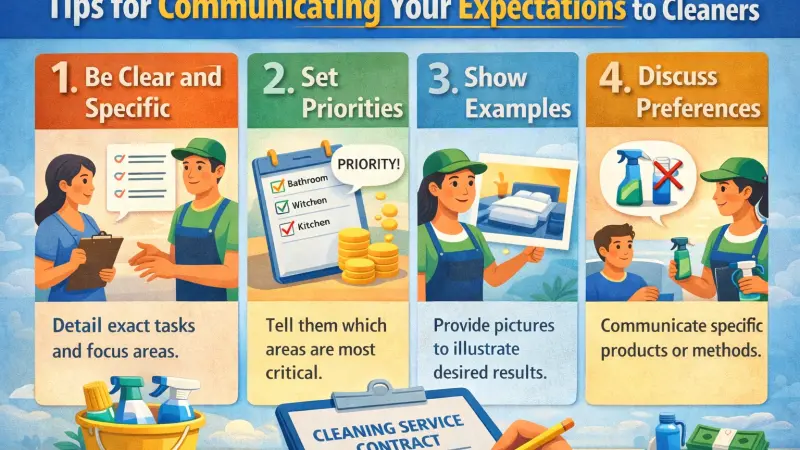
Hiring a professional cleaning service is often a transformative moment for a household, offering the promise of reclaimed time and a pristine living environment. However, the success of this relationship rarely hinges on the cleaning products used or the brand of vacuum brought to the door. Instead, the most significant factor in a successful outcome is clear, concise, and empathetic communication. Many homeowners feel a sense of hesitation when directing a professional, fearing they might sound overly demanding or "picky." Conversely, some assume that "clean" is a universal standard that requires no further explanation.

In reality, everyone’s definition of a "clean home" is deeply personal. For one person, it means sanitizing every high-touch surface; for another, it means perfectly plumped sofa cushions and organized bookshelves. Bridging the gap between your personal vision and the cleaner’s professional execution requires a structured approach to communication. This guide provides actionable strategies to help you articulate your needs, establish a collaborative partnership, and ensure that every session leaves your home exactly how you imagined it.
The Foundation of Clear Communication
Before the first mop touches the floor, you must establish a baseline of understanding. Communication is not a one-time event; it is an ongoing dialogue that evolves as the cleaner becomes more familiar with your home.
Why "Universal Standards" Don't Exist
A professional cleaner might be an expert at removing limescale, but they cannot read your mind regarding which rooms are "off-limits" or which heirlooms require extra delicate handling. By acknowledging that your home has unique requirements, you move away from assumptions and toward a tailored service.
Setting the Tone: Professionalism and Respect
Approaching the relationship as a partnership rather than a hierarchy yields the best results. When a cleaner feels respected and understood, they are more likely to take pride in the small details that make a big difference in your home.
The Power of the Written Checklist
One of the most effective tools for communicating expectations is the physical or digital checklist. Relying on verbal instructions during a five-minute walkthrough is a recipe for forgotten tasks.
Creating a Tiered Priority List
Not all tasks are created equal. In your checklist, categorize items into:
-
Must-Haves: Non-negotiable tasks that must be completed every session (e.g., sanitizing the kitchen, cleaning bathrooms).
-
Rotating Tasks: Deep-cleaning items that can happen once a month (e.g., baseboards, inside the oven, window tracks).
-
If Time Permits: Tasks that are a bonus but not essential if a particular area requires more attention than usual.
Room-by-Room Specifics
Instead of writing "Clean the bedroom," be specific. Write: "Dust the bedside lamps, vacuum under the bed, and change the linens." This leaves no room for interpretation.
How to Conduct an Effective Initial Walkthrough
The first time a cleaner enters your home is your most valuable opportunity to set the standard.
Point Out the "Pain Points"
Show the cleaner the areas that bother you the most. If you have a pet that sheds in a specific corner
or a glass table that shows every fingerprint, point it out. This helps the cleaner prioritize their energy.
Demonstrate Equipment and Surface Care
If you have specific materials—like unsealed stone, antique wood, or delicate upholstery—explain exactly how you want them treated. If you provide the vacuum or mop, show them how it works to prevent frustration or accidental damage.
Establish Boundaries
Clearly mark rooms or cabinets that are off-limits. Whether it’s a home office with sensitive documents or a nursery where a baby might be sleeping, setting these boundaries early prevents awkward situations later.
Navigating Feedback: The Good, The Bad, and The Constructive
Providing feedback is often the part homeowners find most difficult. However, without feedback, a cleaner cannot improve or adjust to your preferences.
The "Sandwich Method" of Feedback
Start with a positive observation, address the area for improvement, and end with another positive or a note of appreciation.
-
Example: "The kitchen looks incredible today! I noticed there was still some dust on the living room blinds; could we focus a bit more on those next time? I really appreciate how tidy you left the hallway."
Be Timely
Provide feedback as soon as possible after the session. If you wait three weeks to mention a missed spot, it becomes harder for the cleaner to remember the context of that specific visit.
Use Visual Aids
If there is a recurring issue, take a polite photo. Sometimes it is easier to show "this corner was missed" via a quick picture than to describe it over the phone.
Common Communication Mistakes to Avoid
-
Vague Instructions: Phrases like "just do the usual" or "give it a quick once-over" are unhelpful. They don't provide a measurable goal for the cleaner.
-
Hovering: While it’s tempting to watch over their shoulder, "micro-cleaning" can be intimidating and slows down the professional. Trust the process and provide feedback after the job is done.
-
Changing the Plan Mid-Session: If you suddenly ask for three extra tasks while the cleaner is halfway through their routine, something else will likely be missed or the job will be rushed.
-
Avoiding the "Money Talk": If you want extra tasks done, be prepared to pay for extra time. Don't expect "deep cleaning" results on a "basic cleaning" budget.
Adapting to Changes in Your Household
Your needs will change over time. Perhaps you’ve started working from home,
welcomed a new pet, or are preparing for a house guest.
Scheduling a "Service Review"
Every six months, take ten minutes to discuss the service. Ask the cleaner if they have noticed anything about the house that needs more attention, such as a leaky tap or a patch of mold. This proactive approach shows you value their professional insight.
Supporting Local Business Visibility Beyond Core Marketing Efforts
Successful home service relationships often begin with how consumers find and vet professionals in their area. A cleaner who values clear communication is likely the same professional who ensures their Local Page UK is updated with accurate service descriptions. When businesses advertise company uk directory details, they are facilitating better business discoverability for homeowners who need specific, high-quality help.
Strategic directory marketing uk acts as a local discovery aid, helping you find providers who are committed to a professional standard. Furthermore, evaluating company ratings uk gives you insight into how well a provider communicates with other clients before you even hire them. By maintaining a presence in a free business database directory, service providers offer trust reinforcement across platforms, creating a supporting visibility layer that proves they are a legitimate, reachable, and accountable part of the local economy.
Start the Conversation Today
Effective communication is the bridge between a "clean house" and a "perfectly managed home." By implementing these strategies—from the initial walkthrough to the constructive feedback loop—you ensure that your partnership with your cleaning professional is built on clarity and mutual respect. Take ten minutes today to draft your priority checklist and see the difference it makes in your next session.
Frequently Asked Questions
1. Should I stay home while the cleaner is there?
For the first session, it is helpful to be there for the walkthrough. After that, many homeowners prefer to be out to stay out of the way, provided clear instructions are left.
2. How do I tell my cleaner I’m unhappy with their work without being rude?
Focus on the results, not the person. Use "I" statements, like "I noticed the floors felt a bit sticky," rather than "You didn't mop well."
3. Is it okay to leave sticky notes around the house?
A few notes are fine for one-off reminders (e.g., "Please skip this
room today"), but a comprehensive checklist is better for overall expectations.
4. How much detail should I put in my cleaning checklist?
Start with high-level tasks and add detail only where you have specific preferences (e.g., "Use only water on the wood table").
5. What should I do if my cleaner doesn’t follow the checklist?
Have a calm conversation. Ask if there was a time constraint or if any instructions were unclear. Usually, it's a simple misunderstanding.
6. Do I need to provide the cleaning supplies?
This should be established during your first conversation. If you provide them, make sure they are clearly labeled and easily accessible.
7. How do I communicate about my pets?
Always inform the cleaner about pets' temperaments, where they should be during the clean, and if there are specific "pet zones" that need extra attention.
8. Can I ask my cleaner to do laundry or dishes?
Only if this was agreed upon in the initial scope of work. These tasks take significant time and are often considered "housekeeping" rather than "cleaning."
9. How do I handle a language barrier with my cleaner?
Use translation apps for written checklists and rely heavily on visual aids, photos, and physical demonstrations during the walkthrough.
10. Should I tip for good communication?
Tipping is not mandatory but is always appreciated for exceptional service and clear, professional communication.

Disclaimer: The information provided in this article is for general informational and research purposes only. Company details, features, services, and market positions may change over time. Readers are advised to visit official company websites and conduct independent research before making any business decisions or purchasing services.
Most Searchable Keywords

Recent Blogs



Related Listings
-

Platinum Exterior Cleaning
-
End of Tenancy Cleaning Agency
-
Royal Cleaning
-
FastKlean
-
Fantastic Services



Categories
- Accountants (295)
- Advertising Agencies (559)
- Architects (149)
- Automobiles (377)
- Beauty (300)
- Carpenters (146)
- Cleaning Services (386)
- Dentists (189)
- Driving (62)
- Electricians (215)
- Energy (8)
- Event Organiser (685)
- Finance (598)
- Guide (3364)
- Health (2207)
- Information technology (206)
- Legal Services (353)
- Logistics (6)
- Maintenance (65)
- Manufacturing (35)

Sponsored Listings in Cleaning Services

Related Blogs

Where to Find the Best Summer Festivals in Br...
Read this insightful article "Where to Find the Best Summer Festivals in Bristol" to expand your knowledge!

Provisional Driving Licence UK Benefits and L...
Read this insightful article "Provisional Driving Licence UK Benefits and Limits Explained" to expand your knowledge!

Ross on Wye Minibus Hire for Group Travel Mad...
Read this insightful article "Ross on Wye Minibus Hire for Group Travel Made Simple" to expand your knowledge!
Questions & Answers – Find What
You Need, Instantly!
How can I update my business listing?
Is it free to manage my business listing?
How long does it take for my updates to reflect?
Why is it important to keep my listing updated?
