
UK Looks Set to Miss Government Export Targets
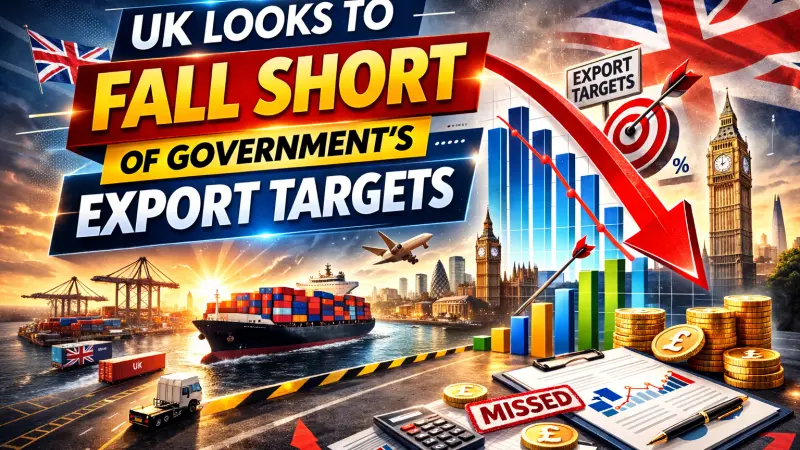
Exports are a vital driver of economic growth, helping businesses expand into new markets, create jobs, and strengthen national income. In recent years, the UK government has set ambitious export targets aimed at boosting international trade and improving economic resilience. However, current forecasts and industry feedback suggest the UK may fall short of these goals.

A combination of slowing global demand, ongoing trade barriers, policy uncertainty, and structural challenges has created a difficult environment for exporters. While the government continues to pursue trade deals and support programmes, many analysts believe export growth may not reach expected levels in the near term.
This article explores why the UK looks set to fall short of its export targets, the factors affecting trade performance, and what this means for businesses and the wider economy.
Overview of the UK’s Export Ambitions
The UK has long aimed to expand exports as part of its broader economic strategy, particularly after leaving the European Union. Government initiatives have focused on securing new trade agreements, supporting exporters, and improving access to global markets.
However, achieving these targets requires strong global demand, efficient trade processes, and competitive industries. Current economic conditions suggest these factors are not fully aligned, making it harder to meet expectations.
Forecasts Indicate Slower Export Growth
Recent analysis indicates export growth is expected to cool significantly in 2026. Forecasts highlighted by business groups suggest the outlook for export growth is weakening, prompting calls for stronger action to support businesses.
Economists note that weaker external demand and global economic uncertainty are likely to limit the contribution of exports to overall growth, with net trade expected to remain broadly flat.
These forecasts suggest that while exports may still grow, they are unlikely to meet ambitious government targets.
Global Economic Conditions Limiting Demand
One of the biggest challenges facing UK exporters is slower global economic growth. Weak consumer demand in key markets and rising trade tensions are reducing opportunities for export expansion.
Economic projections suggest that slowing growth in major economies and higher tariffs could weigh on UK exports, limiting growth potential in the coming years.
This environment makes it harder for businesses to increase sales abroad, even with government support.
Trade Barriers and Policy Challenges
Trade barriers continue to affect the UK’s ability to grow exports, particularly in sectors heavily reliant on international supply chains.
Non tariff barriers and regulatory differences can increase costs and complexity for exporters.
Business groups have emphasised the need to reduce trade barriers and improve support for accessing new markets, highlighting these issues as key obstacles to export growth.
Without improvements in trade facilitation, exporters may struggle to remain competitive.
Impact of Supply Chain Risks
Supply chain disruptions and policy changes in trading partners can also affect export performance. For example, concerns have been raised that new industrial policies in Europe could create additional barriers and disrupt integrated supply chains.
UK officials have warned that policies prioritising domestic production in Europe could raise costs and negatively impact UK trade relationships.
Such developments highlight the uncertainty facing exporters operating in global markets.
Delays in Trade Facilitation Projects
Efforts to streamline trade processes have also faced setbacks. For example, a major digital border project designed to simplify import and export procedures has been shelved, raising concerns about efficiency and costs for traders.
Without improvements to trade infrastructure, exporters may continue to face administrative burdens that limit growth.
Progress and Challenges With Trade Agreements
The UK has been pursuing new trade agreements to boost exports, including deals with major global partners. However, implementing these agreements takes time, and some negotiations remain ongoing.
Progress on trade deals with countries such as India and negotiations with other regions highlight opportunities, but delays in implementation mean the benefits may not be fully realised in the short term.
This gap between agreements and real world impact can slow export growth.
Structural Issues Affecting Competitiveness
Structural challenges such as productivity gaps, skills shortages, and higher costs can also limit export performance. Businesses must remain competitive globally, and any inefficiencies can reduce their ability to win international contracts.
Additionally, changes in exchange rates and global market conditions can affect pricing competitiveness for UK exporters.
What Falling Short Means for the Economy
If export growth remains below target, it could limit overall economic expansion. Exports contribute significantly to GDP, employment, and investment, so weaker performance may reduce growth momentum.
Lower export growth may also affect the balance of trade and government revenues, creating additional pressure on economic policy.
Opportunities Despite the Challenges
Despite these challenges, there are still opportunities for UK exporters. Growing demand in emerging markets, technological innovation, and new trade partnerships could support future growth.
Government support programmes, export financing, and digital trade initiatives can also help businesses expand internationally.
Companies that focus on innovation, productivity, and diversification are likely to be better positioned to succeed in global markets.
What Businesses Can Do to Adapt
Businesses can strengthen their export strategies by diversifying markets, investing in innovation, and improving supply chain resilience. Staying informed about regulatory changes and trade opportunities can also help companies remain competitive.
Working with trade support organisations and leveraging government programmes can provide additional resources for international expansion.
Future Outlook for UK Exports
While the short term outlook suggests export growth may fall below targets, long term prospects remain more positive if global conditions improve and trade policies become more supportive.
Continued investment in trade infrastructure, innovation, and international partnerships will be crucial for improving export performance.
The UK appears likely to fall short of its government export targets due to a combination of weaker global demand, trade barriers, policy challenges, and structural issues. Forecasts pointing to slower export growth highlight the need for stronger support measures and improved trade conditions.
While challenges remain, opportunities still exist for businesses that adapt and innovate. By focusing on competitiveness and exploring new markets, UK exporters can navigate the current environment and position themselves for future growth.
FAQs
Why is the UK likely to miss export targets Slower global demand, trade barriers, and structural challenges are limiting export growth.
Are UK exports declining Exports are expected to grow slowly, but not at the pace needed to meet targets.
What factors affect export growth Global demand, trade agreements, exchange rates, and competitiveness all influence exports.
How do trade barriers impact exporters They increase costs and complexity, making it harder to compete internationally.
Are trade deals helping UK exports Trade deals create opportunities but take time to deliver measurable results.
What is the outlook for UK exports in 2026 Forecasts suggest growth will cool and remain modest.
How does global demand affect exports Lower demand in key markets reduces opportunities for export growth.
What industries are most affected Manufacturing and sectors reliant on international supply chains are often most impacted.
Can exports recover in the future Yes, improved global conditions and policy support could boost exports.
What can businesses do to improve exports Diversify markets, invest in innovation, and improve efficiency.
How do exchange rates affect exports A weaker currency can make exports more competitive, while a stronger currency can reduce demand.
What role does government policy play Policies influence trade agreements, support programmes, and regulatory conditions.
Are exporters receiving government support Yes, programmes such as export financing and trade promotion exist.
Why are supply chains important for exports Efficient supply chains reduce costs and improve reliability for international trade.
Will export growth improve long term Long term prospects depend on global economic conditions and policy improvements.

Disclaimer: The information provided in this article is for general informational and research purposes only. Company details, features, services, and market positions may change over time. Readers are advised to visit official company websites and conduct independent research before making any business decisions or purchasing services.
Most Searchable Keywords

Recent Blogs


Related Listings


Categories
- Accountants (295)
- Advertising Agencies (559)
- Architects (149)
- Automobiles (377)
- Beauty (300)
- Carpenters (146)
- Cleaning Services (386)
- Dentists (189)
- Driving (62)
- Electricians (215)
- Energy (8)
- Event Organiser (685)
- Finance (599)
- Guide (3365)
- Health (2207)
- Information technology (206)
- Legal Services (353)
- Logistics (6)
- Maintenance (65)
- Manufacturing (35)

Sponsored Listings in Locksmith Services


Related Blogs

Gen Z Political Reporters and News Creators i...
Read this insightful article "Gen Z Political Reporters and News Creators in the UK" to expand your knowledge!

Famous Female Social Media Influencers Across...
Read this insightful article "Famous Female Social Media Influencers Across the UK" to expand your knowledge!
Your UK Sponsor Licence 2026 Step by Step Gui...
Read this insightful article "Your UK Sponsor Licence 2026 Step by Step Guide" to expand your knowledge!
Questions & Answers – Find What
You Need, Instantly!
How can I update my business listing?
Is it free to manage my business listing?
How long does it take for my updates to reflect?
Why is it important to keep my listing updated?
