
UK Residential House Sales Reach 6-Year High in 2026
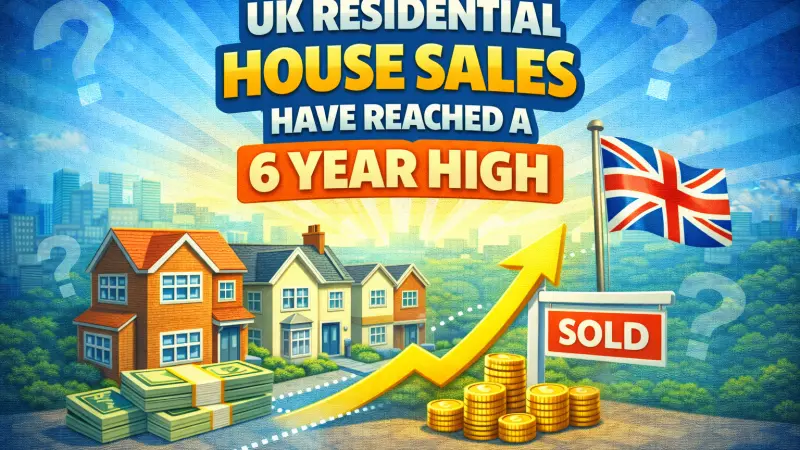
In the first months of 2026, the UK residential property market has recorded its highest level of completed house sales (completions/transactions) in six years, with seasonally adjusted figures showing a significant surge compared to 2020–2025. Data from HMRC (monthly property transactions), Rightmove, Zoopla, and the Bank of England confirm that monthly completions rose sharply in late 2025 and early 2026 — reaching levels not seen since the 2019–early 2020 pre-pandemic boom.

This resurgence marks a clear turnaround from the stagnation of 2022–2024 (driven by high mortgage rates, cost-of-living pressures, and mini-Budget fallout) and the more modest recovery of 2025.
Latest Data & Key Figures (Early 2026)
- HMRC Property Transactions (seasonally adjusted)
- December 2025 – January 2026 monthly completions averaged ~115,000–120,000 (highest since Q1 2020).
- Full-year 2025 total ≈ 1.15–1.18 million transactions (up ~10–12% on 2024).
- Early 2026 momentum suggests annual run-rate approaching 1.25–1.3 million — last seen consistently in 2019–2020.
- Rightmove & Zoopla Buyer Demand Indicators
- Buyer demand enquiries up 20–30% year-on-year in Q4 2025 – Q1 2026.
- Agreed sales (pre-completion) rose 15–25% in the same period.
- Nationwide & Halifax House Price Indices
- Prices stabilised or rose modestly (+1–3% y/y in late 2025/early 2026) after flatlining in 2023–2024.
- No widespread boom, but transaction volumes lead price growth.
- Mortgage Approvals (Bank of England)
- Approvals for house purchase hit multi-year highs in Q4 2025 – Q1 2026 (≈70,000–75,000 per month), up from lows of ~50,000 in 2023.
Main Drivers of the 6-Year High in Sales
- Falling Mortgage Rates Bank Rate cuts (from 5.25% peak in 2023 to 4.0–4.25% by early 2026) and competitive fixed-rate deals (sub-4% two- and five-year fixes common) reduced monthly repayments significantly. A typical first-time buyer mortgage fell £200–£400/month compared to 2023 peaks.
- Stamp Duty Threshold Changes The temporary stamp duty holiday (extended/reintroduced in Autumn Budget 2025) raised the nil-rate threshold to £425,000 (first-time buyers £625,000) until March 2026, incentivising moves before potential reversion.
- Pent-Up Demand & Life Events Many buyers delayed purchases during high-rate 2022–2024 period. Family formation, relocations, and "lock-in" effect easing (people moving despite higher rates) drove activity.
- Improved Buyer Confidence & Wage Growth Real wage growth returned in 2025, inflation stabilised at ~2%, and employment remained resilient — boosting affordability and sentiment.
- Supply Constraints Persist New build completions remain low (~150,000–170,000 annually vs 300,000 target), creating competition for existing stock and supporting transaction momentum.
Regional & Segment Trends
- Strongest growth — South East, London commuter belt, Midlands, North West (demand spilling from London).
- First-time buyers — Surge due to stamp duty relief and lower rates.
- Buy-to-let — Modest pickup but still below pre-2016 levels (higher stamp duty surcharge, Section 24 tax changes).
- Cash buyers — Proportion stable (~30–35%), including downsizers and investors.
Implications for 2026 & Beyond
- Buyers — Better affordability window in early 2026, but competition intense in popular areas.
- Sellers — Faster sales, potential for modest price uplift (3–5% y/y forecast by some agents).
- Investors & Landlords — Cautious optimism; yields compressed in high-demand areas.
- Mortgage Market — Lenders more willing; product choice improved.
- Policy Risk — Stamp duty holiday end (March 2026) may cause short-term dip; future tax changes (e.g., capital gains, council tax revaluation) could cool momentum.
Challenges & Headwinds Ahead
- Potential rate pause or reversal if inflation reaccelerates.
- Affordability still stretched (house price-to-earnings ratios ~8–9x in many regions).
- Supply shortage persists — planning reforms slow to deliver.
- Economic uncertainty (global slowdown, energy costs) could slow buyer sentiment.
Overall, the 6-year high in transactions signals a healthier, more active market — but not a return to 2020–2021 frenzy.
10 Frequently Asked Questions (FAQs)
1. What exactly does “6-year high in house sales” mean? It refers to the highest monthly/quarterly number of
completed residential property transactions (completions) since early 2020, as reported by HMRC and industry sources.
2. When was the last time sales were this high? Late 2019 – early 2020, before pandemic lockdowns, stamp duty holiday, and subsequent rate rises caused a sharp drop in 2022–2023.
3. Are house prices booming again in 2026? No — prices are rising modestly (1–4% y/y forecasts), but transaction volumes lead price growth. The surge is in activity, not runaway inflation.
4. What caused the sudden increase in sales? Mainly falling mortgage rates (Bank Rate cuts), extended stamp duty relief, pent-up demand from 2022–2024, and returning buyer confidence.
5. Is the stamp duty holiday driving most of the activity? A significant factor — the
£425,000/£625,000 thresholds (until March 2026) pulled forward many purchases, especially first-time buyers and movers.
6. Will sales drop sharply after the stamp duty holiday ends? Likely a temporary slowdown in Q2 2026, but sustained lower rates and underlying demand should prevent a return to 2023 lows.
7. Which regions are seeing the strongest sales growth? South East, London commuter areas, Midlands, North West — spillover from high London prices plus better affordability in some northern regions.
8. How are first-time buyers faring in this surge? Strong participation due to stamp duty relief, lower
rates, and schemes like Shared Ownership/Mortgage Guarantee — though deposit requirements remain a barrier.
9. What does this mean for property investors and landlords? Modest improvement in transaction liquidity and confidence, but yields remain compressed in many areas and regulatory pressures (Renters' Rights Bill, EPC requirements) continue.
10. Where can I find the most up-to-date UK house sales data? HMRC monthly property transactions (published ~1 month in arrears), Rightmove House Price Index, Zoopla Market Report, Nationwide House Price Index, Bank of England mortgage approvals, and ONS housing statistics.
The UK residential house sales reaching a 6-year high in early 2026 reflects a long-awaited recovery — fuelled by lower borrowing costs, fiscal incentives, and years of pent-up demand. While not a return to the frenzied 2020–2021 market, the surge in completions signals renewed confidence, improved affordability for many, and a more active market for buyers and sellers alike.
For homeowners, investors, and first-time buyers — whether in London, the Midlands, or managing remotely from Delhi — 2026 offers a window of opportunity, but with the usual
caveats: affordability constraints, regional variations, and policy risks (stamp duty cliff-edge, future tax changes). Monitor mortgage rates, stamp duty deadlines, and local supply closely.
The market is moving again — and for the first time in years, momentum is clearly positive.

Disclaimer: The information provided in this article is for general informational and research purposes only. Company details, features, services, and market positions may change over time. Readers are advised to visit official company websites and conduct independent research before making any business decisions or purchasing services.
Most Searchable Keywords

Recent Blogs



Related Listings


Categories
- Accountants (295)
- Advertising Agencies (559)
- Architects (149)
- Automobiles (377)
- Beauty (300)
- Carpenters (146)
- Cleaning Services (386)
- Dentists (189)
- Driving (62)
- Electricians (215)
- Energy (8)
- Event Organiser (685)
- Finance (599)
- Guide (3365)
- Health (2207)
- Information technology (206)
- Legal Services (353)
- Logistics (6)
- Maintenance (65)
- Manufacturing (35)

Sponsored Listings in Locksmith Services


Related Blogs

Gen Z Political Reporters and News Creators i...
Read this insightful article "Gen Z Political Reporters and News Creators in the UK" to expand your knowledge!

Famous Female Social Media Influencers Across...
Read this insightful article "Famous Female Social Media Influencers Across the UK" to expand your knowledge!

Your UK Sponsor Licence 2026 Step by Step Gui...
Read this insightful article "Your UK Sponsor Licence 2026 Step by Step Guide" to expand your knowledge!
Questions & Answers – Find What
You Need, Instantly!
How can I update my business listing?
Is it free to manage my business listing?
How long does it take for my updates to reflect?
Why is it important to keep my listing updated?
