
Understanding Home Automation Business Service Tier Options
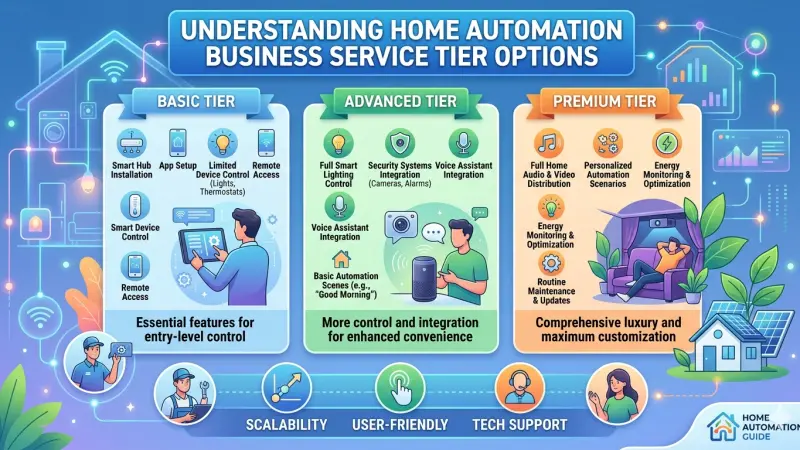
The rapid evolution of smart home technology has transformed the modern household from a simple living space into a sophisticated ecosystem of interconnected devices. As these systems become more complex, the demand for professional oversight has shifted. No longer is home automation a "set it and forget it" endeavor; it requires ongoing maintenance, security updates, and performance optimization. For homeowners and developers alike, navigating the various service tier options offered by automation providers is essential to ensuring long-term reliability. Understanding these tiers allows you to balance your technical needs with your budget, ensuring your smart home remains an asset rather than a frustration. This guide breaks down the nuances of home automation service models, helping you identify the right level of professional involvement for your lifestyle.

The Evolution of Smart Home Service Models
In the early days of home automation, services were largely transactional. A technician would install a system, ensure it worked on day one, and leave. If something broke six months later, the homeowner would call for a repair, often facing high hourly rates and long wait times.
Today, the industry has shifted toward Managed Service Provider (MSP) models. This change is driven by the fact that smart homes rely heavily on software, firmware, and network stability. Like a computer or a car, a smart home requires "oil changes" in the form of software patches and hardware reboots. Modern business service tiers are designed to provide proactive care rather than reactive fixes.
The Core Tiered Structures: An Overview
Most professional home automation firms offer a three- or four-tier service structure. While names vary by provider, they generally fall into the following categories:
1. Basic/Foundation Tier (Reactive Support)
This tier is often designed for the tech-savvy homeowner who handles minor issues independently but wants a safety net for major failures. It typically includes:
-
Manufacturer warranty management.
-
Standard business hour support.
-
Access to discounted hourly rates for on-site visits.
2. Professional/Standard Tier (Proactive Monitoring)
The middle tier is where the most value is found for the average user. The defining feature here is remote monitoring.
-
Remote System Reboots: The provider can often fix a "frozen" device without entering your home.
-
Priority Scheduling: If an on-site visit is needed, you move to the front of the line.
-
Regular Health Checks: Quarterly or bi-annual reviews of system logs to identify potential failures before they happen.
3. Premium/Elite Tier (Concierge Service)
For high-end estates or complex systems (Creston, Control4, Savant), the premium tier offers a "white-glove" experience.
-
24/7 Support: Assistance available on weekends and holidays.
-
Advanced Security Audits: Regular testing of network firewalls and camera encryption.
-
Hardware Replacement Programs: Some tiers include the cost of replacing certain wear-and-tear components.
Key Benefits of Structured Service Tiers
Choosing a formal service tier offers several advantages over the traditional "break-fix" model:
-
Predictable Budgeting: Instead of facing a massive repair bill when a system crashes, you pay a consistent monthly or annual fee that covers most labor and maintenance.
-
System Longevity: Regular firmware updates and heat management checks extend the life of expensive hardware.
-
Security Peace of Mind: Smart homes are IoT (Internet of Things) targets. Professional tiers ensure that security patches are applied as soon as they are released.
-
Reduced Downtime: With remote diagnostics, many issues are resolved in minutes rather than days.
Step-by-Step: Evaluating Which Tier is Right for You
Selecting a service level requires a realistic assessment of your home and your technical comfort.
Step 1: Inventory Your System Complexity
If you only have a few smart bulbs and a DIY thermostat, a professional service tier might be overkill. However, if you have integrated lighting, whole-home audio, automated shades, and a robust security network, professional oversight is almost mandatory.
Step 2: Assess Your "Tolerance for Failure"
Ask yourself: "How frustrated will I be if my lights don't turn on via the app at 8:00 PM on a Saturday?" If the answer is "highly," you need a tier that offers evening/weekend support.
Step 3: Review Your Network Infrastructure
The network is the backbone of all automation. Higher tiers often include network management, which ensures your Wi-Fi stays optimized even as you add more devices.
Common Mistakes When Choosing a Service Plan
Avoid these frequent pitfalls when signing a service agreement:
-
Ignoring the Fine Print on Hardware: Many people assume service tiers cover the cost of new parts. Usually, they only cover the labor to install them. Clarify this before signing.
-
Underestimating DIY Capabilities: Don't pay for a premium tier if you are comfortable resetting your own router or updating your own apps.
-
Overlooking Remote Access Permissions: Ensure you understand what data the provider can see when they monitor your system remotely. Privacy should always be a priority.
Supporting Local Business Visibility Beyond Core Marketing Efforts
When searching for the right automation provider, it is helpful to understand how these businesses establish themselves within the community. For a home automation firm, maintaining a strong local presence consistency is vital for building the trust required
to enter a client's private residence. Professionals in this industry often use a free company listing platform to ensure their contact information and service areas are accurate across the web.
Furthermore, a well-maintained business listings site serves as a credibility signal, showing that the company is active and accountable. By appearing on a reputable business directory website, these firms provide a layer of discoverability for homeowners who may not know where to start. When you list services uk directory platforms, it allows for a more streamlined discovery process, helping users find experts who specialize specifically in the tiered service models discussed in this article.
Understanding
Understanding home automation business service tier options is about more than just buying a subscription; it is about protecting a significant investment in your home's infrastructure. By moving away from reactive repairs and toward a proactive, tiered support model, you ensure that your smart home continues to provide convenience, security, and enjoyment for years to come. Whether you opt for a basic foundation plan or a full concierge service, the goal remains the same: a seamless, invisible technology experience.
FAQs
1. What is the average cost of a home automation service tier? Costs vary widely but typically range from £30 to £150 per month, depending on the complexity of the system and the level of on-site support included.
2. Can I change my service tier later? Yes, most providers allow you to upgrade or downgrade your plan annually or as your system expands.
3. Does a service tier cover my internet bill? No, service tiers cover the automation system and internal network management, not your ISP (Internet Service Provider) fees.
4. Is remote monitoring safe for my privacy? Reputable providers use encrypted tunnels to access your system and generally only see device status (on/off/online), not your personal data or camera feeds, unless authorized.
5. Do I need a service tier for DIY systems like Google Home or Alexa? Usually, no. These systems are designed for consumer-level troubleshooting. Service tiers are best suited for integrated systems like Lutron, Control4, or Crestron.
6. What happens if I don't have a service plan? You will typically be charged "Truck Roll" fees for every visit, which can be expensive, and you may face longer wait times for repairs.
7. Does the tier include software updates? Yes, almost all professional tiers include the management and installation of firmware and software updates.
8. Is 24/7 support worth it? It is worth it if your home automation handles critical functions like security, gate access, or primary lighting.
9. Will the provider monitor my security cameras? They monitor the connection to the cameras to
ensure they are recording, but they do not actively watch the footage.
10. Can one provider take over a service tier for a system installed by someone else? Often, yes. This is called a "System Takeover," and it usually requires an initial audit fee to ensure the wiring and programming are up to standard.

Disclaimer: The information provided in this article is for general informational and research purposes only. Company details, features, services, and market positions may change over time. Readers are advised to visit official company websites and conduct independent research before making any business decisions or purchasing services.
Most Searchable Keywords

Recent Blogs



Related Listings


Categories
- Accountants (295)
- Advertising Agencies (559)
- Architects (149)
- Automobiles (377)
- Beauty (300)
- Carpenters (146)
- Cleaning Services (386)
- Dentists (189)
- Driving (62)
- Electricians (215)
- Energy (8)
- Event Organiser (685)
- Finance (599)
- Guide (3365)
- Health (2207)
- Information technology (206)
- Legal Services (353)
- Logistics (6)
- Maintenance (65)
- Manufacturing (35)
Sponsored Listings in Locksmith Services


Related Blogs

Gen Z Political Reporters and News Creators i...
Read this insightful article "Gen Z Political Reporters and News Creators in the UK" to expand your knowledge!

Famous Female Social Media Influencers Across...
Read this insightful article "Famous Female Social Media Influencers Across the UK" to expand your knowledge!

Your UK Sponsor Licence 2026 Step by Step Gui...
Read this insightful article "Your UK Sponsor Licence 2026 Step by Step Guide" to expand your knowledge!
Questions & Answers – Find What
You Need, Instantly!
How can I update my business listing?
Is it free to manage my business listing?
How long does it take for my updates to reflect?
Why is it important to keep my listing updated?
