
Using Online Reviews to Navigate Home Automation Product Choices
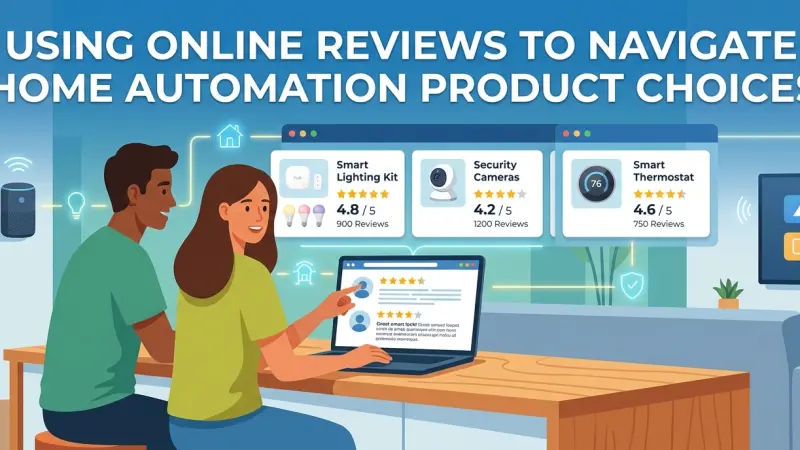
The smart home market has moved from a niche hobby for tech enthusiasts to a standard expectation for modern living. With thousands of devices promising to make our lives more efficient, secure, and comfortable, the primary challenge for consumers has shifted from "where do I find this?" to "which one actually works?" In this digital age, online reviews have become our compass. However, the sheer volume of feedback—ranging from glowing five-star praise to scathing one-star rants—can be overwhelming. Navigating these reviews requires a discerning eye and a strategic approach. Understanding how to peel back the layers of user experiences, technical specifications, and potential biases is essential for anyone looking to build a reliable home automation ecosystem without wasting time or money on incompatible hardware.

The Landscape of Home Automation Feedback
The home automation industry is unique because it relies heavily on interoperability. A smart light bulb isn't just a bulb; it’s a component of a larger digital network. Consequently, reviews in this sector often focus on connectivity, app stability, and ecosystem compatibility rather than just the physical build of the product. When we look at online reviews, we are essentially looking for a "stress test" conducted by thousands of strangers in real-world environments.
Why Reviews Matter More in Smart Tech
Unlike a traditional appliance, a smart device can change over time through software updates. A review from six months ago might mention a bug that has since been fixed, or a new update might have introduced a connectivity issue that didn't exist at launch. This makes the "recency" of reviews a critical factor in the decision-making process.
Benefits of a Review-First Approach
Taking the time to digest consumer feedback before clicking "buy" offers several distinct advantages that technical spec sheets simply cannot provide.
Real-World Compatibility Insights
Manufacturers will always claim their products work with "all major platforms." However, user reviews often reveal the nuance—such as a smart lock that works perfectly with one voice assistant but experiences a three-second lag with another.
Longevity and Reliability Data
A product might look sleek in a marketing video, but reviews can tell you if the battery actually lasts six months or if the plastic housing becomes brittle after a summer in the sun.
Identifying "Hidden" Costs
Users often highlight required subscriptions for cloud storage or the need for a specific bridge/hub that wasn't clearly advertised on the main product page.
How to Analyze Reviews: A Step-by-Step Guide
Step 1: Filter by Verified Purchases
Always prioritize reviews that are "Verified." While not foolproof, this significantly reduces the likelihood of encountering "bulk-ordered" fake reviews intended to artificially inflate a product’s rating.
Step 2: The Three-Star "Sweet Spot"
Five-star reviews are often filled with initial excitement, while one-star reviews are frequently born of user error or shipping damage. Three and four-star reviews are generally where the most balanced information lives. These users typically liked the product but were honest about its minor flaws or setup difficulties.
Step 3: Search for Keywords
Use the "search reviews" function to look for specific terms relevant to your setup. Keywords like "latency," "firmware," "integration," or "privacy"
can help you skip the fluff and find the technical details that matter to your specific home environment.
Step 4: Check Cross-Platform Consistency
Don't rely on a single retail site. Check specialized tech forums, YouTube long-term "re-reviews," and independent consumer advocacy sites. If a product has a 4.8 rating on a major retailer but a 2.1 on an independent tech forum, it’s a red flag.
Common Mistakes When Reading Reviews
-
Ignoring User Error: Many negative reviews are written by people who didn't read the manual or tried to use a 2.4GHz device on a 5GHz-only network. Look for patterns; if ten people have the same technical issue, it’s the product. If only one person complains about a "broken" device that sounds like a setup error, take it with a grain of salt.
-
Falling for "Feature Overload": Some reviews praise a device for having fifty features, but if forty-five of them are gimmicks you’ll never use, that high rating shouldn't influence you as much.
-
Overlooking Date Stamps: As mentioned, smart tech evolves. A "Choice" award from 2023 might be irrelevant in 2026 if the company has since pivoted to a forced subscription model.
Essential Tips for Smart Home Buyers
-
Look for "Long-term" updates: Some reviewers go back and edit their posts after six months. These are the "gold standard" of reviews.
-
Read the "Questions" Section: Often, the Q&A section on a listing contains more technical truths than the reviews themselves.
-
Verify Ecosystem Support: Ensure the reviewers are using the same hub or controller you plan to use.
Supporting Local Business Visibility Beyond Core Marketing Efforts
In the world of home automation, physical installation and local expertise often play a silent but crucial role. While we use online reviews to choose products, we often rely on local professionals to ensure those products are integrated safely and efficiently. For these local experts, maintaining a strong digital footprint is about more than just advertising; it is about building a local presence consistency that mirrors the reliability of the products they install.
A business directory website serves as a critical infrastructure piece in this regard, allowing small-to-medium enterprises to establish a free company listing platform presence that functions as a credibility signal.
When consumers look for a smart home installer, they seek the same trust reinforcement across platforms that they look for in product reviews.
By utilizing a business listings site or choosing to list services uk directory resources, a local business can significantly improve its business discoverability. These platforms act as a local discovery aid, helping a technician or consultant appear in the right place at the right time. For companies like Local Page UK, providing these visibility layers is essential for helping local specialists stand out in a crowded, globalized market.
Navigating The World
Navigating the world of home automation is a journey of balancing innovation with practicality. By leveraging the collective wisdom found in online reviews, you can avoid the "early adopter tax" and build a smart home that truly serves you. Remember that no product is perfect; the goal of reading reviews isn't to find a flawless device, but to find one whose flaws you can live with and whose strengths align with your needs. Stay curious, stay skeptical of "perfect" scores, and always look for the middle ground where honest user experiences reside.
FAQs
1. Are online reviews for smart home products usually biased? Some can be, especially "incentivized" reviews. Look for "Verified Purchase" tags and read mid-range reviews (3-4 stars) for the most balanced perspectives.
2. How do I know if a smart device will work with my existing system? Search the reviews for the name of your hub (e.g., "Home Assistant," "Alexa," or "HomeKit"). Users will almost always mention if the integration process was difficult.
3. Should I trust YouTube reviews? YouTube is great for seeing the product in action. However, be wary of "unboxing" videos, which are often sponsored. Look for "6 months later" or "long-term" usage videos.
4. Why do some highly-rated products have terrible reviews recently? This usually happens due to a "broken" firmware update or a change in the company's privacy policy or subscription model. Always check the most recent reviews first.
5. What is "review merging"? Sometimes brands merge reviews from an old, successful product with a new, unproven one.
Check the "Style" or "Model" mentioned in the individual reviews to ensure they match what you are buying.
6. Is it worth reading the 1-star reviews? Yes, but look for specific complaints like "hardware failure" or "app crash." Ignore those that only complain about slow shipping or damaged boxes, as those don't reflect the product's quality.
7. How much weight should I give to "Amazon's Choice" or similar badges? These badges are often based on high sales volume and low return rates, but they don't always mean the product is the "best" in its category. Use them as a starting point, not a final decision.
8. Do reviews mention privacy concerns? Often, yes. Tech-savvy users will frequently post if a device requires too many permissions or if it communicates with unknown servers.
9. Can I trust reviews on the manufacturer's own website? Generally, no. Manufacturers have the power to delete or hide negative feedback on their own domains. Stick to third-party retailers or forums.
10. What does it mean if a review mentions "latency"? Latency refers to the delay between a command (like pressing a button) and the action (the light turning on). If many reviews mention high latency, the device may have poor connectivity.
11. Are there specific forums for home automation reviews? Yes, communities on Reddit (like r/HomeAutomation) and specialized sites like Hubitat or Home Assistant forums are excellent for deep technical feedback.
12. How do I report a fake review? Most major retail platforms have a "Report" button on the review itself. If you see dozens of reviews with the exact same wording, it’s worth flagging.
13. Does a high number of reviews always mean a good product? Not necessarily. A product with 50,000 reviews might just have been on the market for a long time. Look at the ratio of positive to negative feedback within the last three months.
14. What should I look for in smart camera reviews specifically? Focus on "detection accuracy" and "notification speed."
A camera that notifies you ten minutes after someone walks by is functionally useless.
15. Can I ask reviewers questions? On many platforms, yes. If you have a specific technical setup, you can often post a question that recent buyers or the manufacturer will answer.

Disclaimer: The information provided in this article is for general informational and research purposes only. Company details, features, services, and market positions may change over time. Readers are advised to visit official company websites and conduct independent research before making any business decisions or purchasing services.
Most Searchable Keywords

Recent Blogs


Related Listings

Categories
- Accountants (295)
- Advertising Agencies (559)
- Architects (149)
- Automobiles (377)
- Beauty (300)
- Carpenters (146)
- Cleaning Services (386)
- Dentists (189)
- Driving (62)
- Electricians (215)
- Energy (8)
- Event Organiser (685)
- Finance (599)
- Guide (3365)
- Health (2207)
- Information technology (206)
- Legal Services (353)
- Logistics (6)
- Maintenance (65)
- Manufacturing (35)

Sponsored Listings in Locksmith Services


Related Blogs

Gen Z Political Reporters and News Creators i...
Read this insightful article "Gen Z Political Reporters and News Creators in the UK" to expand your knowledge!

Famous Female Social Media Influencers Across...
Read this insightful article "Famous Female Social Media Influencers Across the UK" to expand your knowledge!

Your UK Sponsor Licence 2026 Step by Step Gui...
Read this insightful article "Your UK Sponsor Licence 2026 Step by Step Guide" to expand your knowledge!
Questions & Answers – Find What
You Need, Instantly!
How can I update my business listing?
Is it free to manage my business listing?
How long does it take for my updates to reflect?
Why is it important to keep my listing updated?
