
What are best practices for lead nurturing email automation in finance
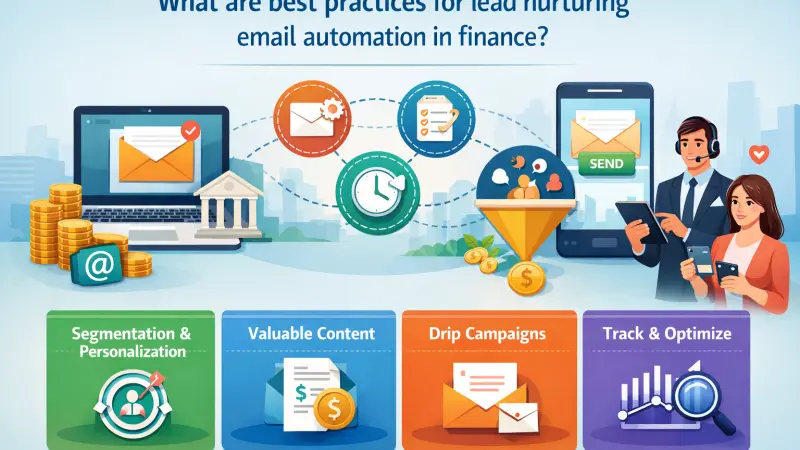
In an era where digital transformation is no longer optional, how can financial institutions maintain a personal touch while scaling their outreach? The challenge for many UK firms lies in bridging the gap between initial enquiry and long-term client loyalty without exhausting manual resources. Lead nurturing email automation provides a sophisticated solution to this dilemma, allowing firms to deliver timely, relevant, and compliant information to prospective clients. By implementing automated workflows, financial advisors, mortgage brokers, and insurance providers can ensure that no lead is left cold, effectively guiding prospects through the complex decision-making journey that characterises the financial services industry.
The Strategic Importance of Email Automation in Financial Services
Financial products are rarely impulsive purchases; they require significant research, trust, and deliberation from the consumer. Consequently, the primary keyword, lead nurturing email automation, becomes the backbone of a modern marketing strategy. In the United Kingdom, where competition amongst fintech start-ups and established high-street banks is fierce, the ability to remain "top of mind" through automated sequences is invaluable. These systems allow for the segmentation of audiences based on their specific interests whether that be retirement planning, first-time buyer mortgages, or wealth management ensuring that every communication adds value rather than contributing to inbox clutter. Furthermore, automation ensures that follow-ups occur at the precise moment a lead interacts with your digital assets.
Effective automation goes beyond simply sending a "thank you" note after a form submission. It involves creating a multi-stage journey that educates the recipient on complex financial topics, thereby positioning the firm as a thought leader and a reliable source of information. In a highly regulated environment, these automated systems also provide an audit trail of communications, which is essential for demonstrating compliance with Financial Conduct Authority (FCA) standards. By automating the delivery of Disclosure Documents and Key Investor Information Documents (KIIDs) at the appropriate stages, firms can mitigate the risk of human error while providing the transparency that modern UK consumers expect from their financial partners.
Segmenting Your Audience for Personalised Nurturing
One of the most significant errors a financial firm can make is treating its entire database as a single, homogenous entity. Lead nurturing email automation is most effective when driven by deep segmentation. For instance, a prospect who has downloaded a guide on "Inheritance Tax Planning" has vastly different needs than a young professional looking for their first ISA. By categorising leads based on demographic data, website behaviour, and stated goals, firms can tailor the tone and content of their emails to resonate with the specific pain points of each individual. This level of personalisation is what distinguishes a helpful financial advisor from a generic corporate entity, fostering a sense of being understood that is critical in the finance sector.
To achieve this, firms should integrate their email marketing platforms with their Customer Relationship Management (CRM) software. This integration allows for real-time updates: if a lead moves from "cold" to "warm" by attending a webinar or using an online mortgage calculator, the automated email sequence should shift immediately to reflect this new stage of the journey. This dynamic approach prevents the awkwardness of sending introductory content to someone who is already deep in the consideration phase. In the UK market, where data privacy is paramount, ensuring that these segments are managed in strict accordance with GDPR (General Data Protection Regulation) is not just a legal requirement but a cornerstone of building consumer trust.
Content Excellence: Educating Rather Than Selling
The hallmark of a successful lead nurturing sequence in finance is the prioritisation of education over solicitation. Prospects in the financial sector are often overwhelmed by jargon and complex regulations; therefore, providing clarity is the highest value a firm can offer. Instead of immediately pushing a product, an automated sequence should offer a series of insights—perhaps an analysis of how recent Bank of England base rate changes might affect mortgage repayments, or a checklist for preparing for a retirement review. This approach builds "brand equity," making the prospect more likely to choose your firm when they are finally ready to sign a contract, as you have already proven your expertise and helpfulness.
Every email in a nurturing sequence should have a clear, singular objective. Whether it is encouraging the recipient to read a blog post, watch a video, or book a discovery call, the call to action (CTA) must be prominent but not aggressive. Using formal British English and maintaining a professional, authoritative tone helps in establishing the credibility required for someone to trust you with their capital.
Consistency is also key; the "cadence" of your emails—how frequently they are sent—must be balanced so that you remain helpful without becoming a nuisance. Generally, a weekly or fortnightly schedule is appropriate for most financial lead nurturing campaigns, depending on the urgency of the product being discussed.
Technical Optimisation and Deliverability Standards
Even the most well-crafted email is useless if it ends up in a spam folder. For UK finance firms, deliverability is a technical challenge that must be addressed alongside content creation. This involves setting up proper authentication protocols such as SPF (Sender Policy Framework), DKIM (DomainKeys Identified Mail), and DMARC (Domain-based Message Authentication, Reporting, and Conformance). These technical measures verify to email providers that your communications are legitimate, which is particularly important for financial institutions whose domain names are often targeted by phishing scams. Ensuring a high "sender reputation" is essential for lead nurturing email automation to reach its intended audience effectively.
Mobile optimisation is another non-negotiable factor. A significant portion of UK professionals check their emails on smartphones during their commute or between meetings. If your automated emails contain broken layouts, tiny text, or unclickable buttons on a mobile screen, you lose credibility instantly. Emails should be designed with a "mobile-first" mindset, using responsive templates that adapt to any screen size. Additionally, firms must ensure that the "Unsubscribe" process is clear and straightforward. While it may seem counter-intuitive, making it easy for disinterested parties to opt-out helps maintain a clean list of highly engaged prospects, which ultimately improves the overall performance and ROI of your automation efforts.
Measuring Success: KPIs and Continuous Improvement
The "set it and forget it" mentality is the enemy of effective lead nurturing. To truly master lead nurturing email automation, firms must engage in rigorous A/B testing and data analysis. This might involve testing two different subject lines to see which achieves a higher open rate, or experimenting with the placement of a "Book a Consultation" button to improve click-through rates. Key Performance Indicators (KPIs) such as open rates, click-through rates, conversion rates, and the "time to conversion" provide a roadmap for optimising your sequences. If a particular email in a five-part series has a high "unsubscribe" rate, it indicates that the content at that specific stage is misaligned with the prospect's needs.
Furthermore, it is vital to track the "downstream" impact of email automation. Are the leads nurtured through these sequences more likely to become high-value clients? Do they have a higher retention rate? By closing the loop between marketing automation and sales data, financial firms can justify the investment in these technologies. The UK financial landscape is constantly evolving due to economic shifts and regulatory updates; therefore, your automated content must be reviewed and updated regularly. Stale content that references outdated tax thresholds or expired government schemes can do more harm than good, as it suggests a lack of attention to detail—a trait no client wants to see in their financial partner.
Compliance and the Legal Framework in the UK
In the UK, financial marketing is governed by strict rules, primarily the FCA’s "fair, clear, and not misleading" principle. Every automated email must adhere to these standards. This means that any claims regarding potential returns must be balanced with clear risk warnings, and past performance must not be presented as a guarantee of future results. Lead nurturing email automation systems should be designed with a "compliance-first" architecture, where all templates are pre-approved by a compliance officer before they are added to an active workflow. This prevents the accidental distribution of non-compliant materials which could lead to significant fines and reputational damage.
Beyond the FCA, firms must be acutely aware of the Privacy and Electronic Communications Regulations (PECR), which sit alongside GDPR. These regulations dictate how and when you can send electronic marketing to individuals. For instance, "soft opt-in" rules might apply in some B2B contexts, but for most consumer-facing financial services, explicit consent is the safest and most ethical path. Transparency regarding how a lead's data will be used for automated profiling and nurturing is a requirement of the "right to be informed" under UK law. By being transparent and ethical in your automation practices, you not only satisfy the regulator but also build a foundation of trust with your prospects that is difficult for competitors to replicate.
Frequently Asked Questions
What is lead nurturing email automation?
It is the process of using software to send a series of pre-written, relevant emails to prospects over time, based on their behaviour or specific triggers, to build trust and encourage conversion.
How often should I send emails to financial leads?
While it varies, a common best practice in the UK is to send an email once every 7 to 14 days to remain helpful without being intrusive.
Is email automation compliant with FCA regulations?
Yes, provided that the content is fair, clear, and not misleading, and that all necessary risk warnings are included.
Automation actually helps compliance by ensuring the same approved message is sent to everyone.
Do I need a CRM for email automation?
While not strictly mandatory, integrating your email system with a CRM is highly recommended for effective audience segmentation and tracking.
Can I use automation for existing clients?
Absolutely. Automation is excellent for "onboarding" new clients or sending regular market updates to maintain long-term relationships.
How do I stop my emails from going to spam?
Use proper authentication (SPF, DKIM, DMARC), avoid "spammy" keywords in subject lines,
and ensure you only send to people who have opted in.
Developing a robust digital presence is essential for any firm wishing to thrive in today's competitive landscape. For financial professionals looking to enhance their reach, utilising a free business search directory or a free company search directory can be an excellent first step in securing foundational citations. By ensuring your firm is listed in a company directory online, you significantly improve your local SEO and overall discoverability. To ensure your firm stands out among the competition, consider registering with a verified business directory to build additional trust with potential clients. Enhancing your online visibility is a continuous journey, and Local Page UK provides the tools necessary to manage your digital footprint effectively. If you are ready to expand your reach today, you can secure a free listing to help more local clients find your professional services.
Disclaimer: The information provided in this article is for general informational and research purposes only. Company details, features, services, and market positions may change over time. Readers are advised to visit official company websites and conduct independent research before making any business decisions or purchasing services.
Most Searchable Keywords
Recent Blogs


Related Listings
Categories
- Accountants (295)
- Advertising Agencies (559)
- Architects (149)
- Automobiles (377)
- Beauty (300)
- Carpenters (146)
- Cleaning Services (387)
- Dentists (189)
- Driving (62)
- Electricians (215)
- Energy (8)
- Event Organiser (686)
- Finance (602)
- Guide (3372)
- Health (2207)
- Information technology (206)
- Legal Services (353)
- Logistics (6)
- Maintenance (65)
- Manufacturing (35)
Sponsored Listings in Travel Agencies



Related Blogs

How Much Do UK Actors Really Earn Full Indust...
Read this insightful article "How Much Do UK Actors Really Earn Full Industry Breakdown" to expand your knowledge!

Blue Light Card UK 2026 Check Eligibility and...
Read this insightful article "Blue Light Card UK 2026 Check Eligibility and Claim" to expand your knowledge!

BBC Radio 1 DJs Net Worth Ranking Revealed
Read this insightful article "BBC Radio 1 DJs Net Worth Ranking Revealed" to expand your knowledge!
Questions & Answers – Find What
You Need, Instantly!
How can I update my business listing?
Is it free to manage my business listing?
How long does it take for my updates to reflect?
Why is it important to keep my listing updated?
