
What is Copyright Protection? A Complete Guide to UK Copyright Law
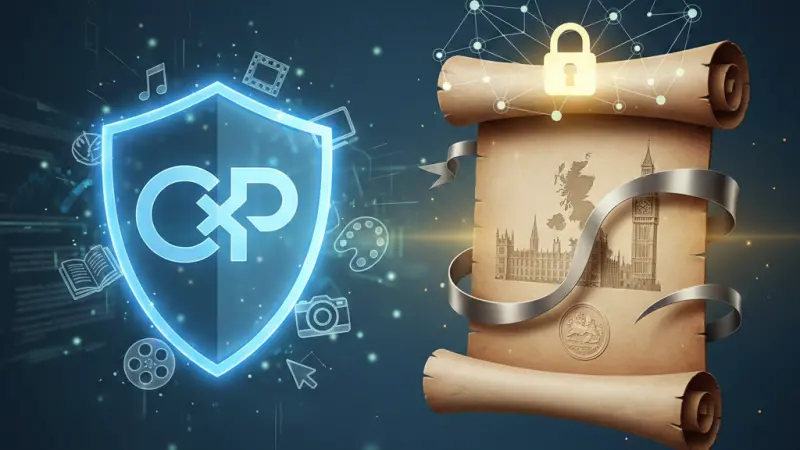
In the modern digital landscape, the United Kingdom remains one of the most competitive markets in the world. Whether you are a solo entrepreneur, a growing tech startup, or an established B2B service provider, the pressure to innovate is constant. However, innovation often breeds imitation. In a sea of "corporate wannabes" and copycats, the only way to truly secure your market share is through brand recognition and the production of high-quality, original content.

But once you’ve spent weeks crafting an industry-leading blog post, designing a unique set of graphics, or developing proprietary software, what is stopping a competitor from simply hitting "copy and paste"?
The answer lies in Copyright Protection. This legal shield is the ultimate weapon for creators and businesses alike. In this detailed guide, we will break down the complexities of the Copyright, Designs and Patents Act 1988, explore what you can (and cannot) protect, and explain how to enforce your rights in 2026.
What is Copyright Protection?
At its core, copyright is a form of intellectual property (IP) protection. According to the UK Government, copyright applies automatically to original, creative works from the moment they are created and "fixed" in a tangible form (such as being written down, recorded, or saved as a digital file).
The Automatic Nature of UK Copyright
Unlike trademarks, which require a formal application to the Intellectual Property Office (IPO), or patents, which involve a rigorous and expensive examination process, copyright is automatic.
No Registration Needed: There is no official "Copyright Register" in the UK where you must sign up to be protected.
No Symbol Required: While the © symbol is a helpful deterrent, your work is legally protected even without it.
The CDPA 1988: The primary legislation governing these rights is the Copyright, Designs and Patents Act 1988. This act ensures that the moment you finish an original illustration or click "publish" on an article, you are the lawful owner of the rights to that work.
Why Evidence Still Matters
Even though protection is automatic, the burden of proof lies with the creator during a dispute. In 2026, where AI-generated content and digital scraping are rampant, keeping "irrefutable evidence" of your creation process is more important than ever. Saving early drafts, time-stamped files, and version histories can make resolving an infringement claim significantly easier.
What Does Copyright Protect?
The scope of the Copyright, Designs and Patents Act 1988 is broad, covering a vast array of creative outputs. To be eligible, the work must be original (showing a degree of skill, labour, or judgment) and fall into one of the following categories:
1. Original Literary Works
This isn't just limited to novels and poetry. In a business context, this includes:
Song lyrics and manuscripts.
Company blog posts, articles, and whitepapers.
Instruction manuals and commercial documents.
2. Original Non-Literary Works
Digital assets are the backbone of modern business. These include:
Computer software and programs: The underlying code is protected as a literary work.
Web content: Everything from your landing page copy to your FAQ section.
Databases: Original collections of data that required "creative" selection or arrangement.
3. Works of Art
Visual identity is key to standing out. Protected works include:
Photographs, paintings, and digital illustrations.
Architectural designs and technical drawings.
Logos: While names aren't copyrighted, the artistic design of a logo is.
Maps and cartography.
4. Sound, Music, and Dramatic Works
Music: The actual composition and the lyrics.
Sound Recordings: The specific recording of a performance (which is a separate right from the composition).
Dramatic Works: Choreography, plays, and dance routines.
5. Media and Typography
Television and film recordings.
Broadcasts (cable and satellite).
Typographical arrangements: The specific layout and "look" of a published page (this protects publishers from others simply photocopying their books).
Items Exempt from Copyright Protection: The "Fair Dealing" Rules
In October 2014, the UK Government introduced significant updates to copyright guidelines. These exemptions—often referred to as "Fair Dealing"—allow the public to use protected works in specific, limited scenarios without needing the owner's permission.
Personal Use and Backups
Consumers are permitted to make personal copies of media they have legally purchased (like shifting a CD to an MP3 player) for the purpose of "format shifting" or keeping a backup.
Quotation, Criticism, and Review
You can quote another person's work as long as the use is "reasonable and fair" and includes full attribution. This is essential for academic writing, journalism, and even B2B industry reviews.
Research and Private Study
Individuals can copy parts of films, sound recordings, or broadcasts for non-commercial research or private study.
Caricature, Pastiche, and Parody
Modern culture thrives on satire. The law allows the use of limited portions of a work for entertainment purposes—for example, a comedian using a few lines of a famous song in a parody sketch.
Education and Libraries
Teachers can copy or display content for educational purposes within a classroom setting. Similarly, libraries and museums have rights to copy works to preserve them for future generations.
Accessible Formats for the Disabled
Charities and individuals are permitted to make copies of works in accessible formats (like Braille or large print) if a commercial version is not readily available.
How Long Does Copyright Protection Last?
Copyright is not forever. Eventually, works enter the Public Domain. The duration depends on the type of work:
| Type of Work | Duration of Protection |
|---|---|
| Literary, Artistic, Musical, Dramatic | 70 years after the death of the creator. |
| Sound Recordings | 70 years from the end of the year it was first published. |
| Broadcasts | 50 years from the end of the year it was first broadcast. |
| Films | 70 years after the death of the last surviving principal (director, author, etc.). |
| Typographical Layouts | 25 years from the first publication. |
International Protection: The Berne Convention
Does your UK copyright protect you in the UK, France, or Japan? Yes, largely due to the Berne Convention.
This international agreement, signed by over 180 countries, ensures a "minimum level" of protection. If you are a UK national or your work was first published in the UK, your copyright is automatically recognized in all other member countries. While specific local laws might vary slightly, the core principle remains: your work is protected globally.
How to Defend Your Work from Infringement
In the UK, the responsibility for enforcing copyright lies solely with the owner. If you find a "copycat" using your content, follow these steps:
Verify Licensing: Check the Government’s official license register. Sometimes, users apply for licenses for "orphan works" (where the owner cannot be found).
Contact the Infringer: Often, a polite "Cease and Desist" letter or email is enough. Many people copy content out of ignorance rather than malice.
Takedown Notices: If the content is on a platform like YouTube, Instagram, or
a hosted website, use their internal DMCA or Copyright Takedown tools.
Legal Action: If the infringer refuses to comply, you can pursue damages or an injunction through the Intellectual Property Enterprise Court (IPEC), which is designed for smaller, more affordable IP disputes.
Licensing and Selling Your Copyright
Your copyright is a valuable asset. You have the right to:
License it: You retain ownership but allow others to use it for a fee (royalties). You can join a licensing body or "collecting society" to manage this for you.
Sell it: You can transfer ownership entirely via a written document called an "assignment."
Can I Copyright My Business Name?
This is a common point of confusion. No, you cannot copyright a name.
To protect your brand name, you must:
Incorporate: Register with Companies House to stop others from registering a company with the exact same name.
Trademark: Register a Trade Mark for your brand name or slogan to prevent competitors from using it in your industry.
Grow Your Presence and Protect Your Brand
In 2026, building a reputable brand means more than just having great content; it means being visible in the right places. One of the best ways to establish your business's authority and stand out from the competition is by listing your company in a trusted uk online business directory.
By joining a reputable uk business directory, you not only improve your SEO but also provide a verified trail of your brand's existence, which can be helpful for intellectual property disputes. Whether you are looking for a uk local business directory to target a specific region or need to find local businesses uk for partnerships, Local Page UK is the premier choice.
Small businesses can take advantage of the business listing uk options to get started without any upfront costs. A business listing uk entry helps you build "backlinks" and proves the longevity of your brand. If you want to list your services, the local business listings uk section at localpage.uk offers a comprehensive local businesses list uk for consumers and professionals.
From uk small business directory needs to extensive uk b2b business directory networks, being part of a uk b2c business directory ensures you reach the right audience. Don't miss out on the benefits of a business listing uk or a premium uk verified business listings spot. Use the local page uk business directory to secure your spot in the uk top rated local businesses and make your brand "un-copyable."
Service-Related Questions & Answers
1. Is copyright the same as a trademark?
No. Copyright protects creative expressions (text, art, code). Trademarks protect brand identifiers like names, logos, and slogans.
2. Do I have to pay to get copyright?
No, in the UK, copyright protection is free and automatic upon the creation of the work.
3. Can I copyright an idea?
No. Copyright only protects the expression of an idea, not the idea itself. You must write it down or record it for it to be protected.
4. Does copyright cover my website?
Yes. The text, images, and the underlying code of your website are all protected by copyright.
5. What is the © symbol for if it's not required?
It serves as a notice to others that the work is protected, which can discourage infringement and help in legal cases by proving the infringer knew the work was protected.
6. Can I use a song in my YouTube video if I give credit?
Not necessarily. Credit does not replace permission. Unless it falls under an exemption like "parody," you need a license.
7. How do I prove I created something first?
You can use digital timestamps, mail a copy to yourself (unopened), or use professional "vault" services that record the date of creation.
8. What happens if I use AI to create content?
This is a developing area of law in 2026. Generally, works must have a human "author" to qualify for copyright, though "computer-generated" works have specific 50-year protection rules.
9. Can I sell my copyright?
Yes, but the transfer must be made in writing and signed by you (the assignor).
10. How much can I quote under "Fair Dealing"?
There is no fixed word count. It must be "fair and reasonable"—typically just enough to make your point or provide a critique.
11. Does my UK copyright work in the UK?
Yes, thanks to the Berne Convention.
12. Can a logo be both copyrighted and trademarked?
Yes. The artistic drawing is protected by copyright, while its use as a brand symbol is protected by trademark.
13. What is an "Orphan Work"?
A work where the copyright owner is unknown or cannot be located.
14. Are social media posts protected?
Yes, your original posts and photos on social media are your intellectual property.
15. How long does a film's copyright last?
70 years after the death of the last surviving principal director, author of screenplay, or composer of the soundtrack.

Disclaimer: The information provided in this article is for general informational and research purposes only. Company details, features, services, and market positions may change over time. Readers are advised to visit official company websites and conduct independent research before making any business decisions or purchasing services.
Most Searchable Keywords
Recent Blogs

Related Listings
Categories
- Accountants (295)
- Advertising Agencies (559)
- Architects (149)
- Automobiles (377)
- Beauty (300)
- Carpenters (146)
- Cleaning Services (386)
- Dentists (189)
- Driving (62)
- Electricians (215)
- Energy (8)
- Event Organiser (685)
- Finance (599)
- Guide (3365)
- Health (2207)
- Information technology (206)
- Legal Services (353)
- Logistics (6)
- Maintenance (65)
- Manufacturing (35)
Sponsored Listings in Locksmith Services

Related Blogs
Gen Z Political Reporters and News Creators i...
Read this insightful article "Gen Z Political Reporters and News Creators in the UK" to expand your knowledge!

Famous Female Social Media Influencers Across...
Read this insightful article "Famous Female Social Media Influencers Across the UK" to expand your knowledge!

Your UK Sponsor Licence 2026 Step by Step Gui...
Read this insightful article "Your UK Sponsor Licence 2026 Step by Step Guide" to expand your knowledge!
Questions & Answers – Find What
You Need, Instantly!
How can I update my business listing?
Is it free to manage my business listing?
How long does it take for my updates to reflect?
Why is it important to keep my listing updated?
