
What Shareholder Details Are Public in the UK
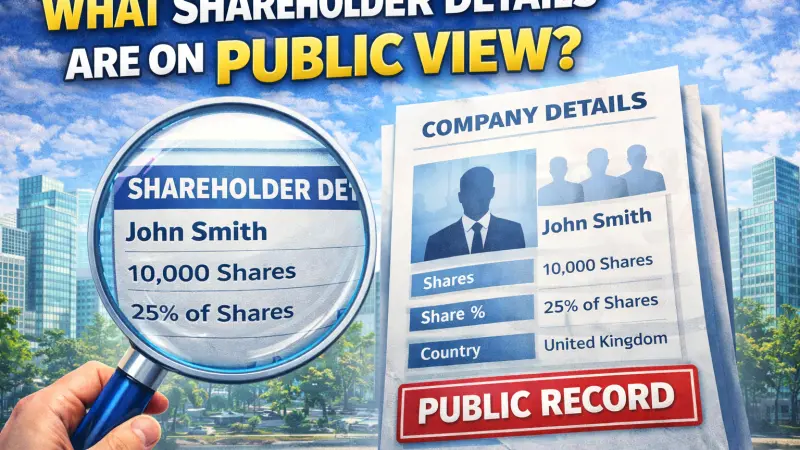
Transparency is a key principle of company regulation in the UK. Companies are required to disclose certain information about their ownership to ensure accountability and prevent financial crime. As a result, some shareholder details may be available to the public through official records.

However, not all shareholder information is publicly visible, and the level of disclosure depends on the type of company and the shareholder’s level of control. Understanding what information is public helps business owners, investors, and stakeholders manage privacy expectations and comply with legal requirements.
This article explains what shareholder details are on public view in the UK, how the system works, and what information remains private.
Why Shareholder Transparency Exists
The UK government requires transparency to promote trust in the business environment and reduce risks such as fraud, money laundering, and tax evasion.
Public access to certain company information allows investors, partners, and the public to understand who owns and controls a company.
This transparency helps maintain confidence in the UK corporate system.
Where Shareholder Information Is Published
Shareholder information is primarily available through Companies House, which maintains a public register of UK companies.
Anyone can search company records online to view certain details about ownership and control.
However, the level of information available depends on whether the shareholder is listed as a Person with Significant Control.
What Is a Person With Significant Control
A Person with Significant Control often called a PSC is someone who owns or controls more than 25 percent of shares or voting rights in a company or has significant influence over it.
Companies must identify PSCs and report their details to Companies House, where they become publicly accessible.
This register helps ensure transparency about who ultimately controls a company.
Shareholder Details That Are Public
For PSCs, the following information is generally available to the public
Full name Month and year of birth Nationality Country of residence Service address Nature of control such as percentage of shares or voting rights
This information helps identify individuals who have significant influence over a company.
Shareholder Information That Is Not Public
Certain details are kept private to protect personal privacy. These include
Full date of birth Residential address Contact details Financial information
Companies House holds this information but does not display it publicly.
Shareholders Who Are Not PSCs
For private limited companies, shareholders who do not meet PSC criteria are generally not listed publicly by name on Companies House.
Their details are kept in the company’s internal register of members, which is not automatically available online but may be accessible upon request in certain circumstances.
Public Information for Public Limited Companies
Public limited companies have greater disclosure requirements. Shareholder information may be more widely available through annual reports and regulatory filings.
This ensures transparency for investors and the public markets.
Service Address vs Residential Address
The address shown publicly for PSCs is usually a service address rather than a residential address.
This protects personal privacy while still allowing official communication.
Residential addresses are kept confidential by Companies House.
Why Some Information Is Restricted
Restricting certain personal details helps balance transparency with privacy and security.
It reduces the risk of identity theft and protects individuals from unwanted contact while maintaining accountability.
This approach ensures the system remains fair and secure.
How to Check Shareholder Information
Anyone can search a company on the Companies House website to view publicly available PSC information and filings.
This is commonly used by investors, partners, and due diligence professionals.
Access to this information is free and easy to use.
Changes to Shareholder Information
Companies must update Companies House when there are changes to PSC details or ownership structure.
Keeping records updated ensures compliance and maintains accurate public information.
Failure to update details can lead to penalties.
Privacy Protection Options
In certain cases, individuals can apply to protect their information if they believe disclosure could put them at risk.
This is usually granted in exceptional circumstances.
Understanding these options helps directors and shareholders manage privacy concerns.
Importance for Business Owners
Knowing what information is public helps business owners manage expectations and ensure compliance with legal requirements.
It also helps when explaining transparency obligations to investors or partners.
Understanding disclosure rules prevents confusion and ensures proper governance.
Common Misconceptions
Many people assume all shareholders are publicly listed, which is not true for most private companies unless they are PSCs.
Another misconception is that full personal details are visible, but sensitive information is protected.
Clarifying these points helps reduce misunderstandings.
Benefits of Public Transparency
Transparency builds trust in the business environment and supports informed decision making.
It allows stakeholders to verify ownership and assess potential risks.
Public records also help maintain accountability within companies.
In the UK, only certain shareholder details are publicly available, mainly for individuals classified as Persons with Significant Control. This includes basic identification information and the nature of their ownership or influence.
Sensitive details such as full dates of birth and residential addresses remain private to protect personal privacy.
Understanding what shareholder information is on public view helps businesses remain compliant while managing privacy expectations. It also supports transparency and trust within the UK corporate system.
FAQs
1 Are all shareholders listed publicly in the UK No only Persons with Significant Control are publicly listed on Companies House.
2 What is a PSC It is someone who owns or controls more than 25 percent of a company or has significant influence.
3 Is a shareholder’s address public Only the service address is public not the residential address.
4 Is the full date of birth shown No only the month and year are displayed.
5 Can I search shareholder information online Yes through the Companies House website.
6 Are private company shareholders public Usually not unless they are PSCs.
7 What information is shown for PSCs Name month and year of birth nationality service address and nature of control.
8 Can shareholder details be removed Only in special cases where there is a risk to personal safety.
9 Do companies have to update shareholder information Yes changes must be reported to Companies House.
10 Are company accounts public Yes most companies must file accounts that are publicly accessible.
11 Can anyone access Companies House records Yes they are available to the public.
12 Why is transparency required To prevent fraud and promote trust in the business environment.
13 Are contact details public No personal contact information is not publicly displayed.
14 Do public limited companies disclose more information Yes they have greater disclosure requirements.
15 Is the PSC register mandatory Yes most UK companies must maintain a PSC register.

Disclaimer: The information provided in this article is for general informational and research purposes only. Company details, features, services, and market positions may change over time. Readers are advised to visit official company websites and conduct independent research before making any business decisions or purchasing services.
Most Searchable Keywords

Recent Blogs



Related Listings


Categories
- Accountants (295)
- Advertising Agencies (559)
- Architects (149)
- Automobiles (377)
- Beauty (300)
- Carpenters (146)
- Cleaning Services (386)
- Dentists (189)
- Driving (62)
- Electricians (215)
- Energy (8)
- Event Organiser (685)
- Finance (599)
- Guide (3365)
- Health (2207)
- Information technology (206)
- Legal Services (353)
- Logistics (6)
- Maintenance (65)
- Manufacturing (35)

Sponsored Listings in Locksmith Services


Related Blogs

Gen Z Political Reporters and News Creators i...
Read this insightful article "Gen Z Political Reporters and News Creators in the UK" to expand your knowledge!

Famous Female Social Media Influencers Across...
Read this insightful article "Famous Female Social Media Influencers Across the UK" to expand your knowledge!

Your UK Sponsor Licence 2026 Step by Step Gui...
Read this insightful article "Your UK Sponsor Licence 2026 Step by Step Guide" to expand your knowledge!
Questions & Answers – Find What
You Need, Instantly!
How can I update my business listing?
Is it free to manage my business listing?
How long does it take for my updates to reflect?
Why is it important to keep my listing updated?
