
Which gamification elements boost engagement in personal finance apps
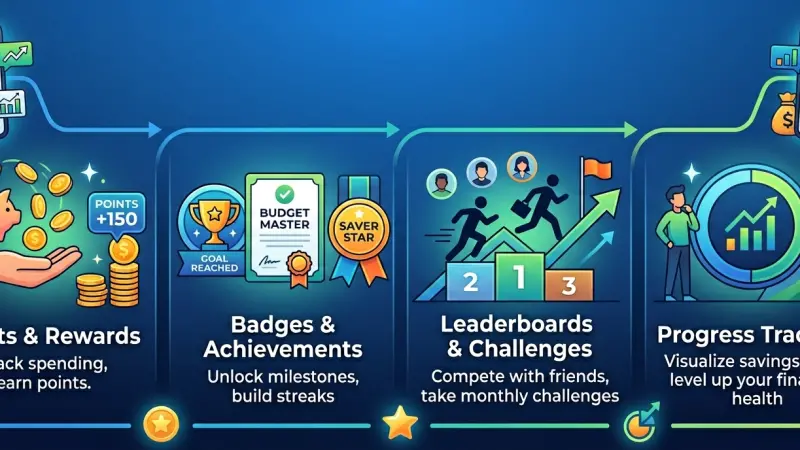
Why is it that millions of individuals find themselves compulsively checking a language-learning app or a fitness tracker every morning, yet often view their banking statements with a sense of dread or avoidance? The answer lies in the psychological power of game design, and increasingly, the UK fintech sector is asking which gamification elements boost engagement in personal finance apps to help users build better fiscal habits. In a landscape where the cost of living remains a primary concern for British households, the traditional, static approach to money management is being replaced by dynamic, interactive interfaces that reward positive behaviour. By transforming the "chore" of budgeting into a series of achievable, game-like challenges, developers are successfully bridging the gap between financial literacy and actual behavioural change, ensuring that users remain consistently engaged with their long-term economic goals.

The primary keyword, gamification elements in personal finance apps, refers to the integration of game-design techniques in non-game contexts to motivate specific user actions—such as increasing monthly savings, reducing discretionary spend, or consistently categorising transactions. For a UK audience, these elements must be balanced with a high degree of trust and security; while users enjoy the thrill of "levelling up," they remain acutely aware that they are dealing with real-world capital. Effective gamification in this sector does not aim to trivialise financial responsibility, but rather to use the principles of behavioural economics to make prudent decision-making the "path of least resistance." When executed correctly, these features move beyond mere gimmicks, creating a virtuous cycle of engagement where the user feels empowered, informed, and crucially entertained by the process of securing their own financial future in an increasingly digital world.
The Power of Progress Tracking and Visual Milestones
At the heart of any successful engagement strategy is the concept of visibility; specifically, the ability for a user to see exactly how far they have come and how close they are to their destination. Progress bars, circular trackers, and visual maps are essential gamification elements in personal finance apps because they provide immediate feedback on financial health. In the UK, where many young professionals are saving for a first home deposit or a specific travel goal, seeing a "Savings Pot" fill up visually can trigger a dopamine response similar to completing a level in a video game. This visual representation of effort acts as a powerful deterrent against impulsive spending, as the user can literally see the negative impact a withdrawal would have on their progress towards a cherished milestone, making the long-term benefit more tangible than a short-term luxury.
Moreover, the use of "unlockable" milestones can further incentivise consistent app usage. For example, a personal finance app might offer badge icons or profile customisations once a user has successfully tracked their expenses for thirty consecutive days. While these rewards have no intrinsic monetary value, they serve as a digital "pat on the back" that reinforces the user’s identity as a financially disciplined individual. For the British consumer, who often appreciates a "no-nonsense" approach to services, these visual cues should be clean, professional, and integrated into a sophisticated User Experience (UX). By breaking down a daunting task—like saving £10,000—into hundreds of tiny, visualised steps, apps can prevent "goal fatigue," keeping the user motivated through the middle stages of their journey where the initial excitement might have otherwise waned, thus ensuring sustained engagement over many months or years.
Utilising Streaks and Consistency Loops for Habit Formation
One of the most potent psychological triggers in digital engagement is the "streak"—the concept of performing an action every day to keep a counter increasing. Personal finance apps that implement daily check-ins or transaction reviews use streaks to build a "consistency loop," where the user’s desire to not "break the chain" outweighs the effort required to engage with the app. For a UK worker managing a busy schedule, a notification that says "You've categorised your spending for 14 days in a row—don't stop now!" can be the difference between a forgotten budget and a perfectly maintained financial record. This element taps into loss aversion; once a streak is established, the user feels a sense of ownership over that number and will go to great lengths to protect it, thereby cementing the habit of regular financial self-reflection.
However, the design of these streaks must be carefully calibrated to avoid being perceived as annoying or stressful. High-quality personal finance apps often include "grace periods" or "streak freezes" to account for the reality of life, ensuring that a single missed day doesn't lead to total abandonment of the app. Practical examples in the UK market include banking apps that reward users with "coins" or "points" for every week they stay within their defined spending limits.
These points can then be used to enter prize draws or unlock exclusive financial insights. By gamifying the frequency of interaction, developers ensure that the app remains "top of mind" for the user. This persistent presence is vital for long-term financial health, as it prevents the common habit of "ostriching"—where individuals ignore their bank balance during difficult financial periods—by making the act of checking one's balance a positive, rewarded experience.
Social Comparison and Friendly Competition Elements
Humans are inherently social creatures who often measure their own success relative to their peers. While financial matters are traditionally private in British culture, "anonymised" social competition is becoming one of the most effective gamification elements in personal finance apps. Features that allow users to see how their saving rate compares to the "average for people in London" or "others in your age bracket" can provide a healthy competitive nudge. This isn't about shaming those who have less, but rather about providing a benchmark for what is possible. When a user sees that they are in the "Top 20% of savers this month," it provides a sense of prestige and accomplishment that purely numerical data cannot provide, encouraging them to maintain or improve their standing in the next cycle.
To implement this successfully without infringing on privacy, apps often use leaderboards with pseudonyms or communal "goals" where a whole community of users works together to reach a target—such as planting a certain number of trees based on the total amount saved across the platform. This "cooperative gamification" is particularly popular among the socially-conscious Gen Z and Millennial demographics in the UK. By aligning personal financial gain with a broader social or environmental purpose, insurers and fintechs can tap into a deeper sense of motivation. This sense of belonging to a "tribe" of savers can reduce the feeling of isolation that often accompanies debt management or strict budgeting, making the process feel like a shared journey rather than a solitary struggle against the pressures of modern consumerism and the rising costs of urban living.
Tangible Rewards and the Psychology of Reinforcement
While digital badges and streaks are effective, nothing boosts engagement quite like tangible rewards. The integration of cashback, merchant discounts, or "round-up" bonuses acts as a primary reinforcement mechanism. In the UK, several leading digital banks have successfully gamified the "round-up" feature, where every transaction is rounded up to the nearest pound, with the change placed into a separate pot. Sometimes, these apps add a "lottery" element, where a random round-up is multiplied or "boosted" by the bank. This introduces a sense of excitement and "variable reward"—the same psychological principle that makes slot machines addictive—but applies it to a productive activity: saving money. This element of surprise keeps the user engaged, as every purchase carries the small possibility of a financial "win."
Furthermore, loyalty schemes that offer "real-world" value, such as a free coffee or a discount at a major UK retailer for hitting a savings target, create a direct link between the app's digital environment and the user's physical life. This makes the gamification feel "worth it" for those who might be skeptical of purely digital accolades. The marketing potential here is significant, as it allows for partnerships between finance apps and other lifestyle brands, creating an ecosystem of value that surrounds the user. By rewarding the "effort" of budgeting rather than just the "result" of having money, these apps support users through the difficult early stages of financial recovery or wealth building. This positive reinforcement ensures that the app is viewed as a supportive partner in the user's life, rather than a judgmental tool that only highlights their financial shortcomings or failures.
Educational Gamification: Learning through Interactivity
Financial literacy is a significant challenge in the UK, with many adults feeling overwhelmed by complex terms like "compound interest," "ISA limits," or "credit utilisation." Gamification elements in personal finance apps can transform this dry information into interactive "quests" or quizzes. Instead of reading a 2,000-word article, a user might complete a five-minute interactive module to unlock a "Credit Master" badge.
This "edutainment" approach ensures that users actually retain the information, as they are actively participating rather than passively consuming. By rewarding the acquisition of knowledge, apps can empower users to make better decisions, which in turn leads to better financial outcomes and higher satisfaction with the app itself, creating a long-term retention strategy based on genuine user value.
The design of these educational elements should be bite-sized and mobile-friendly, catering to the "micro-moments" in a user’s day—such as a morning commute on the Tube or a lunch break. Using storytelling techniques, where the user helps a digital avatar navigate a financial crisis, can make the lessons more memorable and relatable. For example, an app might present a scenario: "James wants to buy a car, but his credit score is low—help him choose the right steps to improve it." This simulated decision-making builds confidence without any real-world risk. As the user's "Financial IQ" score increases within the app, they are more likely to engage with more advanced features, such as investment portfolios or pension tracking. This progression through a "learning hierarchy" keeps the app relevant as the user’s financial life becomes more complex, preventing them from outgrowing the tool as they move through different life stages.
The Role of Aesthetics and UX in Sustaining Engagement
Finally, we must not overlook the importance of "juice"—the term used in game design for the satisfying visual and auditory feedback that follows an action. When a UK user moves money into a savings pot, the app should respond with a satisfying "clink" sound, a burst of digital confetti, or a smooth animation of coins moving across the screen. These small aesthetic touches make the interface feel alive and responsive. A dull, spreadsheet-like app will struggle to maintain engagement, regardless of how good its logic is. The most successful personal finance apps in Britain use vibrant colour palettes, friendly typography, and intuitive gestures to make the user experience feel premium and modern. This high level of polish signals to the user that the app is a high-quality, trustworthy tool that deserves their attention.
However, "juice" must be used purposefully. Every animation and sound should reinforce a positive action. Excessive or confusing visuals can lead to "cognitive load," where the user becomes overwhelmed and closes the app. The goal is "elegant gamification," where the game elements feel like a natural extension of the financial task, not an unnecessary layer on top of it. For example, using "haptic feedback" on a smartphone to give a subtle vibration when a budget limit is reached can act as a gentle, physical reminder to the user. By engaging multiple senses, finance apps can create a deeper psychological connection with the user. This holistic approach to design ensures that the app is not just a tool, but an experience—one that the user looks forward to interacting with, thereby ensuring the high levels of daily active usage that are necessary for significant financial transformation.
Frequently Asked Questions
Is gamification in finance apps safe for my data?
Yes, gamification is simply a user-interface layer and does not affect the underlying security of your financial data. UK finance apps must still adhere to
strict FCA regulations and data protection laws (UK GDPR), ensuring that your "gameplay" is as secure as any traditional banking transaction.
Can gamification encourage "addictive" spending?
While gamification is designed to be engaging, ethical finance apps use it to encourage *saving* and *budgeting* rather than spending. Reputable developers include "responsible gaming" principles, ensuring that the focus remains on long-term financial health rather than high-frequency transaction loops that could be harmful.
Do these apps charge extra for gamified features?
Most personal finance apps in the UK offer their core gamification elements—like streaks, badges, and progress bars as part of their free tier. Some advanced features, like exclusive reward schemes or "boosted" cashback, may be part of a premium "Pro" subscription, but the basic engagement tools are usually free to use.
Can gamification really help me get out of debt?
Absolutely. By breaking down large debts into small, visualised "levels" and rewarding you for every on-time payment, gamified apps can make the daunting process of debt recovery feel much more manageable. The constant positive reinforcement helps maintain the motivation required to stick to a repayment plan over several years.
Are these apps suitable for older users?
While often associated with younger generations, the principles of gamification clarity, feedback, and rewards are universal. Many older UK users find that the
clear progress tracking and simplified interfaces of gamified apps are actually easier to navigate than traditional, jargon-heavy banking portals.
In the rapidly expanding world of UK fintech, the ability to stand out and provide genuine value to users is the hallmark of a successful brand. For developers, consultants, and financial service providers, building trust is just as important as building engagement. One of the most effective ways to establish this trust and reach a wider audience is by ensuring your professional services are easily discoverable. Listing your business on a Local Page UK company directory online can significantly enhance your brand's authority and help potential clients find your expertise. By utilizing a free company search directory, you can improve your online visibility and connect with users who are actively seeking the next generation of financial tools. Whether you are looking for a verified business directory to showcase your innovation or a free business search directory to network with industry peers, establishing your presence in a reputable directory is a vital step toward long-term success in the digital marketplace.

Disclaimer: The information provided in this article is for general informational and research purposes only. Company details, features, services, and market positions may change over time. Readers are advised to visit official company websites and conduct independent research before making any business decisions or purchasing services.
Most Searchable Keywords

Recent Blogs


Related Listings


Categories
- Accountants (295)
- Advertising Agencies (559)
- Architects (149)
- Automobiles (377)
- Beauty (300)
- Carpenters (146)
- Cleaning Services (386)
- Dentists (189)
- Driving (62)
- Electricians (215)
- Energy (8)
- Event Organiser (685)
- Finance (599)
- Guide (3365)
- Health (2207)
- Information technology (206)
- Legal Services (353)
- Logistics (6)
- Maintenance (65)
- Manufacturing (35)

Sponsored Listings in Locksmith Services


Related Blogs

Gen Z Political Reporters and News Creators i...
Read this insightful article "Gen Z Political Reporters and News Creators in the UK" to expand your knowledge!

Famous Female Social Media Influencers Across...
Read this insightful article "Famous Female Social Media Influencers Across the UK" to expand your knowledge!
Your UK Sponsor Licence 2026 Step by Step Gui...
Read this insightful article "Your UK Sponsor Licence 2026 Step by Step Guide" to expand your knowledge!
Questions & Answers – Find What
You Need, Instantly!
How can I update my business listing?
Is it free to manage my business listing?
How long does it take for my updates to reflect?
Why is it important to keep my listing updated?
