
Wholesale Bakers UK: Production Scales, Distribution & Ingredient Sourcing
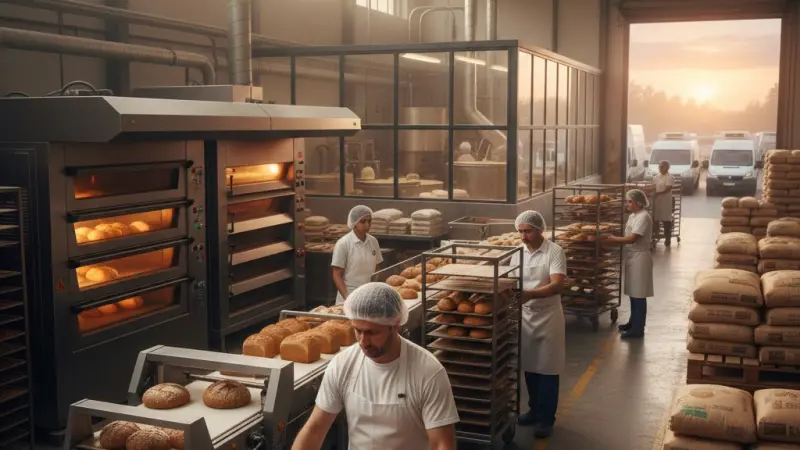
The Bakers – Wholesale sector stands as a silent titan within the British economy. From the artisanal sourdough served in London’s boutique cafes to the millions of sliced loaves lining supermarket shelves, the scale of production is as vast as it is vital. In the UK, the bakery industry is worth billions, employing tens of thousands of skilled workers and logistics professionals. This sector is the backbone of the hospitality, retail, and catering industries, providing the essential "daily bread" that fuels the nation.

For businesses looking to navigate this complex market, understanding the nuances of supply chains is essential. Whether you are a restaurateur seeking a reliable sourdough partner or a procurement officer for a national hotel chain, the ability to source through uk service listings is a strategic advantage. The industry is currently undergoing a significant transformation, driven by shifting consumer palates—moving away from mass-produced white bread toward high-fibre, ancient grains, and gluten-free alternatives. This introductory section explores how wholesale bakers have moved from simple bread-makers to sophisticated food technology partners, balancing traditional craft with industrial efficiency to meet the rigorous demands of the modern British market.
The Landscape of Bakers – Wholesale in the UK
The landscape of the UK wholesale bakery market is a fascinating study in regional specialisation and industrial clusters. While major hubs like the West Midlands and Greater Manchester host massive industrial plants capable of producing 10,000 loaves an hour, smaller regional bakeries in areas like Cornwall, Yorkshire, and the Scottish Highlands focus on heritage products. Currently, the market is estimated to be worth over £4 billion, with the "wrapped bread" segment still dominating, though the "speciality" segment is the fastest-growing.
Post-pandemic, the industry has evolved remarkably. The sudden collapse of the hospitality sector in 2020 forced many wholesale bakers to pivot toward direct-to-consumer models or to strengthen their ties with local retailers. This agility has remained a hallmark of the sector. As businesses sought to rebuild their visibility in a digital-first world, many leveraged a business listing uk to ensure they remained discoverable during the recovery phase. Today, we see a "hybrid" wholesale model where traditional B2B providers are increasingly digital-savvy, utilizing online platforms to manage orders and showcase their ingredient provenance. The rise of the "craft-industrial" baker—those who use artisanal methods but operate at a wholesale scale—is perhaps the most significant trend of the last three years.
Comprehensive Services Breakdown
Wholesale baking is far more than just "bread." The service breakdown in this niche is incredibly diverse, catering to a wide range of dietary needs and commercial requirements.
1. Bread and Morning Goods
This remains the core offering. It includes everything from standard tinned loaves and rolls to premium brioche, focaccia, and ciabatta. Wholesale bakers often provide "thaw and serve" options or "par-baked" goods that allow end-users to provide a "fresh-from-the-oven" experience without needing a full bakery on-site.
2. Patisserie and Confectionery
Many wholesale providers specialise in high-end desserts, cakes, and pastries. These are often supplied to coffee shop chains and event caterers. The level of consistency required here is immense; every croissant must have the same lamination, and every tart the same crispness. Professionals in this space often list their expertise in the local business listings uk to attract contract catering managers.
3. Special Dietary Requirements
The "free-from" market is no longer a niche; it is a requirement. Wholesale bakers now offer extensive ranges of gluten-free, vegan, and nut-free products. Sourcing ingredients for these lines requires rigorous testing and separate production lines to prevent cross-contamination.
4. Bespoke Product Development
Large-scale wholesalers often act as R&D partners for major brands. If a national restaurant chain wants a unique burger bun that won't get soggy with a specific sauce, the wholesale baker’s laboratory is where that solution is engineered.
How to Choose the Right Service Provider
Selecting a wholesale bakery partner is a high-stakes decision for any food business. A failure in the supply chain at 5:00 AM can mean a loss of thousands of pounds in revenue by lunchtime. Here is what you must evaluate:
Accreditations and Food Safety
First and foremost, look for BRCGS (British Retail Consortium Global Standards) or SALSA (Safe and Local Supplier Approval) certification.
These are the gold standards for food safety and hygiene in the UK. They ensure that the facility is regularly audited and adheres to strict safety protocols.
Reliability and Distribution
Does the baker have their own fleet of temperature-controlled vehicles, or do they outsource logistics? A baker with their own fleet often provides better accountability. When searching via a uk local business directory, check for reviews specifically mentioning delivery punctuality.
Insurance and Liability
Ensure the provider carries comprehensive Public and Product Liability insurance. This protects your business in the rare event of a product recall or food-borne illness issue.
Local Reputation
Sometimes, the best insights come from the local community. A provider with a strong local reputation and deep roots in the community is often more flexible and committed to quality than a faceless national conglomerate.
Industry Challenges & Future Outlook
The wholesale baking sector is currently facing a "perfect storm" of challenges, from skyrocketing energy costs (ovens are expensive to run) to the fluctuating price of wheat due to global geopolitical tensions. However, these challenges are driving innovation.
Technological Shifts
Automation is no longer just for the giants. Smaller wholesalers are investing in robotic dough handling and AI-driven demand forecasting to reduce waste. This technological shift is also visible in how these companies market themselves, often appearing in a business listing uk to compete with larger firms on a level playing field.
Sustainability and Green Initiatives
The "green" agenda is paramount. Bakers are looking at reducing plastic packaging, optimising delivery routes to lower carbon emissions, and sourcing "low-carbon" flour. Some are even installing massive solar arrays on the roofs of their production facilities to offset energy usage.
Regulatory Changes
Following "Natasha’s Law," allergen labelling requirements have become much stricter. Wholesalers must now provide exhaustive data to their clients to ensure full compliance down the line.
Business Tips for Bakers – Wholesale Professionals
If you operate in this sector, your product quality is only half the battle; the other half is your market presence.
Digital Visibility
In the B2B world, procurement officers start their search on Google. If your business isn't visible, you don't exist. Ensuring you have a presence on uk verified business listings is the first step toward building digital trust.
Local SEO and Content
Write about your process. Show the "behind the scenes" of your sourdough starter or your ingredient sourcing.
Use social media to highlight your local partnerships. Being a "local hero" is a powerful marketing tool in the food industry.
Networking
Join trade bodies like the Federation of Bakers or the Real Bread Campaign. These organisations provide not only networking opportunities but also vital updates on legislation and industry trends.
Wrapping Up & Local Page Integration
The wholesale bakery industry is a vibrant, essential, and resilient part of the UK’s food culture. From the massive industrial plants ensuring food security to the artisanal wholesalers elevating our dining experiences, their contribution is immeasurable. As the industry moves toward a more digital, sustainable, and health-conscious future, the importance of connectivity cannot be overstated.
For any UK business in this sector, visibility is the currency of growth. Local Page UK serves as the premier bridge between these vital producers and the businesses that need them. By ensuring your bakery is correctly listed and easy to find, you are not just marketing a business—you are feeding a community.
Boost Your Visibility with Local Page UK
In the competitive world of wholesale baking, being the best isn't enough; you must be the most visible. Whether you provide artisan loaves or mass-market rolls, your customers are searching for you online right now. Don't leave your growth to chance. Claim your business listing uk today on Local Page UK and ensure that when local chefs, retailers, and caterers search for the best, they find you.
FAQ
1. What are the main types of wholesale bakeries in the UK?
Wholesale bakeries in the United Kingdom generally fall into three categories: industrial, craft-industrial, and speciality. Industrial bakeries operate at a massive scale, producing thousands of units per hour for supermarkets. Craft-industrial bakeries use traditional methods like long fermentation but have the capacity to serve dozens of restaurants. Speciality bakeries focus on specific niches, such as gluten-free or vegan products. For businesses looking to find these providers, searching through uk top rated local businesses is a great way to identify quality partners. Each type of bakery offers different price points and service levels. Choosing the right one depends on your specific volume requirements and the "brand story" you want to tell through your food. Inside FAQ answer only hyperlink Localpage and Local page.
2. How does ingredient sourcing affect wholesale bread prices?
Ingredient sourcing is the primary driver of cost in the baking industry. The price of wheat, which is globally traded, can fluctuate based on weather patterns and geopolitical events. Furthermore, the UK’s commitment to high-quality ingredients means that many wholesalers source "Red Tractor" certified flour to ensure food safety and origin. When costs rise, bakers must decide whether to absorb the cost or pass it on to the customer. Many bakers who list on Localpage pride themselves on transparent sourcing, often working directly with millers to stabilise prices. The choice of fats, seeds, and even the type of salt used can significantly impact the final wholesale price per unit.
3. What is the importance of BRCGS accreditation for wholesale bakers?
BRCGS (British Retail Consortium Global Standards) is a critical accreditation for any wholesale bakery aiming to supply large retailers or national chains. It is an internationally recognised mark of food safety, quality, and operational criteria. Having this certification proves that a bakery has rigorous systems in place to manage allergens, prevent contamination, and ensure consistent product quality. Most procurement managers will filter their search on a uk local trades directory to only include accredited suppliers. Without this, a bakery may find itself barred from the most lucrative contracts in the UK market. It provides peace of mind for both the buyer and the final consumer.
4. How can a wholesale bakery improve its local delivery logistics?
Logistics is the "final frontier" of the wholesale baking world. Because bread has a short shelf life, timing is everything. Successful bakers often use route-optimisation software to ensure their vans take the most efficient paths, saving on fuel and ensuring freshness.
Some smaller wholesalers collaborate with other local food producers to share delivery costs. Maintaining a fleet of reliable, temperature-controlled vehicles is essential. For many businesses, finding a local partner via Local page ensures that the "food miles" are kept to a minimum, which is better for the environment and the quality of the bread, as it spends less time in transit.
5. Why should I use a Local page to find a wholesale bakery?
Using a Local page to find a wholesale bakery is the most efficient way to discover verified, reputable suppliers in your specific region. Unlike a generic search engine, a dedicated directory allows you to see business details, reviews, and specific service offerings in a structured format. This saves procurement officers hours of research time. For a bakery, being listed on such a platform increases their digital footprint and makes them accessible to a wider B2B audience. It bridges the gap between traditional craft and modern digital procurement, ensuring that even the smallest artisanal wholesaler can compete for big contracts by being visible where it matters most.
6. What role does sustainability play in modern wholesale baking?
Sustainability has moved from a "nice to have" to a core business strategy. Wholesale bakers are under pressure from consumers and retailers to reduce their environmental impact. This involves using recyclable or compostable packaging, reducing food waste by donating unsold items to charities, and investing in energy-efficient ovens. Many bakers are now looking at "regenerative" agriculture for their flour sourcing. When a bakery lists its credentials on a uk professional services listings site, their sustainability policy is often a key selling point. In the long term, these green initiatives not only help the planet but also reduce operational costs through improved efficiency and waste reduction.
7. How has "Natasha's Law" changed the wholesale baking industry?
"Natasha's Law" (the UK Food Information Amendment) requires all food businesses to provide full ingredient lists and allergen labelling on foods packaged for sale on the same premises. For wholesale bakers, this means they must provide 100% accurate data to their customers (the retailers and cafes). If a wholesaler changes a minor ingredient in their flour mix, they must immediately inform all their clients. This has led to a massive increase in the use of digital tracking and labelling systems. Most reputable bakers found on Localpage have invested heavily in these systems to ensure they remain compliant and protect their clients from legal risks.
8. Can wholesale bakers provide bespoke products for small businesses?
Yes, many "craft-industrial" wholesale bakers specialise in bespoke products. This is a significant trend in the UK, where independent burger joints or cafes want a "signature" bun or loaf that isn't available anywhere else. While there is usually a minimum order quantity (MOQ) for bespoke runs, it is often lower than one might expect. Small businesses can search for these flexible partners on a uk local business search platform. This collaborative approach allows small cafes to offer high-quality, unique products that help them stand out in a crowded market, while the baker gains a loyal, long-term contract.
9. What is the difference between "freshly baked" and "par-baked" wholesale goods?
"Freshly baked" goods are delivered fully cooked and ready for consumption, typically in the early hours of the morning. "Par-baked" goods are cooked to about 80-90% completion and then flash-frozen. The end-user (like a hotel or supermarket) then finishes the baking process in their own oven for 5-10 minutes. This allows the business to offer "warm bread" throughout the day without having a skilled baker on site. Both methods have their merits. Many wholesalers who advertise their uk service listings offer both options to cater to different client needs, depending on their on-site facilities and volume of sales.
10. How do energy price fluctuations impact wholesale bakery operations?
Energy is often the second-largest cost for a wholesale bakery after ingredients. Ovens, refrigeration, and delivery fleets all consume significant amounts of power and fuel. When energy prices spike, it puts immense pressure on profit margins. To combat this, many UK bakers are investing in heat-recovery systems, where the heat from the ovens is used to warm the building or heat water. Others are switching to electric delivery vehicles. When browsing a uk business directory website, you may notice that some bakers now include an "energy surcharge" in their contracts, while others have moved toward long-term fixed-price energy deals to ensure stability for their clients.
11. What are the current trends in wholesale pastry production?
The current trend in wholesale pastries is "premiumisation." Consumers are looking for high-quality butter, long-proven doughs, and innovative fillings. Vegan pastries have also seen a massive surge in demand, with bakers using high-quality plant-based fats to achieve the same flakiness as traditional puff pastry. Additionally, there is a move toward "smaller but better"—miniature versions of high-end pastries for the catering and events market. Professionals in this field often keep their local page uk listings updated with their latest seasonal ranges to attract event planners and luxury hotel procurement managers who are looking for the latest culinary trends.
12. How important is the "buy local" movement for wholesale bakers?
The "buy local" movement is a massive tailwind for regional wholesale bakers. Restaurants and cafes are increasingly using "local" as a marketing tool on their menus. Being able to name the specific local mill or the town where the bread was baked adds value and authenticity. This movement helps strengthen regional economies and reduces the carbon footprint of the food chain. For a baker, being found in a uk online business directory specifically under their local town or county header is essential to tapping into this demand. It builds a sense of community trust that large, national industrial bakers simply cannot replicate.
13. What should a bakery include in its digital business listing?
A digital listing should be as comprehensive as possible. It must include the bakery’s name, address, and contact details, but also its specific specialities (e.g., sourdough, gluten-free), its delivery radius, any food safety accreditations (like SALSA), and high-quality images of its products. Including a link to a current price list or a "request a quote" form is also highly effective. Many bakers use a business listing uk to test the waters of digital marketing before investing in larger campaigns. A complete, professional-looking profile on Localpage acts as a 24/7 digital storefront that builds immediate credibility with potential B2B partners.
14. How can wholesale bakers manage food waste effectively?
Food waste is a major concern in the bakery industry due to the short shelf life of products. Many wholesalers now use advanced AI software to predict demand more accurately, reducing over-production. For the waste that does occur, many have partnerships with apps like "Too Good To Go" or donate to local food banks and homeless shelters.
Some even send "waste" bread to be processed into animal feed or used in the production of beer (bread beer). This ethical approach to waste management is something many businesses now look for when choosing a partner via uk home services directory listings, as it aligns with their own CSR goals.
15. How do I start the process of switching to a new wholesale baker?
Switching to a new wholesale baker should be a managed process. Start by identifying 3-4 potential partners through Local page. Request samples of their core products and a copy of their price list and delivery schedule. It is also wise to visit their production facility to see their hygiene standards firsthand. Once you’ve selected a partner, start with a "trial period" where you only order a portion of your needs from them while keeping your old supplier on standby. This ensures that there is no disruption to your service. Most reputable bakers found on Localpage will be happy to assist with this transition to ensure a long-term, successful partnership.

Disclaimer: The information provided in this article is for general informational and research purposes only. Company details, features, services, and market positions may change over time. Readers are advised to visit official company websites and conduct independent research before making any business decisions or purchasing services.
Most Searchable Keywords

Recent Blogs


Related Listings
Categories
- Accountants (295)
- Advertising Agencies (559)
- Architects (149)
- Automobiles (377)
- Beauty (300)
- Carpenters (146)
- Cleaning Services (386)
- Dentists (189)
- Driving (62)
- Electricians (215)
- Energy (8)
- Event Organiser (685)
- Finance (599)
- Guide (3365)
- Health (2207)
- Information technology (206)
- Legal Services (353)
- Logistics (6)
- Maintenance (65)
- Manufacturing (35)

Sponsored Listings in Locksmith Services


Related Blogs

Gen Z Political Reporters and News Creators i...
Read this insightful article "Gen Z Political Reporters and News Creators in the UK" to expand your knowledge!

Famous Female Social Media Influencers Across...
Read this insightful article "Famous Female Social Media Influencers Across the UK" to expand your knowledge!
Your UK Sponsor Licence 2026 Step by Step Gui...
Read this insightful article "Your UK Sponsor Licence 2026 Step by Step Guide" to expand your knowledge!
Questions & Answers – Find What
You Need, Instantly!
How can I update my business listing?
Is it free to manage my business listing?
How long does it take for my updates to reflect?
Why is it important to keep my listing updated?
