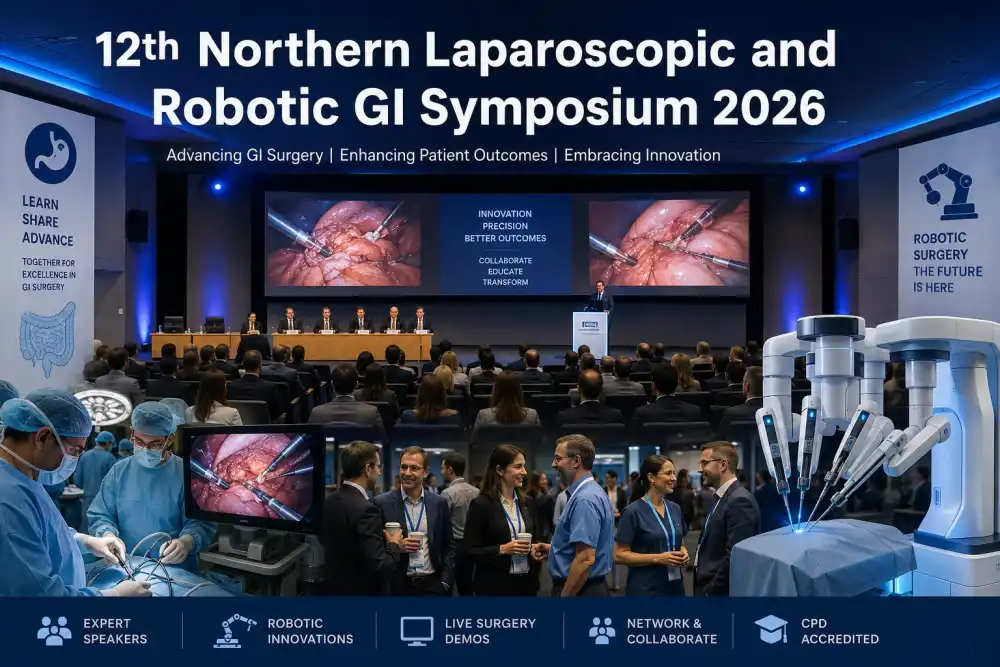
The 12th Northern Laparoscopic and Robotic GI Symposium is one of the leading educational surgical conferences organised through South Tees Conferences at the prestigious STRIVE Academic Centre, The James Cook University Hospital, Middlesbrough. Bringing together surgeons, consultants, trainees, researchers and healthcare professionals from across the United Kingdom, the symposium focuses on the latest developments in minimally invasive gastrointestinal surgery and robotic-assisted procedures.
Healthcare technology is evolving rapidly, making continuous education essential for clinicians involved in gastrointestinal care. This conference provides delegates with access to evidence-based practice, expert keynote presentations, live demonstrations, clinical discussions and opportunities to exchange knowledge with nationally recognised specialists.
Participants will gain valuable insight into emerging surgical technologies, patient safety, enhanced recovery protocols, robotic innovations and multidisciplinary approaches that continue to improve outcomes for gastrointestinal patients.
Why Attend?
Medical conferences remain one of the most effective ways to stay informed about advances in clinical practice. This symposium has been designed to deliver practical knowledge that healthcare professionals can immediately apply in their own hospitals and surgical departments.
Delegates will benefit from presentations delivered by experienced consultants who regularly perform advanced laparoscopic and robotic procedures. Sessions will explore current clinical guidelines, innovative treatment pathways and complex surgical cases while encouraging discussion among participants.
Networking opportunities throughout the day also allow attendees to build professional relationships with surgeons, trainees, researchers and industry representatives working in gastrointestinal healthcare.
Conference Objectives
The symposium has several educational objectives, including improving participants' understanding of modern minimally invasive surgical techniques, enhancing patient safety through evidence-based practice and encouraging collaboration between different healthcare disciplines.
Attendees will explore how robotic surgery continues to transform gastrointestinal procedures by improving precision, reducing recovery times and supporting better patient outcomes.
The programme also encourages participants to critically evaluate new research findings before implementing them into everyday clinical practice.
Key Learning Areas
Throughout the conference, delegates can expect educational sessions covering:
- Advanced laparoscopic gastrointestinal procedures
- Robotic-assisted colorectal surgery
- Upper GI surgical innovations
- Surgical simulation and training
- Enhanced recovery after surgery (ERAS)
- Patient safety strategies
- Clinical decision making
- Complication management
- Future developments in robotic technology
- Evidence-based gastrointestinal surgery
Each session combines practical experience with the latest research to create a comprehensive educational programme suitable for both experienced consultants and surgical trainees.
Expert Speakers
The symposium welcomes respected surgeons and specialists who possess extensive experience in gastrointestinal surgery and medical education. Speakers share practical case studies, discuss challenging procedures and review current clinical evidence.
Panel discussions encourage delegates to ask questions directly to experts, helping attendees better understand how emerging technologies can be integrated into routine clinical practice.
The conference also supports multidisciplinary collaboration by including perspectives from anaesthetists, specialist nurses and allied healthcare professionals involved in perioperative care.
Benefits of Robotic Surgery
Robotic-assisted surgery continues to reshape gastrointestinal healthcare throughout the UK.
During the symposium, attendees will discover how robotic platforms provide surgeons with enhanced visualisation, greater precision and improved dexterity during complex procedures.
Sessions examine patient selection, equipment requirements, training pathways and future innovations expected to influence gastrointestinal surgery over the coming years.
Clinical evidence demonstrating reduced hospital stays, improved recovery times and lower complication rates will also be reviewed.
Hands-on Learning Experience
Although primarily an educational conference, delegates will also have opportunities to observe demonstrations, review surgical videos and participate in interactive discussions.
These practical learning experiences enable participants to better understand modern operative techniques while comparing different surgical approaches used across NHS hospitals.
The interactive format encourages engagement rather than passive learning, making the educational experience significantly more valuable.
Networking Opportunities
Professional networking remains one of the strongest reasons healthcare professionals attend medical conferences.
Throughout the symposium, attendees can exchange experiences with surgeons from different NHS Trusts, discuss ongoing research projects and identify opportunities for future collaboration.
These conversations frequently lead to new research partnerships, training opportunities and improvements in patient care through shared knowledge.
Who Should Attend?
The conference has been developed for professionals working in gastrointestinal healthcare, including consultant surgeons, colorectal surgeons, upper GI surgeons, specialist registrars, junior doctors, theatre practitioners, surgical nurses, physician associates, medical educators and clinical researchers.
Medical students interested in gastrointestinal surgery may also find the conference valuable for understanding current innovations and career pathways.
Professional Development
Continuous Professional Development (CPD) remains an important aspect of modern healthcare practice.
Attendance at educational conferences enables healthcare professionals to maintain clinical competence while learning about evolving technologies and updated national guidance.
Participants can also use knowledge gained during the symposium to improve patient pathways within their own organisations.
Innovation in Healthcare
Innovation continues to drive improvements in patient outcomes across gastrointestinal surgery.
Topics explored throughout the conference include artificial intelligence, digital imaging, robotic platforms, surgical planning software and advances in minimally invasive instrumentation.
Understanding these innovations prepares healthcare professionals for the future of surgical care.
Venue
The STRIVE Academic Centre at The James Cook University Hospital offers modern conference facilities specifically designed for healthcare education.
The venue provides excellent lecture theatres, audiovisual technology, comfortable delegate facilities and convenient access for attendees travelling from across the United Kingdom.
Its location within a major teaching hospital also creates an ideal environment for clinical education and professional networking.
The 12th Northern Laparoscopic and Robotic GI Symposium represents an outstanding opportunity for healthcare professionals seeking to remain at the forefront of gastrointestinal surgery.
With expert speakers, evidence-based presentations, practical discussions and valuable networking opportunities, the conference provides delegates with knowledge that can directly improve patient care and professional development.
Whether you are an experienced consultant, surgical trainee or healthcare researcher, this symposium offers a comprehensive educational experience focused on the future of minimally invasive gastrointestinal surgery and robotic innovation.
Key Event Highlights
Venue & Location Info
Timings
Entry Fees
Event Type
Estimated Turnout & Audience
Community Reviews
James Turner
Sarah Collins
Oliver Bennett
Emma Hughes
How was your experience?
Share your thoughts with the community. Your reviews help others discover the best local events.
Write a Review