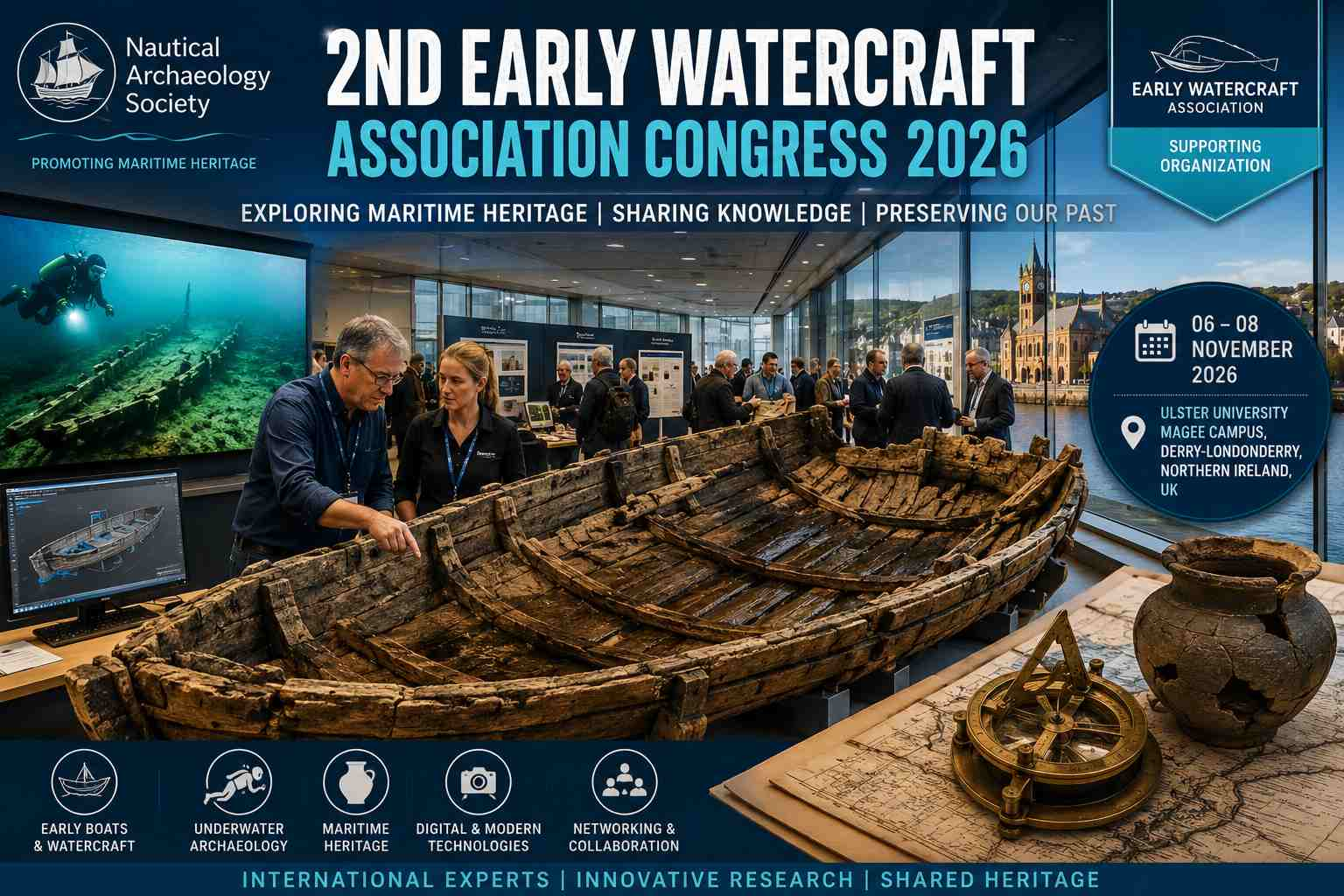
The 2nd Early Watercraft Association Congress 2026 is an international conference dedicated to advancing the study of early boats, maritime archaeology, and underwater cultural heritage. Supported by the Nautical Archaeology Society (NAS), this event brings together leading archaeologists, historians, researchers, museum professionals, heritage specialists, and students from across the globe. Hosted at Ulster University in Derry-Londonderry, the conference provides an exceptional platform for sharing groundbreaking research, discussing archaeological discoveries, and strengthening international collaboration in maritime heritage preservation.
Nautical Archaeology Society
The Nautical Archaeology Society (NAS) is one of the world's leading organizations promoting education, research, and public participation in maritime archaeology. The society works with archaeologists, heritage organizations, museums, universities, and volunteers to preserve underwater cultural heritage while encouraging responsible archaeological practices. Through internationally recognized training programs, educational courses, publications, and archaeological projects, NAS helps both professionals and enthusiasts develop practical skills in maritime archaeology.
The society also promotes awareness of submerged archaeological sites, shipwrecks, ancient ports, and historic waterways that contribute significantly to understanding human history and maritime civilizations.
Event Overview
The 2nd Early Watercraft Association Congress serves as a global forum where experts present the latest findings in early watercraft research, underwater archaeology, conservation science, and maritime heritage management. Over three days, attendees will participate in keynote lectures, technical presentations, panel discussions, workshops, exhibitions, and networking sessions designed to encourage knowledge sharing and professional collaboration.
The conference highlights innovative archaeological techniques while exploring how ancient communities developed watercraft for transportation, trade, fishing, exploration, and cultural exchange.
Conference Objectives
The primary objective of the congress is to promote international collaboration in the study of early watercraft and maritime archaeology. The event encourages researchers to exchange ideas, present new archaeological discoveries, and discuss conservation strategies for underwater cultural heritage.
Additional objectives include:
- Supporting archaeological education and professional development
- Encouraging interdisciplinary research
- Promoting heritage conservation
- Sharing innovative archaeological technologies
- Inspiring future generations of maritime archaeologists
Key Conference Topics
The congress covers a broad range of maritime archaeology subjects, including:
- Early boat construction techniques
- Ancient navigation systems
- Underwater archaeological investigations
- Shipwreck excavation methods
- Maritime trade routes
- Coastal archaeology
- Conservation of archaeological artifacts
- Digital documentation technologies
- Climate change and heritage preservation
- Maritime museum collections
Each session provides valuable insights into ongoing international archaeological research.
Expert Speakers and Research Presentations
Delegates will hear presentations from internationally recognized archaeologists, university researchers, museum curators, conservation specialists, and maritime historians. These experts will present recent discoveries from archaeological excavations, underwater surveys, and historical research projects.
Research papers will showcase new evidence regarding prehistoric boats, medieval vessels, ancient harbors, submerged settlements, and innovative excavation techniques. Speakers will also discuss how modern technology is transforming archaeological documentation and heritage preservation.
Practical Workshops and Technical Sessions
The conference includes practical workshops where participants can learn about modern archaeological methods used in underwater investigations. These sessions introduce attendees to advanced documentation tools including:
- Photogrammetry
- Sonar mapping
- GIS applications
- Digital recording
- Artifact conservation
- Remote sensing technology
- 3D archaeological modeling
These workshops provide valuable knowledge that participants can apply in future archaeological projects.
Maritime Heritage Conservation
Protecting underwater cultural heritage remains one of the central themes of the congress. Experts will discuss international conservation standards, heritage legislation, archaeological ethics, and preservation techniques for fragile underwater artifacts.
Sessions will examine challenges created by coastal erosion, marine development, climate change, and illegal artifact recovery while presenting successful conservation projects from around the world.
Technology Transforming Maritime Archaeology
Modern technology continues to revolutionize archaeological research. The conference highlights how digital innovation improves archaeological recording, interpretation, and public engagement.
Topics include:
- Artificial Intelligence in archaeology
- Drone surveying
- Underwater robotics
- Virtual reality experiences
- Augmented reality museum exhibitions
- Digital heritage archives
- Laser scanning
- High-resolution underwater photography
These technologies enable researchers to investigate archaeological sites with greater precision while preserving valuable historical information.
Networking Opportunities
Networking is one of the greatest benefits of attending the congress. Participants will have opportunities to connect with:
- International archaeologists
- University researchers
- Museum professionals
- Heritage organizations
- Conservation specialists
- Graduate students
- Maritime historians
- Government heritage agencies
These interactions encourage future research collaborations, educational partnerships, and career development opportunities.
Benefits for Students and Early Career Professionals
Students interested in archaeology, history, marine science, or heritage conservation will gain significant value from attending the event. They can learn directly from experienced professionals while exploring career opportunities within maritime archaeology.
Benefits include:
- Learning current research methods
- Meeting academic experts
- Building professional networks
- Discovering postgraduate opportunities
- Understanding archaeological fieldwork
- Presenting research to an international audience
The conference provides an excellent foundation for future careers in archaeology and heritage management.
Exhibition and Educational Resources
Alongside the conference sessions, visitors can explore exhibition areas featuring archaeological publications, research organizations, conservation equipment, museum displays, educational materials, and digital technologies.
Exhibitors will demonstrate innovative tools supporting archaeological investigations and heritage documentation. Participants can also learn about educational courses, volunteer opportunities, and archaeological field schools offered by various organizations.
International Collaboration
The congress welcomes participants from universities, museums, research institutions, and heritage organizations worldwide. This international participation promotes the exchange of archaeological knowledge while encouraging collaborative research projects addressing shared heritage challenges.
Delegates will compare excavation techniques, conservation strategies, educational programs, and heritage policies from different countries, creating valuable global partnerships.
Why Attend the Event?
Attending the 2nd Early Watercraft Association Congress offers numerous professional and educational advantages. Participants gain access to current archaeological research, expert knowledge, practical workshops, and international networking opportunities.
Whether you are an experienced archaeologist, museum curator, heritage manager, student, educator, or maritime history enthusiast, the conference provides valuable insights into the latest developments in maritime archaeology while supporting ongoing heritage preservation efforts.
Final Thoughts
The 2nd Early Watercraft Association Congress 2026, supported by the Nautical Archaeology Society, represents one of the United Kingdom's leading maritime archaeology events. Through expert presentations, practical workshops, research discussions, and international collaboration, the congress strengthens the global effort to preserve and understand maritime cultural heritage.
By bringing together professionals, researchers, students, and heritage organizations, the event promotes innovation, education, and responsible archaeological practice while inspiring future discoveries beneath the world's oceans, rivers, and coastlines. Participants will leave with new knowledge, stronger professional networks, and a deeper appreciation for the importance of protecting our shared maritime history for future generations.
Key Event Highlights
- International presentations on early watercraft archaeology
- Nautical Archaeology Society participation and expert sessions
- Maritime heritage networking opportunities
- Research paper presentations and panel discussions
- Field visits and heritage-focused activitie
Venue & Location Info
Timings
Entry Fees
Event Type
Estimated Turnout & Audience
Community Reviews
James Turner
Sarah Collins
Oliver Bennett
Emma Hughes
How was your experience?
Share your thoughts with the community. Your reviews help others discover the best local events.
Write a Review