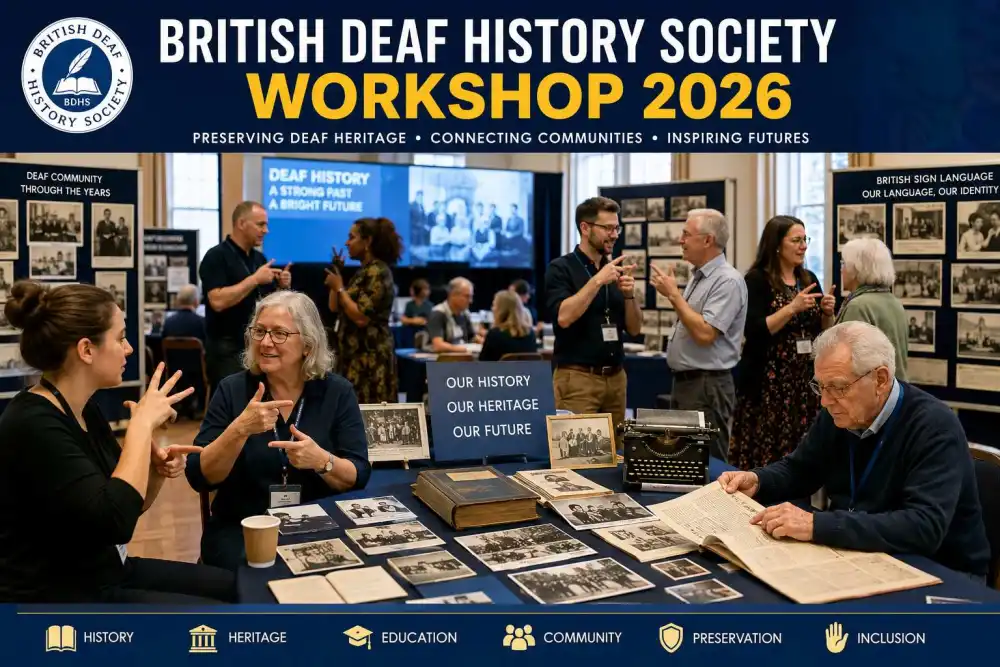
The British Deaf History Society (BDHS) has played a significant role in preserving and promoting the rich heritage of Deaf communities throughout the United Kingdom. Through educational workshops, historical exhibitions, research initiatives, and community engagement, the society continues to inspire people to appreciate the remarkable achievements, culture, and history of Deaf individuals. Every workshop organized by the society provides an opportunity for participants to explore historical records, learn about influential Deaf figures, and understand how Deaf culture has evolved over the centuries.
The British Deaf History Society Workshop 2026 offers a valuable opportunity for attendees to deepen their understanding of Deaf heritage while connecting with researchers, educators, historians, students, and members of the Deaf community. The event encourages knowledge sharing, meaningful discussions, and collaboration among participants who are passionate about preserving historical records and promoting awareness of Deaf culture.
Whether participants are attending to conduct research, support heritage projects, expand professional knowledge, or simply learn more about Deaf history, the workshop provides an engaging and informative environment. Through expert presentations, interactive sessions, and networking opportunities, attendees gain a comprehensive understanding of the historical journey of Deaf communities across Britain.
Understanding the Importance of Deaf History
Deaf history is much more than documenting events from the past. It represents the experiences, struggles, achievements, language, education, and cultural identity of Deaf people throughout generations. Learning about Deaf history helps preserve valuable stories that may otherwise be forgotten while inspiring future generations to appreciate their heritage.
Historical records reveal the evolution of sign language, educational reforms, employment opportunities, technological developments, and advocacy movements that have shaped modern Deaf communities. Workshops organized by the British Deaf History Society encourage participants to examine original documents, photographs, newspapers, personal stories, and historical artifacts that provide fascinating insights into Britain's Deaf heritage.
Preserving these historical resources ensures that future generations can continue learning from the experiences of earlier Deaf communities while recognizing the contributions made by Deaf individuals across education, arts, politics, sports, and social development.
Why Historical Preservation Matters
Preserving Deaf history benefits both the Deaf and hearing communities by promoting inclusion, education, and cultural understanding. Historical preservation helps document important milestones that have contributed to equal rights, improved accessibility, and wider recognition of British Sign Language.
The workshop highlights the importance of collecting historical documents, maintaining archives, recording oral histories, and supporting museums dedicated to Deaf heritage. Participants learn practical approaches for protecting historical materials while understanding the ethical responsibilities involved in preserving cultural records.
By documenting local and national Deaf history, communities can ensure that significant achievements remain accessible to researchers, educators, students, and future historians.
Educational Sessions and Expert Presentations
One of the major attractions of the workshop is its carefully planned educational programme. Experienced historians, researchers, archivists, and heritage professionals present informative sessions covering a wide range of topics related to Deaf history.
Presentations may explore:
- The origins of Deaf education in Britain
- Development of British Sign Language
- Historical Deaf schools
- Influential Deaf leaders
- Community organizations
- Historical archives and preservation methods
- Museum collections
- Family history research
- Historical publications
- Cultural identity
- Modern preservation initiatives
Each session combines academic research with practical examples, making complex historical topics accessible to audiences with varying levels of knowledge.
Interactive Learning Experience
Unlike traditional lectures, the workshop encourages active participation. Attendees are invited to ask questions, join discussions, examine historical materials, and contribute their own experiences.
Interactive activities may include:
- Archive exploration
- Historical document analysis
- Group discussions
- Community storytelling
- Heritage preservation demonstrations
- Research guidance
- Networking sessions
- Question-and-answer forums
These activities create a collaborative learning environment where participants can exchange ideas and develop a deeper appreciation of Deaf history.
Building Strong Community Connections
Community engagement remains one of the British Deaf History Society's primary objectives. The workshop provides an excellent opportunity for individuals from diverse backgrounds to meet and establish lasting professional and personal connections.
Participants include:
- Historians
- Academic researchers
- Teachers
- University students
- Museum professionals
- Archivists
- Genealogists
- Community volunteers
- Deaf community members
- Heritage organizations
Networking sessions encourage collaboration on future research projects, educational initiatives, and community preservation programmes.
Exploring Historical Archives
Historical archives serve as the foundation of Deaf history research. During the workshop, participants discover how archival collections preserve valuable information about past generations.
Examples of archival materials include:
- Historical photographs
- School records
- Personal letters
- Newspapers
- Community newsletters
- Organizational documents
- Meeting minutes
- Historical publications
- Family records
- Oral history recordings
Learning how these collections are managed helps participants appreciate the work involved in preserving cultural heritage.
The Role of British Sign Language in History
British Sign Language (BSL) represents an essential part of Deaf identity and cultural heritage. The workshop explores how BSL developed over time and how it became recognized as an important language within British society.
Historical discussions examine:
- Early sign language use
- Regional variations
- Educational policies
- Language recognition
- Community advocacy
- Cultural significance
Understanding the historical development of BSL provides valuable context for current accessibility and inclusion initiatives.
Inspiring Future Generations
Educating younger generations about Deaf history helps preserve cultural identity while encouraging greater respect for diversity and inclusion. Students attending the workshop gain valuable knowledge that supports academic research and personal development.
Teachers can also apply workshop insights to classroom learning by incorporating Deaf history into educational programmes, helping create more inclusive learning environments.
The workshop encourages continued curiosity, inspiring participants to conduct further research, volunteer with heritage organizations, or contribute historical materials to archives.
Research Opportunities
Researchers attending the workshop benefit from access to experienced historians and heritage professionals. Discussions often highlight emerging research areas, available archival resources, and collaborative opportunities.
Potential research topics include:
- Deaf education history
- Community organizations
- Family genealogy
- Historical newspapers
- Sign language evolution
- Social movements
- Accessibility legislation
- Cultural preservation
- Museum collections
- Local Deaf communities
Sharing research ideas helps strengthen the broader understanding of Britain's Deaf heritage.
Heritage Preservation Through Collaboration
Successful preservation depends upon cooperation between organizations, volunteers, educational institutions, museums, libraries, and local communities.
The workshop demonstrates how collaborative partnerships improve:
- Archive management
- Public awareness
- Educational outreach
- Historical exhibitions
- Digital preservation
- Community engagement
- Research accessibility
Working together ensures that important historical resources remain available for future generations.
Benefits of Attending the Workshop
Participants enjoy numerous educational and professional benefits throughout the event.
These include:
- Learning from experienced historians
- Exploring authentic historical materials
- Building professional networks
- Discovering research resources
- Understanding Deaf heritage
- Supporting preservation initiatives
- Improving historical knowledge
- Meeting community members
- Sharing personal experiences
- Encouraging lifelong learning
These benefits extend well beyond the workshop itself, motivating continued involvement in heritage preservation.
Looking Towards the Future
Technology continues transforming how historical records are preserved and shared. Digital archives, online exhibitions, virtual museums, and electronic databases allow wider public access to important historical collections.
The British Deaf History Society supports ongoing efforts to digitize valuable materials while ensuring their long-term preservation. Modern technology enables researchers from around the world to explore Britain's Deaf history more easily than ever before.
Future workshops are expected to continue embracing innovative preservation methods while maintaining the society's commitment to historical accuracy and community engagement.
The British Deaf History Society Workshop 2026 represents an outstanding opportunity to celebrate, preserve, and promote the remarkable history of Deaf communities throughout the United Kingdom. By bringing together historians, researchers, educators, students, and members of the Deaf community, the workshop creates a collaborative environment dedicated to learning, heritage preservation, and cultural appreciation.
Participants leave with a deeper understanding of Britain's Deaf history, stronger professional connections, and renewed enthusiasm for protecting historical records for future generations. Through expert presentations, interactive discussions, archival exploration, and community networking, the workshop continues the society's important mission of preserving Deaf heritage while inspiring future research and educational initiatives.
As awareness of Deaf history continues to grow, events like this play an essential role in ensuring that the stories, achievements, and cultural identity of Deaf communities remain accessible, respected, and celebrated for generations to come.
Key Event Highlights
Venue & Location Info
Timings
Entry Fees
Event Type
Estimated Turnout & Audience
Community Reviews
James Turner
Sarah Collins
Oliver Bennett
Emma Hughes
How was your experience?
Share your thoughts with the community. Your reviews help others discover the best local events.
Write a Review