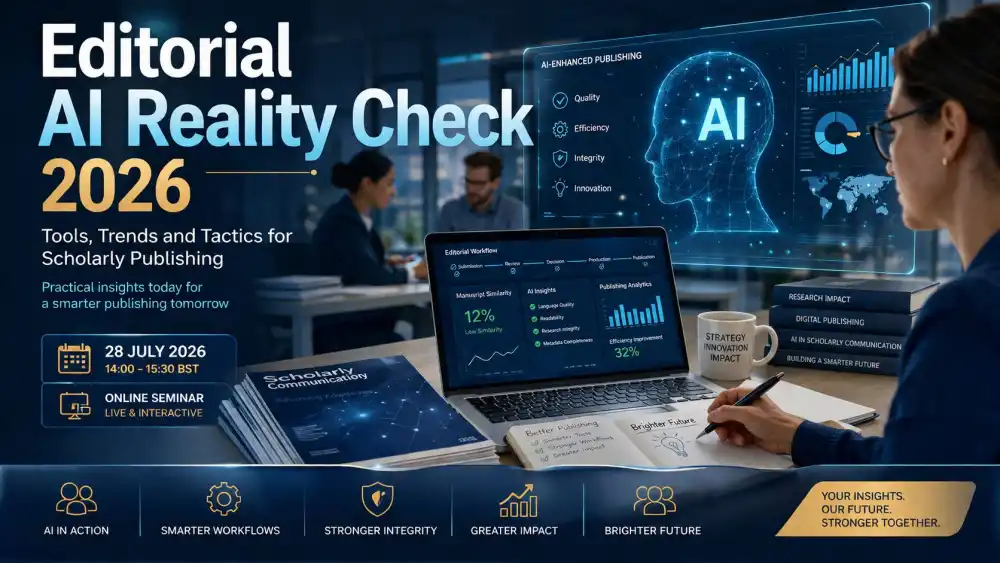
Artificial intelligence is transforming every stage of scholarly publishing, from manuscript submission and peer review to production, dissemination, and long-term preservation. As publishers adapt to new technologies, understanding the practical applications of AI has become essential. The Editorial AI Reality Check 2026 seminar, organized by the Association of Learned and Professional Society Publishers (ALPSP), provides publishing professionals with the knowledge and skills needed to navigate this rapidly evolving landscape.
This educational seminar focuses on practical AI implementation rather than theoretical concepts. Attendees will discover how publishers are successfully integrating AI into editorial workflows while maintaining high standards of quality, research integrity, and ethical publishing. Through expert-led presentations, live demonstrations, and interactive discussions, participants will gain valuable insights into the future of scholarly communication.
Event
Editorial AI Reality Check 2026 is a professional seminar designed for individuals working across the scholarly publishing industry. The event explores the opportunities and challenges presented by artificial intelligence and examines how AI can improve efficiency, accuracy, and collaboration within publishing organizations.
The seminar brings together experienced editors, publishing executives, technology specialists, and research communication experts to discuss practical strategies for adopting AI responsibly. Sessions will include case studies, demonstrations of AI-powered publishing tools, and guidance on implementing AI while ensuring transparency and editorial oversight.
Why Attend This Seminar?
Artificial intelligence is becoming an integral part of scholarly publishing, but many organizations are still determining how to adopt these technologies effectively. This seminar provides practical advice that attendees can apply immediately within their organizations.
Participants will learn how AI supports manuscript screening, peer review, metadata creation, language editing, plagiarism detection, accessibility improvements, and content discovery. The seminar also addresses common concerns related to copyright, ethics, data security, and maintaining trust in scholarly publishing.
Attendees will leave with actionable insights that help improve workflows while preserving editorial excellence and research integrity.
Key Learning Objectives
During the seminar, participants will:
- Understand the latest AI developments in scholarly publishing.
- Explore AI-powered editorial workflow solutions.
- Learn best practices for responsible AI adoption.
- Discover methods for improving operational efficiency.
- Examine ethical considerations surrounding AI use.
- Understand AI governance and policy development.
- Learn strategies for maintaining editorial quality.
- Explore future publishing trends and innovations.
Topics Covered
The seminar features presentations and discussions on a wide range of important topics, including:
- Artificial Intelligence in scholarly publishing
- Editorial workflow automation
- AI-assisted manuscript evaluation
- Peer review innovations
- Metadata generation and enhancement
- Research integrity and quality assurance
- Copyright and licensing considerations
- Responsible AI governance
- Accessibility improvements
- Digital publishing technologies
- Content discoverability
- Publishing analytics
- Editorial decision support
- AI ethics and transparency
- Future publishing strategies
Expert Speakers
Leading professionals from the publishing industry will share their expertise throughout the seminar. Speakers include experienced editors, publishing directors, technology consultants, research integrity specialists, and AI implementation experts.
Each session focuses on practical experiences, real-world examples, and lessons learned from successfully integrating AI into scholarly publishing operations.
Live Demonstrations
One of the highlights of the seminar is the series of live demonstrations showcasing AI-powered publishing tools.
Participants will see how artificial intelligence can assist with:
- Manuscript screening
- Reviewer recommendations
- Language enhancement
- Metadata generation
- Research discovery
- Content classification
- Editorial workflow management
- Automated reporting
These demonstrations provide valuable insights into how technology can enhance productivity while maintaining editorial standards.
Interactive Panel Discussions
The seminar includes panel discussions featuring industry leaders who will explore current challenges and opportunities facing scholarly publishers.
Topics include:
- Balancing AI and human expertise
- Building trust in AI-generated recommendations
- Managing organizational change
- Future regulatory developments
- Ethical publishing practices
- Sustainable technology adoption
Attendees are encouraged to participate by asking questions and sharing their experiences.
Networking Opportunities
Networking is an important aspect of the seminar. Participants will have opportunities to connect with professionals from across the publishing ecosystem, including:
- Academic publishers
- Society publishers
- University press representatives
- Journal editors
- Editorial managers
- Production specialists
- Technology providers
- Research institutions
- Libraries
- Publishing consultants
These connections often lead to future collaborations and knowledge sharing.
Benefits of Attending
Attendees will gain numerous professional benefits, including:
- Improved understanding of AI technologies.
- Practical implementation strategies.
- Enhanced editorial workflow knowledge.
- Better awareness of industry trends.
- Increased confidence in evaluating AI solutions.
- Access to expert advice and guidance.
- Opportunities to expand professional networks.
- Professional development and continuing education.
Responsible AI Adoption
The seminar places significant emphasis on responsible AI implementation. Speakers will discuss governance frameworks that ensure AI supports rather than replaces human editorial expertise.
Topics include:
- Human oversight
- Transparency requirements
- Bias reduction
- Data privacy
- Ethical decision-making
- Quality assurance
- Compliance with publishing standards
- Risk management
Responsible AI adoption helps maintain confidence among authors, reviewers, readers, and research institutions.
The Future of Scholarly Publishing
Artificial intelligence is expected to continue reshaping scholarly communication over the coming years. The seminar explores emerging trends that publishers should prepare for, including:
- Advanced editorial automation
- Intelligent content discovery
- Personalized research recommendations
- AI-assisted peer review
- Enhanced accessibility
- Predictive publishing analytics
- Semantic publishing technologies
- Automated compliance monitoring
Understanding these developments helps organizations remain competitive in an increasingly digital environment.
Who Should Attend?
This seminar is suitable for professionals across the scholarly publishing community, including:
- Academic publishers
- Journal editors
- Editorial assistants
- Managing editors
- Publishing directors
- Production managers
- Digital publishing specialists
- Research integrity officers
- Technology managers
- Library professionals
- Society publishers
- University press staff
- Publishing consultants
- Content strategists
- Innovation managers
Professional Development Opportunities
Attending Editorial AI Reality Check 2026 contributes to ongoing professional development by providing participants with current industry knowledge, practical skills, and exposure to innovative technologies.
Participants will gain confidence in evaluating AI solutions, developing implementation strategies, and supporting organizational digital transformation initiatives.
Why This Seminar Matters
As scholarly publishing becomes increasingly technology-driven, organizations must balance innovation with responsibility. Editorial AI Reality Check 2026 provides practical guidance that helps publishing professionals make informed decisions about adopting AI while maintaining editorial excellence, research integrity, and author trust.
The seminar offers a balanced perspective, combining technical expertise with practical publishing experience to ensure attendees understand both the opportunities and challenges presented by artificial intelligence.
Wrapping UP
Editorial AI Reality Check 2026 is an essential educational seminar for anyone involved in scholarly and professional publishing. Through expert presentations, interactive discussions, live demonstrations, and valuable networking opportunities, participants will gain the knowledge needed to navigate the future of AI-powered publishing with confidence.
Whether you are beginning your AI journey or expanding existing initiatives, this seminar provides actionable insights that support innovation, efficiency, and responsible publishing practices. Attendees will leave better prepared to implement AI solutions that enhanc
Key Event Highlights
- Live demonstration of AI tools for scholarly publishing
- Expert insights into AI trends shaping publishing in 2026
- Practical editorial workflow optimization
- Interactive Q&A with publishing specialists
- Best practices for responsible AI adoption
Venue & Location Info
Timings
Entry Fees
Event Type
Estimated Turnout & Audience
Community Reviews
James Turner
Sarah Collins
Oliver Bennett
Emma Hughes
How was your experience?
Share your thoughts with the community. Your reviews help others discover the best local events.
Write a Review