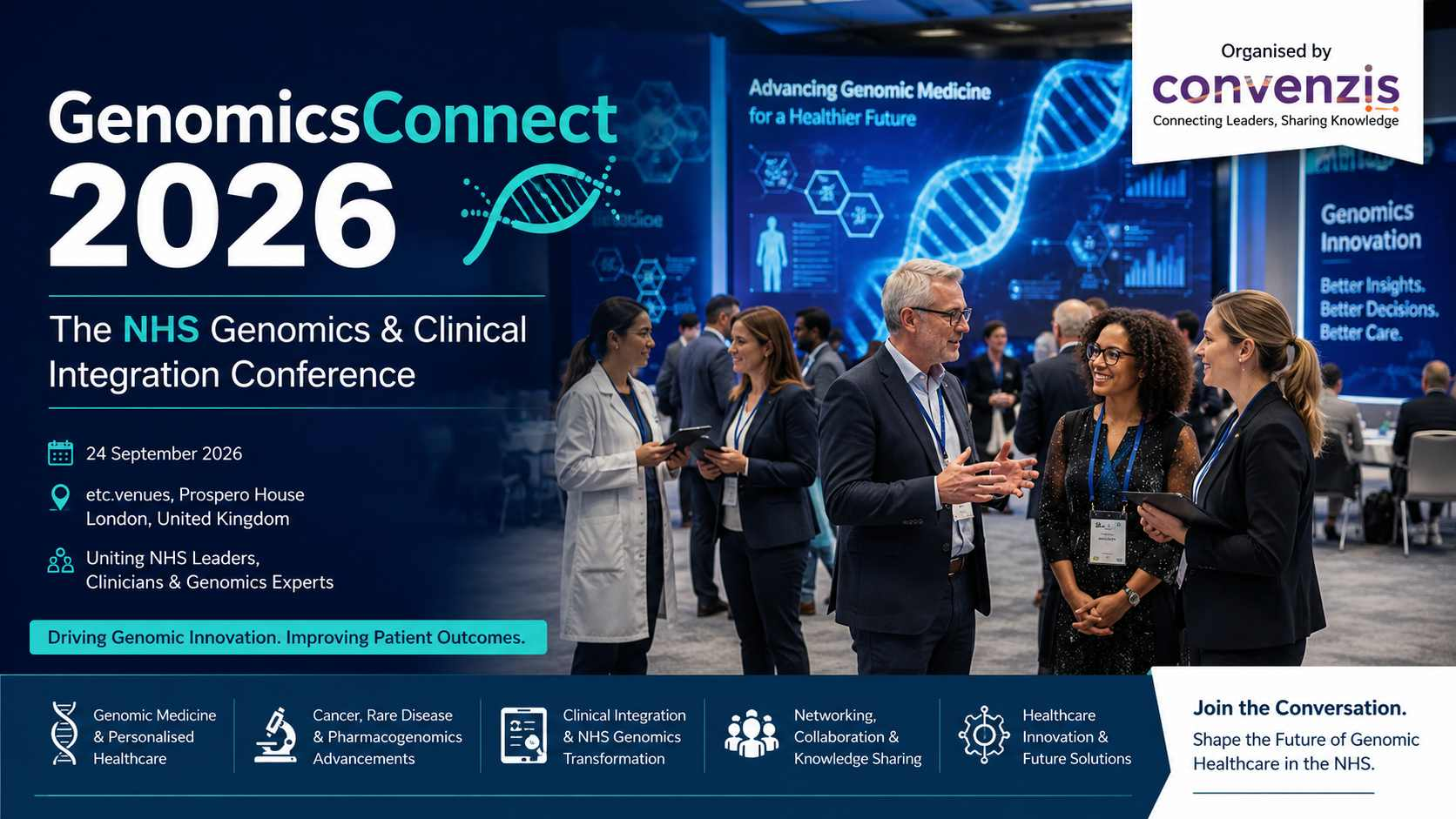
GenomicsConnect 2026 is a strategic healthcare conference designed to examine the rapidly developing role of genomics within the NHS and the wider UK healthcare landscape. Taking place on 24 September 2026 at etc.venues, Prospero House in London, the event provides an opportunity for healthcare professionals, clinical specialists, NHS leaders and organisations working across diagnostics and medical sciences to explore how genomic medicine is moving from specialist research environments into routine clinical practice.
The growth of genomic medicine is creating significant opportunities to improve diagnosis, treatment and long-term patient outcomes. Advances in genomic testing are helping healthcare professionals understand the biological causes of disease, identify patients who may benefit from targeted therapies and support increasingly personalised approaches to care. As genomic technologies continue to develop, the challenge for healthcare systems is no longer simply about generating genomic data. It is also about integrating that information effectively into clinical pathways, ensuring that professionals have the right skills and infrastructure, and making sure patients can benefit from innovation in a safe, equitable and sustainable way.
GenomicsConnect 2026 provides a dedicated platform for examining these developments and considering the practical requirements for successful clinical integration. The conference is particularly relevant to NHS professionals involved in genomics, diagnostics, pathology, cancer care, rare disease services, laboratory medicine and personalised treatment strategies.
Exploring the Changing Role of Genomics in Healthcare
Genomic medicine is becoming increasingly important across multiple areas of healthcare. The NHS Genomic Medicine Service has helped create a framework for integrating genomic testing into patient pathways, while advances in sequencing technologies and data analysis are expanding the potential applications of genomic information.
For healthcare providers, this transformation brings both opportunities and challenges. Genomic testing can support earlier and more accurate diagnosis, help identify inherited conditions and provide additional information that may influence treatment decisions. However, effective implementation requires collaboration between clinical teams, laboratories, scientists, technology specialists and healthcare leaders.
GenomicsConnect 2026 is positioned to support this conversation by bringing together professionals who are directly involved in the development and delivery of genomic healthcare. The event offers an environment where delegates can examine emerging approaches, share experiences and consider how genomic services can be integrated into everyday clinical practice.
Genomics and Personalised Medicine
One of the most important themes surrounding genomic healthcare is the development of personalised medicine. Traditional healthcare approaches often rely on broadly applicable treatment strategies, whereas genomic information can provide additional insight into how an individual patient may respond to particular therapies.
This is particularly significant in areas such as oncology, where genomic testing can help identify molecular characteristics of tumours and potentially guide treatment choices. Similar developments are taking place in rare disease diagnosis and pharmacogenomics, where genetic information may contribute to more informed decisions about medicines.
The conference provides a valuable setting for professionals to explore how personalised medicine is developing and what is required to translate scientific advances into practical clinical benefits. Delegates can consider the role of genomic testing in supporting better decision-making while also examining the infrastructure, governance and workforce requirements associated with implementation.
Supporting Cancer Care Through Genomic Innovation
Cancer is one of the most prominent areas where genomic medicine is influencing healthcare delivery. Genomic analysis can provide insights into the biological characteristics of cancers and may help clinicians understand which treatment approaches are most appropriate for particular patients.
The integration of genomics into cancer pathways requires close collaboration between oncologists, pathologists, genomic laboratories, molecular scientists and other healthcare professionals. It also depends on efficient testing pathways and the ability to interpret complex results in a clinically meaningful way.
GenomicsConnect 2026 offers an opportunity for professionals working in cancer and diagnostics to consider the role of genomic technologies within modern oncology. Discussions around clinical integration can help delegates understand how genomic information may contribute to more targeted and individualised approaches to cancer care.
Improving Rare Disease Diagnosis
Rare diseases can present significant diagnostic challenges for patients and healthcare professionals. Many conditions may involve complex symptoms that are difficult to identify through conventional diagnostic approaches. Genomic testing has the potential to support the identification of underlying genetic causes and help reduce lengthy diagnostic journeys.
The use of genomic technologies in rare disease pathways also highlights the importance of multidisciplinary collaboration. Clinicians, genetic counsellors, laboratory specialists and genomic scientists may all contribute to the diagnostic process.
By bringing together professionals from different areas of healthcare, GenomicsConnect 2026 can support knowledge exchange around the practical challenges and opportunities associated with genomic diagnosis. The event is relevant to professionals seeking to understand how genomic services can be embedded more effectively into patient pathways.
The Importance of Clinical Integration
Generating genomic data is only one part of the healthcare transformation. The information must also be incorporated into clinical workflows in ways that are accessible, reliable and useful to healthcare professionals.
Clinical integration involves multiple considerations, including laboratory capacity, digital infrastructure, data interpretation, workforce development and communication between specialist services and frontline teams. Healthcare organisations must also consider how genomic information is stored, accessed and incorporated into patient records.
The conference focuses on the broader journey from genomic innovation to practical healthcare delivery. This makes it particularly relevant to NHS leaders and professionals who are responsible for planning, implementing or managing genomic services.
Data, Technology and Healthcare Infrastructure
The growth of genomic medicine is closely connected with advances in digital technology. Modern genomic testing can generate significant volumes of complex data, creating a need for robust systems that can support analysis, interpretation and secure information management.
Healthcare organisations must therefore consider how genomic data interacts with existing digital infrastructure. Effective systems can help professionals access relevant information and support more coordinated decision-making across different parts of the healthcare system.
Technology leaders and healthcare professionals can use events such as GenomicsConnect 2026 to explore the relationship between genomics and digital transformation. The conference provides an opportunity to consider how technology can support the practical delivery of genomic medicine while maintaining appropriate standards of security and governance.
Developing the Genomics Workforce
Successful genomic integration also depends on having a skilled workforce. As genomic testing becomes more common, healthcare professionals across different disciplines may need greater awareness of genomics and its relevance to clinical practice.
Specialist genomic professionals also play a critical role in interpreting complex results and supporting clinical teams. Training, education and professional development are therefore important components of the wider genomic transformation.
The event can provide a useful forum for healthcare professionals to learn from peers and understand how organisations are responding to changing workforce requirements. By sharing experiences, delegates can explore approaches to skills development and multidisciplinary collaboration.
Knowledge Sharing and Professional Networking
A key benefit of attending GenomicsConnect 2026 is the opportunity to connect with professionals working across different areas of healthcare. Genomics is inherently multidisciplinary, bringing together clinical, scientific, technological and operational expertise.
Networking can help delegates exchange practical experiences, identify emerging trends and develop professional relationships. For NHS organisations, collaboration can also support the sharing of ideas about service improvement and implementation.
The conference environment encourages delegates to engage with topics that extend beyond individual specialties. This wider perspective can help professionals understand how genomics fits into the broader transformation of healthcare delivery.
A Strategic Forum for NHS Healthcare Professionals
GenomicsConnect 2026 is particularly relevant to NHS professionals who are involved in planning and delivering modern diagnostic and clinical services. The event can help delegates consider the strategic implications of genomic medicine and how organisations can prepare for continued technological development.
For senior leaders, the conference provides an opportunity to examine the operational and strategic considerations associated with genomic integration. For clinical and scientific professionals, it offers a platform for exploring developments in diagnostics and personalised healthcare.
The event also creates opportunities for delegates to engage with peers and consider how emerging genomic approaches could contribute to better patient outcomes.
Building the Future of Genomic Healthcare
The future of genomic medicine will depend on successful collaboration between healthcare organisations, clinical teams, scientific communities and technology specialists. As genomic testing becomes increasingly integrated into patient pathways, healthcare systems will need to continue adapting their infrastructure, workforce and processes.
GenomicsConnect 2026 provides a timely opportunity to examine this transformation. The conference brings together themes including genomic medicine, clinical integration, diagnostics, personalised treatment and healthcare innovation, making it relevant to professionals who want to understand the direction of genomic healthcare in the NHS.
By attending, delegates can gain broader insight into the challenges associated with implementing genomic services while exploring the opportunities created by scientific and technological advances. The event also supports professional knowledge exchange and networking among individuals working in related areas.
With Convenzis' focus on bringing together senior NHS and public-sector professionals, the conference is positioned as a strategic forum for discussions around healthcare transformation. Convenzis states that its conferences are designed to connect leaders and professionals to share knowledge and support improvements in public services, while the GenomicsConnect event itself highlights the increasing role of genomic medicine across cancer, rare disease diagnostics, pharmacogenomics and personalised treatment.
Overall, GenomicsConnect 2026 offers an important platform for professionals seeking to understand how genomics is shaping the future of healthcare. From improving diagnostic pathways and supporting personalised medicine to strengthening clinical integration and digital infrastructure, genomic technologies have the potential to influence many aspects of patient care.
For NHS leaders, clinicians, healthcare scientists, genomic specialists and diagnostics professionals, the conference provides an opportunity to explore these developments in a focused professional environment. The combination of strategic discussion, knowledge sharing and networking can help delegates gain a clearer understanding of the opportunities and practical considerations associated with the next generation of genomic healthcare.
As the NHS continues to develop its genomic capabilities, events such as GenomicsConnect 2026 can play an important role in bringing together the people and expertise needed to support sustainable innovation. The conference therefore represents a valuable opportunity to engage with the evolving landscape of genomic medicine and consider how advances in science and technology can be translated into meaningful improvements for patients and healthcare services.
Key Event Highlights
Venue & Location Info
Timings
Entry Fees
Event Type
Estimated Turnout & Audience
Community Reviews
James Turner
Sarah Collins
Oliver Bennett
Emma Hughes
How was your experience?
Share your thoughts with the community. Your reviews help others discover the best local events.
Write a Review