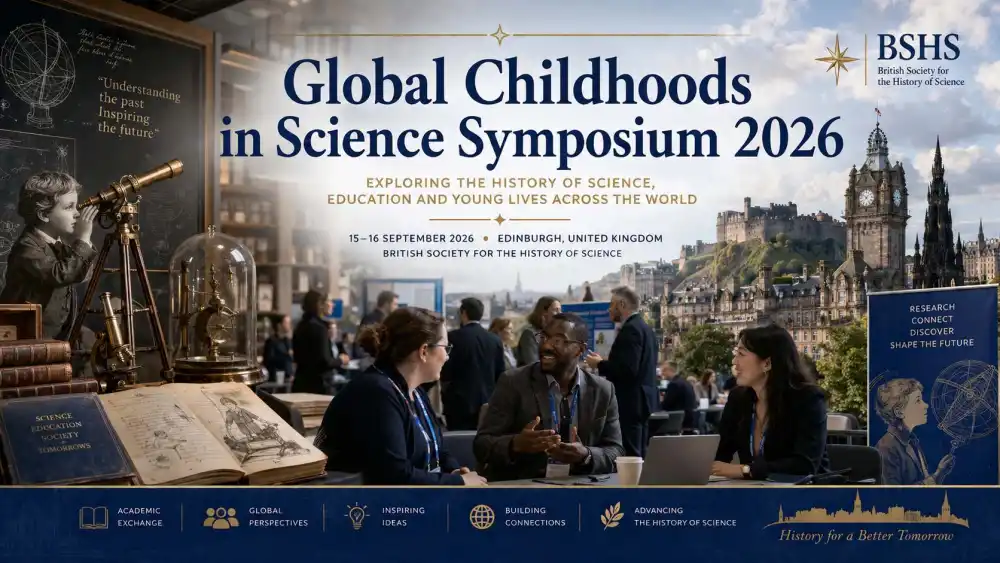
The Global Childhoods in Science Symposium 2026 is a premier academic conference that brings together historians, researchers, educators, museum professionals, archivists, postgraduate students, and science communication experts to explore the historical relationship between childhood and science across different cultures and time periods. Supported by the British Society for the History of Science (BSHS), this symposium provides a collaborative platform for sharing groundbreaking research, encouraging interdisciplinary discussions, and building international academic partnerships.
Held in Edinburgh, one of the United Kingdom's leading centres for education and historical research, the symposium offers participants an inspiring environment to discuss how science, technology, medicine, and education have influenced childhood experiences throughout history.
The symposium focuses on understanding how children have participated in, experienced, and contributed to scientific knowledge over centuries. Researchers from diverse disciplines will present original studies that examine childhood education, scientific institutions, museums, public engagement, colonial science, medical history, and technological innovation.
Attendees will have the opportunity to engage with internationally recognised scholars while discovering new perspectives on historical research methodologies and interdisciplinary collaboration.
Why Attend This Event?
Participating in the Global Childhoods in Science Symposium provides numerous professional and academic benefits. The event offers access to high-quality research presentations, networking opportunities, and collaborative discussions designed to inspire future research projects.
Whether you are an established academic or an early-career researcher, the symposium creates valuable opportunities to exchange ideas with experts from universities, museums, archives, and cultural organisations from around the world.
Key Themes
The symposium explores several important themes within the history of science, including:
- Childhood and scientific education
- History of medicine and public health
- Museums and science communication
- Colonial science and global knowledge exchange
- Scientific instruments and material culture
- Gender and childhood in science
- Environmental history
- Digital humanities and historical archives
- Technology and innovation
- Public engagement with science
These themes encourage interdisciplinary discussions that connect historical research with modern educational and scientific challenges.
Inspiring Keynote Presentations
The conference features keynote speakers who are internationally recognised experts in the history of science and medicine. Their presentations will provide valuable insights into current research trends, emerging historical perspectives, and future opportunities for collaborative scholarship.
Keynote lectures are designed to stimulate discussion while inspiring attendees to develop innovative research ideas within their own areas of expertise.
Research Paper Sessions
Throughout the symposium, participants will attend multiple parallel sessions featuring peer-reviewed research papers presented by scholars from universities and research institutions worldwide.
Topics include:
- Scientific education in different historical periods
- Childhood and medical history
- Scientific publishing
- Museum collections
- Historical archives
- History of technology
- Science communication
- Global scientific networks
- Educational reforms
- Cultural history of science
Each session concludes with audience questions and scholarly discussion, encouraging constructive academic dialogue.
Interactive Panel Discussions
Expert panel discussions allow delegates to hear diverse perspectives on contemporary historical research. These conversations examine methodological challenges, interdisciplinary collaboration, funding opportunities, and future research priorities.
Audience participation is encouraged, creating engaging discussions between experienced academics and early-career researchers.
Networking Opportunities
Networking is one of the most valuable aspects of the symposium.
Delegates will have opportunities to connect during:
- Registration sessions
- Coffee breaks
- Lunch meetings
- Evening receptions
- Informal discussion groups
- Collaborative workshops
These networking sessions often lead to research partnerships, journal publications, conference collaborations, grant applications, and international academic projects.
Professional Development
The symposium supports professional growth through workshops covering:
- Academic publishing
- Research funding
- Grant writing
- Digital humanities
- Archive management
- Museum interpretation
- Public engagement
- Science communication
Participants gain practical knowledge that strengthens both research and career development.
Opportunities for Early Career Researchers
Special sessions are designed for postgraduate students and early-career academics.
These include:
- Poster presentations
- Research feedback sessions
- Career advice
- Publishing guidance
- Networking with senior scholars
- Funding information
- Collaborative project discussions
The symposium provides an excellent environment for emerging researchers to build confidence and establish professional connections.
Museum and Archive Perspectives
Museums and archives play an essential role in preserving scientific heritage.
Experts from cultural institutions will discuss:
- Collection management
- Exhibition development
- Digital archives
- Historical preservation
- Public education
- Community engagement
Participants will learn how historical collections continue to support research and public understanding of science.
International Collaboration
The symposium welcomes delegates from across Europe, North America, Asia, Australia, and other regions.
International participation enriches discussions by introducing different historical perspectives, research methodologies, and collaborative opportunities.
Cross-border partnerships remain one of the conference's greatest strengths.
Benefits of Attending
Attendees will benefit from:
- Learning from leading historians
- Presenting original research
- Receiving expert feedback
- Building professional networks
- Discovering funding opportunities
- Exploring interdisciplinary research
- Meeting international scholars
- Improving presentation skills
- Developing publication opportunities
- Enhancing career prospects
Who Should Attend?
This symposium is ideal for:
- Historians
- Academic researchers
- University lecturers
- Postgraduate students
- Museum professionals
- Archivists
- Librarians
- Science communicators
- Heritage specialists
- Education researchers
Professionals from interdisciplinary backgrounds will also find valuable insights throughout the programme.
Venue Experience
Edinburgh offers an exceptional setting for academic events, combining historic architecture with world-class educational institutions.
Participants can explore:
- Museums
- Historic libraries
- Scientific collections
- Cultural attractions
- University campuses
- Heritage sites
The city's academic atmosphere enhances the overall conference experience.
Why the British Society for the History of Science?
The British Society for the History of Science has supported historical research for decades through conferences, publications, grants, workshops, and educational initiatives.
Its commitment to promoting excellence in the history of science makes this symposium an outstanding opportunity for scholars seeking meaningful academic engagement and professional development.
Final Thoughts
The Global Childhoods in Science Symposium 2026 offers a unique opportunity to explore innovative historical research while connecting with an international community of scholars. Through keynote lectures, research presentations, panel discussions, networking sessions, and professional development workshops, attendees will gain valuable knowledge, establish lasting collaborations, and contribute to the continued advancement of the history of science.
Whether you are presenting original research, seeking academic partnerships, or expanding your understanding of historical scholarship, this symposium provides an inspiring environment where ideas, discoveries, and collaborations shape the future of research in the history of science.
Key Event Highlights
Venue & Location Info
Timings
Entry Fees
Event Type
Estimated Turnout & Audience
Community Reviews
James Turner
Sarah Collins
Oliver Bennett
Emma Hughes
How was your experience?
Share your thoughts with the community. Your reviews help others discover the best local events.
Write a Review