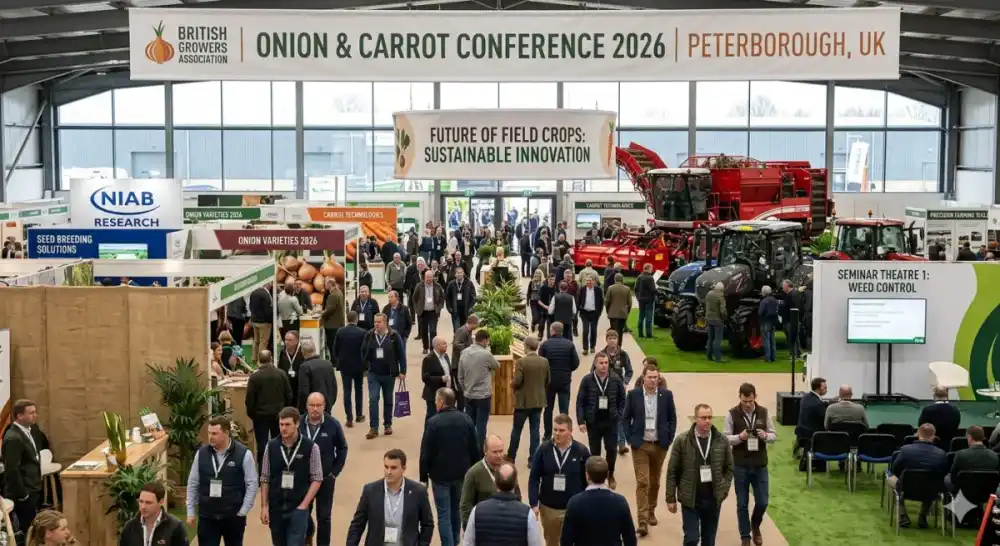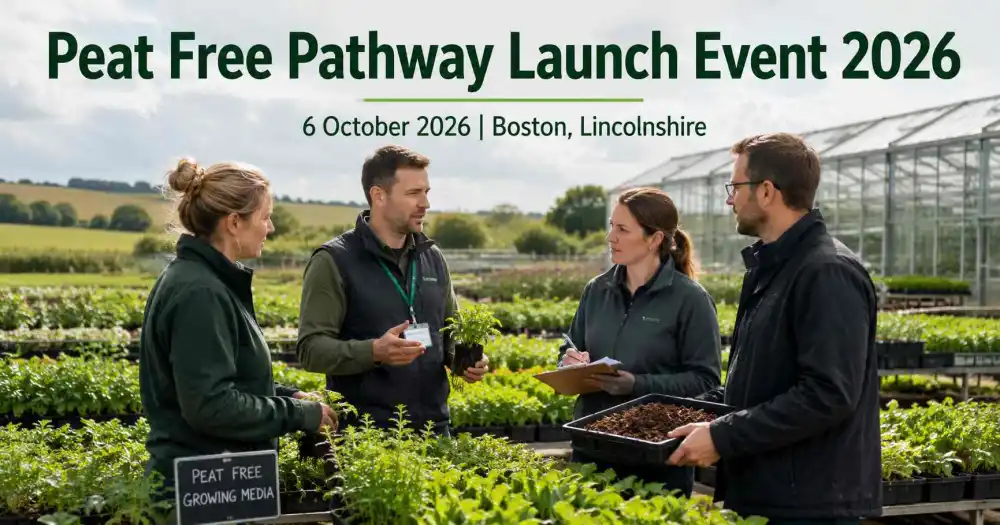
The Peat Free Pathway Launch Event 2026 is an important upcoming gathering for the UK fresh produce and horticulture sector, taking place on Tuesday, 6 October 2026, at Fountain Plants Ltd in Boston, Lincolnshire. The event is designed to bring together growers, retailers, researchers, policymakers, investors, technology providers and supply-chain partners to discuss the practical transition towards peat-free horticulture.
Organised around the newly established Peat-Free Pathway initiative, the event aims to create stronger coordination between different parts of the fresh produce industry. Rather than treating peat replacement as a simple change of material, the initiative recognises that the transition involves production performance, crop quality, food security, research, investment, infrastructure, regulation and commercial resilience.
The event is particularly relevant for professionals who want to understand where the industry currently stands, what challenges remain and what practical action is required to support a successful transition. The organisers describe the Pathway as an umbrella programme designed to align research, innovation and delivery across horticultural supply chains.
Understanding the Peat-Free Pathway
The move towards peat-free growing has become an increasingly important subject within horticulture. Peat has traditionally played a significant role in growing media because of its physical and horticultural properties. However, environmental concerns surrounding peat extraction have encouraged the development and adoption of alternative growing media.
For commercial fresh produce businesses, however, replacing peat is not simply a matter of selecting another material. Growing systems must continue to deliver reliable crop performance, consistency, quality and food safety. Alternatives also need to be commercially practical and available at the scale required by the industry.
The Peat-Free Pathway has therefore been developed to provide a coordinated approach. According to British Growers Association, the initiative brings together sector-specific Fresh Produce Roadmaps that identify practical steps, shared challenges and innovation priorities for different crop categories.
The October launch event provides an opportunity to examine these roadmaps and discuss how they can support practical progress.
A Meeting Point for the Fresh Produce Industry
One of the strongest features of the event is its cross-sector approach. The organisers expect the launch to bring together a broad range of stakeholders involved in horticulture and fresh produce.
Growers will be able to discuss real production challenges and share experiences from trials and commercial operations. Researchers can identify areas where further investigation is required. Suppliers and technology businesses can demonstrate potential solutions, while policymakers and other stakeholders can gain a clearer understanding of the industry's requirements.
This collaborative approach is particularly valuable because different horticultural crops can face very different challenges when transitioning away from peat. A solution that works effectively for one crop or production system may not automatically work for another.
The event therefore provides an environment where these differences can be discussed openly and where participants can identify areas requiring further research, funding or collaboration.
Fresh Produce Roadmaps
A major component of the Peat-Free Pathway is its collection of Fresh Produce Roadmaps. These roadmaps have been developed around specific crop sectors and are intended to establish practical pathways towards reducing and eventually eliminating reliance on peat.
The published roadmap programme covers areas including herbs, propagation, brassicas, leafy salads and mushrooms.
These roadmaps are important because they move the conversation from broad environmental objectives towards specific operational questions. Growers need to know which alternatives are available, how those alternatives perform, what trials are necessary, how supply chains may change and what investment is required.
The October event will provide a valuable opportunity for participants to examine these priorities and understand where individual sectors currently stand.
Research and Innovation
Research and innovation are central to the transition towards peat-free horticulture. The event is expected to encourage collaboration between commercial growers, researchers, technology companies and other organisations working on alternative growing systems.
New growing media, recycled materials, monitoring technologies, sensors and production techniques could all contribute to the transition. However, innovation needs to be tested in realistic commercial conditions before widespread adoption.
The Peat-Free Pathway has also established a Trials Register, designed to improve visibility of ongoing peat-free research and trials. The register can help identify existing projects, reduce duplication and highlight areas where further research is needed.
This could become particularly valuable as businesses increasingly seek evidence-based solutions rather than relying on assumptions about which alternatives will work best.
Practical Knowledge Exchange
The event is not simply intended to present information. It is designed as a knowledge-exchange opportunity where participants can discuss challenges and potential solutions.
Practical knowledge is especially important for growers because changes to growing media can influence crop establishment, irrigation, nutrition, disease management, labour requirements and overall production costs.
By bringing producers and solution providers together, the event can help ensure that innovation is connected to real-world requirements. Growers can explain their operational challenges, while technology and growing-media companies can understand where their products and services may provide value.
This two-way conversation can help accelerate the development of solutions that are both environmentally responsible and commercially viable.
Networking Opportunities
Networking is another important element of the Peat Free Pathway Launch Event. The organisers intend to create opportunities for stakeholders from different areas of the supply chain to connect.
For growers, this can provide access to researchers, suppliers and other producers dealing with similar challenges. For technology providers and manufacturers, it creates an opportunity to meet businesses that need practical solutions.
The event may also help strengthen relationships between industry organisations and policymakers. Since the transition involves regulatory, environmental and economic considerations, constructive communication between these groups will be important.
The event's emphasis on collaboration makes it suitable for professionals who want to build partnerships as well as those looking for technical information.
Facility Tours at Fountain Plants
The event's location also provides an additional practical attraction. Fountain Plants Ltd is hosting the event at its Boston facility, and complimentary facility tours are available to attendees through the event registration process.
A facility tour can provide useful context for discussions about growing media and commercial horticulture. Instead of considering sustainable production purely from a theoretical perspective, participants can see an operating horticultural environment and discuss the practical realities of production.
For growers, researchers and suppliers, this type of experience can help connect technical discussions with real production conditions.
Why the Event Matters
The transition towards peat-free production is likely to remain a significant issue for UK horticulture. The industry needs to balance environmental objectives with food production, commercial viability and supply-chain resilience.
British Growers Association highlights the need to protect productivity, food security and business resilience while coordinating the transition.
This makes the Peat Free Pathway Launch Event particularly relevant at a time when growers and supply-chain businesses are seeking clarity about future requirements.
The event can help participants understand not only the environmental reasons for reducing peat use, but also the practical steps required to make alternative systems work effectively at commercial scale.
Who Should Attend?
The event is particularly relevant to commercial fresh produce growers and horticultural businesses. It will also be useful for researchers working on growing media, crop production, sustainability and agricultural innovation.
Technology companies can benefit by learning more about the challenges facing growers and identifying potential opportunities for collaboration. Growing-media manufacturers and suppliers can use the event to engage directly with businesses looking for alternative solutions.
Retailers, policymakers and investors can also gain a broader understanding of the technical and commercial issues involved in the transition.
For students and early-career professionals interested in sustainable horticulture, the event could provide useful exposure to current industry discussions and emerging technologies.
Building a More Resilient Horticulture Sector
Sustainability is only one part of the challenge. Any successful transition must also support a productive and resilient horticultural sector.
The Peat-Free Pathway recognises the importance of coordinated research, investment and knowledge exchange. Its approach is intended to identify the support required by different parts of the industry and the timelines necessary to achieve meaningful progress.
This is particularly important for smaller businesses that may not have the same research and development resources as larger organisations. Sharing knowledge and coordinating research can help reduce unnecessary duplication and make innovation more accessible.
The launch event therefore represents more than a single industry seminar. It is an opportunity to establish stronger connections between stakeholders working towards a common objective.
What Attendees Can Expect
Attendees can expect a combination of industry discussion, technical insight, networking and practical engagement. The programme is focused on understanding current progress, identifying remaining barriers and discussing the next steps for the sector.
The event is scheduled from 09:00 to 16:00, providing a full working day for presentations, discussions and networking.
Participants should come prepared to exchange ideas and discuss practical experiences. The value of the event will depend not only on presentations but also on the conversations between people working across different parts of the horticultural supply chain.
Wrapping Up
The Peat Free Pathway Launch Event 2026 offers an important opportunity for the UK horticulture and fresh produce community to come together around one of the sector's most significant sustainability challenges.
Taking place at Fountain Plants Ltd, Boston, on 6 October 2026, the event will connect growers, researchers, policymakers, suppliers, retailers and other stakeholders. Its focus on practical roadmaps, innovation, trials, collaboration and knowledge exchange makes it highly relevant to businesses preparing for the future of sustainable horticulture.
For anyone involved in fresh produce production or the development of sustainable growing systems, the event provides an opportunity to understand current industry priorities, explore emerging solutions and establish valuable professional connections. With the UK horticulture sector working to maintain productivity while reducing environmental impact, coordinated initiatives such as the Peat-Free Pathway can play an important role in turning sustainability ambitions into practical action.
Key Event Highlights
- Launch of the industry-led Peat-Free Pathway initiative
- Fresh produce roadmaps for the transition away from peat
- Practical discussions on research, innovation and delivery
- Networking between growers, researchers, suppliers and policymakers
- Facility tours and opportunities to explore sustainable growing solutions
Venue & Location Info
Timings
Entry Fees
Event Type
Estimated Turnout & Audience
Community Reviews
How was your experience?
Share your thoughts with the community. Your reviews help others discover the best local events.