
Discover All Events
Explore 1 premium experiences in all locations
Promoted
List Your Next Big Event
Reach millions of attendees by showcasing your conferences, workshops, or exhibitions on the world's most trusted event platform.
Create Your Event Now
FEATURED
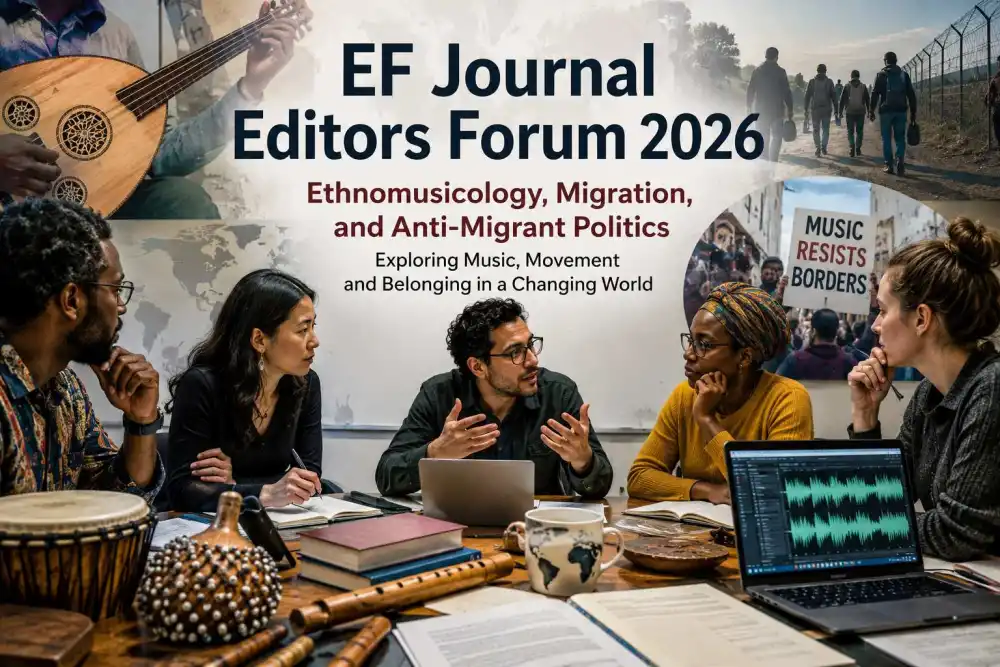
EF Journal Editors Forum 2026
The EF Journal Editors Forum 2026 is a significant academic publishing initiative connected with Ethnomusicology Forum, the journal associated with the British Forum for Ethnomusicology. The 2026 edition focuses on the theme “Ethnomusicology, Migration, and Anti-Migrant Politics” and invites contributions examining how migration shapes musical worlds, cultural practices, creative labour and ethnomusicological research.
Unlike a conventional conference taking place at a physical venue, the Editors Forum is designed as a publication-focused academic initiative. Contributors are invited to submit short pieces of up to 2,500 words, including essays, think pieces, position papers and experimental forms of writing. The initiative provides a platform for exploring timely issues affecting ethnomusicology and the wider cultural world.
The 2026 forum is particularly relevant because migration continues to influence musical communities, artistic practice, cultural identity and academic research. At the same time, contemporary migration is increasingly shaped by border restrictions, political hostility, surveillance, displacement and exclusion. The Editors Forum encourages contributors to examine these issues through musical and ethnomusicological perspectives.
Understanding Migration Through Music And Ethnomusicological Research
Migration has always played an important role in the development of musical cultures. People carry songs, instruments, performance traditions and musical knowledge as they move between places. Migration can create new musical communities, transform existing traditions and generate new forms of cultural expression.
Ethnomusicology provides valuable methods for studying these processes. Researchers can examine how musicians adapt to new environments, how audiences respond to changing cultural influences and how musical traditions are transformed through movement.
The EF Journal Editors Forum invites contributors to examine migration in its many forms. This includes voluntary migration, forced displacement, diaspora, exile and other experiences involving movement or restricted mobility.
The forum also encourages discussion of the everyday lives of musicians and audiences whose experiences are shaped by migration. Through these perspectives, music can be understood not simply as entertainment but as a meaningful part of social life, identity and belonging.
Examining The Impact Of Anti-Migrant Politics On Musical Communities
A central concern of the 2026 forum is the relationship between music and anti-migrant politics. Political debates about migration can influence cultural life in profound ways.
Migrants, refugees and displaced communities may experience restrictions, discrimination and social hostility. These conditions can affect where musicians are able to perform, how cultural practices are represented and whether communities can maintain connections across borders.
The Editors Forum encourages research into how music is created and experienced in contexts shaped by anti-migrant rhetoric, policing and border regimes. This provides an opportunity to explore the relationship between political structures and musical practice.
Music may also become a way of challenging exclusion. Musicians, activists and communities can use performances, songs and cultural events to resist deportation, detention and discriminatory policies. The forum specifically welcomes work examining music as part of movements resisting exclusion and injustice.
Exploring Displacement Diaspora And The Transformation Of Musical Worlds
Displacement can significantly affect musical communities. When people are forced to leave their homes, they may carry musical traditions with them while also encountering new cultural environments.
These experiences can produce complex musical transformations. A musical practice may retain connections to a place of origin while also adapting to new circumstances. New hybrid forms may emerge as musicians interact with other communities.
The Editors Forum welcomes research on migrant, refugee and diasporic musical practices, particularly when these practices exist under conditions of surveillance, precarity or forced immobility.
Such research can help explain how music functions during periods of uncertainty. Musical practices may provide continuity, create community and help people maintain cultural relationships despite physical separation from their places of origin.
Addressing The Ethical Challenges Of Studying Migration And Music
Research involving migration often raises important ethical questions. Researchers may work with people who have experienced displacement, violence, detention or uncertainty about their legal status.
This requires careful consideration of research methods, documentation and representation. Scholars must think about how information is collected, how identities are protected and how research findings may affect participants.
The 2026 Editors Forum welcomes contributions examining the politics of documentation, legality and asylum within ethnomusicology. These themes are particularly important because research itself can become connected to systems of classification and institutional power.
Researchers may also need to consider how academic categories influence public understanding of migrants and migrant communities. Responsible scholarship should avoid simplifying complex experiences or presenting communities only through narratives of crisis.
Considering Music As A Form Of Cultural Belonging
Music can play an important role in the creation of belonging. People may use music to maintain connections with family, community and cultural heritage.
At the same time, musical practices can challenge ideas about who belongs in a particular place. A migrant musical tradition may become part of a new cultural environment while retaining connections to another location.
The Editors Forum encourages discussion of how musical categories such as “traditional,” “authentic,” “national” and “foreign” can influence perceptions of migrant music.
These labels may sometimes create boundaries between communities. They can also determine how music is promoted, studied and represented by cultural institutions.
By examining these categories critically, ethnomusicologists can explore how cultural belonging is constructed through sound, performance and public discourse.
Studying Music In Border Zones Humanitarian Settings And Carceral Spaces
Migration is often shaped by physical and political boundaries. Borders, detention centres, refugee camps and humanitarian environments can all influence how people experience movement and belonging.
Music may exist in these environments in different ways. It may offer emotional support, provide a form of communication or create moments of community.
The Editors Forum invites work examining music-making in humanitarian, carceral and border-zone settings. These environments can reveal the relationship between sound and systems of power.
Research may consider how musical activities are enabled or restricted in such spaces. It may also explore how musicians and communities respond creatively to conditions that limit their freedom of movement.
Exploring The Role Of Digital Platforms In Migration Debates
Digital technology has transformed the way music circulates across borders. Musicians can share performances internationally, audiences can access music from different communities and diasporic networks can remain connected through online platforms.
However, digital spaces can also amplify hostility and misinformation. Social media and online media ecosystems may contribute to anti-migrant sentiment while also providing tools for resistance and advocacy.
The 2026 forum welcomes contributions examining digital platforms, media ecosystems and the amplification or contestation of anti-migrant politics.
This makes the event relevant to researchers studying digital music cultures, online communities and the relationship between technology and political communication.
Welcoming Contributions From Diverse Academic And Creative Communities
The EF Journal Editors Forum is open to a broad range of contributors. The organisers particularly welcome contributions from early-career scholars, musicians, artists, activists and public scholars.
The call also encourages submissions from authors working outside the United Kingdom and the United States. This broad approach can help expand the range of perspectives represented in discussions about migration and music.
Contributions may take different forms. Traditional academic essays are welcome, but the forum also invites think pieces, position papers and experimental approaches to writing.
This flexibility creates opportunities for contributors who may not work within conventional academic formats. It also reflects the diverse ways in which migration and musical life can be studied and experienced.
Connecting Historical Migration With Contemporary Musical Life
Migration is not only a contemporary issue. Historical movement has played a major role in shaping musical traditions around the world.
Researchers can examine how migration has influenced music across different historical periods. They may also explore how historical movements continue to affect contemporary musical identities.
The Editors Forum welcomes contributions using migration as a method of analysis in historical ethnomusicology and global music history.
This perspective can challenge the idea that musical cultures are fixed within national borders. Instead, it highlights the movement of people, instruments, ideas and sounds across regions and generations.
Five Key Highlights Of The EF Journal Editors Forum 2026
Focuses on ethnomusicology, migration and anti-migrant politics.
Examines music-making within conditions of displacement and exclusion.
Welcomes contributions from scholars, musicians, artists and activists.
Encourages essays, think pieces and experimental writing formats.
Explores ethical, political, cultural and methodological research questions.
Who Should Participate In This Academic Initiative
The Editors Forum is particularly relevant to ethnomusicologists researching migration, diaspora, borders and cultural identity. Music researchers interested in social and political issues may also find the theme highly relevant.
Early-career scholars can benefit from the opportunity to contribute to a publication-focused academic initiative. Musicians, artists and activists may provide perspectives that complement conventional academic research.
Public scholars and researchers working outside traditional university environments are also encouraged to engage with the topic.
The broad range of potential contributors reflects the complexity of migration itself. Musical experiences are not limited to academic institutions, and valuable insights can come from people working directly within communities and cultural movements.
Wrapping Up
The EF Journal Editors Forum 2026 provides an important platform for exploring the relationship between ethnomusicology, migration and anti-migrant politics. Organised in association with the British Forum for Ethnomusicology and the journal Ethnomusicology Forum, the initiative encourages contributions that examine the ways migration shapes musical life, cultural identity, research practice and creative work.
The forum's focus extends across displacement, diaspora, borders, surveillance, exclusion, digital media, cultural policy and musical resistance. It also creates space for diverse contributors, including early-career scholars, musicians, artists, activists and public intellectuals.
As a publication-focused academic initiative scheduled for late 2026, the forum represents an opportunity to engage with one of the most important issues affecting contemporary musical and cultural life. By examining migration through sound and ethnomusicology, contributors can explore how music reflects movement, belonging, exclusion and resistance in a rapidly changing world.
Ethnomusicology Forum Journal / Online Publication,
Milton Keynes
11
0
FEATURED
Oct 15, 2026
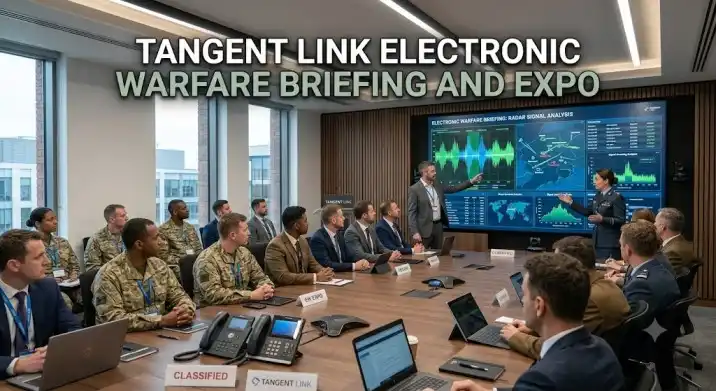
Tangent Link Electronic Warfare Briefing and Expo
The Tangent Link Electronic Warfare Briefing & Expo is an exclusive high-level defense technology conference hosted by Tangent Link Ltd at their headquarters in Slough (Burnham). Designed to address modern security challenges across the Electromagnetic Spectrum (EMS) and Cyber Electromagnetic Activities (CEMA) domains, this event serves as a specialized gathering for military personnel, government officials, defense contractors, and technology leaders. As threat landscapes evolve rapidly, maintaining spectrum superiority and operational resilience requires actionable intelligence, advanced signal processing, and direct collaboration between defense end-users and technological innovators.
Key Briefings on Threat Detection and Electromagnetic Operations
The morning schedule features expert-led technical presentations focusing on modern electromagnetic spectrum operations (EMSO), signal intelligence (SIGINT), radar countermeasure technologies, and tactical spectrum awareness. Senior defense analysts and technical engineers will deliver keynotes detailing strategies for counter-UAS (unmanned aerial systems), communications electronic warfare, and threat simulation in contested operating environments. Attendees will gain updated technical knowledge regarding emerging RF technologies, electronic attack resilience, and integrated sensor solutions required to dominate modern operational theaters.
Interactive Technology Demonstrations and Live Equipment Displays
In addition to technical lectures, the briefing features interactive live hardware and software demonstrations. Participating defense manufacturers and technology firms will showcase state-of-the-art spectrum analyzer systems, tactical direction-finding equipment, dynamic jammer solutions, and simulated threat environments. Participants will have the opportunity to engage directly with systems architects, evaluate real-time data feeds, and examine how advanced software-defined radios (SDR) and artificial intelligence algorithms enhance threat detection speed and decision superiority in tactical combat scenarios.
Fostering Collaboration and Strategic Defense Partnerships
A central objective of the briefing is facilitating direct dialogue between international defense stakeholders and commercial technology providers. Dedicated networking sessions throughout the day provide an informal setting for military delegates, procurement officials, research leaders, and defense engineers to exchange technical insights, discuss joint development initiatives, and explore export readiness frameworks. By bridging commercial innovation with operational military requirements, the event accelerates the development and deployment of crucial defense solutions.
Venue Capabilities and Technical Presentation Environment
Hosted at Tangent Link’s state-of-the-art executive briefing facility in Slough, delegates benefit from professional audiovisual support, secure conference spaces, and comfortably arranged breakout lounges. Tangent Link’s experienced event team ensures a seamless administrative experience with streamlined security checks, organized presentation tracks, and fully catered break intervals. Attendees will also receive comprehensive post-event briefing materials and whitepapers summarizing core technical insights shared during the sessions.
Registration and Delegate Attendance Information
The briefing takes place on Thursday, 15th October 2026, running from 09:30 AM to 04:30 PM. Admission is free for qualified military delegates, government representatives, and invited defense industry personnel, though prior registration via the Tangent Link web portal is mandatory due to strict security protocols and limited room capacity. Conveniently situated in Slough near major transport networks including the M4 motorway and London Heathrow Airport, the venue provides easy access for regional and international defense professionals.
Tangent Link Headquarters (Chilterns House Business Centre),
Slough
8
0

SCS Regional Scientific Seminar Formulation
The Society of Cosmetic Scientists (SCS) is proud to present a comprehensive scientific seminar focused on the "Future of Sustainable Formulation." This intensive one-day event is designed to bridge the gap between traditional cosmetic chemistry and the rapidly evolving demands of eco-conscious consumers. Held at the historic Putteridge Bury in Luton, this seminar offers a unique environment for technical deep-dives and professional networking.
Attendees will explore the latest advancements in green chemistry, biodegradable emulsifiers, and the integration of bioactive botanicals into stable delivery systems. The morning sessions will feature keynote speakers from leading UK research universities and industry pioneers, discussing the regulatory shifts impacting the UK and EU cosmetic markets for 2026 and beyond.
The afternoon is dedicated to interactive "Formulation Clinics," where senior chemists will troubleshoot common stability issues and demonstrate the efficacy of new-age natural preservatives. This event is not just a lecture series; it is a collaborative forum designed to equip cosmetic scientists with the practical tools needed to innovate in a competitive global market. Whether you are a seasoned R&D manager or a junior formulator, this seminar provides the scientific rigor and networking opportunities essential for career progression within the personal care industry.
Putteridge Bury Conference CentrePutteridge Bury Conference Centre,
Luton
185
0
- Prev
- 1
- Next
Share This Page
My Page
Scan QR to open
Barcode