
Events by Royal Society of Chemistry RSC Interest Groups
Explore 5 premium experiences by Royal Society of Chemistry RSC Interest Groups
Promoted
List Your Next Big Event
Reach millions of attendees by showcasing your conferences, workshops, or exhibitions on the world's most trusted event platform.
Create Your Event Now
FEATURED
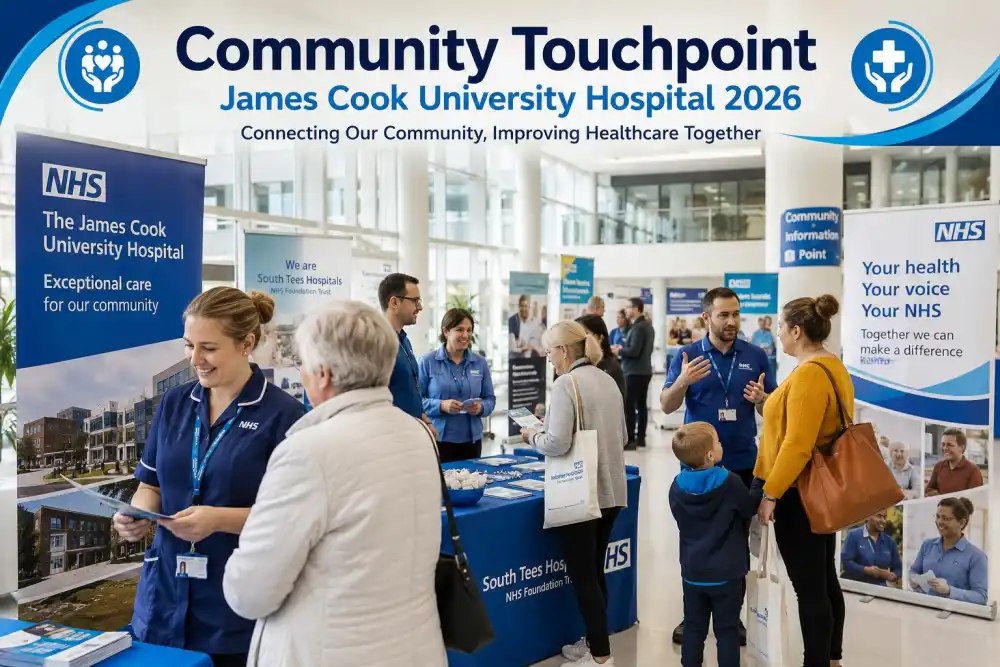
The James Cook University Hospital
Healthcare thrives when hospitals actively engage with the communities they serve. Community Touchpoint – James Cook University Hospital 2026 is a free public engagement event organised by South Tees Hospitals NHS Foundation Trust to strengthen relationships between healthcare professionals, patients, carers, local residents, and community organisations.
The event provides an excellent opportunity to learn more about NHS healthcare services, discover available patient support programmes, meet healthcare specialists, and contribute valuable feedback that helps shape future healthcare improvements. Whether you are a patient, healthcare worker, volunteer, or simply interested in improving community wellbeing, this event offers valuable insights into one of the UK's leading teaching hospitals.
The Event
Community Touchpoint is designed to encourage open communication between the NHS and local communities. Visitors can interact directly with hospital representatives, ask questions about healthcare services, explore patient support resources, and understand how South Tees Hospitals NHS Foundation Trust continues to improve healthcare delivery across the region.
The event creates a welcoming environment where every visitor has the opportunity to learn, participate, and contribute ideas for improving healthcare services.
Why Attend Community Touchpoint?
This event offers much more than an information session. It creates meaningful opportunities for collaboration between healthcare providers and the public.
Attendees can:
Meet NHS healthcare professionals
Learn about patient care services
Discover volunteering opportunities
Explore community health initiatives
Understand future healthcare developments
Receive guidance on available support services
Connect with local community organisations
Whether you are seeking healthcare information or simply want to understand how local NHS services operate, this event provides valuable knowledge and networking opportunities.
What You Can Expect
Visitors will have access to multiple information stands featuring various hospital departments and community healthcare initiatives.
Activities include:
Community engagement discussions
Patient information sessions
Healthcare advice booths
NHS membership information
Volunteer recruitment
Community wellbeing resources
Public feedback opportunities
Experienced NHS staff will be available throughout the event to answer questions and provide helpful guidance.
Meet Healthcare Professionals
One of the biggest advantages of attending Community Touchpoint is the opportunity to meet healthcare professionals from different departments within The James Cook University Hospital.
Visitors can discuss:
Hospital services
Patient pathways
Community healthcare programmes
Specialist treatment services
Health promotion campaigns
Future NHS initiatives
These conversations help improve understanding while building stronger relationships between healthcare providers and the communities they serve.
Learn About NHS Services
Many people are unaware of the wide range of services available through South Tees Hospitals NHS Foundation Trust.
During the event you can learn about:
Emergency care
Specialist medical services
Cancer care
Children's services
Mental health support
Rehabilitation programmes
Outpatient services
Community nursing
Health screening programmes
Healthcare experts will explain how these services support patients across Middlesbrough and surrounding areas.
Share Your Feedback
Community feedback plays an important role in improving NHS services.
Visitors are encouraged to share:
Patient experiences
Suggestions for improvement
Ideas for community healthcare
Accessibility concerns
Service expectations
Future healthcare priorities
Your opinions can help influence future developments across South Tees Hospitals NHS Foundation Trust.
Volunteer Opportunities
The NHS depends upon dedicated volunteers who make a positive difference every day.
During the event visitors can learn about:
Hospital volunteering
Community volunteering
Patient support roles
Charity fundraising
Public engagement programmes
Membership opportunities
Representatives will explain application processes and the benefits of becoming involved.
Community Health and Wellbeing
Community Touchpoint places strong emphasis on prevention and healthier lifestyles.
Visitors can access information covering:
Healthy eating
Physical activity
Mental wellbeing
Preventive healthcare
Long-term condition management
NHS screening programmes
Local wellbeing resources
These services aim to empower individuals to take greater control of their health.
Networking Opportunities
The event also creates valuable networking opportunities for:
Healthcare professionals
Community organisations
Patient advocacy groups
Local charities
Public health partners
Volunteers
Building partnerships between organisations helps improve healthcare delivery across the region.
Who Should Attend?
Community Touchpoint welcomes everyone interested in healthcare and community wellbeing, including:
Patients
Families
Carers
Local residents
Healthcare professionals
Medical students
Volunteers
Community leaders
Charitable organisations
Public sector representatives
No specialist knowledge is required, making the event suitable for all members of the public.
Benefits of Attending
By attending Community Touchpoint, visitors can:
Gain reliable NHS information
Meet healthcare experts
Discover support services
Learn about volunteering
Understand patient care pathways
Improve health awareness
Connect with local organisations
Contribute ideas for improving healthcare
The event provides practical information that can benefit individuals, families, and the wider community.
Why James Cook University Hospital?
The James Cook University Hospital is one of the North East's largest teaching hospitals and provides specialist healthcare services across multiple medical disciplines.
Its commitment to patient-centred care, clinical excellence, innovation, education, and community engagement makes it an ideal venue for bringing healthcare closer to local communities.
Events like Community Touchpoint demonstrate the Trust's ongoing commitment to transparency, collaboration, and continuous improvement.
Community Touchpoint – James Cook University Hospital 2026 offers an excellent opportunity to connect with healthcare professionals, explore NHS services, discover volunteering opportunities, and contribute to improving healthcare across the region.
Whether you are looking for trusted health information, community support, or simply wish to learn more about your local NHS services, this free event provides valuable knowledge in a welcoming and informative environment.
Join South Tees Hospitals NHS Foundation Trust in strengthening the connection between healthcare professionals and the communities they proudly serve. Every conversation, every idea, and every visitor helps build a healthier future for everyone.
The James Cook University Hospital,
Middlesbrough
28
0
FEATURED
Sep 10 - Dec 10, 2026
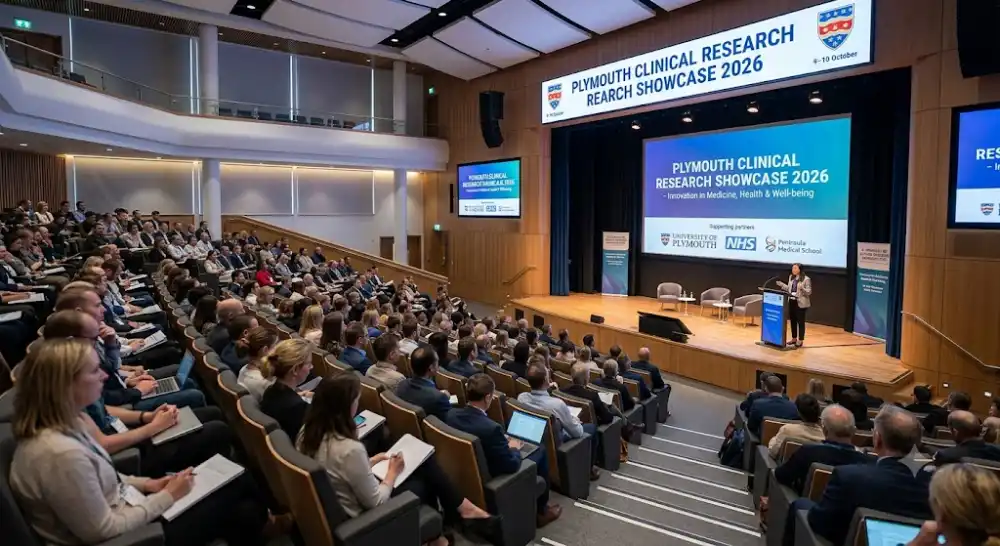
Plymouth Clinical Research Showcase 2026
The Plymouth Clinical Research Showcase 2026 stands as a premier regional event dedicated to celebrating, promoting, and expanding the scope of multidisciplinary medical research, healthcare innovation, and clinical academic achievements across the South West region. Delivered through a collaborative partnership between the Plymouth Joint Clinical Research Office (JCRO), University Hospitals Plymouth NHS Trust (UHP), and higher education researchers, this event brings together top minds, medical professionals, and industry pioneers under one roof. Building on the remarkable success of previous years, the 2026 showcase serves as an essential forum for translating theoretical scientific advancements directly into enhanced patient care models.
Collaborative Research and Keynote Addresses
Attendees will gain direct exposure to insightful keynote presentations delivered by world-renowned research leaders and innovators. Highlights include addresses by key experts focusing on key developments across clinical science, environmental health impacts, hepatology, and novel medical technology applications. The conference sessions emphasize the real-world application of clinical findings, illustrating how academic inquiry directly influences modern healthcare delivery, treatment strategies, and regional health infrastructure.
Specialized Interactive Workshops
A central element of the showcase is its series of practical, skill-building workshops tailored for clinical academics, early-career researchers, and healthcare practitioners. Specialized break-out sessions focus on critical research competencies, including competitive grant writing strategies, navigating high-impact journal publishing pathways, patient and public involvement (PPI) implementation, and structured professional mentorship models. These interactive modules provide participants with concrete tools to elevate their academic output and secure vital funding for ongoing clinical studies.
Dynamic Poster Presentations and Flash Talks
The showcase highlights breakthrough contributions from emerging scholars and seasoned investigators alike through curated flash talks and interactive poster sessions. Participants represent diverse fields, ranging from nursing and dentistry to advanced medical tech, showcasing ongoing projects that address urgent regional and global health challenges. This platform offers a constructive environment for peer review, encouraging constructive feedback, joint paper writing, and interdisciplinary problem-solving across traditional institutional boundaries.
Networking and Stakeholder Engagement
Beyond the scheduled lectures, the event features dedicated networking zones and stakeholder trade stands representing regional health trusts, academic faculties, funding bodies, and biotechnology partners. Representatives from across the NHS, academia, industry, public sector, and VCSE organizations actively engage with delegates to forge long-term strategic alliances. Whether seeking research collaborators, technological partners, or career progression opportunities, attendees gain unparalleled access to the key decision-makers shaping the
Home Park Stadium,
Plymouth
18
0
Apr 20 - 22, 2026
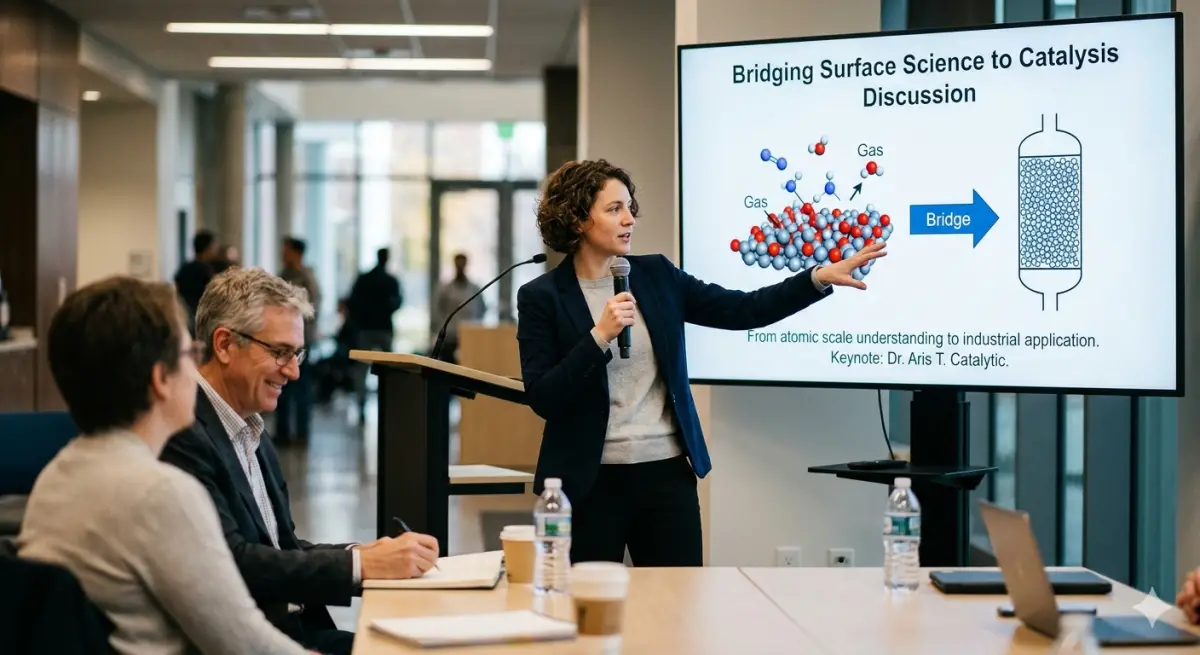
Bridging Surface Science to Catalysis Discussion
The "Bridging the Gap from Surface Science to Heterogeneous Catalysis" Faraday Discussion is a flagship event in the physical chemistry community. Faraday Discussions have a unique format where the primary focus is on the discussion of papers rather than just the presentation of them. Research papers are distributed to attendees well in advance, allowing for a deep, technical dive into the subject matter during the live sessions in London. This particular event targets the critical divide between idealized surface science models and the "real-world" complexity of heterogeneous catalysts.
Over three days, the conference will address four primary themes. First, it investigates new experimental methods for observing catalysts in action, emphasizing operando techniques that allow scientists to see chemical changes in real-time. Second, a significant portion of the event is dedicated to the impact of Artificial Intelligence and Large Language Models on catalysis research. This includes how machine learning can predict "material genes" and accelerate the discovery of new catalysts. Third, the discussion delves into chemical mechanisms and system analysis, identifying the specific intermediates that drive industrial reactions. Finally, the event explores the rational design of self-repairing active sites, a holy grail for catalyst longevity.
The venue, Burlington House, is the historic home of the Royal Society of Chemistry, providing a prestigious backdrop for such high-level discourse. This event is ideal for those who want to be at the forefront of sustainable chemistry, as improvements in catalysis are central to solving energy and environmental challenges. Whether you are an industrial researcher looking for the next breakthrough in efficiency or an academic probing the fundamental physics of surfaces, this Faraday Discussion offers a level of engagement and peer review that is unmatched in other conference formats.
RSC Burlington House,
London
159
0
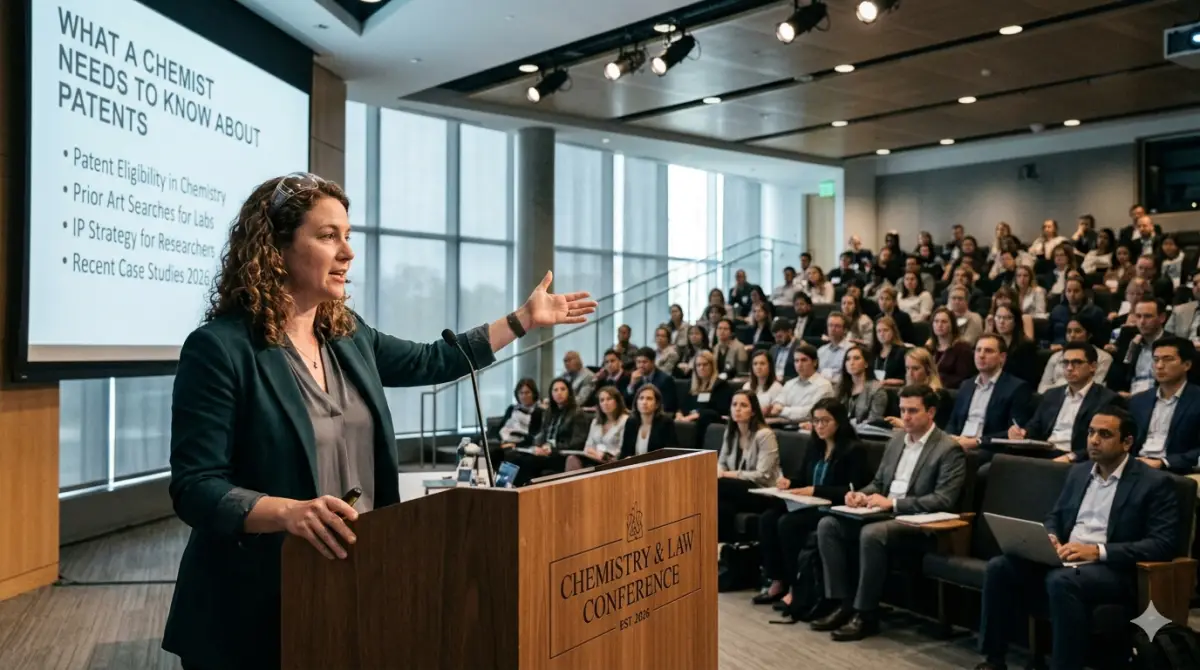
What a Chemist Needs to Know About Patents 2026
Intellectual Property (IP) is the lifeblood of the chemical industry, yet many researchers remain unfamiliar with the nuances of patent law. The "What a Chemist Needs to Know About Patents" seminar, organized by the RSC and the Society of Chemical Industry (SCI), is a tailored workshop designed to bridge this knowledge gap. Scheduled for mid-May 2026 in London, this one-day intensive course is essential for any chemist involved in innovation, whether in an academic spin-out or a large multinational corporation.
The program is led by expert patent attorneys and experienced industrial chemists who have successfully navigated the patent landscape. The curriculum covers the fundamental requirements for patentability: novelty, inventive step, and industrial applicability. However, it goes beyond the basics to address chemistry-specific challenges, such as how to claim a broad class of chemical compounds (Markush structures) without being overly speculative, and how to handle the disclosure of experimental data. Participants will learn about the "prior art" search process, the timeline of a patent application, and the critical importance of keeping accurate laboratory notebooks for legal purposes.
Case studies form a core part of the afternoon session, where attendees analyze real-world chemical patents to understand why they were granted or why they failed. There is also a strong focus on "Freedom to Operate" (FTO) analyses—ensuring that your new product doesn't infringe on existing patents. This seminar is particularly valuable for those looking to transition from the lab to management or commercial roles. By the end of the day, chemists will be better equipped to communicate with legal professionals and protect their valuable discoveries, ensuring that their scientific hard work translates into protected commercial assets.
Burlington House,
London
157
0
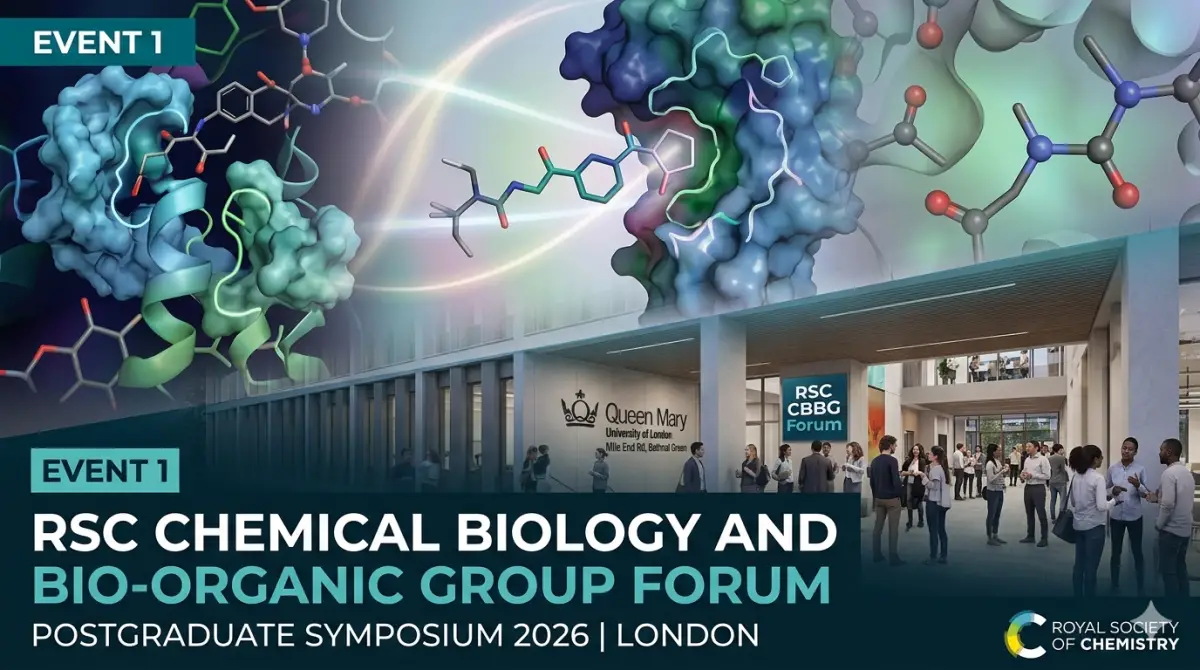
RSC Chemical Biology and Bio organic Group Forum
The 2026 RSC Chemical Biology and Bio-organic Group (CBBG) Postgraduate Symposium is a premier annual gathering designed to highlight the intersection of chemistry and biology. This event serves as a vital platform for early-career researchers, particularly PhD students and postdoctoral fellows, to showcase their cutting-edge research to a specialized audience. Chemical biology is a rapidly evolving field that uses chemical techniques and tools to study and manipulate biological systems, and this symposium captures the full breadth of that diversity.
The forum is structured to facilitate intense scientific exchange. It features a keynote plenary lecture by Professor Mark Bradley, a leader in the field known for his work in high-throughput chemical biology and imaging. Beyond the invited talk, the day is packed with contributed oral presentations and extensive poster sessions. These sessions are meticulously organized to encourage dialogue between young scientists and established academics, fostering a collaborative environment that often leads to future research partnerships.
Attendees can expect to explore topics ranging from the synthesis of novel bioactive molecules and the development of chemical probes to the study of biosynthetic pathways and medicinal chemistry applications. The symposium is not just about data; it is about community. It provides a unique space for the next generation of chemical biologists in London and the wider UK to refine their presentation skills, receive constructive feedback from peers, and gain insights into the latest methodological advances. The event concludes with a reception, providing a more informal setting for networking and career discussions. For any postgraduate student or researcher working at the bio-organic interface, this event is an essential fixture in the 2026 academic calendar.
Queen Mary University of London, Graduate Centre,
London
168
0
Sep 02, 2026
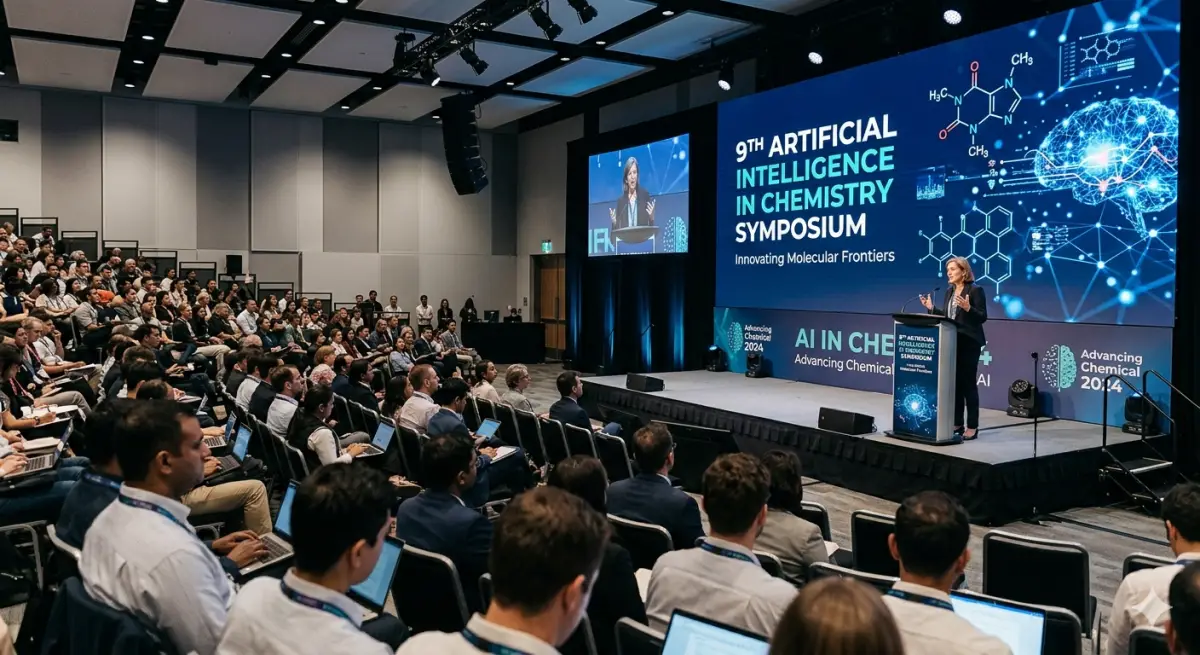
9th Artificial Intelligence in Chemistry Symposium
The 9th Artificial Intelligence in Chemistry Symposium is a premier three-day gathering hosted by the Royal Society of Chemistry’s Chemical Information and Computer Applications Group (CICAG) and the Biological and Medicinal Chemistry Sector (BMCS). As artificial intelligence and deep machine learning continue to revolutionize the chemical sciences, this event serves as a vital nexus for researchers, data scientists, and industry leaders to discuss the latest breakthroughs and practical applications.
The symposium kicks off with a highly anticipated "Introduction to AI in Chemistry" workshop on Day 1. This session is specifically designed to provide participants with foundational skills in Python and Jupyter notebooks, ensuring that even those new to the field can engage with the technical discussions that follow. The subsequent days are packed with a diverse program featuring keynote lectures from world-renowned experts, oral presentations on cutting-edge research, and rapid-fire flash presentations that highlight emerging talent.
Attendees will explore a wide range of topics, including generative molecular design, predictive analytics for chemical reactions, and the integration of AI into laboratory automation. Beyond the formal presentations, the event emphasizes community building through poster sessions and open debates, allowing for granular discussions on the ethical implications and future trajectories of AI in science. Whether you are an academic researcher looking to implement ML models or an industry professional seeking to optimize R&D pipelines, this symposium offers the tools and networking opportunities necessary to stay at the forefront of the digital chemistry revolution. The Royal Society of Chemistry remains committed to accessibility, offering a limited number of bursaries for PhD students and early-career researchers to ensure a diverse and vibrant exchange of ideas in the heart of London.
Burlington House,
London
232
0
Apr 24, 2026
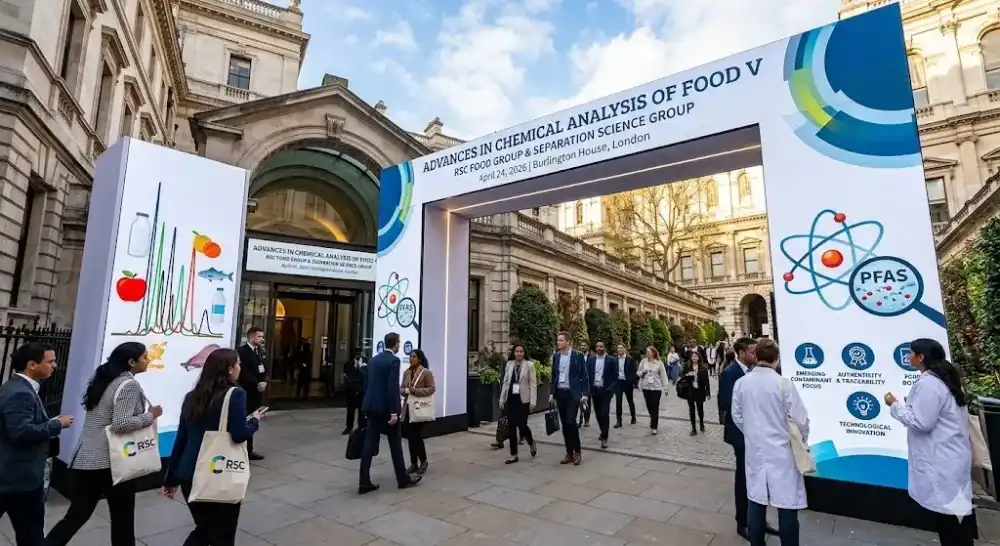
Advances in Chemical Analysis of Food V
The Advances in Chemical Analysis of Food V is a high-level scientific symposium that marks the fifth installment of this highly successful series. Jointly organized by the RSC Food Group and the RSC Separation Science Group, the event is dedicated to the latest methodological and technological breakthroughs in the chemical analysis of food products. As global food supply chains become increasingly complex, the role of precise chemical analysis in ensuring safety, authenticity, and nutritional quality has never been more critical.
Taking place in April 2026 at the historic Burlington House in London, the symposium provides a specialized forum for analytical chemists to discuss the transition from traditional laboratory techniques to high-throughput, automated, and portable sensing technologies. The program is carefully curated to cover diverse topics, including the detection of emerging contaminants (such as microplastics and PFAS), advanced mass spectrometry for food metabolomics, and the use of isotopic analysis for food fraud prevention.
A unique feature of this year's meeting is the integration of "Data Science in Analysis," exploring how machine learning algorithms are being used to interpret complex chromatograms and spectral data. The event structure includes plenary lectures from industry leaders, rapid-fire presentations for early-career researchers, and a dedicated poster session. Attendees will have the opportunity to engage with equipment manufacturers showcasing the latest in LC-MS, GC-MS, and NMR technology specifically tailored for food matrices. This series remains a vital touchstone for any professional involved in the rigorous science of what we eat.
The Royal Society of Chemistry, Burlington House,
London
102
0
- Prev
- 1
- Next
Share This Page
My Page
Scan QR to open
Barcode