
Discover All Events
Explore 1 premium experiences in all locations
Promoted
List Your Next Big Event
Reach millions of attendees by showcasing your conferences, workshops, or exhibitions on the world's most trusted event platform.
Create Your Event Now
FEATURED
Sep 10 - 11, 2026
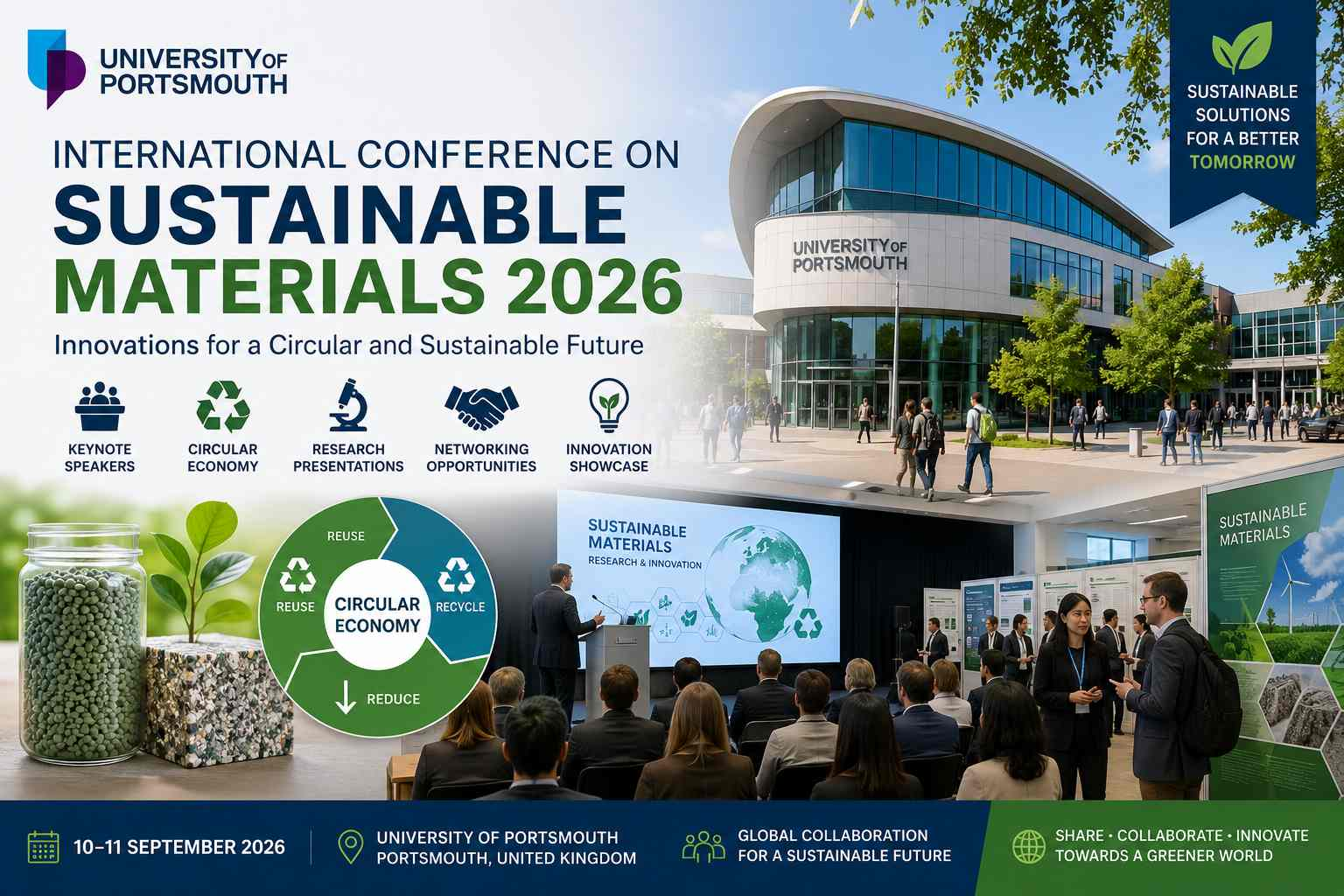
International Conference on Sustainable Materials
The International Conference on Sustainable Materials 2026 at the University of Portsmouth is a premier academic and industry event dedicated to advancing research, innovation, and collaboration in sustainable materials and circular economy practices. The conference will bring together researchers, scientists, engineers, policymakers, environmental experts, industry leaders, entrepreneurs, and students from around the world to exchange knowledge, present groundbreaking research, and discuss practical solutions to today's environmental challenges.
As sustainability becomes a global priority, organizations across every sector are seeking innovative materials and environmentally responsible manufacturing processes. This conference serves as a platform for discussing these developments while encouraging interdisciplinary collaboration between academia, government, and industry. Participants will gain valuable insights into emerging technologies, sustainability policies, recycling innovations, resource efficiency, and future research opportunities.
Why Attend This Conference?
Attending this conference provides an excellent opportunity to stay informed about the latest developments in sustainable materials science and environmental innovation. Delegates will learn directly from internationally recognized keynote speakers and subject matter experts who are actively shaping the future of sustainable engineering and green manufacturing.
The event also offers numerous networking opportunities, allowing participants to connect with fellow researchers, academics, industry professionals, investors, and policymakers. Whether attendees are seeking research collaborations, business partnerships, funding opportunities, or professional development, this conference provides an ideal environment for meaningful connections.
Key Conference Highlights
The conference features an extensive programme designed to benefit attendees from diverse professional backgrounds. Highlights include:
International keynote presentations by leading sustainability experts.
Research paper presentations covering the latest scientific discoveries.
Interactive panel discussions on environmental policy and innovation.
Technical workshops focusing on sustainable manufacturing techniques.
Innovation showcases featuring emerging technologies.
Academic poster sessions presented by postgraduate researchers.
Industry exhibitions displaying environmentally friendly products.
Networking sessions connecting researchers and businesses.
Collaboration opportunities for future research projects.
Discussions on global sustainability challenges and solutions.
These activities ensure that participants receive both theoretical knowledge and practical insights applicable to research, education, and industry.
Topics Covered During the Conference
The conference explores a wide range of subjects related to sustainability and environmental engineering. Major discussion areas include:
Sustainable Materials Development
Circular Economy Strategies
Advanced Recycling Technologies
Green Manufacturing Processes
Renewable Materials
Carbon Reduction Technologies
Waste Management Innovations
Environmental Policy
Sustainable Supply Chains
Environmental Monitoring
Energy-Efficient Production
Sustainable Construction Materials
Each topic is supported by expert speakers and real-world case studies that demonstrate practical applications across different industries.
Distinguished Speakers and Experts
The conference welcomes internationally respected experts from universities, research institutions, government organizations, and leading companies. Keynote speakers will share their expertise on current sustainability challenges, innovative technologies, and future trends in materials science.
Panel discussions will encourage interaction between speakers and attendees, allowing participants to ask questions, exchange ideas, and gain diverse perspectives on complex environmental issues.
The combination of academic excellence and industry experience ensures a balanced programme that benefits both researchers and professionals.
Research Paper Presentations
Research presentations are one of the conference's most valuable features. Scientists and academics from around the world will present peer-reviewed studies covering numerous sustainability topics.
Presentations include:
Innovative biodegradable materials
Advanced composite technologies
Plastic recycling innovations
Sustainable packaging solutions
Low-carbon manufacturing methods
Green chemistry applications
Resource-efficient production systems
Circular business models
These presentations provide attendees with the latest scientific findings while encouraging discussion and collaboration among experts.
Interactive Workshops
Practical workshops enable participants to develop new technical skills through hands-on learning experiences. These sessions focus on real-world applications and demonstrate how sustainability principles can be implemented across industries.
Workshop topics may include:
Life Cycle Assessment
Circular Economy Planning
Sustainable Product Design
Environmental Impact Assessment
Carbon Footprint Analysis
Waste Reduction Strategies
Green Manufacturing Technologies
Sustainable Innovation Management
Participants leave with practical knowledge that can immediately be applied within their organizations or research projects.
Networking Opportunities
One of the greatest advantages of attending the conference is the opportunity to build professional relationships with experts from around the world.
Networking activities include:
Welcome reception
Coffee networking breaks
Business networking sessions
Research collaboration meetings
Industry-academia discussions
Student networking events
Speaker meet-and-greet sessions
These activities encourage collaboration, knowledge sharing, and future partnerships across multiple disciplines.
Industry Exhibition
The conference includes an exhibition where companies, research organizations, and technology providers display their latest innovations in sustainable materials and environmental technologies.
Visitors can explore:
Recycling equipment
Sustainable manufacturing solutions
Green building materials
Environmental monitoring systems
Smart production technologies
Laboratory equipment
Research software
Renewable energy technologies
The exhibition enables attendees to discover practical solutions that support sustainability goals while meeting directly with product specialists and innovators.
Benefits for Students and Early-Career Researchers
Students and emerging researchers will benefit significantly from participating in the conference. Dedicated poster sessions provide opportunities to present research to an international audience while receiving valuable feedback from experienced academics.
Additional benefits include:
Career guidance from industry professionals
Networking with leading researchers
Research collaboration opportunities
Exposure to international scientific communities
Professional development workshops
Access to cutting-edge research
These experiences help prepare the next generation of sustainability professionals and researchers.
Who Should Attend?
This conference is designed for professionals and organizations working across sustainability, engineering, research, and innovation.
Ideal attendees include:
University researchers
Academic faculty
Environmental scientists
Engineers
Sustainability managers
Manufacturing professionals
Consultants
Postgraduate students
PhD researchers
Investors
Environmental organizations
The diverse audience creates valuable opportunities for interdisciplinary collaboration and knowledge exchange.
Why the University of Portsmouth?
The University of Portsmouth is internationally recognized for its commitment to research excellence, innovation, and sustainability. Its state-of-the-art facilities, experienced academic staff, and collaborative research environment make it an ideal venue for hosting an international conference focused on sustainable materials and circular economy solutions.
The university actively supports partnerships between academia, industry, and government, ensuring that research contributes to real-world environmental improvements and technological advancement.
Register and Join the Global Sustainability Community
The International Conference on Sustainable Materials 2026 provides an outstanding opportunity to learn from world-leading experts, discover innovative technologies, present research, and build lasting professional relationships. Whether you are an academic, researcher, engineer, policymaker, student, or business leader, this event offers valuable knowledge and networking opportunities that will help shape the future of sustainable innovation.
Join delegates from around the world at the University of Portsmouth to explore cutting-edge research, exchange ideas, and contribute to the development of sustainable solutions that support a greener, more resilient future.
University of Portsmouth,
Portsmouth
9
0
FEATURED
Oct 15 - 16, 2026
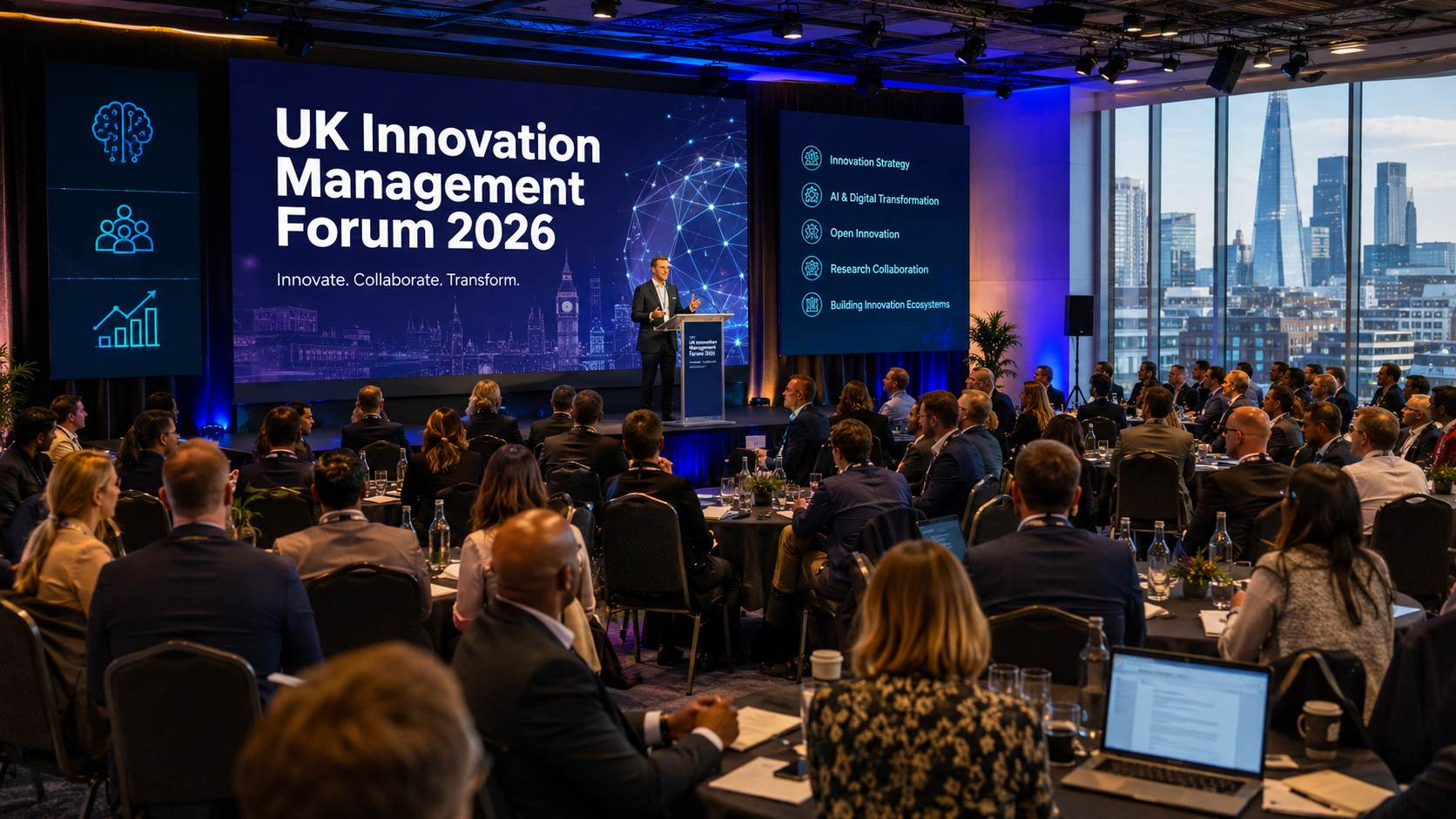
UK Innovation Management Forum 2026
Innovation has become a central driver of economic development, organisational growth and societal progress. As businesses and institutions face rapid technological change, shifting customer expectations and increasing pressure to operate sustainably, the ability to manage innovation effectively has become more important than ever. The proposed UK Innovation Management Forum 2026 is designed as a professional gathering focused on the exchange of knowledge, research and practical experience across the innovation management community.
The event concept aligns closely with the areas traditionally associated with the International Society for Professional Innovation Management (ISPIM), an international community focused on innovation management research and practice. ISPIM's recent conference themes have included areas such as AI and digital innovation, innovation ecosystems, business models, entrepreneurship, open innovation, responsible innovation, sustainability-oriented innovation management and knowledge and technology transfer.
Designed for professionals, researchers, academics, entrepreneurs and innovation specialists, the proposed UK forum would provide a platform for exploring how organisations can develop stronger innovation capabilities and translate ideas into measurable outcomes.
A Platform for Innovation Management Knowledge
One of the central purposes of an innovation management conference is to connect theoretical knowledge with practical application. Organisations often generate many ideas but struggle to move those ideas through development, validation and implementation. Effective innovation management helps bridge this gap.
The proposed forum would provide opportunities for delegates to examine the complete innovation journey, from identifying emerging opportunities through to developing solutions and creating sustainable value. Discussions could focus on how organisations establish innovation strategies, manage portfolios, build internal capabilities and create cultures that encourage experimentation.
For researchers and academics, the event would provide a setting to discuss emerging findings and methodologies. For business professionals, it could offer practical insights into how innovation principles can be applied within organisations of different sizes and sectors.
Exploring Digital Transformation and Artificial Intelligence
Artificial intelligence and digital transformation are reshaping the way organisations innovate. From automated workflows and advanced analytics to generative AI and intelligent decision-support systems, new technologies are creating opportunities for businesses to rethink traditional processes.
The proposed UK Innovation Management Forum 2026 could explore how organisations can integrate AI into innovation strategies while maintaining responsible governance and human oversight. Delegates could examine the opportunities and risks associated with AI-driven innovation, including questions around data, ethics, skills, organisational change and implementation.
AI is also changing the innovation process itself. Teams can use advanced tools to identify market trends, analyse customer needs, generate concepts and accelerate prototyping. However, successful adoption requires more than technology. Organisations must also develop appropriate leadership, capabilities and governance structures.
These issues make digital innovation an important subject for researchers and practitioners seeking to understand the future of innovation management.
Building Stronger Innovation Ecosystems
Modern innovation rarely happens in isolation. Businesses increasingly collaborate with universities, research organisations, startups, government agencies, investors and technology partners. These relationships create innovation ecosystems in which knowledge and resources can move between different participants.
A UK-based innovation management forum could provide valuable opportunities to explore how such ecosystems are created and sustained. Sessions could examine collaboration models, regional innovation networks, technology clusters and partnerships between industry and academia.
For the UK economy, these discussions are particularly relevant because innovation ecosystems can help connect research with commercial opportunities. Universities may generate new knowledge, startups may develop emerging technologies and established companies may provide the resources needed to scale solutions.
Understanding how these different actors collaborate can help organisations identify new opportunities and overcome barriers to innovation.
Open Innovation and Collaborative Development
Open innovation is another important area for organisations seeking to expand their innovation capabilities. Instead of relying entirely on internal research and development, companies can work with external partners to access new technologies, knowledge and ideas.
The proposed event could examine how businesses can create effective open innovation strategies. Topics might include corporate-startup partnerships, collaborative research, technology licensing, innovation challenges and external idea platforms.
Delegates could also explore the challenges involved in open innovation. Intellectual property management, organisational culture, trust and communication can all affect the success of collaborative projects.
By sharing experiences and research, participants could gain a better understanding of how external collaboration can be integrated into broader innovation strategies.
Supporting Entrepreneurs and Startups
Startups and entrepreneurs play an important role in introducing new ideas and technologies to the market. Their ability to experiment quickly and respond to emerging opportunities can make them valuable partners for larger organisations.
The proposed forum could provide a dedicated focus on entrepreneurship, startups and small and medium-sized enterprises. Discussions could explore how entrepreneurs develop innovative business models, attract investment and scale new ventures.
Established organisations could also benefit from understanding how to work more effectively with startups. Partnerships between corporations and emerging businesses can create opportunities for co-development, pilot projects and technology adoption.
For entrepreneurs, participation in an innovation management event could also create opportunities to meet potential partners, researchers and industry professionals.
Responsible and Sustainable Innovation
Innovation is not only about creating new products or services. Increasingly, organisations must consider the environmental and social consequences of their decisions.
Sustainable and responsible innovation could therefore form an important part of the proposed programme. Discussions could explore how businesses can incorporate sustainability principles into innovation strategies while maintaining commercial viability.
Topics could include circular innovation, responsible technology development, social innovation and sustainable business models. Delegates could consider how innovation can contribute to long-term societal objectives while addressing practical organisational challenges.
The focus on responsible innovation is particularly relevant as organisations develop technologies that can influence individuals, communities and the wider environment.
Research and Industry Collaboration
One of the most valuable features of an innovation management conference is the opportunity to connect academic research with industry practice.
Researchers often develop frameworks and methodologies that can help organisations understand innovation more effectively. At the same time, industry professionals possess practical experience that can identify real-world challenges and opportunities for further research.
The proposed UK forum could encourage dialogue between these communities through presentations, panel discussions and interactive sessions. Such exchanges can help ensure that research remains relevant to practical challenges while allowing businesses to benefit from emerging academic insights.
The ISPIM community's conference activity has historically brought together innovation management professionals from multiple countries and sectors, with programmes covering both research and practical innovation themes.
Networking and Professional Development
Professional networking would be another major attraction of the proposed event. Innovation professionals often work across organisational and disciplinary boundaries, making relationships an important source of new ideas and collaboration.
Delegates could connect with peers from different industries, universities and research institutions. Informal discussions and structured networking activities could help participants identify potential collaborators and exchange experiences.
For early-career researchers and professionals, such an environment could also provide opportunities to build professional networks and learn from experienced practitioners.
The event could also support professional development by exposing attendees to new innovation frameworks, tools and methodologies. Participants could return to their organisations with fresh perspectives on managing innovation and developing new opportunities.
Key Benefits for Attendees
Attending a professional innovation management forum can provide several potential benefits. First, participants can gain exposure to current thinking and emerging trends in innovation.
Second, delegates can learn from practical examples and case studies. Understanding how other organisations approach innovation can help participants identify lessons that may be applicable to their own environments.
Third, networking can create opportunities for collaboration. Participants may discover potential research partners, technology providers, investors or business collaborators.
Finally, conferences can encourage strategic reflection. Stepping away from everyday operational responsibilities allows professionals to consider broader questions about their organisation's future direction and innovation capabilities.
Why the UK Is a Suitable Location
The United Kingdom provides a strong environment for discussions around innovation, research and technology. The country has a diverse ecosystem of universities, research institutions, startups and established businesses.
London, in particular, offers international connectivity and access to a broad professional community. A UK-based innovation management forum could attract participants from across the country while also welcoming international delegates.
A central UK location would make it easier for participants from different sectors to attend and could support wider collaboration between academic and commercial communities.
Who Should Attend?
The proposed event would be relevant to a broad range of professionals involved in innovation and organisational development.
Innovation managers could attend to explore new approaches to managing innovation portfolios and programmes. Business leaders could gain insights into developing innovation strategies aligned with organisational objectives.
Researchers and academics could use the event to exchange knowledge and identify potential research collaborations. Entrepreneurs and startup founders could connect with potential partners and learn from established innovation practices.
Technology professionals and R&D specialists could also benefit from discussions about emerging technologies and their role in innovation.
Looking Ahead
The future of innovation management will be shaped by rapid technological development, global collaboration and increasing expectations around sustainability and responsibility. Organisations that can adapt effectively will be better positioned to identify opportunities and respond to change.
The proposed UK Innovation Management Forum 2026 would offer a valuable setting for exploring these issues. By bringing together researchers, practitioners, entrepreneurs and business leaders, the event could support knowledge exchange and encourage new forms of collaboration.
The strongest innovation ecosystems are built through connections between people and organisations. Events focused on innovation management can help create those connections by providing a shared space for discussion, learning and partnership development.
Final Thoughts
The UK Innovation Management Forum 2026 is proposed as a professional event concept focused on the evolving practice of innovation management. With themes covering digital transformation, artificial intelligence, open innovation, entrepreneurship, sustainability, innovation ecosystems and research collaboration, the event would offer a broad programme relevant to today's innovation professionals.
For businesses, the event could provide insights into developing stronger innovation capabilities. For researchers, it could create opportunities to exchange ideas and develop collaborations. For entrepreneurs, it could offer access to professional networks and potential partners.
The proposed forum also reflects the wider direction of innovation management discussions associated with ISPIM, whose published conference themes span AI and digital innovation, business models, innovation ecosystems, entrepreneurship, open innovation, responsible innovation and sustainability-oriented innovation management.
London Conference Centre,
Manchester
2
0
Jun 04 - 05, 2026
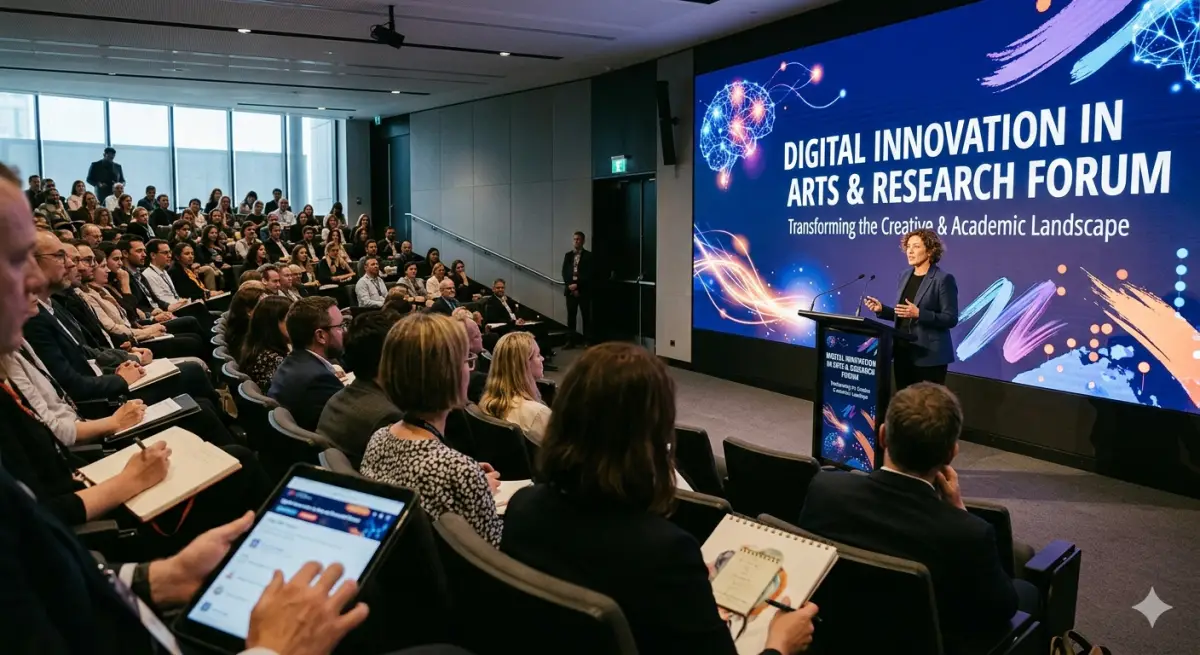
Digital Innovation in Arts and Research Forum
The Digital Innovation in Arts & Research Forum is a flagship event designed to explore the profound impact of emerging technologies on cultural expression and academic inquiry. Set in the vibrant HOME Manchester arts center, the forum brings together researchers, digital artists, and technologists to discuss how tools like Generative AI, Extended Reality (XR), and Big Data are reshaping our understanding of culture. The British Council has long championed the intersection of technology and the arts, and this forum serves as a critical checkpoint for the "Arts and Technologies" roadmap toward 2030.
Day one focuses on "Immersive Storytelling," with presentations on how museums and galleries are using XR to create decolonized narratives and more inclusive visitor experiences. Day two shifts toward "Data-Driven Research," examining how digital archives are being used to track cultural trends and measure the social impact of arts programs. A special session will be dedicated to the "Ethics of AI in Creativity," tackling issues of copyright, authenticity, and the digital divide. The forum includes a "Research Poster Gallery" where PhD students and early-career researchers from across the UK can present their work to an audience of industry professionals. With Manchester being a designated UNESCO City of Literature and a burgeoning tech hub, the forum provides an unparalleled opportunity to forge cross-disciplinary partnerships that will define the creative economy for years to come.
HOME Manchester,
Manchester
59
0
- Prev
- 1
- Next
Share This Page
My Page
Scan QR to open
Barcode