
Discover All Events
Explore 1 premium experiences in all locations
Promoted
List Your Next Big Event
Reach millions of attendees by showcasing your conferences, workshops, or exhibitions on the world's most trusted event platform.
Create Your Event Now
FEATURED
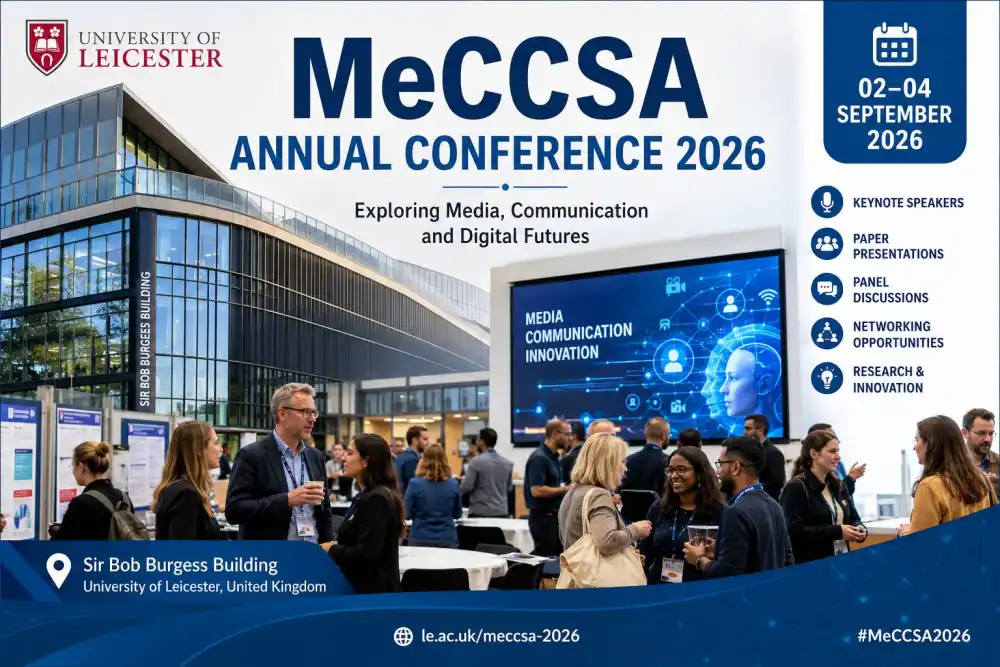
Sep 02 - 04, 2026
MeCCSA Annual Conference 2026
The MeCCSA Annual Conference 2026 is one of the United Kingdom's leading academic gatherings dedicated to media, communication, journalism, digital culture, and creative industries. Hosted by the University of Leicester, the conference will bring together internationally recognized researchers, educators, doctoral candidates, policymakers, and industry professionals to discuss the latest developments influencing contemporary media landscapes.
Taking place from 2 September to 4 September 2026, this prestigious conference offers an outstanding opportunity for attendees to exchange innovative research, build collaborative partnerships, and gain valuable insights into rapidly changing communication environments. The conference theme focuses on understanding emerging media practices, changing audiences, digital transformation, public engagement, persuasion, and evolving communication systems.
University of Leicester
The University of Leicester has established an international reputation for academic excellence, pioneering research, and innovation across multiple disciplines. Located in Leicester, England, the university is home to students and researchers from more than 100 countries.
Its School of Arts, Media and Communication is recognized for producing influential research addressing digital media, journalism, cultural studies, political communication, social media, broadcasting, artificial intelligence, and audience behaviour.
Hosting the MeCCSA Annual Conference reflects the University's commitment to advancing global academic collaboration and encouraging interdisciplinary research.
Conference Theme
The 2026 conference explores the evolving relationship between mainstream and emerging media by examining:
Digital communication trends
Social media influence
Political communication
Media policy
Public engagement
Artificial intelligence in media
Journalism innovation
Audience behaviour
Media ethics
Cultural communication
Participants will examine how technology continues transforming communication while addressing challenges such as misinformation, digital trust, media regulation, and changing public expectations.
Key Features
Delegates can expect an engaging programme including internationally renowned keynote speakers, expert panel discussions, academic paper presentations, poster sessions, interactive workshops, and networking opportunities.
The conference also provides dedicated sessions for early-career researchers, allowing doctoral candidates and emerging scholars to present their work before an international audience.
Industry professionals will contribute practical perspectives on digital communication strategies, journalism practices, creative media, public communication, and technological innovation.
Research Opportunities
Researchers attending the conference will benefit from:
Presentation of original research
Constructive peer feedback
Academic collaboration opportunities
Cross-disciplinary discussions
International publication networking
The conference encourages dialogue between academia and industry while promoting innovative approaches to solving contemporary communication challenges.
Networking Benefits
Networking remains one of the strongest attractions of the MeCCSA Annual Conference.
Participants will have opportunities to connect with:
University professors
International researchers
Government communication specialists
Journalists
Media executives
Communication consultants
Policy experts
Doctoral researchers
These interactions often lead to collaborative research projects, publications, funding partnerships, and long-term academic relationships.
Learning Experience
Attendees will gain insights into emerging topics including:
Digital journalism continues transforming news production and distribution.
Artificial intelligence is reshaping content creation and audience engagement.
Social media platforms are influencing political participation and public opinion.
Media ethics remain increasingly important in combating misinformation.
Digital storytelling techniques continue evolving across multiple communication platforms.
Creative industries are adopting innovative technologies to enhance audience experiences.
Communication researchers are examining new methods for understanding digital behaviour.
The conference offers an excellent environment for exchanging these ideas through interactive discussions and evidence-based presentations.
Professional Development
Professionals working within communication, education, public relations, journalism, broadcasting, digital marketing, and policy development can significantly enhance their knowledge by attending.
Sessions will provide practical insights that attendees can apply within higher education, government organisations, media companies, research institutions, and private industry.
Early-career academics will particularly benefit from mentorship opportunities, publication guidance, and networking with experienced scholars.
International Participation
The conference attracts delegates from universities, research centres, professional associations, and media organisations across Europe and beyond.
This international participation creates an inclusive learning environment where diverse perspectives enrich discussions and promote global collaboration.
Delegates can explore comparative research across different countries while developing broader perspectives on communication challenges affecting societies worldwide.
Venue Experience
The conference will be held in the modern Sir Bob Burgess Building, one of the University of Leicester's flagship academic venues.
The facility offers:
Modern lecture theatres
Presentation spaces
Seminar rooms
Networking areas
Digital learning facilities
Accessibility services
Located within the university campus, the venue provides easy access to accommodation, dining facilities, transport links, and Leicester city centre.
Why Attend?
Attending the MeCCSA Annual Conference offers numerous advantages including learning from internationally respected experts, presenting research to global audiences, discovering emerging communication trends, building valuable professional relationships, and exploring future research collaborations.
Participants will leave with expanded knowledge, stronger professional networks, practical insights, and inspiration for future academic or industry work.
Whether you are an experienced professor, an early-career researcher, a doctoral student, or a communications professional, this conference provides a valuable opportunity to engage with cutting-edge research and influential discussions shaping the future of media and communication studies.
The University of Leicester continues to strengthen its position as a centre for research excellence through events like MeCCSA, reinforcing its commitment to advancing education, innovation, and international collaboration in communication research.
Sir Bob Burgess Building,
Leicester
36
0
FEATURED
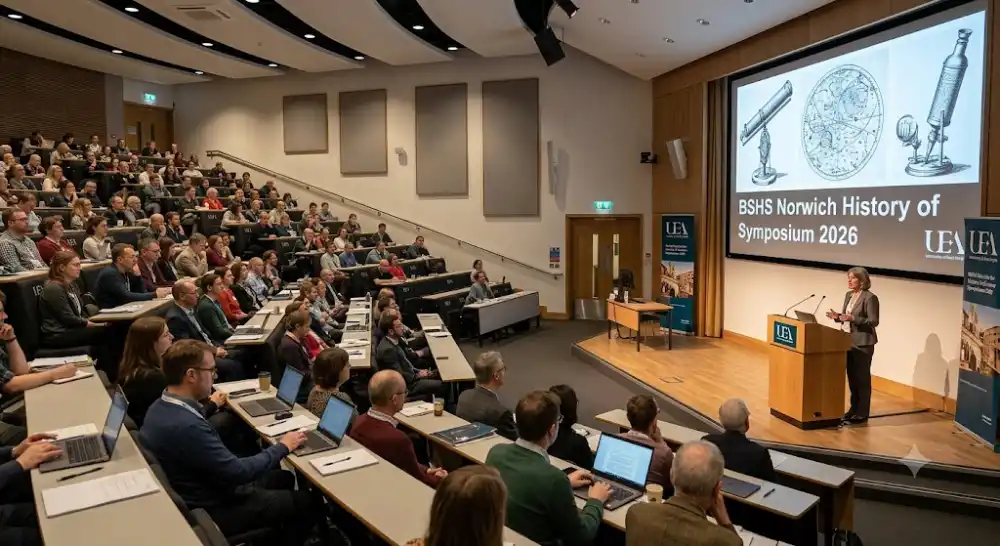
Sep 17 - 18, 2026
BSHS Norwich History of Science Symposium 2026
The British Society For The History Of Science (BSHS) invites academics, researchers, archivists, students, and science history enthusiasts to the BSHS Norwich History of Science Symposium 2026, held at the renowned University of East Anglia (UEA) in Norwich, United Kingdom. As Britain's largest learned society dedicated to the history of science, technology, and medicine, BSHS continues its long-standing tradition of fostering critical scholarly discourse, interdisciplinary collaboration, and public engagement. This flagship two-day autumn symposium brings together global perspectives and localized scientific heritage, offering a dynamic platform to evaluate how historical scientific breakthroughs continue to shape modern society, ethics, policy, and educational frameworks.
Hosted within the modern academic facilities of the University of East Anglia, the 2026 symposium focuses on the historical intersections of natural philosophy, environmental history, agricultural transformation, and medical discoveries across East Anglia and the wider global scientific network. Norwich, with its rich intellectual heritage, medieval manuscript preservation, and proximity to contemporary scientific research hubs, provides an ideal setting for re-examining historical narratives. Attendees will experience an engaging academic program featuring prominent keynote addresses, thematic paper sessions, roundtable debates, and collaborative workshops designed to bridge historical inquiry with contemporary scientific understanding.
Key Thematic Tracks and Academic Presentations
The scholarly agenda for the BSHS Norwich History of Science Symposium 2026 spans a wide array of historical periods and scientific disciplines. Special thematic tracks will address the evolution of ecological thought, early modern natural history collections, the industrialization of agriculture, and the historic communication of scientific knowledge to the public. Scholars from around the world will present cutting-edge research papers that challenge traditional historiographical paradigms and highlight marginalized voices in the development of scientific thought.
In addition to traditional oral presentations, the symposium features a dedicated graduate research showcase. Early-career researchers and postgraduate students will present poster exhibitions detailing ongoing dissertations, archival findings, and innovative methodologies. Senior academics and journal editors from BSHS publications will conduct dedicated mentoring workshops, offering invaluable guidance on scholarly publishing, grant writing, archival access, and academic career progression. These sessions foster an inclusive environment where emerging scholars receive constructive feedback and active encouragement from established leaders in the field.
Networking, Archival Access, and Professional Growth
Beyond formal presentations, the BSHS Norwich History of Science Symposium 2026 emphasizes meaningful professional networking and archival exploration. Delegates will have unique opportunities to connect during structured networking sessions, coffee breaks, and the evening symposium reception held in Norwich's historic central district. These interactions facilitate new research partnerships, joint publication projects, and inter-institutional initiatives among universities, heritage organizations, museums, and research libraries.
Participants will also enjoy curated access to local historical collections and archival displays highlighting East Anglia's historical contributions to botany, geology, and medicine. Guided library tours will showcase rare books, historical maps, and personal correspondence from prominent historical naturalists. Whether you are an established academic seeking to share breakthrough research, a curator looking to connect with historians, or a graduate student building a professional network, this gathering provides an inspiring setting to deepen your engagement with the history of science.
Participate in Shaping Historical Scientific Inquiry
Attending the BSHS Norwich History of Science Symposium 2026 offers an indispensable opportunity to participate in vital discussions that define the future of history of science scholarship. By examining how past societies understood, developed, and applied scientific knowledge, attendees gain critical context for addressing contemporary technological and environmental challenges.
Registration includes access to all keynote lectures, panel sessions, workshop tracks, digital conference materials, daily catered lunches, and the welcome evening reception. Do not miss this opportunity to contribute to one of the year’s most distinguished gatherings of science historians in the historic city of Norwich. Secure your place today and join us at the University of East Anglia on 17th and 18th September 2026.
University of East Anglia (UEA),
Norwich
13
0
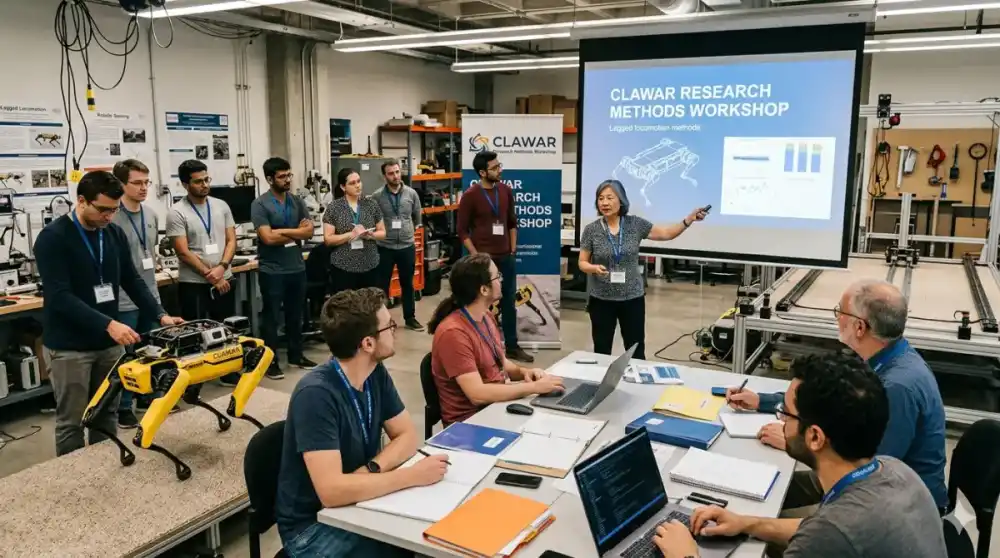
CLAWAR Research Methods Workshop
For the next generation of roboticists, mastering the methodology of research is as important as mastering the code. The CLAWAR Research Methods Workshop in Sheffield is an educational initiative designed to elevate the quality of scientific inquiry in the field of mobile machines. Held at Sheffield Hallam University, this two-day intensive program is specifically tailored for PhD candidates and early-career researchers who are currently navigating the complexities of experimental design, data validation, and academic publishing.
The first day is dedicated to "Experimental Rigor." Participants will learn how to design repeatable experiments for climbing and walking robots, where environmental variables can often skew results. Special attention is given to the integration of simulation (such as ROS and Gazebo) with physical prototyping, ensuring that virtual findings translate accurately to the real world. Professors from the CLAWAR Association’s scientific committee will provide one-on-one feedback on participants' current research designs.
Day two shifts toward the "Dissemination of Knowledge." This covers the nuances of writing for high-impact journals and preparing for international conferences like the annual CLAWAR event. Workshop attendees will participate in a mock peer-review process, gaining insight into what editors look for in a groundbreaking robotics paper. By the end of the workshop, participants will leave with a sharpened research plan and a clearer path toward their doctoral defense or their first major publication. This is a rare opportunity to learn the "hidden curriculum" of robotics research from the very people who set the international standards.
Sheffield Hallam University, Cantor Building,
Sheffield
46
0
- Prev
- 1
- Next
Share This Page
My Page
Scan QR to open
Barcode