
Guide to the Treasure Valuation Committee and Official Support UK
- 👤 Admin
- 👁️ 58 Views
- 📅 January 30, 2026
- 🏷️ Goverment Schemes
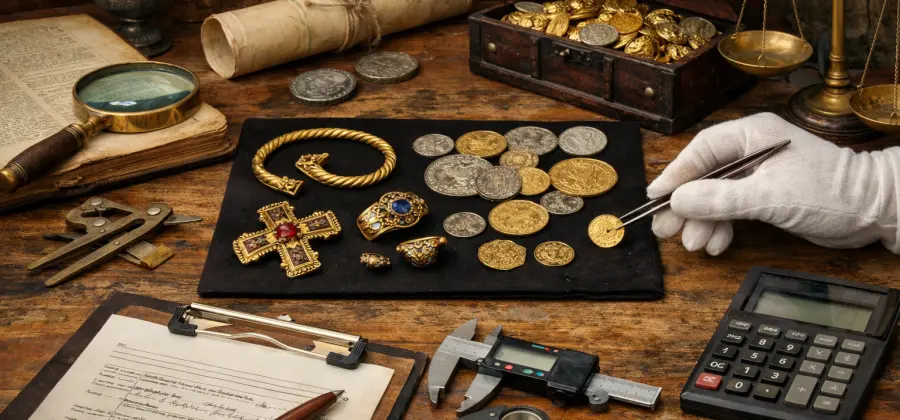
Finding a piece of history is a thrilling experience, but it also comes with significant legal responsibilities and many questions. If you have discovered an item you believe might be "Treasure," it is natural to feel overwhelmed by the process.
The Treasure Valuation Committee (TVC) is an independent body of experts that provides the Secretary of State with valuations for items found in England, Wales, and Northern Ireland that are declared "Treasure" under the Treasure Act 1996.
Whether you are a metal detectorist, a gardener, or a construction worker who has made a discovery, please be reassured: free support UK is available to help you navigate this process legally and fairly. You do not have to do this alone.
Also Read: Trinity House Helpline UK
If You Need Help Right Now
While archaeological finds are rarely life-threatening, "emergency" situations can occur, particularly if you find items that look like unexploded ordnance or if you witness active "nighthawking" (illegal metal detecting/theft).
-
If you find a suspected explosive device: Do not touch it. Move away and call 999 immediately.
-
If you see a crime in progress (nighthawking/theft): Call 999.
Also Read: Guide to Transport Focus and UK Passenger Support
-
For non-emergency reporting of heritage crime: Call 101.
-
Legal Reporting Deadline: You are legally required to report finds that may be Treasure within 14 days of the find or the day you realised it might be Treasure.
Also Read: National Highways Helpline UK
Understanding the Treasure Valuation Committee
The Treasure Valuation Committee ensures that finders and landowners receive a fair market value if a museum wishes to acquire a find. The committee consists of independent experts from the antiquities trade and museum world.
Who it affects
The process affects finders, landowners, and occupiers of the land where the find was made. It applies to items found in England, Wales, and Northern Ireland. In Scotland, different laws apply via the "Treasure Trove" system.
Common Situations
-
The Hobbyist Find: You are metal detecting with permission and find a hoard of silver coins.
-
The Accidental Find: You are digging a pond in your garden and find a gold brooch.
-
The Professional Find: You are an archaeologist or developer and uncover items during a site survey.
Common Problems, Risks, or Situations
Navigating the Treasure Valuation Committee process can be complex. Common issues include:
-
Failing to Report: Not reporting Treasure within 14 days is a criminal offence.
-
Disputes over Ownership: Disagreements between finders and landowners regarding the split of the reward.
-
Valuation Disputes: Feeling that the Treasure Valuation Committee valuation does not reflect the "fair market value."
-
Process Delays: The valuation process can take a significant amount of time (often 12–18 months).
Main Section: UK helplines, Charities & Support
If you are looking for Where can I get help for Treasure Valuation Committee queries or general find reporting, use the following directory.
1. The Portable Antiquities Scheme (PAS)
The primary point of contact for all finders. They provide confidential support UK and expert advice on whether your item qualifies as Treasure.
-
Who it helps: Any member of the public who has found an archaeological object.
-
Find your local Finds Liaison Officer (FLO): https://finds.org.uk/contacts
-
Website: https://finds.org.uk
-
Availability: Office hours (Mon–Fri). Email and phone vary by region.
2. Department for Culture, Media and Sport (DCMS) – Treasure Team
This is the government department responsible for the Treasure Valuation Committee.
-
Who it helps: Finders and museums currently involved in an active Treasure case.
-
Email: treasure@culture.gov.uk
-
Website: https://www.gov.uk/government/organisations/department-for-culture-media-sport
-
Availability: Office hours.
3. National Council for Metal Detecting (NCMD)
A membership organisation that provides Treasure Valuation Committee support UK specifically for hobbyists.
-
Who it helps: Metal detectorists and hobbyist finders.
-
Website: https://www.ncmd.co.uk
-
Support: They offer insurance and legal advice regarding landowner agreements and treasure claims.
4. British Museum – Treasure Registrar
The central hub for processing Treasure cases in England.
-
Who it helps: Finders seeking updates on their specific Treasure case status.
-
Email: treasure@britishmuseum.org
-
Website: https://www.britishmuseum.org/our-work/national/treasure-and-portable-antiquities-scheme
-
Availability: Office hours.
5. Treasure Trove Unit (Scotland)
If you have found something in Scotland, the rules are different (everything is technically Treasure).
-
Who it helps: Finders in Scotland.
-
Phone: 0131 247 4082
-
Email: info@treasuretrovescotland.org.uk
-
Website: https://treasuretrovescotland.org.uk
How to Choose the Right helpline
-
If you have just found something: Contact your local Finds Liaison Officer (FLO) through the PAS. This is the Free support UK route for identification.
-
If you are in a legal dispute with a landowner: Contact the National Council for Metal Detecting (NCMD) or a solicitor specialising in heritage law.
-
If your find is already in the system and you want a valuation update: Contact the DCMS Treasure Team.
Step-by-Step: What Happens When You Contact aSupport
-
Initial Contact: You reach out to an FLO. They will ask for the exact find spot (GPS coordinates), depth, and images of the object.
-
Confidentiality: Your find spot is kept confidential and not made public to prevent "nighthawking" on your site.
-
Identification: Experts will determine if the find meets the criteria of the Treasure Act 1996.
-
Reporting: If it is Treasure, the FLO will help you report it to the local Coroner.
-
Valuation: If a museum wants the item, the Treasure Valuation Committee will commission an independent valuation. You will have the opportunity to comment on this valuation or provide your own.
Support for Friends, Family, or Carers
If you know someone who has found something and is anxious about the legalities, encourage them to seek Confidential support UK through the Portable Antiquities Scheme. It is a common misconception that "the government just takes it." In reality, finders and landowners usually share a reward equal to the full market value.
What You Can Do While Waiting for Support?
-
Keep it Safe: Store the item in a dry, stable environment. Do not attempt to clean it with chemicals, as this can reduce the value and damage the archaeology.
-
Document Everything: Record the precise location and take photos of the item "in-situ" if possible.
-
Don't Post on Social Media: To protect the site from illegal diggers and to protect your own privacy, avoid sharing the location online.
Role of Government and Public Bodies
The Treasure Valuation Committee is appointed by the Department for Culture, Media and Sport (DCMS). Their role is to ensure the Treasure Act 1996 functions fairly, balancing the public's right to see history in museums with the finder's right to a fair reward.
Final Reassurance & Encouragement
Finding Treasure is a contribution to our national story. The Treasure Valuation Committee and the Portable Antiquities Scheme exist to celebrate your find, not to punish you. Seeking Free Treasure Valuation Committee help UK early ensures you are legally protected and that your discovery is preserved for future generations.
Support-Related Questions & Answers
1. Who can I call for Treasure Valuation Committee in the UK? You should first call your local Finds Liaison Officer (FLO) via the Portable Antiquities Scheme.
2. Is there a free helpline for Treasure Valuation Committee? While there isn't a 24/7 "crisis" line, the Portable Antiquities Scheme provides free, expert guidance to all finders.
3. Can I stay anonymous? The Treasure Act requires you to provide your details to the Coroner, but your find spot is kept confidential on public databases.
4. What if it’s an emergency? If you find a weapon or explosive, call 999. If you see illegal digging, call 999. For general find reporting, it is not an emergency.
5. Can I call on behalf of someone else? Yes, you can seek advice for a friend or family member, but the legal duty to report lies with the finder.
6. How long does the valuation take? The Treasure Valuation Committee process typically takes between 12 and 18 months from the date of discovery.
7. Do I get to keep the find? If no museum wants to buy it, the find is "disclaimed" and returned to you.
8. Is the reward tax-free? In the UK, rewards paid under the Treasure Act are currently ex-gratia and are not subject to Capital Gains Tax or Income Tax.
9. What counts as "Treasure"? Generally, objects over 300 years old with at least 10% gold or silver, or prehistoric base-metal hoards.
10. Do I have to share the money with the landowner? Usually, the reward is split 50/50 between the finder and the landowner, provided the finder had permission to be there.
11. What happens if I don't report it? You could face an unlimited fine and up to three months in prison.
12. Can I challenge the valuation? Yes, finders can appeal a Treasure Valuation Committee decision and provide their own independent valuation.
13. Does this apply to finds in gardens? Yes, the Treasure Act applies regardless of whether the find was in a field or your own back garden.
14. Who pays the reward? The museum that chooses to acquire the item pays the reward.
15. Where can I find the official Treasure Act code of practice? You can find it on the DCMS website
DISCLAIMER: Please verify all phone numbers, email addresses, and service details on the official government or organisation websites before use. Numbers and contact information are subject to change without notice.
Most Searchable Keywords
Recent Helplines


Related Listings

Sponsored Listings in Cleaning Services


Related Helplines

Strike Off Your Limited Company Helpline & Su...
Closing your limited company? Find free, confidential support and official UK helpline numbers to guide you through the Companies House stri...

The King’s Awards for Enterprise UK Helpline...
Apply for The King's Awards for Enterprise. Find the right UK helpline number, free support services, and official guidance for your busines...

Free Business Finance Advice UK – Helpline Su...
Need funding or advice? Find the right helpline for finance and support for your business. Access free support UK, grants, and business debt...
Questions & Answers – Find What
You Need, Instantly!
How can I update my business listing?
Is it free to manage my business listing?
How long does it take for my updates to reflect?
Why is it important to keep my listing updated?
